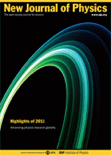
NEW JOURNAL OF PHYSICS
metrics 2024
Innovating ideas, illuminating the world of physics.
Introduction
NEW JOURNAL OF PHYSICS, published by IOP Publishing Ltd, is a prestigious open-access journal that has been at the forefront of the physics community since its inception in 1998. With an impact factor that places it in the Q1 category of Physics and Astronomy (miscellaneous) and a commendable ranking of #49 out of 243 in the general physics and astronomy category according to Scopus, this journal is recognized for its significant contribution to advancing research in the field. The journal caters to a broad scope of topics, providing a platform for the dissemination of cutting-edge research findings and innovative theoretical explorations. Operating from the United Kingdom, it offers a truly international perspective, making its contents accessible and impactful to a global audience. With robust open-access options, the NEW JOURNAL OF PHYSICS ensures that research findings are freely available, promoting collaboration and knowledge sharing among researchers, professionals, and students alike. This commitment to accessibility, combined with its high-quality content, makes it an essential resource for anyone engaged in the physics community.
Metrics 2024
 1.092.803.00204
Metrics History
Rank 2024
Scopus
IF (Web Of Science)
JCI (Web Of Science)
Quartile History
Similar Journals
Results in Physics
Shaping the Future of Physics ResearchResults in Physics, an esteemed open-access journal published by ELSEVIER, has been a prominent platform for disseminating cutting-edge research in the field of physics since its establishment in 2011. With its ISSN 2211-3797 and E-ISSN 2211-3797, this journal proudly holds a Q2 ranking in the Physics and Astronomy category for 2023, showcasing its significance and quality within the scientific community. With a remarkable Scopus rank of #28 out of 243 in the general physics and astronomy domain, placing it within the 88th percentile, Results in Physics serves as a vital resource for researchers, professionals, and students alike, fostering a collaborative environment for the advancement of knowledge across various subfields. The journal aims to provide a rapid and unrestricted access to innovative findings, encouraging open scientific dialogue and enhancing the visibility of breakthrough research. Located in the Netherlands at RADARWEG 29, 1043 NX AMSTERDAM, Results in Physics continues to uphold its commitment to excellence and accessibility in the ever-evolving landscape of physics research.
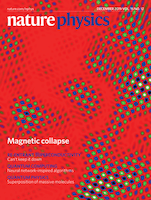
Nature Physics
Illuminating the Path of Modern Physics DiscoveriesNature Physics is a premier journal dedicated to publishing high-impact research in the realm of physics, brought to you by the esteemed NATURE PORTFOLIO. With its ISSN 1745-2473 and E-ISSN 1745-2481, this journal has established itself as a vital resource for the physics community, enjoying a remarkable Q1 quartile ranking in the Physics and Astronomy category for 2023 and securing an impressive Rank #5/243 and a 98th percentile ranking in Scopus. Since its inception in 2005, Nature Physics has become a catalyst for innovation, featuring cutting-edge research that encompasses a broad spectrum of physics disciplines. Although it operates under traditional subscription models, it maintains a commitment to accessibility through selective publications and editorial excellence. Positioned in Berlin, Germany, this journal is a must-read for researchers, professionals, and students who seek to stay at the forefront of advancements in physics.
JOURNAL OF THE KOREAN PHYSICAL SOCIETY
Connecting Innovators in Physical ScienceJOURNAL OF THE KOREAN PHYSICAL SOCIETY is a prominent academic journal dedicated to advancing the field of physics, published by the prestigious Korean Physical Society. With its extensive contribution to the scientific community since its inception in 1996, this journal serves as an essential platform for the dissemination of innovative research findings in various branches of physical science. Despite its current categorization in Q4 and a ranking reflecting its early-stage impact relative to peers, it remains a valuable resource for researchers, professionals, and students eager to explore developments in general physics and astronomy. The journal is accessible in both print and electronic formats, making it convenient for a global audience. Each issue aims to foster collaboration and knowledge-sharing within the field, ensuring that it remains relevant and instrumental in shaping future research directions. Located in South Korea, the journal continues to nurture a vibrant academic community, contributing to the ongoing dialogue in the global scientific arena.
ANNALEN DER PHYSIK
Exploring the Frontiers of Physics and AstronomyANNALEN DER PHYSIK, a prestigious journal published by WILEY-V C H VERLAG GMBH, stands as a cornerstone of the field of physics and astronomy since its inception in 1799. With an ISSN of 0003-3804 and an E-ISSN of 1521-3889, this journal provides a platform for innovative research and critical discourse across various domains of physics. Annalen der Physik is currently ranked in the Q2 category for general physics and astronomy, occupying rank #76 out of 243 in Scopus, placing it within the 68th percentile. This indicates its significant impact and the quality of research it publishes. Although the journal does not offer Open Access options, its robust historical lineage and ongoing contributions ensure that it continues to be an essential resource for researchers, professionals, and students alike. For those seeking to stay at the forefront of contemporary physics research, ANNALEN DER PHYSIK represents a vital source of knowledge, innovation, and scholarly communication.

Condensed Matter
Pioneering Discoveries in Condensed Matter ScienceCondensed Matter is a leading open-access journal dedicated to the diverse and dynamic field of condensed matter physics, published by MDPI since 2016. With its base in Switzerland, the journal aims to present a platform for researchers and professionals to share innovative findings and advancements in areas such as electronic, optical, and magnetic materials. As of 2023, it is ranked in the Q3 category for both condensed matter physics and electronic, optical, and magnetic materials, a testament to its relevance and growth within the scientific community. Researchers will find valuable insights through its accessible format, fostering collaboration and knowledge dissemination within this interdisciplinary field. With a commitment to enhancing the global dialogue in condensed matter studies, Condensed Matter invites contributions that explore theoretical and experimental approaches, thus pushing the boundaries of understanding in this crucial area of science.
EPL
Shaping Tomorrow's Physics Through Collaborative ResearchEPL, a prominent journal published by IOP Publishing Ltd, stands at the forefront of the field of Physics and Astronomy. With a history of impactful contributions stretching from 1986 to 2024, EPL serves as a dynamic platform for researchers to disseminate their pioneering findings and innovative ideas. The journal, with a current category ranking of Q2 among its peers and a competitive Scopus rank of #101 out of 243 in the general physics and astronomy category, reflects its substantial reputation and contribution to the scientific community. Although it operates under a traditional subscription model, EPL's reach is extensive, enabling access to a diverse readership that includes academicians, industry professionals, and students alike. By fostering interdisciplinary collaboration and promoting rigorous research, EPL continues to play a vital role in shaping the future of physics and astronomy.

Physical Review Research
Showcasing the best in rigorous physics research.Physical Review Research, published by the American Physical Society, is a premier open access journal dedicated to the dissemination of high-quality research across all areas of physics and astronomy. Since its inception in 2019, this journal has quickly established itself as a vital platform for researchers, achieving a prestigious Q1 ranking in the dynamics of Physics and Astronomy (miscellaneous) and holding a commendable position in the Scopus Rankings with a rank of #29 out of 243, placing it in the 88th percentile. With the commitment to fostering scientific collaboration and transparency, Physical Review Research offers unrestricted access to valuable findings, enabling researchers, professionals, and students alike to engage with cutting-edge contributions in general physics and astronomy. As it converges into its forthcoming years of publication, the journal remains dedicated to showcasing rigorous research and innovative ideas that drive the field forward.
INDIAN JOURNAL OF PHYSICS
Elevating Physics Discourse Across BordersINDIAN JOURNAL OF PHYSICS, published by the Indian Association for Cultivation of Science, serves as a pivotal platform for researchers and scholars in the field of physics and astronomy. With its ISSN 0973-1458 and E-ISSN 0974-9845, this journal is committed to presenting innovative research and developments across diverse topics in physics, covering both theoretical and experimental studies. The journal has made its mark in the academic community, evidenced by its classification in the Q3 category within the Physics and Astronomy domain as of 2023, and ranks #100 out of 243 in the Scopus curated database, placing it in the 59th percentile. Spanning from 2005 to 2024, the INDIAN JOURNAL OF PHYSICS aims to foster knowledge exchange and stimulate discussions among physicists and scientific enthusiasts. Whether you are a researcher looking to publish your findings, a professional seeking updates in your field, or a student eager to explore varying aspects of physics, this journal is an invaluable resource contributing significantly to the understanding and advancement of physics in India and beyond.
EUROPEAN PHYSICAL JOURNAL B
Bridging Theory and Application in Condensed Matter ScienceEUROPEAN PHYSICAL JOURNAL B (ISSN: 1434-6028, E-ISSN: 1434-6036), published by Springer, is a prominent international journal based in Germany that focuses on the fields of Condensed Matter Physics and Electronic, Optical and Magnetic Materials. With a converged publication timeline from 1998 to 2024, it caters to a diverse audience that includes researchers, professionals, and students striving for the latest advancements in these vital areas of physics. The journal is recognized with a Q3 ranking in both relevant categories for 2023, showcasing its solid yet notable standing within the academic community. Although currently without an H-index, its Scopus rankings reflect a percentile performance of 41st and 39th, respectively, indicating a growing influence among its peers. The journal offers open access options, ensuring that groundbreaking research is widely accessible and contributes to the collective knowledge within the scientific domain. By aiming to publish high-quality, well-researched articles, the EUROPEAN PHYSICAL JOURNAL B plays a crucial role in disseminating innovative findings and fostering collaboration in the field of physics.
JOURNAL OF STATISTICAL PHYSICS
Exploring the intricate dance of statistics and physics.The Journal of Statistical Physics, published by Springer, is a premier academic journal that has made significant contributions to the fields of Mathematical Physics and Statistical and Nonlinear Physics since its inception in 1969. With a strong reputation reflected in its 2023 rankings—placing it in Q2 of both categories and achieving an impressive Scopus rank of #22 in Mathematical Physics and #25 in Statistical and Nonlinear Physics—this journal serves as a vital platform for researchers, professionals, and students. The impact factor of the journal underscores its importance in disseminating cutting-edge research and theoretical developments. Authors are invited to submit original research articles that explore the intricate complexities of statistical mechanics, quantum physics, and related disciplines, fostering deep insights and academic discourse. Although the journal does not currently offer open access, its robust editorial standards and commitment to advancing knowledge make it an essential resource for those engaged in these dynamic fields.