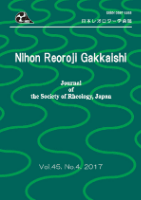
NIHON REOROJI GAKKAISHI
metrics 2024
Pioneering Research in Mechanical Engineering and Rheology
Introduction
NIHON REOROJI GAKKAISHI is an esteemed journal published by the SOC RHEOLOGY, JAPAN, dedicated to advancing the field of rheology and its applications within condensed matter physics, materials science, and mechanical engineering. Since its inception in 1973, this journal has contributed significantly to the global discourse on fundamental and applied research, boasting a comprehensive coverage of innovative studies and breakthroughs up to 2024. Although it currently does not offer open access, it maintains a respected presence with a HIndex that reflects its historical impact and relevance. The journal is categorized in the Q3 quartile across several fields, indicating its essential contributions in these domains among a competitive cohort. With ranking positions of #454 in Mechanical Engineering and #334 in Condensed Matter Physics in Scopus, NIHON REOROJI GAKKAISHI remains an invaluable resource for researchers, professionals, and students aiming to explore and contribute to the ever-evolving landscape of materials science and engineering.
Metrics 2024
 0.311.300.9019
Metrics History
Rank 2024
Scopus
IF (Web Of Science)
JCI (Web Of Science)
Quartile History
Similar Journals
PHYSICS OF FLUIDS
Connecting Theory and Application in Fluid DynamicsPHYSICS OF FLUIDS is a premier journal published by AIP Publishing that serves as a vital resource for the fluid mechanics community. With an impressive impact factor and a consistent ranking in the Q1 quartile across multiple related disciplines—including Computational Mechanics, Condensed Matter Physics, Fluid Flow and Transfer Processes, Mechanical Engineering, and Mechanics of Materials—this journal is renowned for disseminating high-quality research in the dynamic field of fluid dynamics. Covering a wide range of topics, from fundamental fluid mechanics to advanced computational modeling, PHYSICS OF FLUIDS plays a crucial role in advancing understanding and fostering innovation in both academic and industrial applications. With its strong reputation and significant readership, this journal is essential for researchers, professionals, and students seeking to stay updated on the latest developments in fluid physics.

INTERNATIONAL APPLIED MECHANICS
Innovating Solutions for Real-World Mechanical ChallengesINTERNATIONAL APPLIED MECHANICS, published by Springer, is a pivotal journal within the realm of Mechanical Engineering and Mechanics of Materials. With an ISSN of 1063-7095 and an E-ISSN of 1573-8582, this journal serves as a vital resource for researchers and professionals seeking to stay at the forefront of applied mechanics from 1992 to 2024. Although currently categorized in Q4, with a Scopus ranking reflecting its evolving impact (479 out of 672 in Mechanical Engineering and 303 out of 398 in Mechanics of Materials), the journal continually strives to publish innovative research that bridges theoretical concepts and practical applications in mechanics. Notably, it does not offer Open Access, allowing for a focused distribution amongst scholars and institutions. The journal's contributions are essential for advancing knowledge, fostering collaboration, and enhancing education in the diverse fields of engineering mechanics.
RHEOLOGICA ACTA
Unraveling the Complexities of Material BehaviorRHEOLOGICA ACTA, established in 1958 and published by Springer, is a premier journal dedicated to advancing the understanding of rheological behavior in materials. With an impressive impact factor reflected in its Q2 rankings across multiple disciplines, including Condensed Matter Physics, Materials Science, and Mechanics of Materials, this journal serves as an essential resource for researchers, professionals, and students alike. As a key publication in its field, RHEOLOGICA ACTA disseminates high-quality research articles, reviews, and case studies that contribute to the understanding of complex fluid behavior and material properties. Though it operates under a subscription model, the depth and breadth of the content it provides ensures that it remains a vital part of the academic dialogue surrounding materials science and engineering. For those seeking to deepen their expertise, RHEOLOGICA ACTA is indispensable, fostering innovation and progress in the ever-evolving landscape of material characterization and application.

MATERIALS SCIENCE-POLAND
Advancing the Frontiers of Materials ScienceMATERIALS SCIENCE-POLAND, published by SCIENDO, is an esteemed open access journal dedicated to the rapidly evolving field of materials science. Since its inception in 2002 and transitioning to an open access model in 2015, the journal has been a vital platform for researchers and professionals to disseminate their findings and contribute to the scientific community. With an ISSN of 2083-134X and an E-ISSN of 2083-134X, it spans a comprehensive range of disciplines, focusing on condensed matter physics, materials science, and mechanical engineering among others. In the 2023 rankings, it holds a position in the Q4 and Q3 quartiles across various categories, showcasing its relevance and ongoing contribution to these fields. Researchers benefit from its accessibility, enabling wider reach and engagement with contemporary topics in material innovation and applications. As the journal continues to evolve until 2024, it remains a cornerstone for scholars looking to advance their knowledge and research in materials science.
JOURNAL OF ELASTICITY
Elevating Knowledge in Elasticity Across DisciplinesJOURNAL OF ELASTICITY is a prestigious peer-reviewed journal dedicated to the study and advancement of the field of elasticity and its numerous applications across various disciplines. Published by SPRINGER, and located in the Netherlands, this journal has been a key resource since its inception in 1971, providing critical insights and developments up through 2024. With a commendable impact factor and categorized within the Q2 quartile in areas such as Materials Science, Mechanical Engineering, and Mechanics of Materials, the journal maintains a significant standing in the academic community. Researchers and professionals will find a wealth of knowledge through advanced theoretical and experimental studies published within its pages, contributing to both foundational understanding and practical applications. While currently not an open access publication, the JOURNAL OF ELASTICITY remains an essential platform for innovative research and discussions that shape the future of mechanical sciences.
Journal of the Mechanical Behavior of Biomedical Materials
Pioneering Research at the Intersection of Engineering and MedicineJournal of the Mechanical Behavior of Biomedical Materials is a leading academic publication dedicated to the intersection of mechanical engineering and biomedical innovation. Published by ELSEVIER in the Netherlands, this journal, which holds a solid presence within Q2 in Biomaterials and Biomedical Engineering, and Q1 in Mechanics of Materials as of 2023, features high-impact research with a measurable Scopus ranking that places it in the top tier of its fields. With an impressive percentile performance—82nd in Mechanics of Materials and 73rd in Biomedical Engineering—this journal serves as a vital resource for researchers, students, and professionals seeking to enrich their understanding of the mechanical behaviors of biomaterials and their applications. Spanning converged years from 2008 to 2024, it provides access to a wealth of pioneering research that advances the knowledge essential for the development of innovative biomedical applications. Engage with cutting-edge studies and broaden your expertise in the rapidly evolving realms of biomaterials and biomedical engineering through this authoritative publication.

Extreme Mechanics Letters
Exploring the Frontiers of Mechanical ScienceExtreme Mechanics Letters is a distinguished scholarly journal published by Elsevier, focusing on advanced insights in the realms of bioengineering, mechanical engineering, chemical engineering, and mechanics of materials. With an impressive Q1 ranking in multiple categories and a strong representation in Scopus, this journal serves as a vital platform for researchers aiming to disseminate pioneering findings in extreme mechanics. Since its inception in 2014, the journal has rapidly established itself as a leading publication within its field, attracting high-quality manuscripts that push the boundaries of current understanding. As an important resource for professionals and scholars alike, Extreme Mechanics Letters provides valuable insights critical for driving innovation in engineering disciplines. While the journal currently operates on a subscription-based access model, it remains committed to fostering scholarly communication across the globe, ensuring that cutting-edge research reaches its intended audience.
INTERNATIONAL JOURNAL OF ENGINEERING SCIENCE
Unveiling Breakthroughs in Mechanical Engineering and BeyondInternational Journal of Engineering Science, published by Pergamon-Elsevier Science Ltd in the United Kingdom, stands as a premier platform for pioneering research in the diverse fields of engineering and materials science. Since its inception in 1963, this journal has consistently demonstrated its commitment to advancing academic discourse, maintaining an impressive trajectory that positions it in the Q1 category across multiple engineering disciplines including Mechanical Engineering and Mechanics of Materials as of 2023. With notable Scopus rankings—placing it in the top 5% percentile for Mechanical Engineering and related fields—this journal attracts high-quality, impactful research designed for both industry practitioners and academic scholars. Although it does not currently offer Open Access options, its readership is enriched by comprehensive peer-reviewed articles, fostering a deeper understanding of complex engineering problems and innovative solutions. The International Journal of Engineering Science continues to be an invaluable resource for researchers, professionals, and students committed to pushing the boundaries of knowledge in engineering and materials science.
Journal of Mathematical and Fundamental Sciences
Bridging theory and application in mathematical sciences.Journal of Mathematical and Fundamental Sciences, published by INST TEKNOLOGI BANDUNG, serves as an essential platform for disseminating research findings in the diverse fields of mathematical and fundamental sciences. With an ISSN of 2337-5760 and recognized as an Open Access journal since 2013, this publication promotes global accessibility to innovative research, fostering collaboration among researchers, professionals, and students in Indonesia and beyond. The journal has demonstrated its influence within the academic community, evidenced by its classification in various quartiles for 2023, including Q3 in Agricultural and Biological Sciences and Mathematics, and Q4 rankings in several other disciplines. Furthermore, it holds respectable Scopus ranks across numerous categories, reflecting its commitment to quality and relevance in research contributions. With a focus on multidisciplinary studies, the Journal of Mathematical and Fundamental Sciences is dedicated to advancing knowledge and inspiring new ideas across a spectrum of scientific inquiries.
JOURNAL OF RHEOLOGY
Shaping the Future of Rheological ResearchJOURNAL OF RHEOLOGY, published by the SOCIETY OF RHEOLOGY, is a premier academic journal that has been disseminating significant research in the field of rheology since its inception in 1957. With a focus on the behavior of complex fluids and soft materials, this journal plays a crucial role in bridging the disciplines of Condensed Matter Physics, Materials Science, and Mechanical Engineering. Its esteemed ranking in the top quartile (Q1) of multiple categories highlights its impact, particularly in Mechanical Engineering and Mechanics of Materials. Researchers and professionals can benefit from the comprehensive studies published within its pages, which combine theoretical insights with practical applications in diverse industries. Although it does not offer open access, the journal remains a vital resource for those seeking cutting-edge developments and discussions in rheology. The editorial office is located in Japan, under the guidance of Ralph H. Colby at Pennsylvania State University, ensuring a strong academic foundation and international collaboration. The JOURNAL OF RHEOLOGY continues to shape the future of rheological research, making it an essential part of any scholar's library.