
NONLINEAR ANALYSIS-THEORY METHODS & APPLICATIONS
Scope & Guideline
Advancing the Frontiers of Nonlinear Analysis
Introduction
Aims and Scopes
- Nonlinear Partial Differential Equations (PDEs):
The journal emphasizes the study of nonlinear PDEs, exploring existence, uniqueness, stability, and regularity of solutions under various conditions and boundary value problems. - Variational Methods and Optimization:
A significant aspect of the journal's contributions involves variational techniques and optimization problems, particularly in the context of nonlinear functionals and energy minimization. - Geometric Analysis and Differential Geometry:
Research on geometric properties related to nonlinear equations, including curvature flows, geometric inequalities, and their implications in various mathematical settings. - Mathematical Modelling:
The journal publishes work that applies nonlinear analysis to real-world problems, including fluid dynamics, chemotaxis, and phase transitions, bridging the gap between theoretical mathematics and practical applications. - Functional Analysis and Operator Theory:
It also explores functional spaces, operator theory, and their interplay with nonlinear analysis, focusing on boundedness, compactness, and spectral properties.
Trending and Emerging
- Nonlocal and Fractional Calculus:
There is a growing interest in nonlocal and fractional calculus, particularly in the context of PDEs, where researchers explore the effects of nonlocal interactions and fractional derivatives on solutions. - Complex Systems and Dynamics:
Research on complex systems, including interactions in multi-species models and dynamical systems, is trending, highlighting the interdisciplinary nature of nonlinear analysis. - Stochastic and Random Processes:
An increase in studies involving stochastic processes, particularly in relation to nonlinear equations, is evident, reflecting a broader incorporation of randomness into mathematical models. - Machine Learning and Data-Driven Methods:
Emerging themes include the application of nonlinear analysis in machine learning and data-driven approaches, focusing on optimization problems and the behavior of neural networks. - Geometric and Topological Methods:
There is a rising trend in the application of geometric and topological methods to nonlinear analysis, particularly in understanding the structure and properties of solutions to nonlinear equations.
Declining or Waning
- Classical Linear PDEs:
There has been a notable decrease in publications focused on classical linear PDEs, as the community shifts towards more complex nonlinear problems that challenge existing theories. - Elementary Functional Inequalities:
Research in basic functional inequalities, such as those without nonlocal or complex structures, appears to be less prevalent, indicating a potential shift towards more sophisticated inequalities. - Basic Stability Results:
The journal has seen fewer contributions addressing foundational stability results for classical systems, as more research is oriented towards advanced stability phenomena in nonlinear contexts.
Similar Journals

Space
Illuminating the Intersections of Creativity and SpaceSpace is a distinguished journal within the realms of Visual Arts and Architecture, published by the reputable SPACE MAGAZINE. Although its coverage in major indexing databases such as Scopus has ceased since 2016, the journal played a significant role from its inception in 2008, contributing valuable insights during its publication years. Featuring a broad interdisciplinary approach, Space explored the intersections of artistic and architectural expression, offering a platform for researchers and practitioners to exchange innovative ideas. The journal's impact within the field of Arts and Humanities is reflected in its Scopus rankings, where it holds significant positions, albeit with lower percentiles, in both relevant categories. Although it currently does not offer open access, the journal remains a reference point for scholars interested in the evolving dynamics of space in the arts. As such, Space continues to be an essential resource for individuals who strive to understand and explore the relationship between human creativity and spatial design.

Communications in Analysis and Mechanics
Connecting researchers to inspire the future of mathematical sciences.Communications in Analysis and Mechanics is a pioneering journal published by the AMER INST MATHEMATICAL SCIENCES (AIMS), dedicated to advancing the fields of mathematics, engineering, and applied sciences. With its recent transition to Open Access in 2023, the journal aims to enhance the dissemination of high-quality research by fostering a collaborative environment for researchers, professionals, and students. Operating from the United States, this journal embraces a broad scope encompassing geometry, optimization, and mechanics, ensuring a comprehensive platform for innovation and critical discourse. Despite its nascent status, it features competitive Scopus rankings in various disciplines, notably achieving a percentile around 7th to 13th, indicative of its growing impact among peers. The editorial team is committed to publishing original research that addresses significant challenges and developments within the mathematical sciences, facilitating a vital exchange of ideas and methodologies.
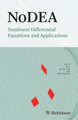
NODEA-NONLINEAR DIFFERENTIAL EQUATIONS AND APPLICATIONS
Transforming Theory into Practice in Nonlinear MathematicsNODEA-NONLINEAR DIFFERENTIAL EQUATIONS AND APPLICATIONS, published by Springer International Publishing AG, is a premier journal dedicated to the dynamic field of nonlinear differential equations and their diverse applications. With an ISSN of 1021-9722 and an E-ISSN of 1420-9004, NODEA has established itself as a key resource for researchers and professionals striving to advance the understanding and practical implementation of mathematical theories. As evidenced by its prestigious Q1 ranking in both Analysis and Applied Mathematics for 2023, the journal stands at the forefront of academic inquiry, fostering innovation and collaboration among mathematicians. With coverage spanning from 1994 to 2024, NODEA not only reflects historical advancements but is also pivotal in shaping future research trajectories. While it currently does not offer Open Access, the journal ensures access to groundbreaking studies amidst a global academic landscape, advocating for the dissemination of knowledge that addresses complex real-world challenges. The journal's ongoing commitment to excellence makes it an essential read for anyone keen on exploring the profound implications of nonlinear dynamics in mathematics.
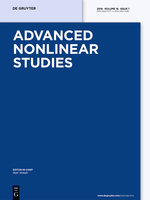
ADVANCED NONLINEAR STUDIES
Pioneering Insights in Mathematics and PhysicsADVANCED NONLINEAR STUDIES is a premier academic journal dedicated to the exploration of nonlinear phenomena across various scientific disciplines, particularly within the fields of mathematics and statistical physics. Published by De Gruyter Poland Sp. z o.o., this journal has established itself as a significant resource for researchers and practitioners alike since its inception in 2001. With an impressive Q1 ranking in both mathematics and statistical/nonlinear physics, it remains at the forefront of innovative research, providing open access to its content since 2022, thus ensuring a wide dissemination of groundbreaking findings. In the latest Scopus rankings, it boasts excellent standing, placing it in the top 16% for general mathematics and in the upper tier for statistical and nonlinear physics. The journal aims to foster scientific discourse and collaboration, making it an essential platform for advancing knowledge and understanding in nonlinear studies. Located in Warsaw, Poland, ADVANCED NONLINEAR STUDIES continues to attract contributions from a global network of scholars, making it a vital hub for contemporary research in this dynamic field.
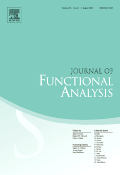
JOURNAL OF FUNCTIONAL ANALYSIS
Shaping the Future of Analysis through Rigorous ResearchThe JOURNAL OF FUNCTIONAL ANALYSIS, published by Academic Press Inc Elsevier Science, stands as a premier platform in the field of analysis, encompassing a broad spectrum of topics pertinent to functional analysis and its applications. With an impressive impact factor and categorized in Q1 for the year 2023, it ranks as one of the top journals in Mathematics (Analysis), placing it in the 77th percentile among its peers. This journal, founded in 1967, continues to provide researchers, professionals, and students with cutting-edge insights, rigorous publications, and a vibrant forum for scholarly discourse. The journal remains committed to advancing knowledge in the discipline and fostering an environment that encourages innovation and collaboration. Although it does not offer open access options, its high standards for publication ensure that each issue is replete with high-quality research that significantly contributes to the field. The journal's comprehensive coverage aligns well with the evolving landscape of functional analysis, making it an indispensable resource for anyone seeking to deepen their understanding and engage with current trends in this essential area of mathematics.

Journal of Mathematical Analysis
Empowering Researchers Through Open Access InsightsThe Journal of Mathematical Analysis, published by UNIV PRISHTINES in Serbia, offers a dedicated platform for the dissemination of innovative research in the fields of mathematical analysis and applied mathematics. With an ISSN of 2217-3412 and a convergence period from 2020 to 2024, this journal aims to foster significant advancements in both theoretical and practical aspects of mathematics. Categorized in the Q4 quartile for Analysis, Applied Mathematics, and miscellaneous Mathematics as of 2023, it serves as an essential resource for researchers and professionals alike, providing key insights into the evolving landscape of mathematical inquiry. Although it is an open access journal, facilitating global readership, its Scopus rankings reflect its emerging status, with rankings indicating a 51st percentile in Mathematics (miscellaneous) and 28th percentile in Applied Mathematics. This journal not only aims to contribute to academic discourse but also seeks to bridge gaps between mathematical theory and real-world applications, making it a vital resource for students and professionals engaged in the complexities of mathematical research.

NONLINEARITY
Advancing Insights in Nonlinear ScienceNONLINEARITY is a premier academic journal published by IOP Publishing Ltd, dedicated to advancing the field of complex systems through the lens of nonlinear science. Since its inception in 1988, the journal has established itself as a vital resource for researchers and professionals alike, offering a robust platform for disseminating high-quality research in areas such as applied mathematics, mathematical physics, and statistical and nonlinear physics. With an impressive Q1 ranking across multiple pertinent categories, including Applied Mathematics and Mathematical Physics, NONLINEARITY ranks among the top journals globally, making it essential reading for those seeking to deepen their understanding of nonlinear phenomena. Although it does not operate under an open-access model, its rich repository of rigorous articles significantly contributes to academia, fostering innovative thought and facilitating cutting-edge research. Located in the heart of the United Kingdom at TEMPLE CIRCUS, TEMPLE WAY, BRISTOL BS1 6BE, NONLINEARITY continues to be at the forefront of the scientific community, championing new discoveries and interdisciplinary dialogue within its dynamic scope.

Dynamics of Partial Differential Equations
Pioneering Insights in Applied MathematicsDynamics of Partial Differential Equations is a prestigious peer-reviewed journal published by INT PRESS BOSTON, INC in the United States, specializing in the intricate and innovative field of partial differential equations (PDEs). With an ISSN of 1548-159X, this journal has become an invaluable resource for researchers, professionals, and students alike since its inception in 2007. The journal is recognized for its rigorous scholarship, as indicated by its 2023 category quartiles, achieving Q1 status in Analysis and Q2 in Applied Mathematics. The Scopus rankings further affirm its relevance, placing it within the top half of its field. While the journal operates under a subscription model, it remains a vital platform for disseminating cutting-edge research that addresses both theoretical and applied aspects of differential equations, contributing significantly to advancements in mathematics and related disciplines. It serves as a meeting ground for researchers dedicated to exploring the dynamic and evolving nature of PDEs, fostering collaboration and innovation within the academic community.
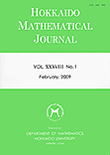
Hokkaido Mathematical Journal
Exploring the depths of mathematics for a brighter future.Hokkaido Mathematical Journal, published by Hokkaido University, Department of Mathematics, stands as a pivotal platform for scholarly discourse in the field of mathematics. Established in 1972, this peer-reviewed journal has consistently contributed to the advancement of mathematical research, covering a wide spectrum of topics within the discipline. With its current ranking in the third quartile (Q3) among miscellaneous mathematics journals, it offers valuable insights and findings that cater to both established researchers and budding mathematicians alike. The journal is accessible through traditional subscription, fostering a community that values rigorous theoretical exploration and applied mathematical methods. As it approaches its convergence year in 2024, Hokkaido Mathematical Journal remains essential for those dedicated to pushing the boundaries of mathematical knowledge and innovation in Japan and beyond.

COMMUNICATIONS ON PURE AND APPLIED ANALYSIS
Elevating the Standards of Mathematical ScholarshipCOMMUNICATIONS ON PURE AND APPLIED ANALYSIS, published by the American Institute of Mathematical Sciences (AIMS), is a pivotal journal that serves the fields of pure and applied mathematics. With an ISSN of 1534-0392 and an E-ISSN of 1553-5258, this journal showcases rigorous research findings that span a myriad of topics within mathematical analysis and its applications. Given its impressive Q2 ranking in both Analysis and Applied Mathematics categories, it is recognized for its significant contributions, ranking 92nd out of 193 in Analysis and 369th out of 635 in Applied Mathematics according to Scopus. The journal, running continuously from 2004 to 2024, invites submissions that push the boundaries of mathematical thought and practice. While it operates under a traditional access model, the journal's comprehensive scope and burgeoning impact factor underscore its importance for researchers, professionals, and students who seek to engage deeply with current mathematical advancements.