
Nordicom Review
Scope & Guideline
Connecting Researchers to the Future of Communication Studies
Introduction
Aims and Scopes
- Media and Communication Studies:
The journal emphasizes interdisciplinary research in media and communication, exploring how media influences societal relationships and individual behaviors across various contexts. - Political Communication:
A core area of focus is political communication, particularly how media shapes political discourse, influences public opinion, and impacts democratic processes in Nordic countries. - Digital Media and Technology:
The journal investigates the implications of digital media and technology on society, including user interactions, digital engagement, and the transformative effects of social media. - Cultural Narratives and Identity:
Research often addresses cultural narratives and identity formation, examining how media representations affect social perceptions and collective identities within the Nordic context. - Media Policy and Ethics:
Nordicom Review also delves into media policy, ethics, and the implications of media practices, contributing to discussions on media regulation and the role of journalism in democracy.
Trending and Emerging
- Digital Polarisation and Fragmentation:
There is a growing focus on themes of digital polarisation and fragmentation, exploring how media consumption patterns contribute to societal divisions and political polarization. - Impact of Social Media on Politics:
Research increasingly examines the role of social media in political communication, particularly how platforms shape political discourse and citizen engagement. - Health Communication:
Emerging themes in health communication, especially in the context of crises like the Covid-19 pandemic, highlight the importance of media in shaping public health narratives and responses. - User-Centric Media Studies:
An increase in studies focusing on user experiences and interactions with media reflects a broader trend towards understanding media consumption through the lens of user agency and engagement. - Media and Environmental Issues:
There is a rising interest in how media addresses environmental challenges, particularly the role of media in shaping public perceptions and discourses around sustainability and climate change.
Declining or Waning
- Traditional Journalism Practices:
There is a noticeable decline in research focused on traditional journalism practices, possibly due to the rise of digital media and changing consumption habits that prioritize new forms of media engagement. - Niche Media Studies:
Studies centered on niche or alternative media sources have seen a reduction, suggesting a shift towards broader analyses of mainstream media and its societal impacts. - Historical Media Analysis:
Research focused on historical analyses of media practices and representations seems to be waning, as contemporary issues and their immediate implications take precedence.
Similar Journals

Revista de Comunicacion-Peru
Exploring the Frontiers of Communication Studies.Revista de Comunicación-Perú is a distinguished open-access journal published by Universidad de Piura, with a dedicated focus on communication studies. Since its inception in 2002, the journal has provided a vital platform for researchers, professionals, and students to disseminate knowledge and foster discourse in the field of communication. As of 2023, it proudly holds a Q1 classification in the Communication category and ranks impressively in Scopus, placing at #117 out of 1304 in Cultural Studies and #160 out of 511 in Communication, demonstrating its significant impact within the academic community. The journal’s scope encompasses diverse topics related to communication, cultural discourse, and media analysis, making it an essential resource for those seeking to explore contemporary issues in these areas. With a commitment to promoting scholarly exchange, Revista de Comunicación-Perú continues to play a pivotal role in shaping the communication landscape in Peru and beyond.
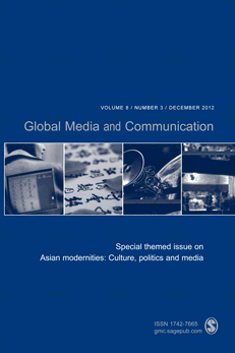
Global Media and Communication
Navigating the Future of Global Communication StrategiesGlobal Media and Communication is a premier journal dedicated to advancing the fields of media and communication studies, published by SAGE Publications Ltd. With an ISSN of 1742-7665 and an E-ISSN of 1742-7673, this journal offers a platform for scholarly discourse and innovative research that explores the intricate relationships between global media practices and communication strategies. Recognized as a Q1 journal in both the Arts and Humanities (Miscellaneous) and Communication categories for 2023, it stands out in its commitment to delivering high-quality, peer-reviewed articles that contribute to the understanding of contemporary media landscapes. Located in London, United Kingdom, the journal benefits from being at the heart of cultural and digital innovation. Researchers, professionals, and students can look forward to insightful articles that not only critique existing frameworks but also propose new methodologies, ensuring that Global Media and Communication remains a vital resource for anyone interested in navigating the evolving dynamics of media and communication on a global scale.

International Journal of Communication
Bridging theory and practice in communication studies.International Journal of Communication, published by USC Annenberg Press, is a premier open access journal dedicated to advancing the field of communication studies. Since its inception in 2007, the journal has provided a vital platform for researchers, professionals, and students to engage with cutting-edge research, theoretical frameworks, and empirical studies. With an impressive Q1 quartile ranking in Communication for 2023 and a notable Scopus rank of 156 out of 511 in the Social Sciences Communication category, the journal consistently contributes to high-quality scholarly discourse. It covers a wide array of topics, making it a crucial resource for those looking to stay informed about the latest developments in communication research. The journal's commitment to open access enhances its reach and impact, fostering a global community of academics and practitioners dedicated to exploring the complexities of communication in contemporary society. This makes the International Journal of Communication an essential read for anyone interested in understanding the dynamics of communication today.

Revista Comunicacao Midiatica
Unveiling Insights into Media's Impact on SocietyRevista Comunicação Midiática is a prominent academic journal focusing on the fields of communication, media studies, and cultural dynamics, published by Universidade Estadual Paulista Júlio Mesquita Filho, Facility of Architecture, Arts & Communication. With its ISSN 2236-8000, this journal aims to disseminate innovative research, theoretical advancements, and practical insights that contribute to a deeper understanding of communication processes in contemporary society. Although it currently does not provide Open Access options, the journal serves as a valuable resource for researchers, professionals, and students who are keen to explore the intricate relationships between media and culture. Located in Bauru, Brazil, the journal is committed to fostering multidisciplinary dialogue and enhancing scholarly discourse, making it an invaluable addition to the academic landscape in the realm of media studies.
Popular Communication
Navigating the Evolving Landscape of CommunicationPopular Communication, published by Routledge Journals, Taylor & Francis Ltd, is a leading academic journal in the field of Communication, recognized for its Q1 ranking in the 2023 Scopus category. With an ISSN of 1540-5702 and an E-ISSN of 1540-5710, this journal has been converging significant research from 2010 to 2024, highlighting contemporary trends and evolving dynamics in popular communication practices. The journal is based in the United Kingdom and focuses on the intersection of media, culture, and communication, making it a vital resource for researchers, professionals, and students interested in understanding the impact of communication in society today. Although it does not offer Open Access options, it remains a cornerstone for scholarly discourse, with an impressive rank of #96 out of 511 in Social Sciences Communication, placing it in the 81st percentile. Contributions to this journal play a critical role in advancing knowledge and encouraging further scholarship in the diverse realm of popular communication.

Tripodos
Unveiling Insights in Contemporary CommunicationTripodos is a prominent open-access journal published by UNIV RAMON LLULL, FAC CIENCIES COMUNICACIO BLANQUERNA in Spain, dedicated to advancing the field of communication studies since its establishment. With an ISSN of 1138-3305 and an E-ISSN of 2340-5007, Tripodos has gained recognition for publishing high-quality research articles that examine diverse aspects of communication in contemporary society. The journal has successfully transitioned to open access since 2006, ensuring that its valuable contributions are readily available to a global audience. As of 2023, Tripodos holds a Q3 ranking in the Communication category according to Scopus, reflecting its growing influence within the academic community, ranking 187 out of 511 journals and positioning itself in the 63rd percentile. This journal serves as an essential platform for researchers, professionals, and students who are eager to explore the dynamic field of communication and its impact on society.

Journal of African Media Studies
Illuminating the African Media Landscape.Journal of African Media Studies, published by INTELLECT LTD, stands at the forefront of communication research, focusing on the rich tapestry of media practices and theories across the African continent. Since its inception in 2011, this peer-reviewed journal has dedicated itself to exploring the intricate relationships between media, culture, and society in Africa, contributing significantly to the global discourse on communication. With an impressive impact factor positioning it in Q2 of the Communication category for 2023, and ranking #218 out of 511 in the Scopus Social Sciences Communication field, it offers a rigorous platform for scholars and practitioners alike. The journal's commitment to quality research is evident in its robust editorial process and its regular publication of articles that delve into contemporary issues affecting African media landscapes. Despite being a subscription-based journal, it attracts an engaged readership interested in accessing critical insights and advancing knowledge in media studies. As it converges its timeline towards 2024, Journal of African Media Studies continues to be an essential resource for researchers, professionals, and students eager to contribute to and explore the evolving narratives of African media.
Perspectivas de la Comunicacion
Advancing Knowledge Through Open Access ResearchPerspectivas de la Comunicacion is an esteemed open-access academic journal published by UNIV FRONTERA, dedicated to the field of communication studies. With an ISSN of 0718-4867, the journal has established itself as a vital resource for scholars and practitioners since its inception in 2008, offering a platform for innovative research and discourse across various communication paradigms. Located in the heart of Chile at AV FRANCISCO SALAZAR, TEMUCO, this journal caters to a diverse international audience, encouraging contributions that reflect the global nature of communicative practices. While specific ranking metrics such as HIndex and Scopus Ranks are not readily available, the journal's open-access model ensures that its contributions are widely disseminated, promoting greater accessibility and engagement within the academic community. The objectives of Perspectivas de la Comunicacion include fostering critical discussion on contemporary issues in communication, highlighting interdisciplinary research, and providing a space for emerging voices in the field. This commitment to scholarly excellence positions the journal as a significant player in advancing knowledge and understanding within communication studies.
JOURNAL OF BROADCASTING & ELECTRONIC MEDIA
Shaping the Future of Broadcasting ResearchThe JOURNAL OF BROADCASTING & ELECTRONIC MEDIA, published by Routledge Journals, Taylor & Francis Ltd, is a premier academic publication in the field of communication, officially recognized in the Q1 category for its exceptional quality and impact. With a rich history dating back to 1985, this journal serves as a vital platform for innovative research and critical discussions surrounding broadcasting and electronic media, addressing contemporary issues in digital communication, media technology, and audience studies. The journal boasts an impressive Scopus rank of #73 out of 511 in the Social Sciences - Communication category, placing it within the top 15% of its field. Researchers, professionals, and students alike benefit from its insightful articles that contribute to understanding the evolving landscape of media and communication. Although it does not currently operate under an Open Access model, its rigorous peer-review process ensures that published works meet high academic standards, sustaining its reputation as a cornerstone for scholarly discourse in the media industry.
Asian Journal of Communication
Navigating the Future of Communication in AsiaThe Asian Journal of Communication, published by Routledge Journals, Taylor & Francis Ltd, is a premier scholarly platform dedicated to advancing the field of communication studies. Established in 1990 and continuing its impactful publication journey through 2024, this esteemed journal caters to a broad spectrum of interdisciplinary research, addressing critical issues in communication, media, and education in an Asian context. With an impressive impact factor and ranked in the top quartiles in both Communication (Q1) and Education (Q2), the journal is recognized for its rigorous peer-review process and its commitment to quality scholarship. Researchers, professionals, and students can access invaluable insights and innovative research trends, helping to bridge gaps and foster understanding across diverse communication practices. The journal is accessible through institutional subscriptions and promotes global discourse, making it an essential resource for anyone engaged in the vibrant field of communication.