OCEANIA
metrics 2024
Cultivating Innovative Research for Tomorrow's Scholars
Introduction
OCEANIA, published by WILEY, is a distinguished journal that has been fostering scholarly discourse in the fields of anthropology and the history and philosophy of science since its inception in 1930. With an impressive impact factor and secure positions in the Q2 quartile for both categories, OCEANIA stands out as an influential resource for researchers and professionals alike. Its latest Scopus rankings reflect its commitment to quality, placing it in the 76th percentile for history and philosophy of science and the 66th percentile for anthropology. Though it does not operate under an open access model, the journal provides robust access options for institutions and individuals to explore its rich array of peer-reviewed articles that contribute to the understanding of cultures and scientific thought across the Pacific region and beyond. As we advance toward its continued convergence into 2024, OCEANIA remains a pivotal platform for innovative research and academic debate, cultivating insights that are crucial for scholars and students navigating the complexities of these interconnected disciplines.
Metrics 2024
 0.270.400.8029
Metrics History
Rank 2024
Scopus
IF (Web Of Science)
JCI (Web Of Science)
Quartile History
Similar Journals
AMERICAN ANTHROPOLOGIST
Exploring diverse perspectives in anthropology.American Anthropologist is a prestigious journal published by Wiley, dedicated to advancing the field of anthropology. With a rich publishing history dating back to 1888, it has become a leading platform for scholarly discourse, showcasing innovative research and diverse perspectives from around the globe. The journal holds impressive ranks within its categories, being recognized as Q1 in both Anthropology and Arts and Humanities, alongside a notable Scopus ranking of #36 out of 502 in Social Sciences. Its robust impact in academia is reflected in its emphasis on interdisciplinary approaches that resonate within the fields of social science and humanities. Researchers and students alike are encouraged to contribute to this vital resource that continues to shape anthropological thought and practice. For those interested, the journal is tailored for non-open access, ensuring the curation of high-caliber scholarly work accessible to a wide audience while supporting the standards of peer-reviewed publications.
Kiva-Journal of Southwestern Anthropology and History
Connecting Cultures through Rigorous ScholarshipKiva - Journal of Southwestern Anthropology and History is a distinguished academic journal published by Routledge Journals, Taylor & Francis Ltd, that serves as a vital resource for scholars in the fields of anthropology, archaeology, and history. With an ISSN of 0023-1940 and an E-ISSN of 2051-6177, this journal has established itself as a significant avenue for scholarly communication since its inception in 1964. It consistently ranks in the top quartiles, including Q1 in Archaeology and Q2 in Anthropology, reflecting its high impact and rigorous peer-review process. Covering a wide array of topics pertinent to the Southwestern United States, Kiva invites original research articles, reviews, and methodological papers that advance understanding of the region's rich cultural heritage and historical narratives. While currently not open access, its commitment to disseminating quality research makes it an essential reading for researchers, professionals, and students aiming to explore the multifaceted dimensions of southwestern studies.

JOURNAL OF THE POLYNESIAN SOCIETY
Advancing Knowledge in Polynesian StudiesJOURNAL OF THE POLYNESIAN SOCIETY, published by Polynesian Soc Inc, is a distinguished periodical that aims to disseminate high-quality research in the fields of anthropology, archaeology, and cultural studies. With an ISSN of 0032-4000 and E-ISSN 2230-5955, this journal serves as a key resource for scholars and practitioners interested in the rich historical and cultural narratives of the Polynesian region. Since its inception, the journal has published a multitude of scholarly articles, reflecting a convergence of research from 1971 to 2022, thus establishing itself as a foundational text within its domain. The journal is indexed in notable categories with a Q4 ranking in anthropology and a Q3 in both archaeology and cultural studies as of 2023, highlighting its relevant contributions to the academic community. Moreover, its impressive Scopus ranks position it within the 80th percentile for archaeology and the 67th percentile for anthropology, showcasing its dedication to scholarly excellence. Although not an open-access publication, the journal remains a vital avenue for academic discourse and exchange, making it a significant resource for researchers, professionals, and students dedicated to understanding the diverse cultures of the Pacific Islands.
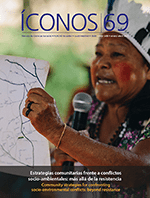
Iconos
Bridging Disciplines to Address Contemporary Social IssuesIconos is a distinguished academic journal published by FAC LATINOAMERICANA CIENCIAS SOCIALES-FLACSO in Ecuador, with an ISSN of 1390-1249 and an E-ISSN of 1390-8065. Since its inception in 1997, Iconos has proudly maintained an open-access policy, promoting accessibility and dissemination of critical research across various disciplines. With a strong focus on Anthropology, Gender Studies, and Social Sciences, this journal has achieved a commendable standing, being categorized in the Q2 quartile in 2023 across multiple categories in these fields. Notably, it ranks #199 in Anthropology and #91 in Gender Studies, placing it in the upper percentiles of academic publishing. The journal aims to foster interdisciplinary dialogue and to illuminate socio-cultural dynamics through rigorous scholarship. With its commitment to quality, research diversity, and social relevance, Iconos serves as an essential resource for researchers, professionals, and students alike, seeking to engage with contemporary social issues from a Latin American perspective.

Annual Review of Anthropology
Shaping the Future of Anthropological DiscourseAnnual Review of Anthropology is a premier journal published by Annual Reviews, dedicated to providing comprehensive and authoritative reviews in the field of anthropology. Established with the goal of synthesizing essential research findings, this influential publication not only shapes contemporary anthropological discourse but also facilitates interdisciplinary dialogue within the broader realm of social sciences and cultural studies. With an impressive impact factor that places it in the Q1 category across multiple classifications, including Anthropology and Arts and Humanities, this journal is highly regarded by researchers and academics alike. The Annual Review of Anthropology has been a trusted resource for critical insights and transformative ideas, helping to advance the understanding of human societies from 1980 to the present. Although it does not offer open access, access to its articles is available through various academic institutions, ensuring that both seasoned scholars and students can benefit from its wealth of knowledge. With a Scopus ranking placing it in the top percentiles for relevant subjects, this journal is essential reading for anyone looking to stay at the forefront of anthropological research.
Anthropological Forum
Unraveling the Threads of Human ExistenceAnthropological Forum, an esteemed journal in the field of anthropology, is published by Routledge Journals, Taylor & Francis Ltd. With an ISSN of 0066-4677 and an E-ISSN of 1469-2902, the journal has cemented its reputation for fostering critical discussions and innovative research since its inception in 1963. Covering a broad range of topics within anthropology, it has achieved an impressive Q1 ranking in the category of Anthropology and a Q2 ranking in Arts and Humanities (miscellaneous) in 2023, showcasing its pivotal role in advancing scholarly discourse. With a Scopus ranking placing it in the top 10% of its field, the journal provides valuable insights into contemporary anthropological issues, making it an essential resource for researchers, professionals, and students alike. Although not an open-access journal, the comprehensive studies and articles published within its pages contribute significantly to the academic and professional community. Addressed out of Milton Park, Abingdon, UK, the Anthropological Forum remains a seminal platform for disseminating high-quality anthropological research.
Museum Worlds
Exploring the future of cultural heritage.Museum Worlds is a distinguished academic journal published by BERGHAHN JOURNALS, dedicated to advancing scholarship in the fields of Museology and Conservation. With a strong impact within the academic community, evidenced by its 2023 Scopus rankings—#16 in Museology and #32 in Conservation—this journal offers an engaging platform for innovative research and discourse surrounding museum practices and cultural heritage. Since transitioning to Open Access in 2020, Museum Worlds has broadened its reach, making valuable insights available to researchers and practitioners globally. With its publication spanning from 2019 to 2023 and positioning in the top quartiles of respective categories, this journal is integral for those invested in the evolution of museum studies, providing a space for critical reflection, debate, and the sharing of pioneering methodologies in the stewardship of cultural institutions. Located in the heart of Brooklyn, NY, it stands as a hub for the scholarly community, inviting contributions that push the boundaries of knowledge in the ever-evolving landscape of museums.

AIBR-Revista de Antropologia Iberoamericana
Innovating Perspectives in Ibero-American Cultural StudiesAIBR-Revista de Antropologia Iberoamericana is a premier scholarly journal published by the ASOC ANTROPOLOGOS IBEROAMERICANOS EN RED, dedicated to advancing research and discussion in the fields of Anthropology and Cultural Studies. Since becoming an Open Access publication in 2006, this journal has facilitated the dissemination of valuable insights and innovative perspectives, making its contributions widely accessible to scholars, professionals, and students alike. Based in Madrid, Spain, it serves as a crucial platform for anthropological research emanating from the Ibero-American context. The journal is recognized within the academic community, achieving a commendable Q2 ranking in both Anthropology and Cultural Studies categories as of 2023, and ranks favorably in Scopus, highlighting its significance and impact in the field. Researchers seeking to contribute or engage with contemporary anthropological discourse will find AIBR a critical resource for knowledge production and scholarly exchange.
ETHNOHISTORY
Engaging with the Complex Tapestry of Human ExperienceETHNOHISTORY is a prestigious academic journal published by DUKE UNIVERSITY PRESS, focusing on the interdisciplinary study of historical and anthropological methodologies. With its ISSN 0014-1801 and E-ISSN 1527-5477, the journal has made significant contributions to understanding the complex intersections of culture, history, and social dynamics since its inception in 1970. It holds a Q3 ranking in Anthropology and a Q2 ranking in History, reflecting its relevance in contemporary scholarly discourse, and boasts impressive Scopus rankings, placing it in the 77th percentile in History and the 45th percentile in Anthropology. While it does not operate under an Open Access model, the journal remains vital for researchers seeking comprehensive scholarly insights into the ethnographic historical record. The objective of ETHNOHISTORY is to foster dialogue among historians and anthropologists, ensuring the voices of marginalized communities and overlooked narratives are preserved and acknowledged in historical analyses. Researchers, professionals, and students will find invaluable resources and rigorous scholarship that provoke thought and inspire further exploration in the fields of history and anthropology at ETHNOHISTORY.
Nature + Culture
Bridging Worlds: Uniting Nature and CultureNature + Culture, published by BERGHAHN JOURNALS, focuses on the interdisciplinary exploration of cultural and environmental relationships, bridging the gap between the social sciences and ecological studies. With its ISSN 1558-6073 and E-ISSN 1558-5468, this journal has established itself as a key platform for scholars aiming to advance discussions in an era of rapid environmental change and cultural transformation. Operating from the United States, specifically at 20 Jay St, Suite 512, Brooklyn, NY 11201, it holds a respectable position within the academic community, evidenced by its Q3 ranking in Social Sciences (miscellaneous) for 2023 and its Scopus rank of #132 out of 275 in General Social Sciences. While currently not an Open Access journal, Nature + Culture provides vital insights that address the pressing issues of our time, making it an essential resource for researchers, professionals, and students committed to understanding the intersection of nature and human culture from 2008 through its converging years into 2024.