PAEDIATRIC AND PERINATAL EPIDEMIOLOGY
Scope & Guideline
Transforming Data into Healthier Futures
Introduction
Aims and Scopes
- Maternal and Child Health Outcomes:
The journal investigates various health outcomes related to pregnancy, childbirth, and early childhood, including the effects of maternal health conditions, lifestyle factors, and environmental exposures on both maternal and child health. - Epidemiological Research Methodologies:
It employs diverse epidemiological methodologies, including cohort studies, case-control studies, and systematic reviews, to assess risk factors and outcomes in paediatric and perinatal populations. - Health Disparities and Equity:
The journal emphasizes research on health disparities, focusing on how socioeconomic, racial, and environmental factors affect perinatal and paediatric health outcomes. - Pharmacoepidemiology:
A unique contribution of the journal is its focus on the pharmacological aspects of maternal and child health, exploring drug safety and efficacy in pregnant populations and their offspring. - Longitudinal Studies:
The journal highlights the importance of longitudinal studies that track health outcomes over time, providing insights into the long-term effects of prenatal exposures and early life conditions.
Trending and Emerging
- Impact of Environmental Exposures:
There is an increasing focus on how environmental factors, such as air pollution and climate change, influence maternal and child health outcomes, particularly in the context of rising global temperatures and their implications for public health. - Mental Health and Pregnancy:
Research examining the mental health impacts on pregnancy and postpartum outcomes is gaining momentum, highlighting the importance of psychological well-being for maternal and child health. - Intersectionality in Health Research:
Emerging studies are increasingly addressing the intersection of race, socioeconomic status, and health outcomes, emphasizing the need for a more nuanced understanding of health disparities. - Pharmacoepidemiology Innovations:
The journal is seeing a trend towards innovative pharmacoepidemiological studies that assess the safety and efficacy of medications during pregnancy, reflecting a growing concern for maternal and fetal health in clinical practice. - Causal Inference Techniques:
Recent publications are adopting advanced causal inference methodologies to better understand the relationships between exposures and health outcomes, moving beyond traditional statistical approaches.
Declining or Waning
- Traditional Risk Factors for Preterm Birth:
While still relevant, research focusing solely on traditional risk factors for preterm birth, such as maternal age and previous birth history, has seen a decrease as newer, multifaceted approaches gain traction. - Single-Country Studies:
There has been a noted decline in studies limited to single-country analyses, as the journal increasingly favors comparative studies that provide broader insights across different populations and settings. - Basic Descriptive Epidemiology:
Research that primarily describes epidemiological trends without delving into causal mechanisms or interventions has diminished, reflecting a shift towards studies that offer deeper insights and actionable findings.
Similar Journals

Obstetric Medicine
Fostering knowledge for a healthier future in obstetrics.Obstetric Medicine is a prominent journal published by SAGE Publications Ltd that focuses on advancing the field of obstetrics and gynecology through innovative research and clinical insights. With an ISSN of 1753-495X and an E-ISSN of 1753-4968, the journal has established itself as an essential resource for practitioners, researchers, and students alike, particularly noted for its contributions to maternal health and pregnancy-related conditions. Operating from the United Kingdom, the journal is indexed in Scopus and is currently ranked within the 42nd percentile in its category, reflecting its commitment to high-quality scholarship. Although it is categorized in the Q3 quartile for 2023, Obstetric Medicine continues to evolve as its scope widens, appealing to a diverse audience interested in both clinical and research aspects of obstetric care. The journal fosters a rich platform for exchanging ideas and findings, enabling readers to stay abreast of the latest advancements and practices in the field. Engaging with this journal provides valuable insights that can enhance the knowledge base and clinical skills of those dedicated to women’s health.
AJP Reports
Unlocking knowledge for better care in Pediatrics and Perinatology.AJP Reports, published by THIEME MEDICAL PUBL INC, is a distinguished open-access journal that has been making valuable contributions to the fields of Obstetrics and Gynecology and Pediatrics, Perinatology, and Child Health since its inception in 2011. With its ISSN 2157-6998 and E-ISSN 2157-7005, the journal serves as a crucial platform for the dissemination of groundbreaking research and clinical practice advancements. According to the 2023 categorization, it is ranked in the third quartile for Obstetrics and Gynecology and the second quartile for Pediatrics, Perinatology, and Child Health, reflecting its importance in these fields. The journal is committed to accessibility, ensuring that all published studies can reach a broad audience of researchers, practitioners, and students, ultimately fostering collaboration and innovation. As it converges its database from 2014 to 2024, AJP Reports continues to play a pivotal role in enhancing the understanding and management of maternal and child health issues, making it an essential resource for those at the forefront of these vital medical specialties.

Clinical Epidemiology and Global Health
Empowering knowledge for a healthier world.Clinical Epidemiology and Global Health, published by Elsevier - Division Reed Elsevier India Pvt Ltd, is a leading open-access journal dedicated to the dissemination of research in the crucial fields of epidemiology and global health. With an ISSN of 2452-0918 and an E-ISSN of 2213-3984, this journal has been a platform for innovative studies since its inception in 2013, converging into a comprehensive resource through 2024. Operating from the Netherlands and ensuring accessibility from anywhere in the world since its transition to an open-access model in 2021, it fosters the global exchange of knowledge. The journal's impact is reflected in its current quartile rankings, including Q2 in Public Health, Environmental and Occupational Health and Q3 in Epidemiology, Infectious Diseases, and Microbiology. With a growing reputation bolstered by SCOPUS rankings that place it in the top percentiles, Clinical Epidemiology and Global Health stands as an essential resource for researchers, professionals, and students dedicated to advancing public health and epidemiological research.

Andes Pediatrica
Fostering collaboration for the future of child health.Andes Pediatrica is an esteemed open-access journal published by the SOC CHILENA PEDIATRIA that has been at the forefront of pediatric research since its inception in 2021. Based in Chile, the journal aims to enhance knowledge and dissemination of innovative findings in the fields of pediatrics, perinatology, and child health, making significant contributions to the wellbeing of young populations. With a commitment to open access, it facilitates widespread availability of research, ensuring that crucial information reaches clinicians, researchers, and policymakers globally. Despite its recent launch, Andes Pediatrica has already secured a respectable position within the academic community, reflecting its rank in the Q3 category for 2023 in Pediatrics as per Scopus rankings. By fostering a collaborative environment for sharing cutting-edge research, the journal plays a vital role in addressing contemporary challenges in child health, ultimately striving to improve health outcomes for children both in Chile and beyond.
Children-Basel
Advancing pediatric knowledge for a healthier future.Children-Basel is a prestigious peer-reviewed academic journal published by MDPI, focusing on the field of Pediatrics, Perinatology, and Child Health. Established in 2014, it has gained significant recognition, evidenced by its Q2 ranking in the 2023 Category Quartiles, placing it among the top journals in its category. With an E-ISSN of 2227-9067, the journal embraces an Open Access model, making it widely accessible to researchers, practitioners, and students worldwide. This accessibility encourages the dissemination of critical knowledge and innovative research findings that address the myriad challenges and advancements in child health. Operating from its base in Basel, Switzerland, Children-Basel aims to foster a global dialogue among professionals dedicated to improving the health and well-being of children, thereby enhancing the scientific understanding and clinical practice within this vital field.
Pediatria i Medycyna Rodzinna-Paediatrics and Family Medicine
Advancing pediatric care through collaborative research.Pediatria i Medycyna Rodzinna-Paediatrics and Family Medicine, published by MEDICAL COMMUNICATIONS, is a vital resource in the fields of Family Practice and Pediatrics, aimed at fostering the exchange of knowledge and fostering advancements in these essential areas of healthcare. Established in 2006 and fully Open Access since 2008, this journal promotes accessibility to research findings, encouraging collaboration among researchers, practitioners, and students alike, particularly in Poland and beyond. With its ISSN 1734-1531 and E-ISSN 2451-0742, the journal has garnered a positioning within the Q4 quartile for its specialized categories, thus providing a platform for diverse studies ranging from clinical practices to innovative healthcare approaches in pediatrics and family medicine. Although currently ranked at Q4 in 2023 categories and with Scopus rankings highlighting its emerging influence, the journal aspires to elevate its impact through high quality, peer-reviewed articles that address the pressing challenges and advancements in children's health and family medicine practices. With its main office located in Warsaw, Poland, the journal invites contributions that align with its objective of improving healthcare outcomes through dedicated research and inquiry.
Journal of Perinatology
Elevating standards in obstetrics and pediatrics for optimal outcomes.Journal of Perinatology, published by Springer Nature, is a premier peer-reviewed journal dedicated to advancing the fields of Obstetrics and Gynecology and Pediatrics. Established in 1987, this esteemed journal serves as a vital resource for researchers, practitioners, and students interested in the latest developments in perinatal and neonatal health. With an impressive Q1 ranking in both categories, it is recognized for its impactful contributions to the science of maternal-fetal medicine and child health. The journal's rigorous editorial standards and focus on innovative research make it a critical platform for disseminating high-quality studies that enhance clinical practices and improve outcomes for mothers and newborns. Despite not currently offering Open Access options, the Journal of Perinatology remains committed to ensuring broad dissemination of knowledge through its traditional access model. With a robust presence in the 84th percentile in Pediatrics and the 77th percentile in Obstetrics and Gynecology, this journal is an essential reference point for scholars and healthcare professionals striving for excellence in perinatal care.
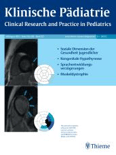
KLINISCHE PADIATRIE
Transforming Pediatric Care with Cutting-Edge DiscoveriesKLINISCHE PADIATRIE is a prominent academic journal published by GEORG THIEME VERLAG KG since its inception in 1972. Based in Germany, this journal serves as a valuable resource for professionals and researchers in the fields of Pediatrics, Perinatology, and Child Health. With an ISSN of 0300-8630 and E-ISSN 1439-3824, it features a rich array of peer-reviewed articles that focus on child health and development, encompassing clinical practices, therapeutic advances, and interdisciplinary approaches to pediatric care. While the journal operates on a subscription basis, its impact within the academic community is evidenced by its ranking of Q3 in Pediatrics, Perinatology, and Child Health as of 2023, and it maintains a solid standing within Q4 in Medicine (miscellaneous). The journal aims to bridge the gap between emerging research and clinical practice, providing a platform for innovative ideas that enhance pediatric care. Researchers, medical professionals, and students alike will find KLINISCHE PADIATRIE an essential addition to their academic repertoire, fostering advancements in pediatric healthcare and enriching knowledge in this vital field.
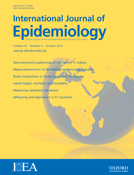
INTERNATIONAL JOURNAL OF EPIDEMIOLOGY
Championing evidence-based practices for public well-being.INTERNATIONAL JOURNAL OF EPIDEMIOLOGY, published by Oxford University Press, is a leading peer-reviewed journal established in 1972, dedicated to advancing the field of epidemiology and its applications in medicine. With an impressive impact factor and a Q1 ranking in both Epidemiology and Miscellaneous Medicine, this journal ranks among the top-tier publications in its category, reflecting its commitment to high-quality research and scholarship. The journal serves as a vital platform for researchers, professionals, and students to share innovative findings, methodologies, and insights in epidemiological science, thus contributing to the broader understanding of public health. The journal includes a diverse range of articles encompassing the latest trends and developments in the field, ensuring comprehensive access to essential information and promoting evidence-based practices. For those seeking rigorous academic discourse and the latest research, the INTERNATIONAL JOURNAL OF EPIDEMIOLOGY is an indispensable resource in the realm of health studies.

JOURNAL OF EPIDEMIOLOGY AND COMMUNITY HEALTH
Empowering communities with vital epidemiological insights.JOURNAL OF EPIDEMIOLOGY AND COMMUNITY HEALTH, published by the esteemed BMJ PUBLISHING GROUP, stands as a leading journal in the fields of Epidemiology and Public Health. With an impressive impact factor and ranking in the Q1 quartile for both Epidemiology and Public Health categories as of 2023, it significantly contributes to the dissemination of critical research that shapes public health policies and practices globally. The journal has been a vital resource since 1978, continuously providing an academic platform for the latest advancements and discussions pertinent to community health, environmental concerns, and epidemiological studies. Researchers, professionals, and students alike depend on this influential publication for rigorous peer-reviewed articles, thereby enhancing its reputation as one of the top journals in the field. Despite the absence of Open Access options, the journal's scholarly contributions are evident, making it indispensable for anyone engaged in public health and epidemiological research.