
Papeles de Poblacion
metrics 2024
Fostering understanding through open-access research.
Introduction
Papeles de Población, published by the Universidad Autónoma del Estado de México, is a prominent open-access journal that has been advancing the field of demography since its inception in 1997. With an ISSN of 1405-7425, this journal aims to foster a deeper understanding of population studies through research articles, reviews, and critical analyses that address the complex dynamics of demographic changes, social structures, and their implications. While currently ranked in the fourth quartile of its category in 2023, it serves as a significant channel for researchers, professionals, and students to disseminate and access cutting-edge findings. Open access since 2004, it provides a platform for broader readership and knowledge sharing, thus contributing to the global discourse on population issues. Based in Mexico, the journal is committed to embracing diverse perspectives, emphasizing the importance of regional studies within a global context.
Metrics 2024
 0.140.200.3016
Metrics History
Rank 2024
Scopus
IF (Web Of Science)
JCI (Web Of Science)
Quartile History
Similar Journals

Comparative Population Studies
Bridging gaps in population studies for informed policy-making.Comparative Population Studies is an esteemed open-access journal published by the BUNDESINSTITUT BEVOELKERUNGSFORSCHUNG in Germany, dedicated to advancing the field of demography. Since its launch and transition to open access in 2010, the journal has provided a platform for researchers to share innovative population studies, promoting a deeper understanding of demographic trends and patterns globally. With an impressive Q2 rank in Demography within the 2023 quartile categories and a commendable rank #61 out of 139 in Scopus' Social Sciences Demography classification, it plays a vital role in disseminating rigorous research. The journal covers a range of topics related to population dynamics, migration, and social implications, making it invaluable to academics, professionals, and students in the field. With an emphasis on comparative studies, Comparative Population Studies not only fosters scholarly dialogue but also enhances policy-making and economic planning. Located at Friedrich-Ebert-Allee 4, Wiesbaden 65185, Germany, the journal continues to be a prominent resource for those eager to engage with the latest demographic research.

Central and Eastern European Migration Review
Bridging Research and Policy in Migration StudiesThe Central and Eastern European Migration Review, published by the CENTRE MIGRATION RESEARCH, University of Warsaw, serves as a critical platform for sharing innovative research on migration dynamics within Central and Eastern Europe. This Open Access journal has been a vital resource for scholars since its inception in 2012, enabling widespread access to high-quality research that addresses pressing demographic, social, and political issues related to migration. With an impressive ranking among the Q2 category in Demography, Social Sciences (miscellaneous), and Sociology and Political Science, it occupies a significant space in contemporary sociological discourse, reflecting its robust scholarly impact. Notably, the journal achieved Scopus rankings that place it in the 60th percentile or higher within multiple categories, highlighting its contributions to the field. Researchers, professionals, and students alike can delve into a diverse array of articles that explore migration trends, policies, and societal implications, making it an indispensable resource for anyone engaged in migration studies.
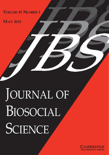
JOURNAL OF BIOSOCIAL SCIENCE
Fostering Research at the Intersection of Health and SocietyJOURNAL OF BIOSOCIAL SCIENCE, published by Cambridge University Press, is a pivotal interdisciplinary journal dedicated to advancing our understanding of the complex interplay between biological and social factors in human health and society. With an ISSN of 0021-9320 and an E-ISSN of 1469-7599, this journal has been a cornerstone of scholarly communication since its inception in 1969, paving the way for innovative research until 2024 and beyond. The journal is ranked in the Q3 quartile in Public Health, Environmental and Occupational Health and Q2 in Social Sciences (miscellaneous), reflecting its significant impact in these fields. Its Scopus ranking further emphasizes its relevance, sitting at #79 out of 275 in General Social Sciences and #334 out of 665 in Public Health. Researchers, professionals, and students are encouraged to explore the journal's rich repository of articles that delve into critical biosocial issues, fostering a deeper understanding of how social structures influence health and well-being. Although not open access, the journal remains an essential resource for those committed to addressing contemporary health challenges through a biosocial lens.

Canadian Studies in Population
Navigating the Complexities of Population ChangeCanadian Studies in Population, published by Springer, is a prestigious journal dedicated to advancing the field of demography and the history of population studies within Canada and beyond. With an ISSN of 0380-1489 and an E-ISSN of 1927-629X, this journal has proudly contributed to scholarly discourse since its inception in 1975, and continues to make significant impacts through its rigorous research articles and comprehensive reviews. Recognized for its high academic standards, it boasts a Q2 ranking in Demography and a Q1 ranking in History in 2023, reflecting the journal's critical role in shaping contemporary understanding of demographic trends and historical population developments. With a Scopus rank of #51/139 in Demography and #83/1760 in History, it appeals to a diverse audience including researchers, professionals, and students eager to explore population dynamics, historical context, and societal implications of demographic shifts. While the journal maintains traditional subscription access options, its rigorous peer-reviewed content ensures that it remains a cornerstone for scholars seeking credible and influential insights in their respective fields.
POPULATION RESEARCH AND POLICY REVIEW
Transforming Insights into Actionable PolicyPopulation Research and Policy Review is a prestigious journal published by Springer, specializing in the fields of demography and policy analysis. Established in 1982, this journal has developed a significant reputation within the academic community, currently holding a Q1 ranking in Demography and a Q2 ranking in Management, Monitoring, Policy, and Law as of 2023. With a robust Scopus ranking of #34 out of 139 in Demography and a readership that spans multiple disciplines, this journal serves as a critical platform for researchers, professionals, and policymakers to disseminate their findings and insights related to population dynamics and policy implications. Although not an open-access journal, Population Research and Policy Review provides vital research that influences both theoretical frameworks and practical applications in social sciences and environmental management. The journal’s ongoing commitment to high-quality, peer-reviewed scholarship makes it an indispensable resource for those seeking to understand and address contemporary demographic challenges.

Journal of Demographic Economics
Fostering Global Dialogue in Demographic EconomicsThe Journal of Demographic Economics, published by Cambridge University Press, stands as a leading interdisciplinary platform dedicated to the exploration and advancement of research in the intertwined fields of demography, economics, and geography. With an impact factor that reflects its esteemed position—ranking in the Q1 quartile for Demography (2023)—the journal fosters scholarly dialogue through high-quality articles that elucidate the complex interactions between population dynamics and economic trends. Operating under an open access model, the journal ensures that its findings are widely accessible, promoting inclusivity and engagement among researchers, professionals, and students alike. The Journal of Demographic Economics endeavors to bridge gaps in knowledge by publishing innovative and rigorous studies, thereby contributing significantly to both theoretical frameworks and practical applications across various domains. Drawing submissions from a global audience, this journal not only enhances the understanding of demographic transitions but also informs policy decisions and socioeconomic development strategies, making it an essential resource for those invested in demographic and economic research.
Demographic Research
Navigating the future through demographic research.Demographic Research is a leading journal in the field of demography, published by the prestigious Max Planck Institute for Demographic Research. Available in both print and electronic formats (ISSN: 1435-9871, E-ISSN: 1435-9871), this open-access journal has been a valuable resource for demographers and social scientists since its inception in 1999. With a commendable impact factor and ranked Q1 in its category, the journal demonstrates a significant commitment to advancing our understanding of demographic trends and their implications across contexts. Hailing from Germany, the journal's rich international perspective adds depth to its studies, making it a vital platform for innovative research. Researchers, professionals, and students are encouraged to engage with its wealth of articles that not only document demographic changes but also offer insights critical for policy-making and social planning. The journal's broad scope encompasses diverse themes, providing a comprehensive overview of the demographic shifts that shape societies today.

JOURNAL OF ETHNIC AND MIGRATION STUDIES
Illuminating the Intersection of Ethnicity and MigrationJOURNAL OF ETHNIC AND MIGRATION STUDIES (ISSN: 1369-183X, E-ISSN: 1469-9451) is a leading peer-reviewed journal published by Routledge Journals, Taylor & Francis Ltd, based in the United Kingdom. With a significant impact factor and ranked Q1 in both Arts and Humanities (miscellaneous) and Demography as of 2023, this journal is pivotal for advancing research in ethnic and migration studies. It brings together interdisciplinary perspectives, focusing on the complexities of migration, integration, and the dynamics of cultural diversity across the globe. The journal's commitment to high-quality scholarship is reflected in its impressive Scopus rankings, placing it in the top percentile for both Demography and Arts and Humanities categories. Although not currently open access, it provides essential insights for researchers, policymakers, and practitioners dedicated to understanding the ever-evolving landscape of ethnic relations and migration issues. With contributions that span from theoretical frameworks to empirical studies, the journal aims to foster a deeper understanding of the social implications of migration, making it an invaluable resource for scholars and students alike.
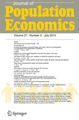
JOURNAL OF POPULATION ECONOMICS
Unveiling the Economic Impacts of Population ShiftsThe JOURNAL OF POPULATION ECONOMICS, published by SPRINGER, stands as a leading peer-reviewed journal in the fields of demography and economics. Established in 1988, this esteemed journal offers a platform for high-quality research that probes the intricate relationships between population dynamics and economic phenomena. With its impressive Q1 quartile ranking in both Demography and Economics and Econometrics for 2023, the journal is recognized as a vital resource for scholars and practitioners alike, reflecting its rigorous standards and impact in the academic community. Its Scopus rankings position it within the top tiers of social sciences, making it an essential read for those engaged in demographic and economic research. Although the journal does not currently adopt an open access model, its esteemed reputation and continuous publication until 2024 ensure relevant and up-to-date findings contribute meaningfully to scholarly discourse. At its core, the JOURNAL OF POPULATION ECONOMICS aims to bridge theoretical insights and empirical findings, fostering an understanding of how population changes influence economic outcomes and vice versa.
Asian Population Studies
Advancing Knowledge on Asian Population DynamicsAsian Population Studies is a distinguished journal published by Routledge Journals, Taylor & Francis Ltd, delivering comprehensive insights into the vibrant field of demography. Since its inception in 2006, this peer-reviewed journal has consistently provided a platform for high-quality research that enhances our understanding of population dynamics in Asia. With an impressive category ranking of Q2 in Demography for 2023, and holding a notable position as 35th out of 139 within the Scopus ranking, it is recognized for its significant contributions to the field, appealing to researchers, scholars, and professionals alike. The journal covers a diverse range of topics, including population growth, migration patterns, and socio-economic factors influencing demographic changes across Asian countries. Although it does not offer open access, Asian Population Studies remains a vital resource for those seeking to explore demographic trends and their implications for policy and practice in one of the most populous regions of the world. With a commitment to academic excellence, it continues to serve as an essential tool for anyone engaged in demographic research and study.