Philosophical Perspectives
Scope & Guideline
Elevating scholarly communication in philosophy.
Introduction
Aims and Scopes
- Philosophy of Mind and Consciousness:
The journal publishes works examining the nature of consciousness, dual-character concepts, and the implications of mental phenomena, including discussions on tacit knowledge, intentionality, and the consciousness of infants. - Epistemology and Knowledge:
A significant focus on theories of knowledge and belief, exploring topics such as the knowledge argument against materialism, epistemic akrasia, and the nature of belief itself. - Metaphysics and Ontology:
Engagement with fundamental questions of existence and reality, including modal pluralism, ontological collectivism, and the dynamics of time. - Social Cognition and Ethics:
The intersection of social cognition and philosophical ethics is explored, particularly in relation to belief systems, moral evaluations, and the impact of social structures on cognition. - Philosophical Methodology:
The journal emphasizes innovative philosophical methodologies, including planning theories of belief and causal process tracing, fostering a critical engagement with traditional and contemporary approaches.
Trending and Emerging
- Cognitive Science and Philosophy:
An increasing number of papers integrate insights from cognitive science with philosophical inquiries, particularly in understanding mental processes, emotions, and the implications for theories of knowledge. - Non-Traditional Epistemology:
Emerging themes include non-standard epistemological approaches, such as contextualism and the exploration of knowledge in relation to social contexts, highlighting a shift from classical models to more nuanced understandings. - Philosophy of Technology:
A growing interest in the philosophical implications of technology is evident, particularly regarding how technology influences belief systems, social cognition, and ethical considerations in contemporary society. - Interdisciplinary Approaches:
There is a notable trend towards interdisciplinary research, where philosophical questions are examined through the lenses of other disciplines such as psychology, sociology, and neuroscience, reflecting a holistic approach to understanding complex issues.
Declining or Waning
- Traditional Epistemological Debates:
Discussions surrounding classic epistemological concerns, such as foundationalism and coherentism, have become less frequent, possibly as newer frameworks and theories gain traction in contemporary philosophy. - Meta-Ethics:
Topics focused on meta-ethical questions and the nature of moral language and truth have seen a waning presence, as the journal appears to be increasingly oriented towards practical applications of ethical theories rather than abstract discussions. - Philosophical Analysis of Language:
While language remains a critical area in philosophy, the specific focus on linguistic analysis and semantics has diminished, suggesting a shift towards more interdisciplinary approaches that blend philosophy with cognitive science and psychology.
Similar Journals

ERKENNTNIS
Cultivating critical perspectives in logic and philosophy.ERKENNTNIS, published by SPRINGER, is a premier academic journal that has been advancing the study of philosophy and logic since its inception in 1919. With its esteemed ranking in the Q1 quartile for both categories as of 2023, it stands at the forefront of scholarly discourse, earning an impressive rank of #104 in the field of philosophy and #13 in logic according to the Scopus rankings. This influential publication not only contributes to the theoretical underpinnings of these disciplines but also fosters a vibrant exchange of ideas among researchers, professionals, and students alike. While it does not offer open access to its articles, the journal's esteemed reputation and rigorous peer-review process ensure that all published works maintain the highest standards of quality and intellectual inquiry, making ERKENNTNIS an essential resource for anyone engaged in these critical areas of study.
PHILOSOPHY AND PHENOMENOLOGICAL RESEARCH
Exploring the Depths of Thought and ExperiencePHILOSOPHY AND PHENOMENOLOGICAL RESEARCH, published by Wiley, stands as a premier journal within the realms of Philosophy and the History and Philosophy of Science, boasting an impressive Q1 ranking in both categories as of 2023. With the ISSN 0031-8205 and E-ISSN 1933-1592, this esteemed journal has been a pivotal platform for philosophical inquiry since its inception in 1970. Dedicated to advancing understanding in phenomenology and its implications across various disciplines, the journal encourages scholarly discourse through high-quality peer-reviewed articles that explore both classical and contemporary philosophical thought. With a Scopus ranking of #46 in Philosophy and #20 in the History and Philosophy of Science, PHILOSOPHY AND PHENOMENOLOGICAL RESEARCH operates at the confluence of rigorous academic investigation and innovative ideas, making it an indispensable resource for researchers, professionals, and students alike. As part of its commitment to facilitating scholarly communication, the journal does not currently offer open access but ensures accessibility through various institutional subscriptions. Discover the rich tapestry of philosophical inquiry that shapes our understanding of the world in its pages.

Topicos-Revista de Filosofia
Advancing Scholarly Conversations in Contemporary PhilosophyTopicos-Revista de Filosofia, published by UNIV PANAMERICANA, DEPT FILOSOFIA, stands as a significant academic platform within the field of philosophy, actively contributing to scholarly discourse since 2006 through its open access model. With an ISSN of 0188-6649 and an E-ISSN of 2007-8498, this journal is dedicated to fostering critical thought and philosophical inquiry in both regional and global contexts. Operating out of Mexico City, it provides a vital avenue for researchers, professionals, and students to engage with contemporary philosophical issues, reflected in its ranking of Q3 in the 2023 category for Philosophy and its position within the 33rd percentile among over 800 peer journals in the field according to Scopus. Topicos not only prioritizes accessibility to philosophical scholarship but also aims to propel academic discussions and elevate the standards of philosophical research. With coverage extending from 2013 to 2024, it invites contributions that bridge diverse philosophical traditions and innovative thought pathways, reinforcing its role as an influential resource for the philosophical community.
Philosophical Issues
Illuminating the Depths of Philosophical InquiryPhilosophical Issues is a leading journal in the field of philosophy, published by WILEY, renowned for its commitment to advancing scholarly discourse and academic rigor. With an ISSN of 1533-6077 and an E-ISSN of 1758-2237, this journal has established itself as an essential resource for philosophers and researchers alike, providing impactful insights and fostering interdisciplinary dialogue. Based in Germany, the journal holds a prestigious Q1 ranking in philosophy as of 2023 and is recognized in the Scopus database with a rank of 266 out of 806, placing it in the 67th percentile. From 2011 to 2023, it has broadened its scope to include various aspects of philosophical inquiry, reflecting contemporary challenges and innovations within the field. Although it does not currently offer open access options, Philosophical Issues continues to be pivotal in shaping philosophical thought and is highly regarded by both seasoned scholars and students. The journal's emphasis on publishing high-quality, peer-reviewed articles makes it a valuable asset for anyone passionate about exploring the depths of philosophical thought.

Teorema
Exploring the depths of contemporary thought.Teorema is a distinguished academic journal within the realm of Philosophy, published by KRK EDICIONES in Spain. With an ISSN of 0210-1602, this journal has consistently contributed to the philosophical discourse since its inception in 2008, with a planned continuation until 2024. Recognized for its rigorous peer-review process and quality research, Teorema holds an esteemed position in the Scopus ranking, placed in the 57th percentile of Arts and Humanities philosophy journals, and categorized in Q3 for 2023. This journal serves as a platform for researchers, professionals, and students to engage with innovative philosophical ideas and debates, fostering a deeper understanding of key concepts and contemporary issues. While it does not offer open access to its content, Teorema remains an indispensable resource for those committed to the advancement of philosophical scholarship.
PACIFIC PHILOSOPHICAL QUARTERLY
Fostering Insightful Dialogues in PhilosophyWelcome to the PACIFIC PHILOSOPHICAL QUARTERLY, a leading journal in the field of philosophy, published by Wiley. With an impressive impact factor and ranked in the top 15% of its category (Q1 in Philosophy), this esteemed journal has become a vital source for scholars and practitioners alike. Established in 1996, the journal presents groundbreaking articles that explore contemporary philosophical issues, ensuring its relevance through converged contributions up to 2024. With robust Scopus rankings, including a position of #122 out of 806 in the Arts and Humanities category, the quarterly serves as a platform for innovative ideas and rigorous debates in the philosophical community. Though it does not offer open access, its insights are invaluable for researchers, professionals, and students eager to deepen their understanding of philosophical discourse.
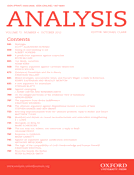
ANALYSIS
Championing Rigorous Analysis and DialogueANALYSIS, an esteemed journal published by Oxford University Press, ranks in the top quartile (Q1) within the field of Philosophy, showcasing its significance in disseminating cutting-edge research and critical studies since its inception in 1933. With an ISSN of 0003-2638 and an E-ISSN of 1467-8284, the journal has maintained a dedicated readership across various converged publications from 1933 to the present. Based in the United Kingdom, ANALYSIS is committed to exploring foundational philosophical questions and advancing theoretical dialogue in both traditional and contemporary contexts. The journal is recognized for its rigorous peer-review process and is indexed in Scopus, reflecting its solid standing at rank #178/806 in the Arts and Humanities domain, encompassing the 77th percentile of its category. Although currently not available as an open-access journal, ANALYSIS provides invaluable insights and a platform for philosophical discourse that appeals to scholars, professionals, and students alike, fostering a deeper understanding of the complexities in the world of philosophy.
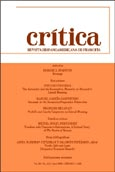
CRITICA-REVISTA HISPANOAMERICANA DE FILOSOFIA
Unveiling the Rich Tapestry of PhilosophyCRITICA-REVISTA HISPANOAMERICANA DE FILOSOFIA, published by CRITICA in Mexico, is a prominent peer-reviewed journal established in 1977 that has continually contributed to the field of philosophy in the Hispanic world. With an ISSN of 0011-1503 and an E-ISSN of 1870-4905, this journal plays a significant role in disseminating philosophical discourse, engaging both established and emerging scholars. It holds a Q3 ranking in the field of Philosophy according to the 2023 Category Quartiles and is ranked 305 out of 806 in the Scopus Arts and Humanities: Philosophy category, placing it in the 62nd percentile. Although it does not offer an open access option, its commitment to quality and relevance makes it an essential resource for researchers and students eager to explore contemporary philosophical issues and debates. The journal remains a vital platform for intellectual exchange, encouraging diverse perspectives that enrich the landscape of philosophical inquiry.
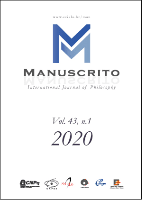
Manuscrito
Advancing Open Access to Transformative IdeasManuscrito is a prominent open access journal published by UNICAMP-UNIV ESTADUAL CAMPINAS, dedicated to exploring critical themes in the realm of Philosophy. With an ISSN of 0100-6045 and E-ISSN 2317-630X, it has been advancing academic discourse since its inception, transitioning to an open access model in 2011 to enhance the dissemination of knowledge. Strategically located in Campinas, Brazil, the journal's editorial focus spans a diverse array of philosophical inquiries, engaging scholars from various perspectives. The journal holds a respectable Q3 ranking in the 2023 category of Arts and Humanities - Philosophy in Scopus, ranking #503 out of 806 journals, placing it within the 37th percentile. The Manuscrito journal is committed to fostering intellectual exchange and encouraging research that challenges traditional paradigms. Researchers, professionals, and students will find it an invaluable resource for accessing pioneering ideas and contemporary philosophical debates, especially as it is poised to converge on new insights from 2017 to 2024.

REVUE INTERNATIONALE DE PHILOSOPHIE
Exploring the Depths of Philosophical ThoughtREVUE INTERNATIONALE DE PHILOSOPHIE, published by REVUE INT PHILOSOPHIE, is a prestigious journal in the field of philosophy, based in Belgium. With an ISSN of 0048-8143 and an E-ISSN of 2033-0138, this journal has been a vital platform for philosophical discourse since its inception in 1983, successfully evolving through various phases until 2024. Despite currently being positioned in the Q4 category of Philosophy according to the 2023 rankings, it serves as an important venue for scholars and students alike, allowing for a diverse exploration of philosophical thought. Although it is not an Open Access publication, the journal fosters a rich environment for rigorous scholarly research and debate. By presenting articles that challenge and inspire, REVUE INTERNATIONALE DE PHILOSOPHIE ensures that it remains an essential resource for anyone engaged in philosophical inquiry.