Population Health Metrics
metrics 2024
Innovating Strategies for Health Improvement
Introduction
Population Health Metrics, an esteemed journal published by BMC, has established itself as a leading platform for researchers and practitioners in the fields of epidemiology and public health. Since its inception in 2003, this open-access journal from the United Kingdom has been dedicated to advancing the understanding of health metrics, offering insightful analyses and data-driven research that address critical global health challenges. With an impressive Q1 ranking in both Epidemiology and Public Health, Environmental and Occupational Health categories, along with a robust Scopus percentile ranking in its field, it plays a pivotal role in disseminating impactful research findings. Researchers and professionals are encouraged to contribute to and engage with the journal's broad array of topics, ensuring that the conversations around population health continue to evolve and influence policy and practice worldwide. With the commitment to accessibility and quality, Population Health Metrics is essential reading for anyone dedicated to improving health outcomes at the population level.
Metrics 2024
 1.653.203.3063
Metrics History
Rank 2024
Scopus
IF (Web Of Science)
JCI (Web Of Science)
Quartile History
Similar Journals
Annals of Applied Statistics
Fostering Excellence in Statistical ApplicationsThe Annals of Applied Statistics, published by the Institute of Mathematical Statistics (IMS), is a leading academic journal that serves as a crucial repository for groundbreaking research in the fields of statistics and probability applications. Since its inception in 2008 and continuing through 2024, this journal has established itself as an influential platform with a notable reputation, boasting a prestigious Q1 classification in 2023 across critical categories such as Modeling and Simulation and Statistics, Probability, and Uncertainty. With its rigorous peer-review process and significant Scopus rankings—including a position of #78 in Statistics and Probability—Annals of Applied Statistics aims to foster innovative statistical methods and their applications in a variety of disciplines. Researchers, professionals, and students interested in the latest advancements in analytical methods will find this journal essential for navigating the evolving landscape of applied statistics. The journal does not offer open access options, ensuring that published content reflects the highest academic standards.
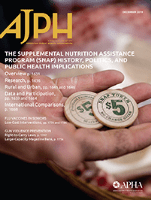
AMERICAN JOURNAL OF PUBLIC HEALTH
Bridging research and practice to enhance population well-being.The American Journal of Public Health, published by the American Public Health Association, stands as a cornerstone in the field of public health and epidemiology since its inception in 1949. With its rigorous peer-review process and a robust commitment to advancing knowledge and research practices, this journal holds a prestigious position in the academic community, as reflected in its 2023 Scopus ranking, where it is placed in the top percentile (93rd) within the categories of Public Health and Environmental and Occupational Health. The journal's focus encompasses a broad spectrum of public health topics, making it essential reading for researchers, practitioners, and students dedicated to improving population health. Subscribers can access invaluable insights through its collection of innovative studies and reviews, thereby reinforcing the journal's role in shaping public health policy and practice. By bridging research and real-world application, the American Journal of Public Health remains a vital resource for those engaged in the quest to improve health outcomes across diverse communities.
Spatial and Spatio-Temporal Epidemiology
Innovating Approaches to Spatio-Temporal ChallengesSpatial and Spatio-Temporal Epidemiology is a premier journal dedicated to advancing the understanding of spatial patterns and temporal dynamics in epidemiological research. Published by ELSEVIER SCI LTD in the United Kingdom, this journal utilizes a robust interdisciplinary approach, blending methodologies from epidemiology, geography, and environmental science. With an impressive impact factor and categorized in the top quartiles for its fields—Q2 in Epidemiology and Q1 in Geography, Planning and Development (2023)—this journal excels in providing high-quality insights relevant to both academic researchers and public health professionals. The journal supports open access options, enhancing the dissemination and impact of scholarly articles. Since its inception in 2009, Spatial and Spatio-Temporal Epidemiology has published a myriad of studies that contribute significantly to understanding the geographical and temporal aspects of diseases, thereby serving as a crucial resource for anyone invested in improving public health outcomes and addressing infectious diseases globally.
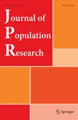
JOURNAL OF POPULATION RESEARCH
Illuminating the complexities of demographic change.JOURNAL OF POPULATION RESEARCH, published by Springer, is a premier journal dedicated to advancing the field of demographic studies. With a focus on research that addresses the complexities of population dynamics, this journal serves as a vital platform for scholars, practitioners, and students alike. It holds a commendable Q2 ranking in the Demography category for 2023, underscoring its influence and commitment to quality research. The journal spans a rich convergence of knowledge from 2005 to 2024, covering key developments and emerging trends in population research. Although it operates under a traditional access model, its impact continues to resonate throughout the academic community, highlighting the importance of robust demographic analysis in policy and planning. By fostering insightful discussions and providing access to groundbreaking studies, the JOURNAL OF POPULATION RESEARCH remains an essential resource for those eager to deepen their understanding of population issues.

MMWR Surveillance Summaries
Connecting Research and Practice for a Healthier TomorrowMMWR Surveillance Summaries, published by the Centers for Disease Control and Prevention, is a premier journal within the fields of Epidemiology, Health Information Management, and related health sciences. With an impressive recognition as a Q1 journal in multiple categories, it ranks among the top resources for scholars and practitioners, boasting significant impact factors reflecting its authority and relevance. This journal serves as a vital conduit for disseminating critical public health surveillance data, shaping health policies and practice. Its comprehensive coverage from 2002 to 2024 ensures that researchers and professionals remain informed of vital trends and findings in the ever-evolving landscape of public health. Although not an open-access journal, MMWR Surveillance Summaries remains an essential repository of information, guiding critical research and decision-making in health-related fields.
BJOG-AN INTERNATIONAL JOURNAL OF OBSTETRICS AND GYNAECOLOGY
Driving Progress in Obstetrics and GynaecologyBJOG - An International Journal of Obstetrics and Gynaecology is a leading peer-reviewed journal in the field of obstetrics and gynecology, published by Wiley in the United Kingdom. With a rich history dating back to 1902, this esteemed journal is recognized for its significant contribution to advancing clinical practice and research, consistently ranking in the top tier (Q1) of its category, according to the 2023 Scopus rankings. Representing the best of 209 journals in the discipline, BJOG is dedicated to publishing high-quality research and innovative insights that address critical issues in women's health. While not an open-access journal, it provides valuable access options for institutions and individuals to stay informed about the latest developments and evidence-based practices. The journal's commitment to disseminating cutting-edge research makes it an essential resource for clinicians, researchers, and academics aiming to improve health outcomes in obstetrics and gynecology.
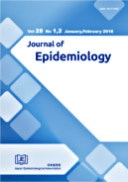
JOURNAL OF EPIDEMIOLOGY
Exploring the intersection of health and society.JOURNAL OF EPIDEMIOLOGY is a premier peer-reviewed journal published by the JAPAN EPIDEMIOLOGICAL ASSOCIATION dedicated to advancing the field of epidemiology and public health. With an impressive impact factor and recognition as a Q1 journal in both the epidemiology and miscellaneous medicine categories, it ranks in the top percentile of its field, occupying the 28th position out of 148 journals in epidemiology according to Scopus. Since its inception in 1991, this open access journal has provided researchers, practitioners, and students with valuable insights and findings that shape healthcare policies and practices globally. The journal covers a broad range of topics within epidemiology, fostering a multidisciplinary approach to understanding and addressing health challenges. With a commitment to high-quality research and accessibility, the JOURNAL OF EPIDEMIOLOGY plays a crucial role in the dissemination of knowledge and best practices within the public health community.

Statistics and Its Interface
Transforming Data into Knowledge Across DisciplinesStatistics and Its Interface, issn 1938-7989, published by INT PRESS BOSTON, INC, is a vital academic journal dedicated to bridging the critical intersection of statistics, applied mathematics, and interdisciplinary research. With its inaugural publication in 2011, this journal has continually aimed to provide a platform for innovative statistical methods and their application across various fields, offering valuable insights for researchers and practitioners alike. While the journal currently operates without an open access model, it maintains an essential position within the scholarly community, evidenced by its 2023 rankings in the third quartile for Applied Mathematics and the fourth quartile for Statistics and Probability. Furthermore, it holds a respectable position in Scopus rankings, reflecting its commitment to quality over quantity. By publishing cutting-edge research, Statistics and Its Interface serves as a critical resource for advancing statistical knowledge and cultivating a deeper understanding of its applications in real-world contexts.
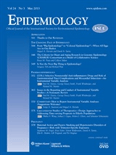
EPIDEMIOLOGY
Advancing the frontiers of public health knowledge.EPIDEMIOLOGY, published by Lippincott Williams & Wilkins, stands as a vital resource in the field of epidemiological research. With its ISSN 1044-3983 and E-ISSN 1531-5487, this journal has been a cornerstone for scholars since its inception in 1990. Covering a wide array of topics within the domain, it strives to disseminate cutting-edge findings that inform public health policies and clinical practices. Currently ranked Q3 in Epidemiology and positioned at #33 out of 148 according to Scopus, the journal boasts an impressive 78th percentile rank, reflecting its significance and impact within the academic community. Though not open access, EPIDEMIOLOGY provides robust access options for institutional subscribers, ensuring that critical epidemiological insights reach a broad audience. As this field continues to evolve, the journal remains dedicated to empowering researchers, practitioners, and students with the knowledge necessary to advance public health initiatives and improve population health outcomes.
Population Space and Place
Illuminating Spatial Dimensions of Demographic ChangePopulation Space and Place is an esteemed academic journal published by WILEY, dedicated to advancing the fields of demography and geography, planning, and development. With an impressive 2023 impact factor and categorized in the top quartile (Q1) for both demography and geography, this journal serves as a vital platform for researchers, professionals, and students seeking to explore the spatial dimensions of population dynamics. Founded in 2004 and running through 2024, it has established itself as a significant contributor to scholarly discussions, evidenced by its high Scopus rankings, including rank #18 out of 139 in demography and #165 out of 821 in geography and planning. While the journal currently does not offer open access, it remains a key resource for those involved in academic research and policy formulation. With its focus on the interplay between population trends and spatial analytics, Population Space and Place is essential for anyone aiming to understand the complexities of population geography in a rapidly changing world.