Proceedings of the Institution of Civil Engineers-Urban Design and Planning
Scope & Guideline
Innovating Spaces for Tomorrow's Cities
Introduction
Aims and Scopes
- Urban Sustainability and Resilience:
The journal emphasizes research on sustainable urban development practices, including eco-friendly design, green infrastructure, and community resilience against climate change impacts. - Social Dimensions of Urban Design:
It explores the social implications of urban planning, focusing on inclusivity, safety, and quality of life in various urban settings, particularly in relation to marginalized communities. - Innovative Planning Methodologies:
The journal encourages the development and application of new methodologies for urban planning, including quantitative analyses and participatory planning approaches. - Technological Integration in Urban Planning:
There is a consistent focus on integrating advanced technologies such as Artificial Intelligence, Geographic Information Systems (GIS), and smart city concepts in urban planning and design. - Historical and Cultural Context in Urban Design:
Research on the interplay between historical preservation, cultural identity, and modern urban development is a significant area of focus, reflecting on how past practices inform contemporary design.
Trending and Emerging
- Nature-Based Solutions in Urban Design:
Research on nature-based solutions is increasingly prominent, highlighting their role in enhancing urban resilience, biodiversity, and overall urban livability. - Quantitative Approaches to Urban Quality of Life:
There is a growing trend towards utilizing quantitative methods to assess and improve the quality of life in urban neighborhoods, indicating a shift towards data-driven decision-making. - Gender Equity in Urban Planning:
Emerging research focuses on gender equity within urban planning processes, examining barriers to women's professional advancement and the design of inclusive public spaces. - Impact of Health on Urban Design:
The intersection between urban design and public health is gaining attention, particularly regarding how urban environments influence physical and mental health outcomes. - Post-Pandemic Urban Resilience:
The COVID-19 pandemic has spurred interest in urban resilience strategies and adaptive planning, with research increasingly addressing how cities can better respond to crises.
Declining or Waning
- Traditional Urban Planning Frameworks:
There appears to be a waning interest in traditional, static urban planning models as the field increasingly embraces dynamic, participatory, and technology-driven approaches. - Generalized Case Studies without Local Context:
Research papers focusing on generalized case studies lacking specific local context or applicability seem to be diminishing, as the journal prioritizes context-sensitive and localized research. - Focus on Theoretical Concepts without Practical Applications:
There is a noticeable decline in papers that solely discuss theoretical frameworks without practical implications or case studies, as the journal aims to promote actionable insights for practitioners.
Similar Journals

ACE-Architecture City and Environment
Exploring the Intersection of Design and SustainabilityACE-Architecture City and Environment, published by Universitat Politècnica de Catalunya in Spain, serves as an essential repository for innovative research and insights that intersect the fields of architecture, urban studies, and environmental planning. Since its establishment as an Open Access journal in 2006, it has facilitated widespread accessibility to scholarly work, fostering a collaborative and inclusive academic community. The journal has consistently maintained a prominent standing within its field, reflected in its 2023 Quartile rankings—, Q3 in Geography, Planning and Development, and Q2 in Urban Studies. With a publication horizon extending from 2011 to 2024 and an impressive Scopus ranking among peers, it offers a comprehensive platform for researchers to disseminate their findings and engage with contemporary challenges in urban environments. ACE is pivotal for professionals and students alike, striving to shape the future of sustainable architecture and urban planning through rigorous scholarship.

Ciudad y Territorio-Estudios Territoriales-CyTET
Advancing Interdisciplinary Insights in Territorial StudiesCiudad y Territorio-Estudios Territoriales-CyTET, published by the MINISTERIO FOMENTO, CENTRO PUBLICACIONES, is a premier journal dedicated to the interdisciplinary exploration of urban and regional studies. With an ISSN of 1133-4762, this Spanish journal serves as a vital platform for researchers and practitioners interested in the dynamics of geography, planning, and development. Recognized in the Q2 quartile for both Geography, Planning and Development and Urban Studies for 2023, CyTET represents a significant contribution to academic discourse, ranked at 145th in Urban Studies and 542nd in Geography, Planning and Development within the Scopus database. Notably, the journal’s converged issue years from 2014 to 2024 emphasize its ongoing commitment to staying current with the rapidly evolving challenges and innovations in urban environments. Although not Open Access, CyTET provides invaluable insights and research findings that are critical for professionals, scholars, and students aiming to enhance their understanding and impact in the realm of territorial studies.
Urbani Izziv-Urban Challenge
Shaping the Future of Urban DevelopmentUrbani Izziv - Urban Challenge, a prominent journal in the field of urban studies and planning, is published by the Urban Planning Institute of the Republic of Slovenia. Established in 1993, this Open Access journal aims to foster the dissemination of cutting-edge research and innovative ideas in architecture, cultural studies, and urban development. With an impressive impact, it holds a Q2 ranking in both Architecture and Cultural Studies, while maintaining a solid presence in Geography, Planning and Development, and Urban Studies categories. As of 2023, it ranks within the top 25% of journals in the Cultural Studies discipline, highlighting its pivotal role in shaping urban discourse. Researchers and practitioners alike will find the journal an invaluable resource for exploring the intertwined challenges of urbanization, cultural evolution, and sustainable development. With an expansive convergence from 1994 to 2024, it continues to attract influential contributions that illuminate the dynamics of urban life in Slovenia and beyond.
Frontiers of Architectural Research
Pioneering Solutions for Contemporary Architectural ChallengesFrontiers of Architectural Research, published by KEAI PUBLISHING LTD, stands at the forefront of interdisciplinary scholarship, addressing contemporary challenges in the fields of architecture, urban studies, building and construction, and archaeology. Since its establishment in 2012, this open-access journal has rapidly gained recognition, achieving prestigious rankings in the 2023 category quartiles, including Q1 placements in both Architecture and Archaeology. With an impressive Scopus rank of #5 out of 354 in Archaeology and #10 out of 189 in Engineering - Architecture, it demonstrates its significant influence and contribution to advancing architectural research. Frontiers of Architectural Research embraces a broad scope that fosters innovative discourse and practical solutions, catering to a diverse audience of researchers, professionals, and students keen on exploring the intersection of culture, environment, and technology. By ensuring immediate access to research findings, the journal not only enhances the visibility of scholarly work but also encourages collaborative dialogues that shape the future of architectural practice.
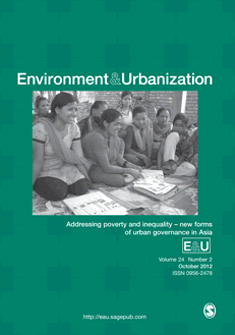
ENVIRONMENT AND URBANIZATION
Advancing sustainable solutions for urban ecosystems.Environment and Urbanization is a leading interdisciplinary journal published by SAGE Publications Ltd, dedicated to advancing knowledge in the fields of Environmental Science and Urban Studies. With a strong focus on the interactions between urban environments and ecological systems, this journal has established itself as a pivotal resource for researchers, professionals, and students interested in sustainable urban development and environmental management. Since its inception in 1989, Environment and Urbanization has continually provided high-quality, peer-reviewed articles that foster a deeper understanding of contemporary urban challenges, making it a highly cited publication with an impressive impact factor. As evidenced by its Q1 ranking in both Environmental Science (miscellaneous) and Urban Studies for 2023, the journal stands at the forefront of research, boasting notable Scopus rankings in its fields. By remaining committed to publishing cutting-edge research, the journal aims to influence policy and practice across the globe, ultimately aiding in the creation of more resilient and livable urban areas.

Urban Science
Transforming Urban Challenges into OpportunitiesUrban Science, published by MDPI in Switzerland, is a pioneering open access journal that has been serving the academic community since 2017. With a robust focus on understanding urban environments through various interdisciplinary lenses such as Environmental Science, Geography, Planning and Development, and Urban Studies, this journal aims to advance knowledge on the complexities of urban living and the challenges that modern cities face. Recognized for its impact, Urban Science holds prestigious rankings, including Q1 in Urban Studies and Q2 in multiple relevant categories. Its presence in leading databases like Scopus, where it stands among the top percentile ranks, underscores its contribution to critical dialogues in urban research. The journal’s commitment to accessibility, targeted toward researchers, professionals, and students alike, fosters an inclusive platform for disseminating innovative ideas and solutions necessary for sustainable urban development.
Journal of Architecture and Urbanism
Innovating Architecture for Sustainable CitiesThe Journal of Architecture and Urbanism, published by VILNIUS GEDIMINAS TECH UNIV, stands as a pivotal resource for scholars and practitioners in the fields of architecture and urban studies. Since its inception in 2012, the journal has committed to advancing research and discourse on the design, planning, and functionality of urban environments, reflecting a dedicated focus on contemporary challenges in architecture and urbanism. With an impressive open access model implemented since 2018, it ensures that innovative research is accessible to a global audience, fostering collaboration and knowledge exchange. The journal boasts a commendable reputation, categorized in the Q2 quartile for Architecture and Q3 in both Geography, Planning and Development and Urban Studies as of 2023, while maintaining respectable Scopus rankings. Addressing key themes from sustainable design to socio-economic impacts on urban spaces, the journal aims to inspire new models and solutions that meet the evolving needs of growing urban populations. This is a must-read for anyone engaged in the intersection of architecture and urban development.

Teka Komisji Urbanistyki i Architektury
Innovating Urban Planning for a Better Tomorrow.Teka Komisji Urbanistyki i Architektury is an esteemed journal published by the Polska Akademia Nauk (Polish Academy of Sciences), dedicated to advancing the fields of urban planning and architecture. With its ISSN 0079-3450 and E-ISSN 2450-0038, this scholarly publication plays a pivotal role in disseminating innovative research, critical analysis, and theoretical advancements related to urban development and architectural design. Although not currently available as an open-access journal, it remains essential for researchers, professionals, and students eager to stay informed about contemporary challenges and solutions in the built environment. The journal emphasizes high-quality, peer-reviewed articles that stimulate scholarly debate and foster interdisciplinary collaboration among contributors from diverse academic backgrounds. Consequently, it has emerged as a vital resource for developing urban planning policies and architectural practices, both in Poland and globally.

Revista de Urbanismo
Empowering Urban Policy with Open Access InsightsRevista de Urbanismo is a distinguished open-access journal published by the Facultad de Arquitectura y Urbanismo, Universidad de Chile, dedicated to advancing knowledge and dialogue within the fields of urban studies, geography, planning, and nature conservation. Since its inception in 1999, the journal has embraced an open-access model, ensuring that cutting-edge research is freely available to scholars, practitioners, and students worldwide. With an esteemed reputation, the journal has achieved notable rankings in 2023, including Q2 in Geography, Planning and Development and Urban Studies, showcasing its commitment to high-quality scholarly contributions. The journal not only serves as a platform for innovative ideas and research findings but also aims to influence urban policy and sustainable development practices, addressing the pressing challenges faced by cities today. By fostering interdisciplinary collaboration, Revista de Urbanismo plays a pivotal role in shaping the future of urban environments in Chile and beyond.
PROGRESS IN PLANNING
Pioneering Solutions for Contemporary Planning ChallengesPROGRESS IN PLANNING is a premier academic journal published by PERGAMON-ELSEVIER SCIENCE LTD, renowned for its impactful contributions to the fields of geography, urban planning, and development. With an impressive impact factor situating it in the Q1 quartile of its category for 2023, this journal ranks a notable #38 out of 821 in the Scopus listings, placing it in the 95th percentile within the realm of social sciences. Since its inception in 1973, the journal has established itself as a critical platform for the dissemination of innovative research and practical insights, fostering a deeper understanding of contemporary urban challenges and planning strategies. Although currently not offering open access, PROGRESS IN PLANNING continues to attract a diverse array of submissions, providing a vital resource for researchers, professionals, and students seeking to advance their knowledge and contribute to the evolution of planning practices worldwide.