Processing and Application of Ceramics
metrics 2024
Innovating Ceramic Processing for Tomorrow's Challenges
Introduction
Processing and Application of Ceramics is a prominent open-access journal dedicated to the advancement of knowledge in the field of ceramics and composites. Published by the University of Novi Sad, Faculty of Technology in Serbia, this journal has been fostering research and innovation since its inception in 2007. With its ISSN 1820-6131 and E-ISSN 2406-1034, this journal is indexed in Scopus, where it holds a ranking of #82 out of 127 in the Materials Science category, placing it in the 35th percentile and within the Q3 quartile as of 2023. Spanning a convergence period from 2014 to 2024, the journal serves as a vital platform for researchers, professionals, and students alike, eager to explore the latest developments in ceramic materials, their processing techniques, and practical applications. The journal's commitment to accessibility and quality makes it an essential resource for those aiming to stay at the forefront of ceramics research.
Metrics 2024
 0.240.901.3023
Metrics History
Rank 2024
Scopus
IF (Web Of Science)
JCI (Web Of Science)
Quartile History
Similar Journals

MATERIALS SCIENCE-POLAND
Advancing the Frontiers of Materials ScienceMATERIALS SCIENCE-POLAND, published by SCIENDO, is an esteemed open access journal dedicated to the rapidly evolving field of materials science. Since its inception in 2002 and transitioning to an open access model in 2015, the journal has been a vital platform for researchers and professionals to disseminate their findings and contribute to the scientific community. With an ISSN of 2083-134X and an E-ISSN of 2083-134X, it spans a comprehensive range of disciplines, focusing on condensed matter physics, materials science, and mechanical engineering among others. In the 2023 rankings, it holds a position in the Q4 and Q3 quartiles across various categories, showcasing its relevance and ongoing contribution to these fields. Researchers benefit from its accessibility, enabling wider reach and engagement with contemporary topics in material innovation and applications. As the journal continues to evolve until 2024, it remains a cornerstone for scholars looking to advance their knowledge and research in materials science.
BOLETIN DE LA SOCIEDAD ESPANOLA DE CERAMICA Y VIDRIO
Empowering Research in the Evolving World of Materials ScienceBOLETIN DE LA SOCIEDAD ESPANOLA DE CERAMICA Y VIDRIO, published by Elsevier, is a premier open-access journal dedicated to advancing research in the fields of Ceramics and Composites, Industrial and Manufacturing Engineering, and Mechanics of Materials. With an impressive impact factor and a strong ranking within its categories—Q2 in 2023 for multiple engineering domains—it serves as a vital resource for academics, industry professionals, and students alike. The journal has embraced an open-access model since 2015, providing widespread accessibility to the latest findings and innovations in ceramic and glass sciences, thus encouraging collaboration and knowledge sharing within the global research community. Published quarterly, and with a focus on interdisciplinary applications, the BOLETIN DE LA SOCIEDAD ESPANOLA DE CERAMICA Y VIDRIO is not only influential in shaping research agendas but also essential for anyone engaged in the evolving landscape of materials science.

Transactions of the Indian Ceramic Society
Fostering Knowledge in the Ceramics CommunityTransactions of the Indian Ceramic Society is a distinguished journal published by Taylor & Francis Ltd, focusing on the vital field of ceramics and composites. With an ISSN of 0371-750X and an E-ISSN of 2165-5456, this journal serves as a crucial platform for disseminating cutting-edge research and innovations in ceramic materials science. Operating since 1941, it has established a solid reputation within the academic community, currently holding a Q3 ranking in the Ceramics and Composites category according to the 2023 Scopus rankings. Though not an open-access journal, it provides a wealth of insights and findings that can significantly impact both theoretical and practical applications in materials science. The journal aims to facilitate knowledge exchange among researchers, professionals, and students, thereby pushing the boundaries of what is possible in the world of ceramics. It is a valuable resource for anyone looking to advance their understanding and contribute to this ever-evolving field.
LASERS IN ENGINEERING
Pioneering Research in Laser Applications for IndustryLASERS IN ENGINEERING is a pivotal journal in the fields of Atomic and Molecular Physics, Electrical and Electronic Engineering, and Industrial and Manufacturing Engineering, published by Old City Publishing Inc. With a history spanning from 1996 to the present and an E-ISSN of 1029-029X, the journal is dedicated to advancing the understanding and application of laser technology in engineering contexts. Although currently categorized as Q4 based on its Scopus rankings, this journal serves as a vital platform for sharing innovative research and application studies, fostering collaboration among professionals and academics alike. As the importance of laser systems in industry and research continues to grow, LASERS IN ENGINEERING aims to provide valuable insights and contribute to the development of practical solutions in laser applications. While not open access, the journal remains an essential resource for those preparing to delve deeper into the intricate relationships between laser technologies and engineering.

International Journal of Applied Ceramic Technology
Driving excellence in applied ceramic research.International Journal of Applied Ceramic Technology, published by WILEY, serves as a key platform for advancing the field of ceramics and composites with a rich focus on innovation and practical applications. With an ISSN of 1546-542X and E-ISSN 1744-7402, this journal has established its presence in multiple disciplines, indicated by its impressive Q3 rankings in Ceramics and Composites, Condensed Matter Physics, Marketing, and Materials Chemistry as of 2023. Covering research from 2004 to 2024, it provides a comprehensive repository of knowledge that aids in the understanding and development of materials. Although it lacks Open Access options, the journal maintains rigorous peer-review standards that ensure high-quality publications for researchers, professionals, and students alike. Given its scopus rankings, including a commendable #61 in Ceramics and Composites, this journal is pivotal for anyone looking to deepen their expertise and engage with the latest advancements in ceramic technology.

Journal of the Korean Ceramic Society
Fostering interdisciplinary approaches in ceramic research.The Journal of the Korean Ceramic Society is a premier academic journal dedicated to advancing the field of ceramics and composites, serving as a vital platform for researchers, professionals, and students alike. Published by SPRINGER HEIDELBERG, this journal boasts an impressive scopus rank of #49 out of 127 in the Materials Science category, with a commendable 61st percentile ranking, highlighting its impact and relevance in contemporary research. Since its inception, the journal has been converging significant research contributions from 2007 to 2024, consistently fostering innovation in ceramic materials and their diverse applications. Although it operates under a traditional access model, the journal remains committed to disseminating high-quality research in ceramics and composites, currently positioned in the Q2 category for 2023. With a strategic focus on the latest developments, methodologies, and interdisciplinary approaches, the Journal of the Korean Ceramic Society is essential reading for anyone engaged in materials science and engineering, aiming to navigate the complexities of this dynamic field.
POWDER METALLURGY AND METAL CERAMICS
Unveiling New Horizons in Powder Metallurgy ResearchPOWDER METALLURGY AND METAL CERAMICS is a prestigious journal published by Springer, dedicated to advancing the field of powder metallurgy and the development of metal ceramics. With an ISSN of 1068-1302 and an E-ISSN of 1573-9066, this journal includes significant research contributions that explore innovative developments in materials science and engineering. Since its inception in 1993, it has garnered attention within multiple disciplines, consistently ranking in the Q2 and Q3 quartiles across categories such as Metals and Alloys, Ceramics and Composites, and Mechanics of Materials. The journal offers valuable insights into the synthesis, characterization, and applications of advanced materials, making it an essential platform for researchers, professionals, and students aiming to stay at the forefront of technological advancements in this dynamic field. Although not currently offering open access, the journal remains a critical resource for disseminating high-quality research that influences both academia and industry.
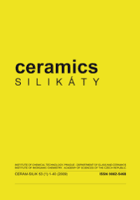
CERAMICS-SILIKATY
Exploring the Boundaries of Ceramics ResearchCERAMICS-SILIKATY is a distinguished open-access journal published by the University of Chemistry and Technology, Prague, specializing in the fields of Ceramics and Composites, Analytical Chemistry, Chemical Engineering, and Materials Chemistry. Since its inception in 1991, this journal has played a pivotal role in disseminating cutting-edge research and innovative findings in the study of ceramics, emphasizing both fundamental and applied aspects. With a commitment to accessibility since 2000, CERAMICS-SILIKATY promotes knowledge sharing among researchers, professionals, and students globally. The journal's current standing in the Q3 Quartile across several categories highlights its significant contributions and relevance in the academic community. As a hub for interdisciplinary research, the journal invites submissions that advanced our understanding of ceramic materials and their applications, positioning itself as an essential resource for those engaged in the forefront of materials science.
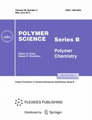
POLYMER SCIENCE SERIES B
Elevating Knowledge in Polymer SciencePOLYMER SCIENCE SERIES B is a distinguished journal published by MAIK NAUKA/INTERPERIODICA/SPRINGER, dedicated to advancing knowledge in the fields of ceramics and composites, materials chemistry, and polymers and plastics. The journal, identifiable by its ISSN 1560-0904 and E-ISSN 1555-6123, spans a significant timeline from 1996 to 2024, reflecting its commitment to preserving and disseminating cutting-edge research in polymer science. With its current ranking in the Q3 category across relevant fields, it supports scholars and professionals in enhancing their understanding and application of polymeric materials. While it operates on a non-open access basis, the journal is pivotal for researchers seeking in-depth analysis and peer-reviewed studies. Located in the heart of the United States at 233 Spring St, New York, NY 10013-1578, POLYMER SCIENCE SERIES B serves as an essential resource for committed researchers, professionals, and students aiming to push the boundaries of polymer science.

JOURNAL OF CERAMIC PROCESSING RESEARCH
Innovating Techniques for Tomorrow's CeramicsJOURNAL OF CERAMIC PROCESSING RESEARCH, published by the Korean Association for Crystal Growth, Inc., serves as a vital source of scholarly communication in the field of ceramics and composites. With an ISSN of 1229-9162, this well-regarded journal aims to advance knowledge through rigorous research and publication of innovative studies that push the boundaries of ceramic processing technologies. Indexed in Scopus and boasting a 2023 Q3 ranking in the ceramics category, it provides a platform for researchers to disseminate their findings and engage with emerging trends in material science. The journal reflects a commitment to contributing to the scientific community, emphasizing the importance of interdisciplinary collaboration and advancements in fabrication techniques. Although it operates under a traditional access model, the journal is a beacon for researchers, professionals, and students, inviting them to explore breakthroughs from the years 2000 through 2024 and beyond.