
Processes
metrics 2024
Empowering researchers with accessible knowledge.
Introduction
Processes is an esteemed open-access journal published by MDPI, dedicated to advancing the understanding and application of scientific principles within the realms of bioengineering, chemical engineering, and process chemistry and technology. Founded in 2013 and based in Basel, Switzerland, this journal aims to foster rigorous research dissemination without the barriers of traditional publishing, making a diverse array of scholarly articles accessible to the global scientific community. With an impressive standing in the academic landscape, Processes is classified in 2023 within prestigious quartile rankings, including Q2 in Chemical Engineering (miscellaneous) and Q3 in both Bioengineering and Process Chemistry and Technology, reflecting its relevance and contribution to these dynamic fields. The journal welcomes submissions that not only present innovative methodologies and experimental findings but also encourage interdisciplinary collaboration and knowledge sharing among researchers, professionals, and students. As of recent metrics, it ranks favorably within Scopus, reinforcing its impact and relevance for ongoing research and development in these disciplines. Explore Processes as a source of inspiration and knowledge for your next scientific endeavor.
Metrics 2024
 -2.803.00-
Metrics History
Rank 2024
IF (Web Of Science)
JCI (Web Of Science)
Quartile History
Similar Journals

Engineering Review
Pioneering pathways for engineering excellence.Engineering Review is a prominent academic journal published by the University of Rijeka, Faculty of Engineering in Croatia. As an emerging outlet in the field of engineering, the journal has been providing a platform for interdisciplinary research since its inception in 2011, with a commitment to disseminating high-quality studies up to the horizon of 2024. Although currently categorized as Q4 in the Engineering (miscellaneous) section and ranking 242 out of 307 in General Engineering per Scopus metrics, the journal aims to bolster its impact and reach within the engineering community. With a focus on innovative approaches and practical applications in various engineering disciplines, Engineering Review invites contributions from researchers, professionals, and students alike, fostering a collaborative environment for the advancement of engineering research in a global context. While it is not an open-access journal at this time, it remains a vital resource for those engaged in cutting-edge engineering endeavors.
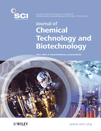
JOURNAL OF CHEMICAL TECHNOLOGY AND BIOTECHNOLOGY
Exploring the Synergy Between Chemistry and BiotechnologyJOURNAL OF CHEMICAL TECHNOLOGY AND BIOTECHNOLOGY, published by WILEY in the United Kingdom, serves as a premier platform for research at the interface of chemical engineering and biotechnology. With an ISSN of 0268-2575 and E-ISSN 1097-4660, this journal has established itself as a crucial resource for scholars and professionals, evidenced by its impactful categorization in the Q1 and Q2 quartiles across multiple domains such as Inorganic Chemistry, Biotechnology, and Renewable Energy. The journal encompasses a broad scope that includes innovative research on sustainable technologies, pollution management, and advances in chemical syntheses, making it essential for those pursuing cutting-edge developments in these disciplines. Researchers and practitioners benefit from its comprehensive coverage, as it includes insightful articles, reviews, and case studies that collectively push the boundaries of contemporary science and engineering. With a ranking of Q2 in its various categories and significant percentiles in key fields, the journal stands as a beacon for high-quality scholarship, eligible for impact in both academia and industry.
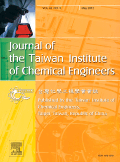
Journal of the Taiwan Institute of Chemical Engineers
Advancing chemical engineering through innovative research.The Journal of the Taiwan Institute of Chemical Engineers is a prestigious publication in the field of chemical engineering and chemistry, published by Elsevier. With an impressive impact factor placing it in the top quartiles (Q1) of both the Chemical Engineering (miscellaneous) and Chemistry (miscellaneous) categories, this journal serves as a vital platform for disseminating cutting-edge research and innovative findings. Since its inception in 2009 and continuing through 2024, it has established a strong reputation with notable Scopus rankings—ranked 40th out of 273 in General Chemical Engineering and 62nd out of 408 in General Chemistry, reflecting the journal’s significance in its field. By offering open access options, the journal ensures that research is readily available to a global audience, fostering collaboration and knowledge exchange among researchers, professionals, and students. The Journal of the Taiwan Institute of Chemical Engineers is dedicated to advancing the discipline of chemical engineering and supporting the development of novel scientific methodologies and applications.
ACS ES&T Engineering
Connecting Scholars to Shape the Future of Engineering and Environmental Practices.ACS ES&T Engineering, published by the American Chemical Society, stands as a leading journal in the realm of Chemical Engineering, Environmental Chemistry, and related fields, with a notable Impact Factor indicative of its scholarly influence. Emerging from 2021 with a vision to address contemporary challenges in engineering and environmental health, this Journal not only covers critical studies in Chemical Engineering but also excels in areas such as Process Chemistry and Technology, aligning with its Q1 status across several categories in 2023. With exceptional rankings in Scopus, including a percentile rank in the 90th for Chemical Health and Safety, it offers a significant platform for researchers, educators, and practitioners to disseminate innovative research and practices. Although the journal maintains a subscription model, its commitment to rigorous peer review and high-quality content ensures that readers gain access to pivotal findings essential for advancing knowledge and practice in a rapidly evolving scientific landscape. For those dedicated to tackling global engineering challenges, ACS ES&T Engineering is an invaluable resource.
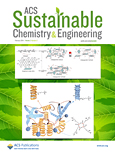
ACS Sustainable Chemistry & Engineering
Elevating sustainable practices in chemical sciences.ACS Sustainable Chemistry & Engineering is a premier journal published by the American Chemical Society, dedicated to advancing knowledge and innovation in the fields of sustainable chemistry and engineering. With an impressive impact factor and a consistent ranking in the Q1 category across various disciplines such as Chemical Engineering, Chemistry, Environmental Chemistry, and Renewable Energy, this journal serves as a vital resource for researchers, professionals, and students alike. Since its inception in 2013, the journal has been committed to publishing high-quality, peer-reviewed articles that address the critical challenges of sustainability in chemistry and engineering. With no open-access option currently available, the journal emphasizes the importance of premium scholarly communication. As the field continues to evolve, ACS Sustainable Chemistry & Engineering remains at the forefront of providing cutting-edge research that impacts our understanding and application of sustainable practices in the chemical sciences.
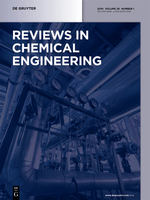
REVIEWS IN CHEMICAL ENGINEERING
Transforming Ideas into Engineering Solutions.REVIEWS IN CHEMICAL ENGINEERING, published by Walter de Gruyter GmbH, is a premier journal that delivers cutting-edge insights and comprehensive reviews in the field of chemical engineering. Established as an eminent resource since 1982, this journal is committed to advancing knowledge and fostering innovation in various domains of chemical engineering, including process design, materials, and environmental considerations. With an impressive Q1 ranking in the 2023 Scopus category for Chemical Engineering and a commendable 20th position out of 273 journals, it is recognized for its rigorous peer-review process and high-impact contributions. Although it operates under a subscription model, the journal remains a vital platform for researchers and professionals aiming to stay at the forefront of technological advancements and scholarly discourse in chemical engineering. With a focus on interdisciplinary applications and real-world relevance, REVIEWS IN CHEMICAL ENGINEERING is an indispensable resource for academics, industry professionals, and students dedicated to excellence in this field.

Hemijska Industrija
Innovating Chemistry: Bridging Research and ApplicationHemijska Industrija, an esteemed journal published by the Association of Chemical Engineers of Serbia, serves as a critical platform for advancing knowledge in the fields of chemical engineering and chemistry since its inception in 1989. With an Open Access policy adopted in 2017, the journal provides global access to cutting-edge research and innovative findings, enhancing visibility for authors and fostering collaboration among researchers, professionals, and students alike. This peer-reviewed journal currently holds a Q3 ranking in both Chemical Engineering (miscellaneous) and Chemistry (miscellaneous) categories, signifying its growing impact in these fields. Published in Belgrade, Serbia, Hemijska Industrija not only disseminates high-quality articles from various disciplines within chemical science but also emphasizes interdisciplinary approaches and practical applications, making it an invaluable resource for anyone seeking to stay at the forefront of chemical innovations.
Frontiers in Chemical Engineering
Pioneering Discoveries in Chemical ScienceFrontiers in Chemical Engineering is an esteemed open-access journal published by Frontiers Media SA, dedicated to advancing knowledge in the dynamic field of chemical engineering. Since its inception in 2019, this journal has rapidly gained recognition for its rigorous peer-reviewed articles and innovative research contributions, achieving notable quartile rankings such as Q2 in Chemical Engineering and Q3 in both Bioengineering and Catalysis by 2023. With an emphasis on providing accessible and cutting-edge research, the journal caters to a diverse audience of researchers, professionals, and students interested in the latest developments and methodologies within the chemical engineering discipline. Hailing from Lausanne, Switzerland, Frontiers in Chemical Engineering embodies a commitment to enhancing collaborative scientific communication, making crucial research findings available without barrier. By publishing high-quality articles that address both theoretical advancements and practical applications in chemical engineering, this journal serves as a pivotal resource for fostering innovation and collaboration across the global research community.
Chemical Engineering and Processing-Process Intensification
Catalyzing Progress in Chemical Engineering ResearchChemical Engineering and Processing - Process Intensification is a leading journal published by Elsevier Science SA, specializing in the multifaceted domain of chemical engineering. With the ISSN 0255-2701 and E-ISSN 1873-3204, this journal stands as a beacon of knowledge, facilitating the dissemination of innovative research from 1984 onwards and continuing through 2024. Renowned for its rigorous peer-review process, it boasts a distinguished reputation, reflected in its top-tier rankings within several fields: Q1 in Chemical Engineering (Miscellaneous), Q2 in Chemistry, and Q1 in Industrial and Manufacturing Engineering. This journal focuses on the advancements in process intensification, which are crucial for optimizing efficiency and sustainability in chemical processes. Although access is not open, the journal serves as an essential resource for researchers, professionals, and students alike who seek to advance their understanding and contribute to the evolving landscape of chemical engineering and process technology. Join a community of innovators driving the future of process engineering through impactful and cutting-edge research.
ChemBioEng Reviews
Pioneering Insights in Bioengineering and Chemical EngineeringChemBioEng Reviews is a premier academic journal dedicated to advancing the fields of biochemistry, bioengineering, and chemical engineering. Published by WILEY-V C H VERLAG GMBH, this journal serves as an essential platform for researchers and professionals seeking to disseminate groundbreaking insights and innovations. With a remarkable impact factor and a solid reputation, it is ranked in the top quartile (Q1) across multiple disciplines, including Biochemistry, Bioengineering, and Industrial and Manufacturing Engineering. The journal's comprehensive scope covers the synthesis, analysis, and application of bioengineered solutions, making it a vital resource for anyone involved in process chemistry and technology. With an unwavering commitment to high-quality scientific discourse from 2014 to 2024, ChemBioEng Reviews is not only pivotal for the academic community but also contributes to industry advancements in filtration, separation processes, and the intersection of chemical and biological engineering.