PROGRESS IN CRYSTAL GROWTH AND CHARACTERIZATION OF MATERIALS
Scope & Guideline
Pioneering Research in Condensed Matter Physics
Introduction
Aims and Scopes
- Crystal Growth Techniques:
The journal emphasizes diverse crystal growth techniques, including chemical vapor transport, epitaxial growth, and novel methods like electrospray crystallization, highlighting advancements and optimizations in these processes. - Characterization Methods:
A core focus is on the development of characterization techniques to analyze the structural, electrical, and optical properties of crystals, contributing to the understanding of material behavior. - Materials Innovation:
The journal promotes research on innovative materials, such as nano-engineered alloys and advanced semiconductors, exploring their applications in technology and industry. - Interdisciplinary Research:
It encourages interdisciplinary studies, bridging chemistry, physics, and materials science to explore fundamental questions such as the origins of life and the role of crystals in biological systems. - Defect Engineering:
There is a consistent focus on understanding defects in crystals, their formation, and how they can be controlled to enhance material properties, which is vital for applications in electronics and photonics.
Trending and Emerging
- Nanomaterials and Nanoengineering:
There is a notable increase in research focused on nanoengineered materials, including synthesis techniques and applications in energy storage and conversion, which is crucial for advancing nanotechnology. - Biosensor Development:
The exploration of new materials for biosensor applications has emerged as a significant trend, indicating a growing intersection between materials science and biotechnology. - 3D and 2D Material Formation:
Recent publications emphasize the formation and stability of both 3D and 2D materials, reflecting a broader interest in these structures for their unique properties and applications in electronics. - Advanced Characterization Techniques:
The development and application of sophisticated characterization methods, including in-situ techniques and optical microscopy, are increasingly prominent, showcasing the need for precise material analysis. - Electrochemical Applications:
Research on materials for electrochemical applications, such as energy storage and conversion, is trending, highlighting the importance of crystals in sustainable technologies.
Declining or Waning
- Classical Crystal Nucleation Theories:
There seems to be a decreasing focus on traditional theories of crystal nucleation, suggesting a shift towards more innovative approaches and practical applications in nucleation and growth processes. - Biomorphs and Historical Mineral Studies:
Research on biomorphs and their historical significance in mineral formation appears to be less frequent, indicating a potential waning interest in purely historical or theoretical studies in favor of application-oriented research. - Thermal Stress Phenomena:
While thermal stress studies have been explored, recent publications suggest a reduced emphasis on this area, possibly due to advancements in other material characterization techniques that provide better insights.
Similar Journals
Optical Materials Express
Empowering researchers through open-access optical insights.Optical Materials Express is a leading open-access journal dedicated to the rapid dissemination of research in the field of optical materials, published by the esteemed Optica Publishing Group. Since its inception in 2012, the journal has played a pivotal role in advancing knowledge and innovation in Electronic, Optical, and Magnetic Materials, currently maintaining a commendable Q2 classification in the 2023 category rankings. With a Scopus rank of 86 out of 284 in its category, the journal proudly boasts a 69th percentile positioning, underscoring its impact and relevance within the scientific community. The journal publishes high-quality, peer-reviewed articles that explore both fundamental and applied aspects of optical materials, making it an essential resource for researchers, professionals, and students alike. Located in Washington, DC, and accessible to a global audience, Optical Materials Express continues to foster collaboration and innovation among scholars in this vibrant field.

MATERIALS SCIENCE-POLAND
Pioneering Research in Materials ScienceMATERIALS SCIENCE-POLAND, published by SCIENDO, is an esteemed open access journal dedicated to the rapidly evolving field of materials science. Since its inception in 2002 and transitioning to an open access model in 2015, the journal has been a vital platform for researchers and professionals to disseminate their findings and contribute to the scientific community. With an ISSN of 2083-134X and an E-ISSN of 2083-134X, it spans a comprehensive range of disciplines, focusing on condensed matter physics, materials science, and mechanical engineering among others. In the 2023 rankings, it holds a position in the Q4 and Q3 quartiles across various categories, showcasing its relevance and ongoing contribution to these fields. Researchers benefit from its accessibility, enabling wider reach and engagement with contemporary topics in material innovation and applications. As the journal continues to evolve until 2024, it remains a cornerstone for scholars looking to advance their knowledge and research in materials science.
X-Ray Structure Analysis Online
Elevating Research Standards in Structural ChemistryX-Ray Structure Analysis Online is a pivotal academic journal dedicated to the field of analytical and materials chemistry, published by the Japan Society for Analytical Chemistry. Established in 2009, this journal serves as a vital platform for researchers and professionals dedicated to advancing the understanding of X-ray structural analysis techniques and their applications. With ISSN 1883-3578, it operates under rigorous peer-review standards, promoting high-quality research contributions. While the journal is currently categorized in the Q4 quartile for both Analytical Chemistry and Materials Chemistry, its focus on cultivating a deeper understanding of material properties through X-ray analysis remains crucial for ongoing developments in these fields. By providing an accessible outlet for innovative studies, X-Ray Structure Analysis Online supports the academic community in overcoming the challenges of a rapidly evolving scientific landscape. It is particularly valuable for those engaged in material and analytical research, offering insights that contribute to both theoretical foundations and practical applications.

Journal of the Korean Crystal Growth and Crystal Technology
Illuminating the Path of Crystal Science DevelopmentJournal of the Korean Crystal Growth and Crystal Technology, published by the Korean Association for Crystal Growth, Inc, serves as a significant platform for the dissemination of research related to crystal growth and technology, emphasizing advancements in the field within the context of Korean and global scientific communities. With its ISSN 1225-1429 and E-ISSN 2234-5078, this journal invites contributions that explore the theoretical and practical aspects of crystal growth, including material science, physics, and engineering applications. Although specific metrics such as HIndex or Scopus ranks are currently unpublished, the journal is poised to impact the field significantly, appealing to researchers, professionals, and students seeking to expand their knowledge and expertise. By fostering collaboration and sharing innovative findings, the Journal of the Korean Crystal Growth and Crystal Technology is a valuable resource for those aiming to contribute to this evolving discipline.
MATERIALS CHARACTERIZATION
Elevating Standards in Materials ResearchMATERIALS CHARACTERIZATION is a leading international journal dedicated to the advancement of knowledge in the field of materials science and engineering. Published by Elsevier Science Inc, this esteemed journal has been disseminating vital research since 1970 and continues to be essential for scholars and industry professionals alike. With an impressive impact reflected in its Q1 quartile rankings across several categories—including Condensed Matter Physics, Materials Science, Mechanical Engineering, and Mechanics of Materials—MATERIALS CHARACTERIZATION stands out as a premier outlet for innovative studies and technical advancements. Researchers can access a wealth of peer-reviewed articles that explore properties, characterization techniques, and applications of materials, fostering interdisciplinary collaboration. With a commitment to high-quality research and comprehensive review processes, the journal plays a crucial role in shaping the future of materials science, making it an invaluable resource for anyone invested in this dynamic field.
JOURNAL OF CRYSTAL GROWTH
Illuminating the Path of Crystal Growth DiscoveriesJOURNAL OF CRYSTAL GROWTH, published by Elsevier, stands as a vital platform in the realm of condensed matter physics, inorganic chemistry, and materials chemistry. With its inception dating back to 1967 and a promising convergence continuing through 2024, this journal encompasses the latest research and advancements in crystal growth phenomena. Although it does not currently offer open access options, its rigorous peer-review process ensures high-quality scholarly contributions that are essential for researchers, professionals, and students alike. The journal's solid standing is reflected in its Scopus rankings, with placements in the third and second quartiles across relevant fields and notable percentiles. Operating from the heart of the Netherlands, JOURNAL OF CRYSTAL GROWTH not only fosters academic dialogue but also enhances the understanding of crystallization processes crucial for materials engineering and applied sciences, making it an indispensable resource for anyone dedicated to exploring the intricacies of crystal growth.
Ceramics International
Exploring the forefront of materials innovation.Ceramics International is a premier journal published by ELSEVIER SCI LTD, focusing on advancing the field of materials science with a specific emphasis on ceramics and composites. With an impressive impact factor and a top-tier standing in several critical categories, including Q1 rankings in Ceramics and Composites, Electronic, Optical and Magnetic Materials, and Materials Chemistry, this journal serves as a crucial resource for researchers and professionals alike. Established in 1981, it has consistently showcased cutting-edge research in various domains, including surfaces, coatings, and process chemistry technologies, making it invaluable for those advancing theoretical and practical knowledge in these areas. While access is through subscription, the journal’s rich content, profound insights, and rigorous peer-review process ensure high-quality articles that contribute meaningfully to the scientific community. By fostering innovation and collaboration through rigorous research, Ceramics International stands out as an authoritative source for those dedicated to the evolution of materials science.

Frontiers in Materials
Advancing the Future of Materials Science.Frontiers in Materials, an esteemed journal published by FRONTIERS MEDIA SA, is a leading platform in the field of Materials Science, with a notable impact factor placing it in the Q2 category of its discipline as of 2023. Since its establishment as an Open Access journal in 2014, it has fostered considerable academic exchange, allowing researchers from around the globe to share their innovative findings and insights. Based in Lausanne, Switzerland, this journal not only emphasizes high-quality peer-reviewed articles but also prioritizes rapid dissemination of research, as evidenced by its commendable Scopus ranking of #62 out of 196 in Materials Science (miscellaneous). By consistently striving to bridge the gap between academia and practical applications, Frontiers in Materials serves as an invaluable resource for researchers, professionals, and students seeking to delve into cutting-edge advancements and transformative applications in materials science.
MATERIALS SCIENCE AND TECHNOLOGY
Connecting Academia and Industry through Materials InsightsMATERIALS SCIENCE AND TECHNOLOGY is a leading journal published by SAGE PUBLICATIONS INC, focusing on the interdisciplinary advancements in the field of materials science. Since its inception in 1984, the journal has provided a platform for researchers and industry professionals to present innovative findings through rigorous peer-reviewed articles. The journal holds a commendable impact factor and categorizes itself within the prestigious Q2 rank in various domains such as Condensed Matter Physics, Materials Science, Mechanical Engineering, and Mechanics of Materials according to the 2023 Quartiles. With no Open Access option, it primarily serves as a repository for in-depth studies and advancements that push the boundaries of materials engineering and application. Located in the United Kingdom, at 2455 TELLER RD, THOUSAND OAKS, CA 91320, the journal continues to attract a global readership, making it indispensable for academics, researchers, and students who aim to stay at the forefront of materials innovation.
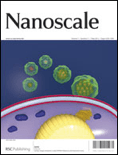
Nanoscale
Pioneering Discoveries in Materials Science.Nanoscale is a premier academic journal published by the Royal Society of Chemistry, dedicated to advancing the field of nanoscience and nanotechnology. With both its ISSN (2040-3364) and E-ISSN (2040-3372) ensuring wide accessibility, the journal is renowned for its high-impact research contributions, reflected in its impressive 2023 Impact Factor and prestigious Q1 ranking in both Materials Science (Miscellaneous) and Nanoscience and Nanotechnology categories. Since its inception in 2009, Nanoscale has fostered a collaborative platform where leading researchers from around the globe share their innovative findings across a multitude of topics spanning from material synthesis to applications in nanotechnology. The journal not only serves as a valuable resource for professionals, researchers, and students but also actively engages the academic community in discussing emerging trends, thus shaping the future of nanoscience. Situated in the heart of the UK at Thomas Graham House, Science Park, Milton Rd, Cambridge CB4 0WF, Nanoscale remains a key publication for those looking to keep abreast of the latest breakthroughs in an ever-evolving field.