
Psychosis-Psychological Social and Integrative Approaches
Scope & Guideline
Empowering researchers and practitioners in psychosis studies.
Introduction
Aims and Scopes
- Psychological interventions for psychosis:
The journal emphasizes various psychological therapies, such as Cognitive Behavioral Therapy for Psychosis (CBTp), Acceptance and Commitment Therapy (ACT), and compassion-focused approaches. These methodologies are explored in terms of their effectiveness and adaptability for individuals experiencing psychosis. - Social and community-based approaches:
Research highlights the importance of social support systems, including peer support groups and community engagement, in the recovery process for individuals with psychosis. The journal investigates how social interactions and community resources can enhance therapeutic outcomes. - Lived experience and qualitative research:
The journal prioritizes the voices of those with lived experience of psychosis, utilizing qualitative methodologies to understand their perspectives, challenges, and recovery processes. This focus enriches the discourse around psychosis and promotes recovery-oriented practices. - Trauma-informed care and its implications:
Trauma's role in the development and experience of psychosis is a significant area of exploration, with studies addressing how trauma-informed approaches can improve treatment outcomes and patient experiences. - Innovative therapeutic modalities:
The journal investigates novel therapeutic approaches, such as adventure therapy, virtual reality, and narrative therapy, that provide alternative pathways for recovery and understanding of psychosis. - Cultural and contextual factors:
Research in the journal recognizes the influence of cultural and contextual variables on the experience and treatment of psychosis, advocating for culturally sensitive practices in mental health care.
Trending and Emerging
- Integration of lived experience in research:
There is a marked increase in studies that incorporate lived experiences of individuals with psychosis, emphasizing the importance of their narratives in shaping research and therapeutic practices. This trend promotes a more inclusive and empathetic approach to mental health. - Innovative therapeutic strategies:
Emerging themes include the exploration of unconventional therapeutic modalities, such as adventure therapy and virtual reality interventions, which are being recognized for their potential to enhance engagement and recovery in individuals with psychosis. - Focus on social determinants of mental health:
Recent publications have begun to emphasize the role of social factors and community resources in the recovery process, highlighting how social identity, peer support, and community-based interventions can significantly impact outcomes for individuals with psychosis. - Trauma and its impact on psychosis:
Studies increasingly address the relationship between trauma and psychosis, focusing on trauma-informed care practices and the implications for treatment, reflecting a growing awareness of the interplay between psychological trauma and psychotic experiences. - Cultural competence in psychosis treatment:
There is a rising interest in understanding how cultural contexts influence the experience of psychosis and the effectiveness of treatment approaches, underscoring the need for culturally sensitive practices in mental health care.
Declining or Waning
- Pharmacological approaches:
While the journal initially included more content related to pharmacological treatments for psychosis, there has been a noticeable decrease in the focus on medication management and psychopharmacology, indicating a potential shift towards psychological and social interventions. - Traditional diagnostic frameworks:
There appears to be a waning interest in conventional diagnostic categories and frameworks, with more emphasis on dimensional and experiential approaches to understanding psychosis, suggesting a move away from rigid classifications. - Negative symptomatology studies:
Research centered on negative symptoms of psychosis has decreased, possibly due to a growing recognition of the complexity of psychosis experiences and a shift towards holistic and integrative views that encompass positive and negative experiences.
Similar Journals

Psychology Research and Behavior Management
Advancing understanding in psychology and behavior management.Psychology Research and Behavior Management is a leading peer-reviewed journal that serves as a vital resource in the field of psychology and mental health. Published by DOVE MEDICAL PRESS LTD since 2008, this open access journal allows for the free dissemination of knowledge, ensuring that valuable research findings are accessible to a global audience. With an impact factor that positions it within the Q2 category in both Psychiatry and Mental Health as well as in Psychology (miscellaneous), the journal is recognized for its significant contribution to the understanding of behavioral management and psychological health. Its rankings—#61 out of 216 in General Psychology and #222 out of 567 in Psychiatry and Mental Health—further highlight its influence within these critical fields. By providing an avenue for innovative research and insights, Psychology Research and Behavior Management aims to support researchers, professionals, and students in exploring and addressing complex psychological issues, ultimately fostering informed practices and advancements in mental health care.

PSYCHOLOGICAL REVIEW
Pioneering Research for the Mind's Frontiers.PSYCHOLOGICAL REVIEW, published by the American Psychological Association, stands as a premier journal within the field of psychology, boasting an impressive track record since its inception in 1894. With an impressive impact factor and a distinguished position in Q1 quartiles for both History and Philosophy of Science and Miscellaneous Psychology, this journal is recognized as a leading source of innovative research and critical analysis. Consistently ranked in the top tier, it holds the 17th position out of 216 in general psychology according to Scopus, reflecting its significance and the high caliber of scholarly contributions it features. While the journal is not open access, it provides comprehensive insights geared towards researchers, professionals, and students keen to deepen their understanding of psychological theories and practices. With a commitment to fostering intellectual discourse, PSYCHOLOGICAL REVIEW is essential for anyone engaged in the evolving landscape of psychological research.
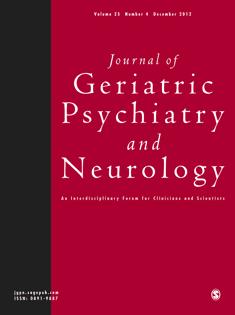
JOURNAL OF GERIATRIC PSYCHIATRY AND NEUROLOGY
Empowering care through rigorous academic exploration.JOURNAL OF GERIATRIC PSYCHIATRY AND NEUROLOGY, published by SAGE PUBLICATIONS INC, is a premier academic journal dedicated to advancing the understanding of mental health issues and neurological disorders in the aging population. With an established presence since 1988, this journal stands out in the fields of Geriatrics, Gerontology, Neurology, and Psychiatry, currently positioned in the Q2 category based on 2023 metrics, reflecting its influence and academic rigor. The journal is indexed in major databases and is highly regarded for its contributions, as evidenced by its strong Scopus rankings. It serves as an essential resource for researchers, clinicians, and students, offering insightful articles that explore the complex interplay between aging, mental health, and neurological conditions. Although it does not provide open access, it continues to be a vital source of scholarly knowledge for those dedicated to enhancing the well-being of the elderly population.
SCHIZOPHRENIA BULLETIN
Innovating treatment approaches for schizophrenia.SCHIZOPHRENIA BULLETIN, published by Oxford University Press, stands as a leading journal in the field of psychiatry and mental health, particularly focusing on the complexities of schizophrenia. Established in 1973, this esteemed journal covers a wide spectrum of research areas, including clinical findings, neurobiology, epidemiology, and treatment approaches, making it indispensable for researchers and practitioners alike. With its current status in the Q1 category of the psychiatry and mental health disciplines, and a remarkable Scopus rank of #34 out of 567, the journal enjoys a strong impact factor, emphasizing its contribution to advancing knowledge in mental health. Although it operates on a subscription model, the significance of the journal in disseminating groundbreaking research makes it a vital resource for those committed to improving outcomes in schizophrenia. Through its rigorous peer-review process and commitment to high-quality scientific communication, SCHIZOPHRENIA BULLETIN continues to be at the forefront of psychiatric research and discourse.
JOURNAL OF CONTEMPORARY PSYCHOTHERAPY
Exploring New Frontiers in Psychotherapeutic ResearchJournal of Contemporary Psychotherapy is a prestigious academic journal dedicated to exploring the evolving practices and theories in the field of psychotherapy. Published by Springer International Publishing AG, the journal has been a vital resource since its inception in 1968, showcasing works that bridge the gap between clinical psychology and psychiatry. With an impressive impact factor reflected in its Q2 ranking in both Clinical Psychology and Psychiatry and Mental Health, the journal caters to a diverse audience of researchers, practitioners, and students keen on advancing their understanding of contemporary therapeutic approaches. Though it operates under a traditional subscription model, the journal is committed to disseminating high-quality research that contributes to the ongoing dialogue in mental health treatment and practice. By focusing on innovative methods and empirical studies, Journal of Contemporary Psychotherapy plays a crucial role in shaping future directions in psychotherapy and mental health care.

Neuropsychiatria i Neuropsychologia
Bridging Neuroscience and Psychiatry for a Better TomorrowNeuropsychiatria i Neuropsychologia is a pivotal journal dedicated to the exploration of behavioral neuroscience, neuropsychology, and psychiatry, published by TERMEDIA PUBLISHING HOUSE LTD in Poland. This journal, with an ISSN of 1896-6764, has been a significant contribution to the scientific community since its inception in 2009 and continues to converge its findings until 2024. While it operates under a traditional access model, its commitment to disseminating research in these critical fields is unwavering. The journal currently holds a Q4 classification in multiple categories including Behavioral Neuroscience and Neuropsychology, reflecting its growing influence in the landscape of mental health studies. With Scopus rankings displaying a percentile standing in the bottom quartile, Neuropsychiatria i Neuropsychologia presents an opportunity for authors and researchers to contribute and engage with emerging findings in psychiatry and behavioral science. By fostering scholarly communication and collaboration, this journal serves as a valuable resource for researchers, professionals, and students seeking to advance their understanding and knowledge within these vital areas of study.

CLINICAL PSYCHOLOGY-SCIENCE AND PRACTICE
Enhancing Mental Health Outcomes with Cutting-Edge ResearchCLINICAL PSYCHOLOGY-SCIENCE AND PRACTICE is a leading journal in the field of clinical psychology, published by the Educational Publishing Foundation of the American Psychological Association. With its ISSN 0969-5893 and E-ISSN 1468-2850, this esteemed publication has been contributing to the discipline since 1994, showcasing research that bridges the gap between psychological science and practical applications. Recognized for its high scholarly impact, it holds a strong position in Q1 of Clinical Psychology category quartiles and boasts an impressive Scopus rank of 68 out of 311, placing it within the 78th percentile of its field. Although not open access, the journal offers vital insights and advancements relevant to practitioners, researchers, and students specializing in clinical psychology. Its objective lies in advancing the understanding of psychological principles while promoting evidence-based practices to enhance mental health outcomes. With a commitment to fostering innovation in the clinical landscape, CLINICAL PSYCHOLOGY-SCIENCE AND PRACTICE remains a critical resource for those dedicated to improving psychological science and practice.
BEHAVIOR THERAPY
Transforming Insights into Effective InterventionsBehavior Therapy, published by Elsevier Inc, is a premier journal in the field of Clinical Psychology, recognized for its significant contributions to the empirical understanding and practical application of behavior therapy interventions. With an impressive impact factor ranking it in the Q1 quartile of Clinical Psychology as of 2023, and a commendable position in the 87th percentile among its peers, this journal serves as a vital resource for researchers, practitioners, and students alike. Since its inception in 1970, Behavior Therapy has dedicated itself to publishing high-quality original research, comprehensive reviews, and insightful case studies that cover the latest advancements in treatment modalities and behavioral interventions. The journal is committed to fostering a deeper understanding of psychological processes and therapeutic techniques, making it an essential platform for innovative ideas and effective practices in the realm of behavior therapy.
Clinica y Salud
Connecting academia and practice in clinical psychology.Clinica y Salud is a prominent peer-reviewed journal in the field of Clinical Psychology, published by the COLEGIO OFICIAL PSICOLOGOS MADRID. With a focus on disseminating high-quality research, this journal has been an Open Access publication since 1990, ensuring that its valuable findings are accessible to researchers, practitioners, and students worldwide. Based in Spain, Clinica y Salud not only contributes to the academic community through its rigorous peer-review process but also encourages the practical application of psychological research in clinical settings. As of 2023, the journal holds a commendable Q2 category ranking within Clinical Psychology, reflecting its significant impact with a Scopus rank of 150/311 and a respectable 51st percentile. Covering research from 2013 to 2024, it provides innovative insights and diverse perspectives, making it an essential resource for those engaged in the evolving landscape of psychological health and well-being.
JOURNAL OF CLINICAL PSYCHOLOGY
Empowering Clinicians Through Groundbreaking ResearchThe JOURNAL OF CLINICAL PSYCHOLOGY, published by Wiley, has been a pivotal resource in the field of psychological research since its inception in 1945. With an impressive impact factor and classification within the Q1 category for both Arts and Humanities and Clinical Psychology, it ranks prominently at #54/552 in Arts and Humanities and #71/311 in Clinical Psychology according to Scopus, placing it in the top percentiles for both categories. The journal primarily serves as a platform for disseminating groundbreaking research, theoretical advancements, and practical applications pertinent to clinical psychology, making it indispensable for researchers, clinicians, and scholars dedicated to enhancing mental health practices. Although not an open-access journal, it provides critical insights and methodologies that are fundamental for professionals navigating the complexities of clinical psychology today. With a commitment to advancing understanding and treatment of psychological disorders, the journal continues to shape outcomes in mental health and therapeutic practices.