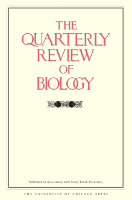
QUARTERLY REVIEW OF BIOLOGY
metrics 2024
Cultivating Excellence in Biological Scholarship
Introduction
QUARTERLY REVIEW OF BIOLOGY, published by University of Chicago Press, stands as a premier journal dedicated to the dissemination of high-quality research and review articles in the field of biological sciences. With an impressive impact factor and an esteemed ranking of Q1 in the Agricultural and Biological Sciences category, the journal is a vital resource for researchers, professionals, and students aiming to stay at the forefront of biological research and developments. Since its inception in 1945, the journal has evolved to cover a broad scope of topics, fostering interdisciplinary dialogue and providing critical insights that promote scientific advancement. Although currently not an open access journal, its reputation is underscored by a remarkable standing in the 95th percentile across Scopus rankings within its field. Located in Chicago, Illinois, this journal continues to be a cornerstone for scholarly communication in biology, making valuable contributions to both academia and practical applications in the biological sciences.
Metrics 2024
 2.483.705.9087
Metrics History
Rank 2024
Scopus
IF (Web Of Science)
JCI (Web Of Science)
Quartile History
Similar Journals

GENETICS AND MOLECULAR BIOLOGY
Bridging theory and practice in genetic science.GENETICS AND MOLECULAR BIOLOGY, published by the SOC BRASIL GENETICA, is a prominent journal dedicated to the advancement of knowledge in the fields of genetics and molecular biology. Since its inception in 1998, this Open Access journal has served as a vital platform for researchers, professionals, and students to disseminate their findings and engage with the latest innovations and discoveries. With an impact factor that reflects its growing influence, GENETICS AND MOLECULAR BIOLOGY ranks in the Q3 category for both genetics and molecular biology as of 2023, indicating its position within the academic community. The journal is indexed in Scopus, highlighting its commitment to maintaining rigorous peer-review standards while providing wide-reaching access to quality research. Operating out of Ribeirão Preto, Brazil, it fosters a collaborative environment for academic discourse and research development not only in Brazil but also globally. The journal encourages submissions that explore a wide range of topics in genetics and molecular biology, making it an essential resource for anyone involved in these dynamic fields.
PALEOBIOLOGY
Bridging the Gap Between Past Life and Present UnderstandingPALEOBIOLOGY, published by Cambridge University Press, is a premier, peer-reviewed journal that stands at the forefront of research in paleontological sciences. With a robust commitment to advancing the study of the interactions between ancient life forms and their environments, the journal has established itself as a vital resource for researchers, professionals, and students in the fields of paleontology, ecology, and evolutionary biology. Spanning from 1975 to 2024, it boasts an impressive Q1 ranking in several categories, including Agricultural and Biological Sciences, Ecology, and Paleontology, indicative of its high impact and relevance in shaping contemporary scientific discourse. While the journal is not open access, it offers a variety of subscription and access options, ensuring broad distribution and visibility of published research. As a leader in its discipline, PALEOBIOLOGY aims to facilitate a deeper understanding of our planet's biological history, making it an essential publication for anyone interested in the dynamics of life across geological time.
EVOLUTIONARY ANTHROPOLOGY
Charting New Territories in Human Evolution and HealthEVOLUTIONARY ANTHROPOLOGY is a premier journal published by WILEY, dedicated to advancing the field of anthropology through innovative and rigorous research. With an ISSN of 1060-1538 and an E-ISSN of 1520-6505, this journal boasts a remarkable Q1 ranking in both the Anthropology and Medicine (miscellaneous) categories, reflecting its significant impact within the academic community. Since its inception in 1992, it has continuously evolved, now encompassing a wide array of subjects pertinent to evolutionary studies and human health. Residing in the highly competitive Scopus rankings, it stands at an impressive rank of 10 out of 502 in the field, placing it within the top 2% of journals in Social Sciences - Anthropology. Researchers, professionals, and students alike will find this journal an invaluable resource for the latest findings, theoretical advancements, and discussions that shape our understanding of human evolution and its biological implications. While not categorized as an Open Access journal, EVOLUTIONARY ANTHROPOLOGY remains a vital outlet for high-quality scholarship, fostering dialogue and enriching knowledge across diverse audiences.
COMPTES RENDUS BIOLOGIES
Illuminating Complex Biological Questions Since 1959COMPTES RENDUS BIOLOGIES, published by the esteemed Académie des Sciences, is a prominent journal based in France that contributes significantly to the fields of Agricultural and Biological Sciences, Biochemistry, Genetics and Molecular Biology, as well as Immunology and Microbiology. With a notable Q3 ranking in several categories as of 2023, this journal serves as an essential platform for disseminating groundbreaking research and advancements in these disciplines. Access is currently available under open access options, enhancing the reach and accessibility of its published findings. The journal has been in continuous publication since 1959, with a current focus extending to 2024, ensuring that it remains at the forefront of scientific communication. With its diverse scope and commitment to quality research, COMPTES RENDUS BIOLOGIES plays a crucial role in fostering dialogue and collaboration among researchers, professionals, and students who are dedicated to understanding and addressing complex biological questions.
Science of Nature
Empowering Scientists Through Open Access Knowledge.Science of Nature, a prestigious journal published by SPRINGER HEIDELBERG, stands at the forefront of multidisciplinary research, encompassing key areas within Ecology, Evolution, Behavior, and Systematics. With an impressive history tracing back to 1913 and a continued focus on innovative scientific inquiry, this journal has earned a commendable Q2 ranking in both Ecology and Medicine as of 2023. The journal is accessible through its Open Access options, promoting wider dissemination of knowledge and research breakthroughs. As a vital resource for researchers, professionals, and students alike, Science of Nature not only reflects the dynamic nature of biological sciences but also contributes significantly to advancing our understanding of complex ecological relationships and medical developments. Recognized by its ISSN 0028-1042 and E-ISSN 1432-1904, this journal is a must-read for those seeking to stay updated with the latest findings and discussions in the field.
Biology Letters
Advancing biological knowledge through concise communication.Biology Letters, published by the esteemed Royal Society, stands at the forefront of research in the field of biological sciences, with a strong emphasis on innovative studies that bridge gaps across disciplines. Since its inception in 2005, the journal has garnered significant recognition, achieving a remarkable Q1 ranking in Agricultural and Biological Sciences (miscellaneous) and a percentile of 88th in the same category, according to Scopus rankings. Released in the United Kingdom, the journal offers a platform for authors to share concise research findings and theoretical perspectives that contribute meaningfully to the advancement of biological inquiry. Although not open access, the journal remains highly regarded in the academic community for its rigorous peer-review process and impactful content, making it an invaluable resource for researchers, professionals, and students dedicated to exploring the complexities of biology. With an ongoing commitment to excellence, Biology Letters continues to shape the future of biological sciences.
TRENDS IN ECOLOGY & EVOLUTION
Unveiling the Latest Trends in Nature's DynamicsTRENDS IN ECOLOGY & EVOLUTION, published by CELL PRESS, is a premier academic journal dedicated to the dynamic fields of ecology, evolution, and behavior. With its ISSN 0169-5347 and E-ISSN 1872-8383, this prestigious journal has consistently contributed to the scientific community since its inception in 1986 and is set to continue its legacy through 2024. Ranked in the top quartile (Q1) of its category in 2023, TRENDS IN ECOLOGY & EVOLUTION holds an extraordinary position, sitting at rank #4 out of 721 in the Scopus database for Agricultural and Biological Sciences, specifically within the Ecology and Evolution sectors, reflecting its high impact and relevance in these critical areas of study. The journal's objective is to provide a platform for reviewing and synthesizing the latest research, trends, and advances, thereby influencing the direction of future scientific inquiries. Although it does not currently offer open access options, its insights are invaluable for researchers, professionals, and students eager to delve into the rapidly evolving understanding of ecological and evolutionary processes.
ZOOLOGY
Exploring innovative insights in zoology.ZOOLOGY, an esteemed journal published by Elsevier GmbH, stands at the forefront of research in the Animal Science and Zoology fields. With a notable impact factor and recognized as a Q1 category journal in its discipline, ZOOLOGY is highly regarded among researchers, ranking #98 out of 490 in Scopus rankings. Founded in 1994 and continuing through to 2024, the journal aims to publish cutting-edge, peer-reviewed articles that contribute significantly to the understanding of zoological sciences. Based in Munich, Germany, ZOOLOGY provides both subscription and open access options, ensuring that influential research reaches a wider audience. It serves as an essential platform for disseminating innovative findings, connecting scholars globally, and fostering interdisciplinary collaboration to advance zoological knowledge.
BIOLOGY BULLETIN
Empowering Research in Genetics and Molecular Biology.BIOLOGY BULLETIN is a prominent academic journal published by PLEIADES PUBLISHING INC, dedicated to advancing the fields of Agricultural and Biological Sciences as well as Biochemistry, Genetics, and Molecular Biology. With an ISSN of 1062-3590 and E-ISSN of 1608-3059, the journal has been a vital resource for researchers and professionals since its commencement in 1996. Located in the United States, BIOLOGY BULLETIN operates within a highly competitive academic landscape, achieving a 2023 ranking in the Q3 quartile for Agricultural and Biological Sciences and Q4 for Biochemistry, Genetics, and Molecular Biology, highlighting its commitment to delivering impactful research despite its challenges. Researchers seeking to publish their findings will find a platform for significant insights, as reflected in its Scopus rankings, where it stands at #183 and #199 out of 221 in its respective categories, showcasing opportunities for growth and visibility. While currently not an open-access publication, BIOLOGY BULLETIN plays a crucial role in facilitating scholarly communication and fostering an understanding of biological sciences, making it an essential read for academics, professionals, and students alike.

ZHURNAL OBSHCHEI BIOLOGII
Bridging Tradition and Innovation in BiologyZHURNAL OBSHCHEI BIOLOGII, published by MEZHDUNARODNAYA KNIGA in the Russian Federation, is a venerable journal with a rich history originating in 1945. Renowned for its contributions to the fields of Ecology, Evolution, Behavior, and Systematics, as well as Medicine (miscellaneous), this journal provides a platform for researchers and professionals to disseminate significant findings within these domains. Although currently not classified as an open access publication, ZHURNAL OBSHCHEI BIOLOGII holds a Q4 quartile designation in its respective categories, reflecting its unique positioning within the global research landscape. While its coverage in Scopus is limited, the journal remains an important resource for academics interested in the evolution of biological sciences, especially within the context of Russian research traditions. By fostering scholarly communication and collaboration, ZHURNAL OBSHCHEI BIOLOGII continues to play a critical role in advancing knowledge in the biological sciences.