
Quiroga-Revista de Patrimonio Iberoamericano
metrics 2024
Bridging Disciplines: Where Art Meets Preservation
Introduction
Quiroga-Revista de Patrimonio Iberoamericano, published by UNIV GRANADA, is a distinguished open-access journal dedicated to the fields of conservation, museology, and the visual and performing arts. Since its inception in 2012, the journal has provided a platform for scholars and practitioners to disseminate innovative research and critical discussions pertinent to Ibero-American heritage. With a growing impact, evidenced by its category quartiles ranking—Q3 in Conservation and Q2 in both Museology and Visual Arts and Performing Arts—as well as its Scopus rankings, Quiroga serves as an essential resource for researchers, professionals, and students who engage with the complexities of cultural preservation and artistic expression. The journal’s commitment to open access ensures the widespread availability of knowledge, fostering academic dialogue and collaboration within the global community. For inquiries, the journal can be reached at their offices located in Granada, Spain.
Metrics 2024
 0.13-0.103
Metrics History
Rank 2024
Scopus
JCI (Web Of Science)
Quartile History
Similar Journals
Visual Resources
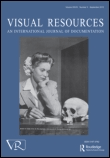
Bridging Academia and Contemporary Visual PracticesVisual Resources, an esteemed journal published by Routledge Journals, Taylor & Francis Ltd, serves as a vital platform for scholarly research in the fields of Museology and Visual Arts and Performing Arts. With an ISSN of 0197-3762 and an E-ISSN of 1477-2809, this journal has navigated the academic landscape since its inception in 1980, continuing to amplify critical dialogues up to 2024. Positioning itself within category quartiles as Q3 for both museology and visual arts, the journal ranks at #302/667 in the Visual Arts and Performing Arts category and #41/83 in Museology according to Scopus, reflecting a significant yet competitive standing. Although not designated as Open Access, the publication remains accessible through institutional subscriptions, catering to a diverse audience of researchers, professionals, and students. By disseminating pioneering research and innovative methodologies pertinent to visual culture and museum practices, Visual Resources plays an indispensable role in advancing knowledge in its disciplines and connects academia with contemporary practice.

OUD HOLLAND
Preserving the Past, Inspiring the Future of ArtOUD HOLLAND is a prestigious journal published by BRILL, focusing on the rich history and developments in the visual arts and performing arts. With a historical lineage dating back to its initial publication years from 1883 and periodic revivals until 2024, this journal has maintained its relevance amidst evolving artistic discourse. It holds an impressive standing in the Arts and Humanities field, ranking 338 out of 667 in the Visual Arts and Performing Arts category, positioning it comfortably within the 49th percentile. The journal disseminates critical research and insightful articles that cater to scholars, professionals, and students dedicated to advancing their understanding of artistic heritage and contemporary methodologies. Though currently not open access, OUD HOLLAND represents an invaluable resource for those committed to exploring the multifaceted dimensions of art, offering access to a wealth of knowledge grounded in meticulous research and scholarship.

Portal-Godisnjak Hrvatskog Restauratorskog Zavoda
Elevating Conservation Practices through Pioneering Research.Portal-Godisnjak Hrvatskog Restauratorskog Zavoda is an esteemed academic journal dedicated to the fields of conservation and visual arts, published by the HRVATSKI RESTAURATORSKI ZAVOD. With its ISSN 1847-9464 and E-ISSN 1848-6681, this journal plays a critical role in disseminating pioneering research and facilitating discourse among scholars, practitioners, and students alike in Croatia and beyond. Although it currently does not operate on an open access model, the journal is recognized for its quality, evident in its Q3 ranking in Conservation and Visual Arts and Performing Arts categories as of 2023. With a focus on innovative techniques and case studies, Portal-Godisnjak contributes significantly to the body of knowledge and best practices in the conservation of cultural heritage. Its commitment to advancing the field is further highlighted by its engagement with contemporary conservation challenges and artistic preservation. The journal stands as an important resource for those invested in the stewardship and enhancement of our shared cultural legacy.
ZEITSCHRIFT FUR KUNSTGESCHICHTE
Exploring the Depths of Art HistoryZEITSCHRIFT FUR KUNSTGESCHICHTE is a prestigious journal dedicated to the study of art history, offering insightful analyses and discussions that enrich the understanding of visual arts and performing arts. Published by DEUTSCHER KUNSTVERLAG GMBH in Germany, this journal has established itself as a significant platform for researchers and professionals alike since its inception. With a print ISSN of 0044-2992 and an e-ISSN of 2569-1619, it spans a comprehensive range of topics in art history, reflecting both traditional and contemporary perspectives. Although categorized in the Q4 quartile for Visual Arts and Performing Arts, the journal contributes to a rich dialogue within its field, aiming to foster academic discourse and promote scholarly research. Its scope has evolved notably from converged years starting in 1975 and gathering strength from 2001 to 2024, and it is committed to serving as an essential resource for students, academics, and practitioners in the arts. While not offering open access, the journal maintains a rigorous peer-review process to ensure high-quality submissions that advance knowledge and stimulate critical thought.

ARTIBUS ASIAE
Cultivating Knowledge in Archeology and the ArtsARTIBUS ASIAE, published by ARTIBUS ASIAE, is a distinguished journal focused on the fields of Archeology and Visual Arts and Performing Arts. Based in Switzerland and with a history of converged years from 2002 to 2024, this journal serves as a vital platform for scholarly discourse and research dissemination within the arts and humanities. Although it currently does not offer open access, ARTIBUS ASIAE maintains a commitment to academic integrity and quality, as evidenced by its presence in Scopus rankings, which places it in the Q4 tier for both Archeology and its niche in the arts and humanities, while achieving a Q3 ranking in Visual Arts and Performing Arts. With an emphasis on advancing knowledge and understanding across various disciplines, ARTIBUS ASIAE is an essential resource for researchers, professionals, and students seeking to enrich their understanding and contribute to the ongoing dialogue in these significant areas of study.

Bulletin KNOB
Advancing Knowledge in Arts and HistoryBulletin KNOB, published by the KONINKLIJKE NEDERLANDSE OUDHEIDKUNDIGE BOND-KNOB, is a reputable Open Access journal that has been disseminating knowledge since 1899, with a continued commitment to making research accessible to all. Based in the Netherlands, this journal provides a platform for scholarly articles that span the fields of Conservation, History, and the Visual Arts and Performing Arts. With its 2023 Scopus rankings placing it in the top quartiles within its category, Bulletin KNOB is recognized for its significant contribution to the advancement of these disciplines. Researchers, professionals, and students alike are encouraged to engage with the journal's diverse content that bridges historical narratives with contemporary practices, fostering a deeper understanding of cultural heritage. The journal’s commitment to excellence is further reflected in its Q3 and Q4 quartile rankings, making it an essential resource for anyone dedicated to the study of the arts and humanities.

Disegnare Idee Immagini-Ideas Images
Charting New Territories in Architecture and Visual ArtsDisegnare Idee Immagini-Ideas Images is a distinguished academic journal published by GANGEMI EDITORE SPA, specializing in the fields of Architecture, Visual Arts, and Performing Arts. With an ISSN of 1123-9247, this journal serves as a vital platform for the dissemination of innovative ideas and research findings in these dynamic disciplines. Over its publication span from 2009 to 2023, it has established itself in the academic community, achieving a respectable ranking in the third quartile for Architecture and second quartile for Visual Arts and Performing Arts as of 2023. Although not an Open Access journal, it offers rich content that appeals to researchers, professionals, and students alike, fostering collaboration and dialogue among scholars in Italy and beyond. The journal is an invaluable resource for those looking to explore the intersections of design and artistic expression.

Radovi Instituta za Povijest Umjetnosti-Journal of the Institute of Art History
Illuminating the Past, Inspiring the Future of Art.Radovi Instituta za Povijest Umjetnosti-Journal of the Institute of Art History is a distinguished academic journal dedicated to the exploration and critical analysis of art history, with a special emphasis on the visual arts and performing arts. Published by INST POVIJEST UMJETNOSTI-INST ART HISTORY in Croatia, this journal provides an essential platform for researchers and practitioners to disseminate their findings and engage in scholarly discourse. Since its transition to Open Access in 2008, it has significantly increased the accessibility of its content, fostering a global exchange of ideas. The journal is indexed in notable databases, reflecting its impact within its field, with a current ranking that places it in the Q4 category for History and in Q3 for Visual Arts and Performing Arts. As it spans its converged years from 2015 to 2024, Radovi is poised to expand its influence and continue contributing to the understanding of art historical narratives. Researchers, professionals, and students alike will find this journal a valuable resource for contemporary discussions and theoretical advancements in the study of art.
Journal of the History of Collections
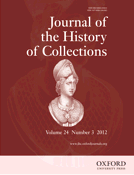
Preserving the legacy of collections for future generations.Journal of the History of Collections, published by Oxford University Press, serves as a vital resource for scholars and practitioners in the fields of conservation, museology, and visual arts. Established in 1989, this esteemed journal explores the intricate narratives of collections, addressing the historical, cultural, and social dynamics that influence collecting practices across various mediums. With an evolving publication span through 1994 and resuming in 1996 to the present day, the journal maintains a strong academic reputation, demonstrated by its impressive rankings in Scopus—placing it in the top quartiles for both Museology and Visual Arts and Performing Arts. Researchers and students will find engaging articles that not only contribute to academic discourse but also reflect on the conservation challenges faced by collections today. While currently not available as open access, the journal’s rigorous peer-review process ensures that only the highest quality research is published, making it an essential addition to any library dedicated to the arts and humanities.

STORIA DELL ARTE
Revealing the Stories Behind the CanvasSTORIA DELL ARTE is a notable journal dedicated to the rich exploration of art history and its varied facets, published by LUCA EDITORI ARTE ROMA. With an ISSN of 0392-4513, this publication serves as a vital resource for researchers, professionals, and students in the fields of Visual Arts and Performing Arts. Although the journal's coverage in Scopus has been discontinued from 2014, it has been recognized in the Scopus ranking as positioned within the 31st percentile among 374 entries in its category, highlighting its relevance in the realm of arts and humanities. While it does not offer open access, the journal's commitment to enriching the discourse on art history makes it an essential read for anyone interested in visual culture and historical contexts. Based in the heart of Rome, at VIA NOVELLA, 22, ROMA 00199 RM, ITALY, STORIA DELL ARTE continues to inspire scholarly discussion and contribute valuable insights to the academic community.