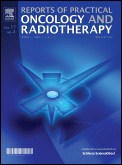
Reports of Practical Oncology and Radiotherapy
Scope & Guideline
Empowering oncology with innovative, practical insights.
Introduction
Aims and Scopes
- Clinical Outcomes and Efficacy of Treatments:
The journal emphasizes studies that explore the clinical outcomes and efficacy of various radiotherapy techniques, including conventional, hypofractionated, and stereotactic approaches, across different cancer types. - Dosimetric Studies and Treatment Planning:
A significant portion of the publications focuses on dosimetric evaluations, treatment planning methodologies, and advancements in radiotherapy technology, with the goal of optimizing patient treatment protocols. - Innovations in Radiotherapy Techniques:
The journal highlights innovative techniques in radiotherapy, such as the use of advanced imaging, adaptive radiotherapy, and modern approaches like MR-guided therapy, which aim to improve treatment precision and patient outcomes. - Patient-Centric Research and Quality of Life:
Research that investigates patient experiences, quality of life post-treatment, and the psychosocial aspects of cancer care is a consistent theme, reflecting the importance of holistic patient management. - Interdisciplinary Approaches in Oncology:
The journal encourages interdisciplinary research that combines radiotherapy with other treatment modalities such as chemotherapy and immunotherapy, showcasing comprehensive treatment strategies for cancer.
Trending and Emerging
- Hypofractionated and Stereotactic Techniques:
There is a growing emphasis on hypofractionated radiotherapy and stereotactic techniques, reflecting advancements in technology that allow for more precise and effective treatment options for various cancers. - Integration of Imaging and Radiomics:
Research exploring the integration of imaging techniques, particularly radiomics, for treatment planning and response prediction is on the rise, indicating a trend towards personalized and data-driven approaches in oncology. - Patient Quality of Life and Experience:
Studies focusing on patient-reported outcomes and quality of life post-treatment are emerging as critical components of oncology research, underscoring the importance of holistic care in cancer treatment. - Artificial Intelligence and Machine Learning Applications:
The application of AI and machine learning in treatment planning, dose calculation, and predictive modeling is gaining momentum, representing a significant trend towards technological innovation in radiotherapy. - Multidisciplinary and Collaborative Research:
There is an increasing trend towards multidisciplinary research collaborations that incorporate various specialties within oncology, highlighting the importance of comprehensive care approaches in improving patient outcomes.
Declining or Waning
- Traditional Radiotherapy Techniques:
There is a noticeable decline in publications focusing solely on traditional radiotherapy techniques without the integration of modern technologies or methodologies, as the field shifts towards more innovative and personalized approaches. - Palliative Care Studies:
Although still relevant, research specifically centered on palliative radiotherapy without the incorporation of advanced techniques or quality of life metrics has decreased, reflecting a broader shift towards curative and integrated treatment strategies. - Radiobiology Studies:
Research dedicated solely to radiobiological mechanisms, without application to clinical practice or treatment optimization, appears to be waning as the journal prioritizes studies that directly impact patient care and outcomes. - Basic Science Research:
The journal has moved away from basic science studies in radiobiology and physics that do not translate into clinical applications, favoring research that demonstrates direct relevance to patient treatment and outcomes. - Single-Institutional Studies:
The trend shows a decline in single-institution studies that do not incorporate multicenter collaboration or broader datasets, as the journal increasingly values research that reflects diverse populations and clinical practices.
Similar Journals

Breast Cancer-Targets and Therapy
Bridging science and practice in breast cancer treatment.Breast Cancer-Targets and Therapy is a leading journal in the field of oncology, published by DOVE MEDICAL PRESS LTD in New Zealand. Established as an Open Access journal in 2009, it offers a platform for researchers and healthcare professionals to disseminate innovative findings and therapeutic strategies related to breast cancer. With an impressive ranking in the Q2 category of oncology journals as of 2023, and placed at Rank #203/404 in the Scopus database, this journal facilitates the exchange of high-quality research aimed at improving patient outcomes and advancing clinical practices. Covering a wide array of topics from basic research to clinical trials, Breast Cancer-Targets and Therapy plays a crucial role in bridging the gap between scientific discovery and practical application. Researchers, professionals, and students alike will find the journal a valuable resource for the latest advancements and best practices in breast cancer treatment.
AMERICAN JOURNAL OF CLINICAL ONCOLOGY-CANCER CLINICAL TRIALS
Unveiling Breakthroughs in Cancer Clinical TrialsAMERICAN JOURNAL OF CLINICAL ONCOLOGY-CANCER CLINICAL TRIALS, published by Lippincott Williams & Wilkins, is a pivotal journal in the fields of oncology and cancer research, focusing on the latest advancements in clinical trials and therapeutic strategies for cancer management. With an ISSN of 0277-3732 and an E-ISSN of 1537-453X, this journal serves as an essential resource for the dissemination of high-quality research findings, scholarly reviews, and innovative methodologies, aiming to advance clinical oncology from 1982 to 2024. It is categorized in Q3 for Cancer Research and Q2 for Oncology, reflecting its significant role in the scientific community. In addition to its rigorous peer-reviewed content, the journal provides a platform for researchers and clinicians to share valuable insights, laying the groundwork for future breakthroughs in cancer treatment. Although it currently does not offer open-access options, the journal remains accessible to a wide audience through academic institutions and libraries. The AMERICAN JOURNAL OF CLINICAL ONCOLOGY is crucial for anyone involved in oncology research, making it a must-read for professionals dedicated to improving cancer care.
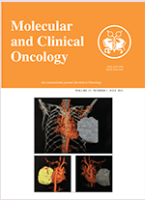
Molecular and Clinical Oncology
Empowering breakthroughs in cancer biology and treatment.Molecular and Clinical Oncology is a dynamic journal published by SPANDIDOS PUBL LTD, aimed at advancing the understanding of cancer biology and treatment modalities. With an ISSN of 2049-9450 and an E-ISSN of 2049-9469, the journal serves as a critical platform for researchers and clinicians dedicated to uncovering novel insights in molecular oncology and enhancing clinical practices. As a testament to its growing influence, the journal has achieved a Q3 ranking in Oncology and a Q4 ranking in Cancer Research for the year 2023, reflecting its commitment to publishing high-quality research. Although currently not an Open Access publication, the journal offers crucial subscription options, ensuring comprehensive access to groundbreaking studies and innovations in the field. With converged years spanning 2018 to 2024, the journal is set to continue enriching the academic community with its valuable contributions, ultimately empowering researchers, professionals, and students engaged in the fight against cancer.
Current Oncology
Innovative Insights for Oncology ProfessionalsCurrent Oncology is a prominent open-access journal dedicated to the field of oncology, published by MDPI in Switzerland. With an ISSN of 1198-0052 and E-ISSN 1718-7729, this esteemed journal has been providing valuable insights since its inception in 1998 and continues to publish cutting-edge research through 2024. Recognized for its contribution to the medical community, Current Oncology holds a 2023 Q2 category rank in Oncology and is positioned at the 41st percentile among its peers in Scopus rankings. As a hub for innovation and discussion in cancer research, it offers a plethora of articles that span various aspects of oncology, making it an essential resource for researchers, professionals, and students alike. Since becoming fully open-access in 2006, it provides expanded accessibility to groundbreaking studies and findings, fostering collaboration and knowledge exchange across the global research community. With its central location in Basel, Switzerland, Current Oncology plays a pivotal role in advancing oncology's frontiers.

World Journal of Surgical Oncology
Elevating standards in oncology surgery with impactful findings.The World Journal of Surgical Oncology, published by BMC, is a leading open-access journal that has been disseminating high-quality research since 2003. With an impressive impact, it currently holds a Q2 ranking in Oncology and a Q1 ranking in Surgery for the year 2023, reflecting its significant contribution to the field. Based in the United Kingdom, this journal serves as a vital platform for researchers, clinicians, and students alike, offering comprehensive coverage on topics ranging from innovative surgical techniques to oncology treatment advancements. As part of the esteemed BMC portfolio, the journal leverages a robust editorial process to ensure the publication of impactful research articles that promote a deeper understanding and enhancement of surgical oncology practices. Its commitment to open access ensures that critical research findings are widely accessible, fostering collaboration and knowledge sharing within the global medical community. For those dedicated to advancing their expertise in surgical oncology, the World Journal of Surgical Oncology is an indispensable resource that reflects the forefront of research and clinical practice.
Journal of Contemporary Brachytherapy
Empowering oncologists with cutting-edge brachytherapy insights.Journal of Contemporary Brachytherapy, published by TERMEDIA PUBLISHING HOUSE LTD, is a distinguished open-access journal dedicated to advancing the field of brachytherapy within the oncology and radiology domains. Since its inception in 2009, the journal has provided a platform for researchers, clinicians, and students to share innovative findings, cutting-edge techniques, and clinical experiences, contributing significantly to evidence-based practices in cancer treatment. With an ISSN of 1689-832X and E-ISSN 2081-2841, the journal has established its presence globally, and it is indexed in Scopus, achieving a commendable standing among its peers—with rankings of #196 in Radiology, Nuclear Medicine, and Imaging and #260 in Oncology for 2023. Notably, it holds a Q3 quartile classification, reflecting its emerging influence in these critical fields. The journal is committed to open science, ensuring that research is accessible to a wide audience, which is particularly vital for the ongoing development of methodologies and the implementation of best practices in brachytherapy. Exploring topics from the technical aspects of brachytherapy procedures to patient management strategies, the Journal of Contemporary Brachytherapy is an essential resource for those looking to stay at the forefront of oncological advancements.
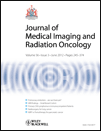
Journal of Medical Imaging and Radiation Oncology
Exploring New Horizons in Medical Imaging and Radiation TherapyJournal of Medical Imaging and Radiation Oncology, published by WILEY, is a pivotal resource in the fields of oncology and medical imaging. With an impact factor reflective of its commitment to advancing research, the journal has maintained a robust reputation since its inception in 2008 and continues to thrive through 2024. It is indexed with an insightful ranking, with a Q2 classification in Radiology, Nuclear Medicine and Imaging, affirming its importance in these disciplines. This journal not only serves as an open access platform, allowing extensive reach and accessibility, but also fosters a scholarly community dedicated to the innovation of imaging techniques and radiation oncology practices. As a key player in disseminating crucial findings and advancements, it appeals to researchers, clinicians, and students who aim to contribute to the evolving landscape of medical imaging and cancer treatment methodologies. The journal is based in Australia, at 111 River St, Hoboken, NJ, and invites submissions that push the boundaries of current knowledge in this critical area of healthcare.
Tumori Journal
Advancing Cancer Research, One Insight at a Time.Tumori Journal is a distinguished publication in the field of oncology, dedicated to advancing the understanding and treatment of cancer since its inception in 1946. Published by SAGE Publications Ltd, this Italian journal serves as a pivotal platform for researchers, clinicians, and academicians to disseminate cutting-edge findings in cancer research and related areas of medicine. With an impressive record of contributions spanning multiple decades, Tumori Journal aims to foster collaboration and dialogue among professionals in the oncology community. Although classified in the Q4 category for Cancer Research and the Q3 category for both Medicine (miscellaneous) and Oncology as of 2023, the journal continues to draw interest with its rigorous peer-review process and commitment to quality. Researchers are encouraged to explore innovative methodologies and share impactful clinical insights through the journal, which also ranks within the top tiers of Scopus metrics for oncology and cancer research domains. With a growing emphasis on accessible research, Tumori Journal remains an essential resource in the continuous fight against cancer.
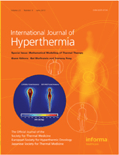
INTERNATIONAL JOURNAL OF HYPERTHERMIA
Connecting researchers to enhance hyperthermia applications globally.INTERNATIONAL JOURNAL OF HYPERTHERMIA, published by Taylor & Francis Ltd, is a leading peer-reviewed journal dedicated to advancing the field of hyperthermia and its applications in medical science, particularly within cancer research and related disciplines. With an ISSN of 0265-6736 and an E-ISSN of 1464-5157, this journal has been a vital resource since its establishment in 1985, offering a platform for innovative research and clinical applications aimed at improving treatment outcomes. The journal is recognized with a Q2 category ranking in several fields, including Cancer Research and Physiological Medicine, reflecting its significant contribution to scientific knowledge and clinical practices. Furthermore, it has been Open Access since 2019, ensuring that cutting-edge research is accessible to a global audience. By facilitating the exchange of ideas and fostering collaborations among researchers, professionals, and students, the INTERNATIONAL JOURNAL OF HYPERTHERMIA serves as an essential resource in the quest to exploit hyperthermia’s full potential in therapeutic settings.
Physics & Imaging in Radiation Oncology
Pioneering Insights at the Intersection of Physics and OncologyPhysics & Imaging in Radiation Oncology is a premier journal dedicated to advancing the interdisciplinary field of radiation oncology through innovative research and imaging technologies. Published by Elsevier, this open-access journal has made its mark since its inception in 2017, ensuring that groundbreaking findings are accessible to a broad audience. With a strong focus on the integration of physics, imaging techniques, and oncology, the journal occupies esteemed positions in the academic landscape, ranking in the top quartile for Radiation and Radiology, Nuclear Medicine and Imaging as of 2023. The journal serves as a platform for researchers, professionals, and students to share insights and foster collaboration, ultimately improving patient outcomes through enhanced imaging and treatment modalities. Based in Ireland and operating from Radarweg 29, 1043 NX Amsterdam, Netherlands, the journal aims to bridge the gap between theoretical physics and practical applications in clinical settings.