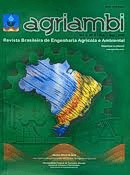
Revista Brasileira de Engenharia Agricola e Ambiental
metrics 2024
Empowering Global Knowledge in Agronomy and Sustainability
Introduction
Revista Brasileira de Engenharia Agricola e Ambiental, published by the Universidade Federal de Campina Grande, serves as a pivotal platform for researchers and professionals in the fields of agricultural and biological sciences, agronomy, and environmental engineering. With an open-access policy since 2000, this journal aims to foster global dissemination of innovative research and practices, ensuring that high-quality findings are accessible to all. Operating in Brazil, it holds notable rankings, including Q2 in the categories of Agricultural and Biological Sciences (miscellaneous) and Agronomy and Crop Science, indicating its strong academic impact and influence within these fields. As of 2023, it ranks #68 out of 193 in Agricultural and Biological Sciences and #188 out of 406 in Agronomy and Crop Science, representing its commitment to advancing scientific knowledge. The journal primarily focuses on publishing studies that address challenges in agricultural engineering and environmental sustainability, making it an essential read for students, researchers, and professionals who are dedicated to innovation and excellence in these dynamic fields.
Metrics 2024
 0.381.401.3042
Metrics History
Rank 2024
Scopus
IF (Web Of Science)
JCI (Web Of Science)
Quartile History
Similar Journals
ACTA AGRICULTURAE SCANDINAVICA SECTION B-SOIL AND PLANT SCIENCE
Bridging Science and Practice in Agronomy and Soil ScienceACTA AGRICULTURAE SCANDINAVICA SECTION B-SOIL AND PLANT SCIENCE, published by Taylor & Francis AS, is a distinguished journal dedicated to the fields of Agronomy, Crop Science, and Soil Science. With an impressive impact factor, and categorized in Q2 for both Agronomy and Crop Science and Soil Science as of 2023, this journal is an essential resource for researchers, professionals, and students aiming to advance their understanding of soil-plant interactions and sustainable agricultural practices. Operating since 1992 and continuing through to 2024, ACTA aims to publish high-quality, peer-reviewed research that encourages the applicability of advanced scientific knowledge in real-world agricultural settings. While the journal is not open access, it remains widely accessible through institutional subscriptions, reflecting its commitment to disseminating essential findings and fostering innovation in soil and plant science worldwide. Nestled in the vibrant academic environment of Norway, ACTA AGRICULTURAE SCANDINAVICA serves as a key platform for nurturing groundbreaking research that informs sustainable agricultural policies and practices globally.

AGROCIENCIA
Innovating today for a greener tomorrow in agriculture.AGROCIENCIA, published by COLEGIO POSTGRADUADOS, is a key journal in the fields of agronomy, animal science, and environmental science in Mexico. With an ISSN of 1405-3195 and an E-ISSN of 2521-9766, this journal has been a crucial platform for disseminating research findings since its inception in 2000. Operating from Montecillo, Estado Mexico, it provides an outlet for scholars and practitioners to share innovations and insights that directly impact agricultural practices and environmental sustainability. Despite its current categorization in the Q4 quartile across multiple disciplines, AGROCIENCIA strives to elevate the quality and reach of research, fostering a collaborative approach to tackle pressing issues within the agricultural sciences. Access options are primarily through institutional subscriptions, allowing for a diverse audience of researchers, professionals, and students to engage with the latest studies aimed at advancing knowledge in the agricultural sector. As the journal converges towards its 2024 milestone, it remains dedicated to enhancing scientific inquiry and promoting effective solutions within its discipline.

APPLIED ENGINEERING IN AGRICULTURE
Driving Agricultural Innovation with High-Quality Research.APPLIED ENGINEERING IN AGRICULTURE is a peer-reviewed journal published by the American Society of Agricultural and Biological Engineers, dedicated to advancing the field of agricultural engineering through the dissemination of high-quality research. With an ISSN of 0883-8542 and an e-ISSN of 1943-7838, this journal has been a key resource since its inception in 1985, serving as a vital platform for scholars and practitioners to share innovative ideas and practical solutions that enhance productivity and sustainability in agricultural practices. The journal is ranked in the Q3 category for Engineering (miscellaneous) as of 2023, and is positioned within the 43rd percentile of the general engineering rankings in Scopus. While not currently an open-access journal, APPLIED ENGINEERING IN AGRICULTURE remains crucial for researchers and professionals looking to explore diverse engineering solutions that address the complexities of modern agriculture, making it an invaluable resource for anyone committed to improving agricultural systems through engineering advancements.

Crop Forage & Turfgrass Management
Innovating crop management for thriving ecosystems.Crop Forage & Turfgrass Management, published by WILEY, serves as an essential platform for researchers, professionals, and students in the fields of agronomy, crop science, plant science, and soil science. With a focus on advancing knowledge in the management of crops, forage systems, and turfgrass, this journal plays a pivotal role in disseminating innovative research and practical applications that drive agricultural sustainability and productivity. Despite its Q3 ranking in various agricultural and biological science categories according to Scopus, it aims to enhance its impact and relevance in the academic community through high-quality publications. As a journal converged from 2015 to 2024, it invites contributions that address contemporary challenges and solutions in crop management, ensuring accessibility to vital knowledge for the advancement of agricultural practices. Situated in the United States, it also reflects the diverse agricultural landscapes and practices of the region, making it a valuable resource for a global audience.
BRAGANTIA
Bridging Academia and Agriculture for a Sustainable FutureBRAGANTIA, published by the Instituto Agronômico, is a distinguished open access journal that has been a vital resource since its inception in 1977. With an ISSN of 0006-8705 and E-ISSN 1678-4499, this journal is recognized for its contributions to the field of Agricultural and Biological Sciences, where it currently holds a respectable Q2 ranking as of 2023. Additionally, BRAGANTIA is indexed in various databases, supporting its impact within Materials Science (Q3 ranking). Positioned in Brazil, the journal promotes the dissemination of high-quality research, aiming to bridge the gap between academia and practical applications in agricultural innovation and sustainability. Researchers, professionals, and students looking to keep abreast of recent advancements and their implications will find BRAGANTIA to be an indispensable platform for sharing and accessing vital agricultural knowledge.

Egyptian Journal of Agronomy
Cultivating Knowledge, Harvesting InnovationEgyptian Journal of Agronomy, published by the NATL INFORMATION DOCUMENTATION CENT, ACAD SCIENTIFIC RESEARCH & TECHNOLOGY, serves as a pivotal platform for researchers, professionals, and students focusing on various disciplines within the agricultural sciences, including agronomy, soil science, horticulture, and ecology. With an ISSN of 0379-3575 and E-ISSN of 2357-0288, the journal aims to bridge the gap in knowledge and innovation in the field with its comprehensive studies and frameworks. While the journal is currently categorized in low Scopus ranks, indicating immense potential for growth in influence and impact, it remains dedicated to providing quality research and fostering advancements in agronomic practices. Set in Egypt, a hub for agricultural research, the journal is committed to reflecting the regional and global challenges in agriculture. The Egyptian Journal of Agronomy is a vital resource for anyone engaged in the evolving landscape of agricultural science, offering insights that promote sustainable practices and address current issues facing the sector.

CROP SCIENCE
Empowering researchers to enhance global food security.CROP SCIENCE, published by WILEY, is a premier journal dedicated to the field of agronomy and crop science, offering a platform for high-quality research on crop production, genetics, and sustainable agricultural practices. With an impactful presence since its inception in 1974, the journal has become a significant contributor to advancing knowledge in this critical field, as evidenced by its Q2 ranking in the 2023 categorizations and a Scopus rank in the 72nd percentile among its peers. The journal's aim is to disseminate innovative research findings that inform best practices and policies for enhancing crop yield and sustainability, making it an essential resource for researchers, professionals, and students alike. Although CROP SCIENCE does not currently offer open access options, the journal’s extensive readership and reputation make it a valuable asset for anyone invested in the future of agriculture.

Revista de Agricultura Neotropical
Unlocking the Potential of Tropical Crop ManagementRevista de Agricultura Neotropical, published by UNIV ESTADUAL MATO GROSSO SUL, serves as a pivotal platform for disseminating research in the fields of agronomy and crop science. Since its inception as an open-access journal in 2014, it has been dedicated to promoting innovative research and practical applications within the agricultural sector, specifically tailored to the challenges and dynamics of the tropical agriculture landscape in Brazil and beyond. Although currently positioned in the Q4 quartile of Scopus rankings, and with a modest agricultural science percentile, the journal actively encourages contributions that highlight sustainable agricultural practices, tropical crop management, and emerging technologies in farming. With its commitment to open access, the Revista de Agricultura Neotropical broadens the reach of critical knowledge, making it accessible to researchers, professionals, and students alike, thus fostering a collaborative environment for advancing agri-scientific initiatives.

Engenharia Agricola
Exploring sustainable solutions in agricultural engineering.Engenharia Agricola, published by the SOC BRASIL ENGENHARIA AGRICOLA, is a crucial open-access journal that has been at the forefront of agricultural engineering research since its inception in 1981. With an E-ISSN of 1809-4430 and an ISSN of 0100-6916, this journal stands out in the field by providing a platform for disseminating innovative studies and advancements in agricultural practices and technologies. Based in Brazil, the journal emphasizes global perspectives in agricultural and biological sciences, currently positioned in the Q3 quartile of its category, as recognized in the 2023 Scopus Ranks, where it ranks 97 out of 193 publications. Researchers, professionals, and students can access a plethora of high-quality articles that contribute to sustainable agronomy, agricultural mechanics, and resource efficiency across various environments, with open access since 2004, ensuring that critical knowledge is readily available to all stakeholders in the field.
AGRONOMY JOURNAL
Advancing Sustainable Agriculture Through Innovative ResearchThe Agronomy Journal, published by Wiley, is a leading platform for cutting-edge research in the field of agronomy and crop science. Established in the United States, this prestigious journal carries the ISSN 0002-1962 and E-ISSN 1435-0645, with its coverage spanning from 1976 to 2024, showcasing a wealth of knowledge over decades. The journal is recognized in the top quartile (Q1) of its category, making it a highly respected source for quality literature, ranking #108 out of 406 in the Scopus database and reflecting a 73rd percentile standing in agricultural and biological sciences. While it operates under traditional access options, its commitment to disseminating valuable scientific inquiry aligns with the objectives of advancing sustainable agricultural practices globally. The Agronomy Journal serves as an indispensable resource for researchers, professionals, and students eager to stay abreast of significant advancements and discussions influencing the future of crop science and agronomic research.