
Revista Chilena de Estudios Medievales
Scope & Guideline
Exploring the Depths of Medieval Scholarship
Introduction
Aims and Scopes
- Philosophical and Theological Inquiry:
The journal frequently publishes papers that delve into the philosophical and theological thought of prominent medieval figures such as Augustine of Hippo and Thomas Aquinas, examining their contributions to ethics, metaphysics, and epistemology. - Cultural and Historical Contextualization:
It focuses on the socio-political and cultural contexts of the medieval period, analyzing how these contexts influenced various phenomena such as religious practices, governance, and societal structures. - Interdisciplinary Approaches:
The journal encourages interdisciplinary research that combines history, literature, art, and philosophy, offering a holistic view of the medieval world. - Analysis of Medieval Texts and Manuscripts:
There is a consistent emphasis on the critical analysis of medieval texts and manuscripts, exploring their implications and relevance to contemporary scholarship. - Eschatology and Calendrical Studies:
The journal addresses themes of eschatology and the significance of calendars, reflecting on how medieval societies understood time and its relation to the divine.
Trending and Emerging
- Exploration of Friendship and Relationships:
There is a growing interest in examining the concepts of love and friendship in medieval thought, particularly through the lens of influential figures like Augustine of Hippo, suggesting a shift towards more personal and relational studies. - Integration of Science and Philosophy:
Recent papers are increasingly addressing the intersections of medieval philosophy with contemporary scientific ideas, particularly regarding nature and cosmology, indicating an emerging theme of integrating historical thought with modern scientific discourse. - Religious and Eschatological Studies:
The exploration of eschatology and its implications in medieval society is becoming prominent, reflecting a renewed interest in how medieval cultures understood and represented concepts of the end times. - Analysis of Material Culture:
There is an emerging focus on material culture, particularly through studies of artifacts and their significance in medieval life, indicating a trend towards examining the tangible aspects of medieval societies. - Cultural Symbolism and Representation:
The journal is increasingly publishing works that analyze cultural symbolism in medieval art and literature, suggesting a trend towards understanding the deeper meanings and representations in medieval culture.
Declining or Waning
- Popular Literature and Folklore:
There has been a noticeable decrease in the exploration of popular literature and folklore from the medieval period, which were once prominent themes in earlier publications. - Military History and Warfare:
Research focused specifically on military history and the dynamics of warfare in the medieval context seems to have diminished, possibly overshadowed by more interdisciplinary and thematic approaches. - Regional Studies:
The journal's output on specific regional studies, particularly those examining localized medieval phenomena, has become less frequent, indicating a shift towards more global or comparative analyses.
Similar Journals

CAMBRIAN MEDIEVAL CELTIC STUDIES
Illuminating the Medieval Celtic ExperienceCambrian Medieval Celtic Studies is a distinguished academic journal dedicated to the exploration and analysis of the rich cultural, historical, and linguistic heritage of the Celtic regions during the medieval period. Published by the Department of Welsh at the University of Aberystwyth in the United Kingdom, this journal serves as a vital platform for scholars and researchers in the fields of archaeology, history, linguistics, and literary studies. With its ISSN 1353-0089, the journal has been operational since 2002, delivering valuable insights and fostering scholarly discourse up to the present, with plans for future publications extending to 2024. Although currently categorized in the Q4 quartile across various relevant fields, Cambrian Medieval Celtic Studies remains committed to enhancing the understanding of medieval Celtic culture through rigorous research and peer-reviewed content. Researchers and students alike will find this journal an essential resource for advancing their studies in these dynamic fields, as it provides open access to a wealth of interdisciplinary perspectives in the arts and humanities.

Listy Filologicke
Advancing Scholarly Discourse in the Heart of the Czech Republic.Listy Filologicke is a distinguished academic journal published by the Institute of Classical Studies at the Academy of Sciences of the Czech Republic, focusing on the interdisciplinary fields of History, Linguistics and Language, and Literature and Literary Theory. With an ISSN of 0024-4457 and an E-ISSN of 2570-9410, this journal has been a pivotal platform for scholarly discourse since its convergence years began in 2003. Notably, it holds a Q3 classification in History and Linguistics and Language, and a Q2 in Literature and Literary Theory as of 2023. Its rankings within Scopus illustrate its relevance and impact in academia, with noteworthy positions in the Arts and Humanities and Social Sciences categories. Researchers, professionals, and students will find Listy Filologicke an invaluable resource for exploring cutting-edge research, critical analyses, and discourse that contribute significantly to their respective fields. Based in the heart of the Czech Republic, it continues to promote scholarly excellence and foster international collaboration.

SVMMA-Revista de Cultures Medievals
Promoting Open Access to Medieval StudiesSVMMA-Revista de Cultures Medievals is a pioneering open-access journal published by the Institut de Recerca i Cultures Medievals (IRCVM) at the University of Barcelona. Since its inception in 2013, this journal has dedicated itself to the exploration and dissemination of knowledge pertaining to medieval cultures across various disciplines, including archaeology, history, literature, philosophy, and the visual and performing arts. As an accessibility-driven journal, SVMMA ensures that its scholarly content is readily available to researchers, professionals, and students, promoting academic dialogue and interdisciplinary research. Despite its current Q4 rankings across diverse fields, SVMMA represents a valuable platform for emerging and established researchers alike, facilitating a deeper understanding of medieval studies and underscoring the journal's commitment to fostering innovative scholarship. Located in Barcelona, SVMMA continues to contribute significantly to the academic discourse while encouraging insightful perspectives on the rich tapestry of medieval cultures.
Doctor Virtualis-Rivista di Storia della Filosofia Medievale
Advancing Knowledge in Historical PhilosophyDoctor Virtualis-Rivista di Storia della Filosofia Medievale is a premier academic journal published by Milano University Press that specializes in the rich field of medieval philosophy. Since its inception in 2002, the journal has embraced an Open Access model, ensuring that scholarly work is accessible to researchers, educators, and students worldwide, thus promoting an inclusive dialogue in the study of historical philosophical thought. The journal seeks to enhance the understanding of medieval philosophical discourse by publishing original research articles, reviews, and critical essays that delve into the nuances and complexities of this era. By fostering a collaborative environment for both established scholars and emerging voices in the field, Doctor Virtualis plays a vital role in advancing knowledge and appreciates the diversity of perspectives that shape medieval philosophy. Located in Milan, Italy, the journal is at the epicenter of scholarly exchange, inviting contributions that will engage and inspire the academic community.

STUDI MEDIEVALI
Advancing Knowledge in Medieval StudiesSTUDI MEDIEVALI, published by the Centro Ital Stud Sull Alto Med, is a premier journal dedicated to the exploration of medieval studies, focusing on both cultural and historical dimensions. Since its inception in 2002, this journal has become an essential resource for scholars and students alike, providing critical insights into the complexities of the medieval era. Although it currently operates under a traditional access model, its contributions to the field are undeniable, with a 2023 ranking in the fourth quartile for Cultural Studies and History categories in Scopus rankings, highlighting its niche yet valuable position within academic discourse. Based in Spoleto, Italy, the journal serves as a platform for innovative research and interdisciplinary dialogue, inviting contributions that challenge conventional understandings and stimulate further inquiry into medieval life. Researchers and professionals will find in STUDI MEDIEVALI an opportunity to engage with a community of passionate scholars dedicated to uncovering the multifaceted realities of the medieval period.

Documenti e Studi sulla Tradizione Filosofica Medievale
Connecting Past Wisdom with Contemporary InquiryDocumenti e Studi sulla Tradizione Filosofica Medievale is a distinguished scholarly journal published by SISMEL EDIZIONI GALLUZZO, focusing on the rich landscape of medieval philosophical traditions. With an ISSN of 1122-5750, this journal serves as an essential resource for researchers, academics, and students interested in the interdisciplinary connections between philosophy and history. We proudly hold a Q2 ranking for both History and Philosophy in the 2023 category quartiles, reflecting our commitment to publishing high-quality, impactful research. Notably, the journal ranks impressively in Scopus, occupying the 82nd percentile in Arts and Humanities History and the 71st percentile in Philosophy. Although the journal is not open access, its curated articles explore a vast array of topics within medieval philosophy, offering a platform for critical scholarship and innovative discussions. Published from 2015 to 2022, Documenti e Studi sulla Tradizione Filosofica Medievale is central to advancing the understanding of philosophical traditions and their historical contexts.
TRADITIO-STUDIES IN ANCIENT AND MEDIEVAL HISTORY THOUGHT AND RELIGION
Engaging with the Complexities of Past Cultures and IdeasTRADITIO - Studies in Ancient and Medieval History, Thought and Religion is a distinguished academic journal published by Cambridge University Press, dedicated to the exploration and analysis of historical, philosophical, and religious narratives from ancient and medieval periods. The journal's ISSN is 0362-1529 and its E-ISSN is 2166-5508. Renowned for its rigorous scholarship, it enjoys a notable standing in the academic community, reflected in its 2023 category quartiles which place it in the second and third tiers across critical fields such as Literature and Literary Theory, Philosophy, Religious Studies, and Visual Arts and Performing Arts. With its comprehensive scope that encompasses multidisciplinary approaches, TRADITIO provides an essential platform for researchers, academics, and students alike to engage deeply with the complexities of historical thought and cultural practices. Although the journal operates within the traditional subscription model, its significance is underscored by impressive Scopus rankings, indicating its high visibility and impact within the arts and humanities sectors. We invite you to discover the richness of ancient and medieval studies through the pages of TRADITIO.

Perspectives Medievales-Revue d'epistemologie des Langues et Litteratures du Moyen Age
Bridging Past and Present through Medieval EpistemologyPerspectives Medievales-Revue d'epistemologie des Langues et Litteratures du Moyen Age is a distinguished academic journal dedicated to the exploration and analysis of medieval languages and literatures, providing a unique platform for interdisciplinary scholarship. Published by SOC LANGUE & LITTERATURE MEDIEVALES OC & OIL, this Open Access journal has been committed to advancing research and knowledge dissemination since 2009. It serves as a vital resource for researchers, professionals, and students interested in the complexities of medieval textuality and linguistics, encouraging innovative perspectives and critical dialogues within the field. With its broad scope encompassing various aspects of medieval studies, the journal aims to stimulate scholarly discussion and inspire future research endeavors. Located in Paris, France, Perspectives Medievales plays a crucial role in promoting the understanding and appreciation of medieval studies on a global scale, contributing to the rich tapestry of humanistic inquiry.
ZEITSCHRIFT FUR DEUTSCHES ALTERTUM UND DEUTSCHE LITERATUR
Fostering Scholarly Discourse in German Literary StudiesZeitschrift für deutsches Altertum und deutsche Literatur is a pivotal academic journal dedicated to the exploration and analysis of German-language antiquity and literature. Published by S Hirzel Verlag, this esteemed journal is based in Germany and has been contributing to the fields of Linguistics, Language, and Literary Theory since its inception. With a history spanning from 1979 to the present, the journal showcases rigorous research and critical studies that enhance our understanding of both historical and contemporary literary landscapes. Although currently not an open-access publication, Zeitschrift für deutsches Altertum und deutsche Literatur operates within the Q4 quartile in its respective categories, reflecting a unique niche within the academic community. As a valuable resource for researchers, professionals, and students alike, it fosters a deeper appreciation for the intricacies of German literature and its evolution, serving as an essential platform for scholarly discourse.
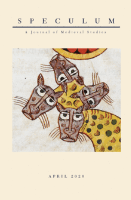
SPECULUM-A JOURNAL OF MEDIEVAL STUDIES
Charting New Paths in Historical UnderstandingSPECULUM: A Journal of Medieval Studies, published by University of Chicago Press, stands as a premier academic platform within the field of medieval studies. With an impressive legacy dating back to its inception in 1926, this journal has attracted scholarly contributions that explore the rich tapestry of human experience during the medieval period, encompassing areas such as history, literature, philosophy, cultural studies, and the visual and performing arts. It boasts elite rankings—Q1 in History, Literature and Literary Theory, Religious Studies, and Visual Arts and Performing Arts, with a commendable Q2 in Cultural Studies and Philosophy—attesting to its impact and relevance in academia. Although it is not an open-access journal, the rigorous peer-review process and critical scholarship found within its pages provide invaluable insights for researchers, professionals, and students alike. With a substantial Scopus ranking, ID 0038-7134, and E-ISSN 2040-8072, SPECULUM continues to serve as an essential resource for advancing knowledge and understanding of the medieval world, encouraging interdisciplinary dialogue and scholarly interaction.