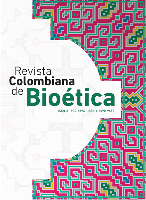
Revista Colombiana de Bioetica
Scope & Guideline
Fostering Informed Dialogue on Ethical Practices
Introduction
Aims and Scopes
- Interdisciplinary Bioethics:
The journal emphasizes a multidisciplinary approach to bioethics, integrating insights from philosophy, law, medicine, and social sciences to address complex ethical dilemmas. - Focus on Latin American Context:
It specifically addresses bioethical issues pertinent to Latin America, including cultural, legal, and social dimensions that influence bioethical practices and policies in the region. - Human Rights and Dignity:
A core focus is on the promotion of human rights and dignity, particularly in contentious areas such as euthanasia, abortion, and patient autonomy. - Research Ethics and Integrity:
The journal addresses ethical considerations in scientific research and publication, advocating for integrity and ethical standards in the research community. - Social Justice and Equity:
It explores themes of social justice, equity, and ethical responsibility, particularly in relation to marginalized populations and healthcare access. - Emerging Technologies and Bioethics:
The journal investigates the ethical implications of emerging technologies such as gene editing and precision medicine, reflecting on their impact on human and environmental health.
Trending and Emerging
- Euthanasia and Dignified Death:
Recent publications have explored the complexities surrounding euthanasia and the right to a dignified death, particularly for vulnerable populations such as minors, indicating a growing concern for end-of-life ethics. - Bioethics and Technology:
There is a notable increase in discussions surrounding the ethical implications of new technologies, such as gene editing and precision medicine, highlighting the intersection of innovation and ethical responsibility. - Gender Identity and Autonomy:
The journal has seen a rise in articles addressing gender identity issues and the autonomy of adolescents, reflecting broader societal shifts towards inclusivity and recognition of diverse identities. - Narrative Bioethics:
An emerging theme is the application of narrative bioethics, which emphasizes personal stories and lived experiences in understanding ethical dilemmas, fostering a more empathetic approach to bioethical discussions. - Social Justice and Health Equity:
There is an increasing focus on social justice issues within healthcare, particularly in relation to marginalized communities, emphasizing the ethical obligation to address disparities in health access and outcomes.
Declining or Waning
- Traditional Bioethical Frameworks:
There is a noticeable decrease in publications that adhere strictly to classical bioethical frameworks, such as those based solely on the principles of autonomy, beneficence, non-maleficence, and justice. - Animal Ethics:
Topics focused on animal ethics, while still relevant, have seen a reduction in frequency, possibly overshadowed by more pressing human-centric ethical issues. - Historical Perspectives on Bioethics:
Papers that delve into historical or philosophical analyses of bioethical concepts are less prominent, indicating a potential waning interest in theoretical explorations. - Environmental Bioethics:
While environmental considerations are still present, the specific focus on environmental bioethics has diminished, possibly as discussions shift towards more immediate health-related ethical concerns. - Non-Western Philosophical Contributions:
The engagement with non-Western philosophical perspectives in bioethics appears to be less frequent, suggesting a potential narrowing of the journal's scope in terms of cultural diversity in bioethical thought.
Similar Journals
KENNEDY INSTITUTE OF ETHICS JOURNAL
Pioneering Insights at the Intersection of Ethics and Social ScienceThe KENNEDY INSTITUTE OF ETHICS JOURNAL, published by the prestigious Johns Hopkins University Press, stands as a leading periodical in the realm of ethics, particularly emphasizing the intersection of health policy, social sciences, history, and philosophy of science. With an ISSN of 1054-6863 and an E-ISSN of 1086-3249, this journal has been a cornerstone of ethical discourse since its inception in 1991. Renowned for its rigorous peer-review process, the journal boasts impressive rankings, including Q1 in History and Philosophy of Science and Q2 in Health (Social Science) for 2023. Researchers, professionals, and students alike will find this journal invaluable for navigating complex ethical issues, providing a platform for innovative research and discourse. Although currently not offering Open Access, its contributions to the fields of ethics and legal aspects of health are profound, making it an essential resource for those engaged in these critical discussions.

Ethics & Bioethics
Advancing ethical discourse in biology and medicine.Ethics & Bioethics is a vital interdisciplinary journal published by DE GRUYTER POLAND SP Z O O, focusing on the ethical dimensions of biological and medical practices. Since its transition to an Open Access model in 2016, the journal has become more accessible, promoting the dissemination of high-quality research to a broader audience. Based in Warsaw, Poland, this journal contributes significantly to the discourse on ethical practices in health policy, education, and philosophy, as evidenced by its impressive Scopus rankings, including a Q1 quartile in Philosophy. Covering a wide spectrum of ethical issues and dilemmas faced in contemporary society, Ethics & Bioethics provides a platform for researchers, professionals, and students to engage with cutting-edge scholarship aimed at advancing understanding and fostering dialogue in the ever-evolving landscape of bioethics. With a commitment to rigorous peer review and academic integrity, this journal is pivotal for those seeking to enhance their knowledge and contribute to the field.

Acta Bioethica
Unraveling the Intricacies of Health Policy and EthicsActa Bioethica is a pivotal open access journal published by the Universidad de Chile's Centro Interdisciplinario de Estudios Bioética, dedicated to the multidisciplinary exploration of bioethical issues in health policy and social sciences. Since its inception in 2000, the journal has fostered dialogue among researchers, professionals, and students, addressing the complexities of ethical practices in diverse health contexts. With an impressive commitment to accessibility, Acta Bioethica has become a vital resource for those engaged in understanding the ethics of healthcare in Latin America and beyond. Although currently ranked in the lower quartiles of Scopus in both health policy and social sciences, the journal is steadily gaining recognition for its unique contributions to bioethics. The journal accepts contributions in both English and Spanish, ensuring a wider reach and impact in the academic community. Located in Santiago, Chile, and active from 2007 to 2024, Acta Bioethica continues to be an essential platform for advancing research and discussions in the ever-evolving field of bioethics.

Cuadernos de Bioetica
Contributing to the Evolving Discourse in BioethicsCuadernos de Bioetica, published by the ASOC ESPANOLA BIOETICA & ETICA MEDICA, is a prominent academic journal dedicated to exploring significant philosophical, ethical, and legal dimensions within the field of bioethics. With an ISSN of 1132-1989 and an E-ISSN of 2386-3773, this journal serves as a vital platform for researchers, professionals, and students in medicine and related disciplines. Since its inception in 2008, it has consistently provided critical analyses and discussions reflecting the evolving landscape of healthcare ethics, contributing notably to the discourse surrounding ethical practices in medicine. Despite its current Q4 ranking in the miscellaneous medicine category, Cuadernos de Bioetica is committed to enhancing its impact and relevance, making it an essential resource for those seeking to navigate the complex ethical challenges in contemporary medical practice. The journal’s reach is underscored by its commitment to fostering open dialogue among diverse stakeholders in the field, encouraging a broad spectrum of contributions to advance knowledge in bioethics.

Journal of Practical Ethics
Bridging Theory and Real-World EthicsJournal of Practical Ethics is an esteemed open-access journal published by the Oxford Uehiro Centre for Practical Ethics, dedicated to enhancing the discourse surrounding ethical issues in various fields, including healthcare, technology, and social policy. Since its inception in 2013, the journal has fostered a robust academic platform for researchers, professionals, and students to explore and publish innovative ideas and solutions to real-world ethical dilemmas. The journal's commitment to making research freely accessible emphasizes its role in bridging the gap between academic inquiry and practical application, thereby encouraging a broader engagement with ethical considerations across disciplines. As the importance of ethical frameworks continues to grow in an increasingly complex world, the Journal of Practical Ethics stands as a vital resource for those seeking to influence policy and practice through rigorous ethical analysis.
Asian Bioethics Review
Exploring Ethical Frontiers in Asia and BeyondAsian Bioethics Review, published by SPRINGER, is a premier journal indexed with ISSN 1793-8759 and E-ISSN 1793-9453, dedicated to advancing discourse in the interdisciplinary field of bioethics across Asia and beyond. Established in 2015, this esteemed publication has rapidly gained recognition, achieving a Q1 ranking in Philosophy and Q2 in key categories such as Health Policy and Issues, Ethics and Legal Aspects in 2023. With its robust Scopus rankings highlighting its significance across diverse domains—including a remarkable 98th percentile ranking in Philosophy—the journal serves as a vital platform for researchers, ethicists, and policymakers to explore pressing ethical issues and contribute to policy development in health and social sciences. Although not open access, the journal ensures a wide reach through institutional subscriptions, making it an essential resource for students and professionals committed to ethical practices in healthcare. Set in the dynamic backdrop of Singapore, "Asian Bioethics Review" continues to shape the conversation around bioethical practices in the Asian context and globally.

Teoria-Rivista di Filosofia
Stimulating Thoughtful Debate in the World of PhilosophyTeoria-Rivista di Filosofia is a distinguished academic journal published by EDIZIONI ETS, based in Pisa, Italy. With a focus on philosophical discourse, this journal is a valuable resource for researchers, professionals, and students in the field of philosophy. Having achieved a commendable Q3 ranking in the 2023 category quartiles, Teoria stands out in the competitive landscape of philosophy journals, with a Scopus rank of #612 out of 806, placing it in the 24th percentile. Although currently classified as a non-open access publication, it frequently addresses cutting-edge themes and challenges within philosophical research, promoting rigorous analysis and diverse perspectives. The journal spans various topics across multiple issues from its inception in 2011 to its ongoing publications scheduled through 2024, making it a relevant venue for contemporary philosophical inquiry. The journal aims to foster scholarly communication and stimulate critical debates, contributing significantly to the global philosophical landscape.
International Journal of Feminist Approaches To Bioethics
Redefining bioethical paradigms with intersectional feminist scholarship.International Journal of Feminist Approaches To Bioethics, published by University of Toronto Press Inc., is a leading interdisciplinary journal dedicated to advancing the discourse on bioethics through the lens of feminist theory. Since its inception in 2012, the journal has significantly contributed to the fields of Gender Studies, Health (social science), and Philosophy, earning commendable rankings in Scopus—particularly within the realms of Arts and Humanities and Social Sciences. The journal is recognized for its rigorous peer-review process and its focus on critical, intersectional analyses, making it an essential resource for researchers, professionals, and students interested in the ethical implications of biomedical practices and policies. Although currently not an open-access publication, it offers valuable insights that challenge traditional bioethical paradigms and encourages innovative scholarship. With a dynamic scope that continues to evolve until 2024, the journal remains vital for those striving to understand the complex interplay between gender and bioethical issues.
THEORETICAL MEDICINE AND BIOETHICS
Fostering Insightful Dialogues on Bioethical Dilemmas.THEORETICAL MEDICINE AND BIOETHICS, published by SPRINGER, is an esteemed journal dedicated to exploring the complex intersections of medicine, ethics, and law. With its ISSN 1386-7415 and E-ISSN 1573-1200, this journal serves as a vital platform for scholars, practitioners, and students interested in the ethical implications of medical practices and innovations. Although it currently holds a Q4 impact factor in the categories of Issues, Ethics and Legal Aspects and Medicine (Miscellaneous) as of 2023, its relevance is amplified by its commitment to fostering critical discourse in a rapidly evolving field. The journal features a diverse range of articles that address profound ethical dilemmas in healthcare, making it a significant resource for contemporary research from 1997 to the present. As an open-access journal, it ensures that cutting-edge knowledge is readily available, inviting contributions that challenge conventional thought and advance the field of bioethics.

Vox Juris
Exploring the intersections of law and society.Vox Juris is a premier academic journal dedicated to the field of legal studies, published by the esteemed Universidad San Martin de Porres, Fondo Editorial. Since its transition to Open Access in 2015, it has significantly enhanced the dissemination of high-quality legal research and scholarship, providing unrestricted access to a wide audience of researchers, professionals, and students globally. Although the journal's H-index and specific scope are currently unspecified, it actively contributes to the discourse surrounding various facets of law, including theory, applications, and interdisciplinary perspectives. Located in the heart of Peru at SEDE LIMA JR LAS CALANDRIAS N0 151291 SANTA ANITA, Vox Juris serves as a vital resource for those seeking to explore and advance their understanding of contemporary legal issues. Its commitment to promoting scholarly dialogue makes it an indispensable platform for both emerging and established voices in the legal community.