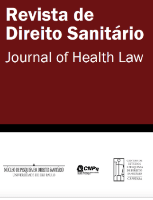
Revista de Direito Sanitario-Journal of Health Law
Scope & Guideline
Exploring the Nexus of Law and Public Health
Introduction
Aims and Scopes
- Health Law and Policy Analysis:
The journal focuses on critical analysis of health laws and policies, exploring their implications for public health, individual rights, and legal frameworks. - Ethical Considerations in Health Care:
It examines ethical dilemmas arising in health care settings, such as patient rights, informed consent, and the implications of new medical technologies. - Judicialization of Health:
A significant area of focus is the judicialization of health, where legal actions are taken to access health care services or medications, reflecting on the challenges and implications for the health system. - Impact of Public Health Crises:
The journal addresses the legal and ethical challenges posed by public health crises, including pandemics, and the need for adaptive legal frameworks. - Human Rights in Health:
It emphasizes the importance of human rights within the health context, analyzing how laws protect or infringe upon individual health rights, particularly for marginalized populations. - Regulatory Frameworks:
The exploration of regulatory frameworks governing health services, pharmaceuticals, and health technologies is a core area, focusing on compliance and effectiveness.
Trending and Emerging
- Legal Implications of Emerging Technologies:
There is an increasing focus on the legal challenges posed by emerging technologies in health care, such as neurotechnologies and digital health applications, emphasizing the need for updated legal frameworks. - Impact of COVID-19 on Health Law:
The COVID-19 pandemic has catalyzed a surge in publications addressing its legal implications, including vaccine mandates, public health laws, and ethical considerations surrounding health crises. - Rights of Vulnerable Populations:
Emerging discussions around the rights of vulnerable populations, including migrants and indigenous peoples, highlight the journal's commitment to addressing inequalities in health law. - Pharmacovigilance and Consumer Protection:
The role of pharmacovigilance as a mechanism for consumer protection is gaining traction, reflecting concerns over drug safety and regulatory oversight. - Interdisciplinary Approaches to Health Law:
There is a growing trend towards interdisciplinary approaches that integrate perspectives from law, public health, and ethics, indicating a move towards more holistic analyses of health law issues.
Declining or Waning
- Traditional Medical Malpractice:
While still important, discussions around traditional medical malpractice seem to be less prevalent, possibly overshadowed by broader systemic issues within health care and public health law. - General Health Insurance Issues:
General topics related to health insurance, particularly those not tied to specific legal cases or reforms, have seen a decrease in focus, as the journal shifts towards more pressing contemporary issues. - Historical Legal Precedents:
There appears to be a declining emphasis on historical legal precedents in health law, with more attention now given to emerging legal challenges and evolving health policies. - Pharmaceutical Regulation without Contextual Analysis:
Discussions centered solely on pharmaceutical regulation without the context of public health implications or ethical considerations have become less common, reflecting a shift towards more integrated analyses. - Non-Controversial Health Topics:
Topics that do not delve into the complexities or controversies of health law, such as basic health promotion without legal implications, have seen a reduction in publication frequency.
Similar Journals
NEW GENETICS AND SOCIETY
Transforming Perspectives on Genetics and Public HealthNEW GENETICS AND SOCIETY is a pioneering peer-reviewed journal published by Routledge Journals, Taylor & Francis Ltd, specializing in the interdisciplinary fields of genetics, health policy, and social science. Since its inception, the journal has provided a critical platform for the exploration of genetic technologies and their societal implications. With an Open Access model adopted in 2022, it continues to enhance accessibility, fostering a global dialogue among researchers, professionals, and students dedicated to understanding the complex interplay between genetics and society. The journal holds a commendable ranking in various categories, including Q2 in Health (social science) and Issues, Ethics and Legal Aspects, reflecting its substantial contribution to these fields. As the discourse around genetics evolves, NEW GENETICS AND SOCIETY remains at the forefront, addressing pressing ethical, legal, and social questions that shape contemporary health policies and practice.

MEDICINE SCIENCE AND THE LAW
Advancing Knowledge at the Intersection of Medicine and LawMEDICINE SCIENCE AND THE LAW is a prestigious journal published by SAGE PUBLICATIONS INC, focused on the intersection of law, health policy, and ethical issues as they pertain to medicine. With a long-standing history dating back to 1960, this journal has become a crucial platform for scholars and professionals alike to share and disseminate research that shapes the evolving legal landscape surrounding health care practices. It holds notable positions in the academic community, ranking in the Q3 category for Health Policy and Issues, Ethics and Legal Aspects, and achieving a distinguished Q1 ranking in Law as of 2023. With rigorous peer-review standards and a commitment to publishing high-quality research, MEDICINE SCIENCE AND THE LAW is invaluable for those exploring the critical legal challenges and ethical dilemmas faced within the healthcare sector. Research contributions are vital for informing policy and practice, ensuring that the journal remains a relevant and essential resource for researchers, practitioners, and students dedicated to the intersection of law and medicine.
International Journal of Human Rights in Health Care
Navigating the complexities of health care through a human rights lens.International Journal of Human Rights in Health Care, published by EMERALD GROUP PUBLISHING LTD, stands as a critical forum for the investigation and discussion of human rights issues in the context of health care. Established in 2015 and continuing to 2024, this journal focuses on interdisciplinary research that intersects the realms of health policy, sociology, and public administration, providing valuable insights and scholarly discourse. With an impressive ISSN of 2056-4902 and recognized publication in the United Kingdom, it has achieved notable rankings across various categories, including Q2 in Sociology and Political Science and Q3 in Health Policy and Social Psychology. The journal's commitment to addressing the pressing challenges at the crossroads of human rights and health care makes it an essential resource for researchers, professionals, and students dedicated to advancing equitable health outcomes. Though it does not currently offer Open Access options, the journal maintains a high standard of quality and relevance, as evidenced by its Scopus rankings, solidifying its position in the academic community.
EUROPEAN JOURNAL OF HEALTH LAW
Fostering interdisciplinary insights in health law.The European Journal of Health Law, published by Brill, stands as a pivotal resource for scholars and practitioners at the intersection of health policy and law since its inception in 1994. This esteemed journal, with an ISSN of 0929-0273 and an E-ISSN of 1571-8093, delves into pressing issues affecting health law across Europe and beyond, providing a platform for rigorous scholarly discourse. It is categorized in the Q4 quartile for Health Policy and Q3 for Law, highlighting its crucial role in advancing knowledge in these fields. While the journal is not an open-access publication, its content remains vital for researchers, students, and professionals seeking to navigate the complexities of health law amidst evolving legal frameworks. With an increasing focus on interdisciplinary studies, the journal aims to foster a deeper understanding of legal principles and their application to health care governance, policy-making, and ethical considerations, making it an indispensable reference for those committed to enhancing health law practice and scholarship.

UNIVERSITY OF PITTSBURGH LAW REVIEW
Shaping the Future of Law Through Rigorous Examination.University of Pittsburgh Law Review is a prestigious academic journal that stands as a cornerstone in the field of legal scholarship. Published by the University of Pittsburgh, University Library System, this journal has been contributing to the discourse of the law since its inception, exemplifying a commitment to advancing scholarly work in various legal domains. Although its open access options are limited, the robust collection of articles and commentaries—spanning from 1973 to the present—provides an invaluable resource for researchers, professionals, and students alike. The journal currently ranks in the Q4 quartile within the field of law for 2023, indicating a specialized focus and offering significant opportunities for legal analysis and research. Positioned in a competitive landscape as Rank #784 out of 1025 in Scopus for Social Sciences - Law, it is an essential platform for emerging voices and innovative ideas that shape legal thought and policy. The University of Pittsburgh Law Review continues to foster critical examination and discussion, making it a vital resource for anyone engaged in the study or practice of law.
South African Journal of Bioethics and Law
Advancing dialogue at the nexus of bioethics and legal scholarship.South African Journal of Bioethics and Law, published by HEALTH & MEDICAL PUBLISHING GROUP, stands as a vital academic platform for discussions at the intersection of bioethics and legal studies. With an ISSN of 1999-7639, this journal has embraced an Open Access model since 2008, ensuring global accessibility for researchers, practitioners, and students alike. Based in South Africa, the journal operates from PRIVATE BAG X1, PINELANDS, CAPE TOWN 7430, and features diverse articles that span a multitude of pertinent topics across health professions, law, and public health. It proudly holds a Q3 ranking in Health Professions and Law sectors, affirming its status within the scholarly community. Notably, for the year 2023, it has achieved impressive placements in Scopus ranks, reinforcing its commitment to disseminating high-quality research and fostering dialogues that influence policy and practice in these critical domains. Researchers exploring the intricate ethical and legal dimensions of healthcare will find this journal an indispensable resource.

ISSUES IN LAW & MEDICINE
Exploring Ethical Frontiers in Health PolicyISSUES IN LAW & MEDICINE, published by the NATIONAL LEGAL CENTER MEDICALLY DEPENDENT & DISABLED INC, serves as a vital resource within the intersecting realms of legal and medical discourse. With an ISSN of 8756-8160, this journal has been in circulation since 1985 and continues to provide insights and analyses relevant to both health policy and the ethical implications of medical practice. Despite its categorization in the fourth quartile among peers, it remains a crucial platform for exploring underrepresented issues that affect medically dependent and disabled populations. Each issue aims to contribute to knowledge and inform practice in areas such as ethics, legal considerations, and health care policy, promoting greater understanding among researchers, professionals, and students alike. While access is not open, the journal's ongoing commitment to addressing complex topics positions it as a relevant source for those dedicated to advancing the conversation at the intersection of law and medicine.

AMERICAN JOURNAL OF BIOETHICS
Pioneering insights into legal and ethical healthcare challenges.American Journal of Bioethics (ISSN: 1526-5161, E-ISSN: 1536-0075) is a premier publication in the field of bioethics, published by Routledge Journals, Taylor & Francis Ltd, renowned for its commitment to advancing scholarly discourse. Established in 2001, the journal is positioned at the forefront of ethical discussions in healthcare, evidenced by its impressive Q1 rankings in both Health Policy and Issues, Ethics, and Legal Aspects in 2023. With an emphasis on high-impact research, it holds a prestigious Scopus Rank of #1/46 in Nursing and #9/310 in Medicine, showcasing its significance in shaping bioethical considerations. Though not classified as an open access journal, its contents are integral for researchers, practitioners, and students engaged in ethical policymaking and advocacy. By addressing contemporary ethical dilemmas and legal nuances within healthcare, the American Journal of Bioethics serves as an essential resource for fostering an informed dialogue and influencing policy development across the globe.
AMERICAN JOURNAL OF LAW & MEDICINE
Exploring the Nexus of Legal and Medical ScholarshipAMERICAN JOURNAL OF LAW & MEDICINE is a prestigious interdisciplinary journal published by Cambridge University Press that bridges the critical intersection of legal and medical scholarship. Since its inception in 1975, this journal has fostered scholarly dialogue surrounding complex legal issues affecting health care and medical ethics, significantly contributing to the fields of law and the social sciences. With its current impact factor highlights showcasing a Q2 ranking in Law and Q3 in Health (Social Science), along with a solid readership base, the journal appeals to researchers, legal professionals, and students alike, offering a platform for impactful research and case studies. Although it does not currently provide Open Access options, the journal continues to prioritize rigorous peer-reviewed content, ensuring that essential discussions on law and medicine remain accessible to its readership. By engaging with contemporary legal and medical issues, the AMERICAN JOURNAL OF LAW & MEDICINE plays a vital role in advancing knowledge and shaping practices within these dynamic fields.

BOSTON UNIVERSITY LAW REVIEW
Exploring the forefront of legal innovation.BOSTON UNIVERSITY LAW REVIEW, a premier legal journal based in the United States, is widely recognized for its contributions to the field of law. Since its inception in 1973, this esteemed publication, with ISSN 0006-8047, has provided a platform for rigorous scholarship and innovative discourse in legal theory and practice. Published by BOSTON UNIV LAW REVIEW, the journal is categorized in the top-tier Q1 of law journals as of 2023, reflecting its high impact and relevance in legal scholarship, backed by a solid Scopus ranking of #219 out of 1025 in Social Sciences _ Law, placing it in the 78th percentile. While not an open-access journal, it remains a vital resource for legal researchers, practitioners, and students, offering comprehensive analyses and insights that inform contemporary legal practices. With a commitment to advancing legal understanding, the BOSTON UNIVERSITY LAW REVIEW seeks to engage and inspire critical thought among its readership.