
Review of Economic Analysis
Scope & Guideline
Connecting Scholars to Transform Economic Knowledge
Introduction
Aims and Scopes
- Interdisciplinary Economic Research:
The journal emphasizes the integration of different economic theories and methodologies, drawing on insights from various disciplines to address complex economic issues. - Policy Analysis and Recommendations:
A consistent focus on evaluating economic policies and their implications helps bridge the gap between theory and practice, providing actionable insights for policymakers. - Empirical Investigations:
The journal publishes rigorous empirical studies that utilize advanced econometric techniques to analyze real-world data, contributing to evidence-based economic research. - Focus on Contemporary Issues:
The journal addresses current global economic challenges, such as the impacts of digitalization, globalization, and crises (e.g., COVID-19) on economic systems. - Cultural and Social Dimensions of Economics:
Research that examines the interplay between cultural factors and economic outcomes is a notable aspect, enriching the understanding of economic behavior.
Trending and Emerging
- Impact of Digitalization:
An increasing number of studies focus on the economic implications of digital technologies, including their effects on labor markets, productivity, and economic growth, highlighting the importance of adapting to a rapidly changing digital economy. - Gender Economics:
Research exploring the intersection of gender and economics has gained momentum, examining issues such as labor market disparities, gendered impacts of policies, and the role of women in economic development. - Economic Effects of Crises:
There is a growing emphasis on analyzing the economic consequences of recent global crises, such as the COVID-19 pandemic, including its effects on health, labor, and financial markets. - Sustainable Economic Practices:
Papers exploring sustainable development, environmental economics, and the role of ESG (Environmental, Social, and Governance) factors in economic decision-making are increasingly prominent, reflecting a broader societal focus on sustainability. - Behavioral Economics:
Research that incorporates behavioral insights into economic analysis is emerging, addressing how psychological factors influence economic decisions and market behaviors.
Declining or Waning
- Traditional Economic Theories:
There has been a noticeable decrease in the publication of papers focused solely on classical economic theories without contemporary relevance, indicating a shift towards more innovative and applied economic research. - Static Economic Models:
Research employing static models with limited real-world applicability seems to be declining as the journal favors dynamic and adaptive approaches that better reflect current economic complexities. - Narrow Regional Studies:
Studies that focus exclusively on specific local or regional economic issues without broader implications or connections to global trends are becoming less common, as the journal seeks to emphasize more universal economic themes. - Purely Descriptive Analyses:
There is a trend away from papers that offer only descriptive analyses of economic phenomena, with a preference for studies that provide deeper insights through empirical testing and theoretical frameworks. - Exclusively Quantitative Approaches:
Research that relies solely on quantitative methods without integrating qualitative insights is gradually losing prominence, as interdisciplinary approaches gain traction.
Similar Journals
Eastern Economic Journal
Fostering Dialogue on Socioeconomic ChallengesThe Eastern Economic Journal, published by Palgrave Macmillan Ltd, serves as a significant platform for the dissemination of research in the field of economics and econometrics. With an ISSN of 0094-5056 and E-ISSN 1939-4632, this esteemed journal has been contributing to the academic community since its inception, covering a diverse range of economic topics with particular emphasis on issues pertinent to the Eastern economic landscape. As a respectable resource with a Q3 categorization in Economics and Econometrics, it ranks at #408 out of 716 in the Scopus database, representing a percentile of 43rd. Although it operates without an open access model, the journal's meticulous peer-review process ensures that only high-quality research is published, making it an invaluable resource for researchers, professionals, and students alike. With the scope of the journal evolving continuously, it encourages contributions that enrich the understanding of economic principles and foster discussions surrounding socioeconomic challenges.

B E Journal of Economic Analysis & Policy
Shaping the Future of Economics with Empirical ExcellenceB E Journal of Economic Analysis & Policy, published by Walter de Gruyter GmbH in Germany, stands as a pivotal resource in the field of economics and econometrics since its establishment in 2001. Boasting an ISSN of 2194-6108 and an E-ISSN of 1935-1682, this journal is committed to advancing the understanding of economic policies and their analysis through rigorous, peer-reviewed research. With an impressive categorization that includes a Q2 ranking in the Economics, Econometrics and Finance (miscellaneous) category and a Q3 ranking in other economics niches as of 2023, it emphasizes the importance of empirical research and robust theoretical frameworks. The journal is indexed in Scopus, reaffirming its credibility, with ranks in the 49th and 32nd percentiles for its respective categories. Researchers, professionals, and students alike will find valuable insights and innovative perspectives within its pages, as it continues to shape discussions around economic policy in an ever-evolving global landscape.
International Review of Applied Economics
Empowering Decision-Makers with Rigorous AnalysisInternational Review of Applied Economics is a leading journal dedicated to the dissemination of innovative research in the fields of economics and econometrics. Published by Routledge Journals, a renowned name in academic publishing under Taylor & Francis Ltd., this journal has established itself as a key resource for scholars, practitioners, and decision-makers. With an impressive Q2 ranking in the category of Economics and Econometrics, and positioned in the 70th percentile based on Scopus rankings, it provides a platform for high-quality, peer-reviewed articles that address contemporary economic issues. The journal aims to facilitate the understanding of applied economic theory and practice, and it accepts a diverse range of contributions including empirical studies, theoretical analyses, and methodological advancements. Operating from the United Kingdom, it has been a significant contributor to the academic dialogue since its inception in 1987, fostering knowledge exchange through rigorous scholarship. Researchers, professionals, and students alike will find valuable insights that inform policy-making and economic strategy in its pages.

Seoul Journal of Economics
Advancing Economic Scholarship for a Global ImpactThe Seoul Journal of Economics, published by the Seoul National University Institute of Economic Research, stands as a significant peer-reviewed platform for advancing scholarship in the fields of economics, econometrics, and finance. As evidenced by its Q2 ranking in the Economics category for 2023, this journal plays a crucial role in disseminating high-quality research and fostering intellectual dialogue amongst scholars and practitioners. With a commitment to bridging theoretical frameworks and empirical findings, the journal covers a diverse array of topics central to modern economic inquiry. While the journal is not open access, it provides vital insights into the rapidly evolving economic landscape in South Korea and beyond, making it a valuable resource for researchers, professionals, and students who seek to enhance their understanding of contemporary economic challenges and methodologies. With its focus on collaboration and rigorous academic discourse, the Seoul Journal of Economics contributes significantly to the global economic knowledge base, encouraging impactful research that influences policy and practice.
JOURNAL OF COMPARATIVE ECONOMICS
Pioneering Research in Comparative EconomicsThe Journal of Comparative Economics is a leading academic journal published by Academic Press Inc Elsevier Science, focusing on the field of Economics and Econometrics. With an impressive Q1 ranking in the 2023 Category Quartiles and a robust Scopus rank of #205 out of 716, this journal maintains a prestigious position in the discipline, indicating its significance for researchers and practitioners alike. Since its inception in 1977, the journal has been committed to fostering the advancement of comparative economics by publishing high-quality, peer-reviewed research that explores the dynamics of economic systems and policies across different cultures and regions. Researchers should note that the journal does not currently offer Open Access options, but its rigorous editorial standards ensure that published articles are widely recognized and influential within the field. As the journal converges towards its 2024 volume, it remains an invaluable resource for scholars aiming to deepen their understanding of economic comparisons, effectively bridging theory and application in a global context.
Metroeconomica
Pioneering Research that Inspires Economic Solutions.Metroeconomica is a prestigious journal published by WILEY, focusing on the dynamic fields of Economics and Econometrics. Known for its rigorous peer-review process, this journal prides itself on disseminating high-quality research that informs and inspires scholars and practitioners alike. With an impact factor reflective of its significance in the discipline, Metroeconomica is categorized in the Q2 quartile for 2023, representing its competitive standing among influential economics publications. Since its inception in 1949 and continuing through a converged publication period until 2024, it has contributed significantly to advancing theoretical and empirical knowledge in economics. Researchers can access its content through traditional avenues, encouraging a wide readership among academics and industry experts. As the journal continues to evolve with the changing landscape of economic research, it remains a vital resource for those seeking to explore contemporary economic issues and foster impactful discussions within the field.
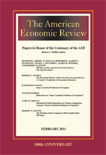
AMERICAN ECONOMIC REVIEW
Unveiling the Innovations in Economic Thought.AMERICAN ECONOMIC REVIEW, published by the American Economic Association, stands as one of the most prestigious academic journals in the field of Economics and Econometrics. With an impressive impact factor and ranking of #9 out of 716 in its category, this journal has achieved a notable position within the top 2% of journals globally, as evidenced by its Q1 classification in 2023. Covering a broad spectrum of economic theory and applied research, it serves as a primary platform for the dissemination of high-quality scholarly work, contributing significantly to the ongoing dialogue within the discipline. Although Open Access options are not available, the journal's rigorous peer-review process ensures that published articles uphold the highest standards of academic integrity and relevance. With coverage spanning from 1973 to 2024, the AMERICAN ECONOMIC REVIEW continues to be an essential resource for researchers, professionals, and students eager to stay at the forefront of economic thought and innovation.
MANCHESTER SCHOOL
Illuminating contemporary economic challenges with scholarly insights.MANCHESTER SCHOOL, published by WILEY, is a leading academic journal in the field of Economics and Econometrics, with a rich legacy dating back to 1930. This esteemed journal fosters scholarly discourse by providing a platform for high-quality research articles that cover a broad spectrum of economic theories, empirical studies, and methodological advancements. With an impact factor reflective of its relevance and rigor, MANCHESTER SCHOOL is ranked in the Q3 category in Economics and Econometrics and holds a Scopus rank of #447 out of 716, placing it in the 37th percentile. Researchers and practitioners alike can access a wealth of knowledge through its diverse range of articles, contributing significantly to the advancement of economic science. While it does not offer Open Access options, the journal maintains a commitment to accessibility by providing in-depth analyses and discussions that are crucial for understanding contemporary economic challenges. Based in the United Kingdom, MANCHESTER SCHOOL continues to uphold its standard of excellence well into 2024 and beyond.
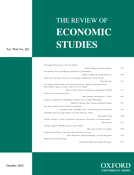
REVIEW OF ECONOMIC STUDIES
Exploring the Frontiers of Economic Theory and PracticeREVIEW OF ECONOMIC STUDIES, published by OXFORD UNIVERSITY PRESS, stands as a premier academic journal in the field of Economics and Econometrics. Established in 1933, it has maintained a strong tradition of scholarly excellence, evidenced by its prestigious Q1 category ranking and its position in the top 93rd percentile among its peers, with a remarkable Scopus rank of #49 out of 716 related journals. This reputable journal aims to publish high-quality research that advances theoretical understanding and empirical knowledge in economics, fostering a dynamic dialogue among researchers, professionals, and students alike. Despite not being an open access journal, the REVIEW OF ECONOMIC STUDIES provides invaluable insights and impactful findings that shape the discourse in the economics community, making it a vital resource for those engaging in rigorous economic analysis and policy-making.
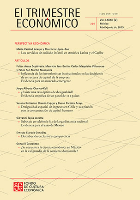
TRIMESTRE ECONOMICO
Bridging Historical Perspectives with Modern Economic Insights.TRIMESTRE ECONOMICO, published by FONDO CULTURA ECONOMICA, is a prominent open access journal in the field of Economics and Econometrics based in Mexico. Since its inception in 1979, this journal has served as a critical platform for disseminating scholarly research and theoretical advancements within economic sciences, addressing both contemporary issues and historical perspectives. With an impact factor that ranks it within the Q3 category among 716 journals in its field, TRIMESTRE ECONOMICO continues to contribute significantly to the academic community, providing readers with insights into economic modeling, policy analysis, and empirical research. The journal has embraced open access since 2011, fostering a broad reach and encouraging innovation and collaboration among researchers, professionals, and students. It is essential reading for those seeking to deepen their understanding of economic trends and theories, making valuable contributions to both local and global discussions.