
Revista de Estudios en Seguridad Internacional-RESI
Scope & Guideline
Innovating Insights for a Safer World
Introduction
Aims and Scopes
- International Security Analysis:
The journal emphasizes the study of international security, particularly relating to conflicts, military strategies, and the implications of geopolitical shifts. This includes examinations of ongoing conflicts, such as the Ukraine war, and their broader impacts on international relations. - Hybrid Warfare and Modern Threats:
A significant focus is placed on hybrid warfare and the multifaceted nature of modern security threats, including cybercrime, organized crime, and terrorism. The analysis of these issues contributes to a deeper understanding of contemporary security challenges. - Regional Security Dynamics:
The journal explores security issues within specific regional contexts, particularly in Europe and the Americas. This includes the role of organizations like NATO and the OAS in shaping regional security policies and responses. - Policy Implications and Governance:
RESI highlights the implications of security studies for governance and public policy. This includes discussions on the management of security resources, the governance of public safety, and the relationship between security policies and social values. - Theoretical Contributions to Security Studies:
The journal also contributes to theoretical frameworks within security studies, addressing concepts like securitization, the role of history in shaping security policies, and the impact of socio-economic factors on security dynamics.
Trending and Emerging
- Impact of the Ukraine War:
The conflict in Ukraine has emerged as a significant theme, with multiple papers analyzing its implications for international security, military strategies, and geopolitical balances. This trend indicates a growing interest in the effects of specific conflicts on global security architecture. - Cybersecurity and Digital Threats:
There is an increasing focus on cybersecurity, digital surveillance, and the implications of social media on security. This reflects the recognition of cyber threats as a critical component of modern security discourse. - Hybrid Threats and Non-Traditional Security:
Emerging discussions around hybrid threats, including organized crime and terrorism, show a trend towards understanding security beyond traditional military frameworks. This highlights the complexities of contemporary security environments. - Human Rights and Security Governance:
Recent publications have begun to emphasize the intersection of human rights and security governance, indicating a growing recognition of the importance of ethical considerations in security policies. - Climate Change and Security:
Although not explicitly mentioned in the titles, there is an underlying trend towards addressing the implications of environmental changes on security, suggesting that future publications may further explore this critical area.
Declining or Waning
- Traditional Military Strategies:
There appears to be a reduced emphasis on conventional military strategies compared to hybrid warfare and non-traditional security threats. This shift indicates a growing recognition of the complexities of modern conflicts that extend beyond traditional military engagements. - Historical Security Studies:
While historical perspectives have been valuable, there seems to be a declining trend in papers solely focused on historical analyses of security dynamics. The focus has increasingly shifted towards current and forward-looking security issues. - Focus on Individual National Security Policies:
The journal is moving away from extensive analyses of individual national security policies in favor of broader regional and international security frameworks, reflecting a more interconnected view of global security challenges. - Discussions on Economic Security:
Themes related to economic security, while still relevant, are appearing less frequently. This could suggest a shift towards more immediate security concerns, such as public safety and cyber threats.
Similar Journals
Strategic Analysis
Connecting scholars and practitioners for impactful analysis.Strategic Analysis is a prominent academic journal published by Routledge Journals, Taylor & Francis Ltd, focusing on the critical fields of Political Science and International Relations, as well as Safety Research. With an ISSN of 0970-0161 and an E-ISSN of 1754-0054, it stands out as a valuable resource for scholars and professionals interested in strategic studies and related disciplines. The journal's esteemed reputation is highlighted by its placement in Q3 and Q4 categories in the respective fields for 2023, indicating its significant contribution to knowledge and discussion within these domains. Covering a broad timeline with converged years from 1978 to 1984, 1998 to 2004, and now from 2007 to 2024, it provides a platform for innovative research and analytical insights. Readers can benefit from in-depth studies and reviews that address contemporary challenges and strategies in public policy and safety, making it an essential read for researchers, practitioners, and students alike. Although it does not currently offer open access, the journal remains committed to disseminating high-quality research aimed at enhancing strategic frameworks and improving decision-making processes on a global scale.
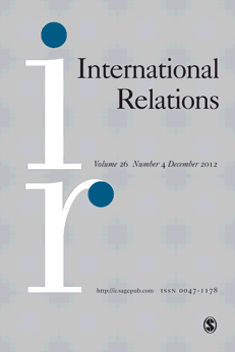
International Relations
Advancing global discourse in political science.International Relations is a premier journal dedicated to advancing the field of political science and international relations, published by SAGE Publications Ltd in the United Kingdom. With its ISSN 0047-1178 and E-ISSN 1741-2862, this journal has served as a critical platform for scholarly discourse since its inception, covering a wide range of themes from global governance to security studies. Having achieved a Q1 ranking in the 2023 category quartiles for Political Science and International Relations, it stands out among a selective group of influential academic publications, ranking #145 out of 706 in its field, placing it in the 79th percentile according to Scopus metrics. The journal operates under a traditional subscription model, catering to a diverse audience of researchers, academics, and professionals who seek to contribute to and engage with emerging ideas and debates. The objective of International Relations is to foster innovative research that addresses the intricate dynamics shaping international interactions, thus providing vital insights that inform policy-making and theoretical developments alike. As such, it remains an essential resource for anyone committed to understanding and influencing the future of global affairs.
Critical Studies on Security
Illuminating the Intersection of Politics and SecurityCritical Studies on Security, published by TAYLOR & FRANCIS LTD, stands as a pivotal journal in the realm of Political Science and International Relations. With an ISSN of 2162-4887 and E-ISSN of 2162-4909, this peer-reviewed journal has carved out its niche since its inception in 2013, continuing to provide a platform for innovative research up until 2024. Its prestigious positioning in the Q1 category of both Political Science and International Relations—ranked #135 out of 706 by Scopus—underscores its significant impact within the academic community, holding a percentile ranking of 80th. Although the journal is not open access, it remains essential for scholars, offering insights that critically assess security studies through diverse theoretical and methodological lenses. As a researcher, professional, or student in the field, engaging with its cutting-edge articles will be invaluable for understanding contemporary security challenges and debates.

European Review of International Studies
Elevating Academic Dialogue on European and Global IssuesEuropean Review of International Studies is a premier journal published by BRILL, dedicated to advancing scholarship in the fields of Political Science and International Relations. With an ISSN of 2196-6923 and E-ISSN 2196-7415, it serves as a significant platform for rigorous academic discourse and contemporary research, currently holding a prestigious Q2 ranking in both Political Science and Social Sciences categories. The journal's scope encompasses a broad range of topics related to international studies, making it a vital resource for researchers, practitioners, and students alike who seek to deepen their understanding of global issues. Published from the Netherlands, the journal has been in circulation since 2014, contributing to scholarly dialogue through a worldwide readership and is indexed in prominent databases such as Scopus, where it ranks in the 41st-42nd percentile across its fields. By promoting open access to knowledge, the European Review of International Studies aims to enrich the academic community's exploration of pivotal global phenomena.
Science & Global Security
Shaping Informed Discussions on Security ThreatsScience & Global Security, published by Routledge Journals, Taylor & Francis Ltd, is an esteemed academic journal that explores the intersection of science, security, and global policy from an interdisciplinary perspective. Since its inception in 1989, the journal has served as a vital platform for disseminating research that addresses the complex challenges posed by security threats in a globalized world, including nuclear proliferation, environmental security, and technological impacts on peace. Although currently classified in the Q4 quartile within the Engineering (miscellaneous) category, the journal is dedicated to fostering dialogue among researchers, policymakers, and practitioners, making it a crucial resource for those engaged in the fields of security studies and international relations. The journal, based in the United Kingdom, operates on a subscription-based model, ensuring that high-quality research is accessible to a wide professional audience. By continuously welcoming diverse methodologies and perspectives, Science & Global Security plays an essential role in shaping informed discussions around the pressing security dilemmas of our time.
JOURNAL OF STRATEGIC STUDIES
Connecting Scholars to the Pulse of Strategic StudiesJOURNAL OF STRATEGIC STUDIES is a premier academic journal dedicated to the fields of political science and international relations, published by Routledge Journals, Taylor & Francis Ltd. Established in 1978, this journal has built a strong reputation for disseminating high-quality research and theoretical contributions that drive innovation and scholarship in strategic studies. With a commendable impact factor that places it in the Q1 quartile for Political Science and International Relations, and Q2 quartile for Sociology and Political Science, the journal ranks among the top publications with notable Scopus rankings that reflect its influence and reach. The journal’s comprehensive scope encompasses a wide array of topics, from security studies to diplomacy, making it an invaluable resource for researchers, professionals, and students alike. Although it operates on a subscription-based access model, the journal's commitment to advancing knowledge in strategic studies ensures that it remains a vital platform for scholarly dialogue and exploration. Join the community of scholars contributing to cutting-edge research through this leading journal.

European Security
Fostering Scholarly Dialogue on Security IssuesEuropean Security is a leading interdisciplinary journal published by ROUTLEDGE JOURNALS, TAYLOR & FRANCIS LTD, dedicated to advancing the understanding of security issues within the realms of Political Science and International Relations. With an impressive Impact Factor and a Q1 ranking in its field as of 2023, this journal has solidified its position as an influential platform for scholars and practitioners alike, ranking #93 out of 706 in the Scopus database. Since its inception in 1992, European Security has provided a forum for original research, analytical essays, and review articles that explore the complexities of security, conflict, and cooperation in the European context and beyond. The journal's commitment to high-quality scholarship is reflected in its rigorous peer-review process and the diverse perspectives it fosters. Although offering subscription-based access, the content within is invaluable for anyone engaged in the study of contemporary security challenges. Whether you are a researcher, professional, or student, European Security is essential reading for deepening your understanding of the dynamic and evolving landscape of international security.
Journal of Asian Security and International Affairs
Illuminating Asia's Security Landscape Through Rigorous Scholarship.Journal of Asian Security and International Affairs, published by SAGE Publications Inc., stands at the forefront of research in the realms of political science and international relations, particularly focusing on the dynamic security landscapes across Asia. With an ISSN of 2347-7970 and an E-ISSN of 2349-0039, this peer-reviewed journal has maintained a commendable position within the academic community, evidenced by its ranking in the Q1 category for Political Science and International Relations as of 2023. It currently holds a respectable Scopus rank of 295 out of 706, situating it in the 58th percentile, which underscores its contributions to the field. While the journal operates as a subscription model, it remains committed to disseminating high-quality research that enhances understanding of security issues in the Asian context, offering a valuable platform for researchers, professionals, and students alike. With coverage spanning from 2014 to 2024, the journal invites innovative scholarship that addresses emerging trends, challenges, and theories relevant to Asian security and international affairs.

African Security Review
Unraveling Security Challenges Across the ContinentAfrican Security Review is a leading journal dedicated to the critical examination of security issues affecting the African continent. Published by Routledge Journals, Taylor & Francis Ltd, and based in the United Kingdom, this peer-reviewed journal aims to foster multidisciplinary dialogue in the fields of Law, Political Science, International Relations, and Safety Research. With a commendable Q2 ranking in these areas for 2023, it sits among the top echelon of academic publications, reflecting its impact and relevance in addressing contemporary security challenges from 1995 through its ongoing contributions up to 2024. The journal provides essential insights and analyses for researchers, practitioners, and policymakers, allowing access to the latest developments and frameworks in African security. The absence of an Open Access option underscores its commitment to maintaining high academic standards and rigor in the studies it publishes. By engaging with the African Security Review, stakeholders can deepen their understanding and enhance their efforts to promote peace and stability across Africa.

FOREIGN AFFAIRS
To Illuminate the Complexities of Global Affairs.Foreign Affairs, published by the Council on Foreign Relations Inc., stands as a premier journal in the fields of Political Science and International Relations. Established as a leading voice in international policy analysis, this journal has garnered an impressive reputation, securing a position in the Q2 category both for Political Science and Sociology, as well as ranking #67 out of 706 in its Scopus category, putting it in the top 10% of its field. Although it is not an open-access journal, it provides critical insights and rigorous scholarship that are invaluable for researchers, policy-makers, and students engaged in the complexities of global affairs. With a publication history dating back to 1965, the journal addresses the pressing international issues of our time, fostering informed discourse and promoting a deeper understanding of global political dynamics. Through its quarterly issues, Foreign Affairs not only serves as a vital resource but also shapes the conversations that define contemporary international relations.