
Revista de Historiografia
Scope & Guideline
Fostering innovative historiographical discourse.
Introduction
Aims and Scopes
- Historiographical Analysis:
The journal focuses on the examination of historiographical trends and the evolution of historical narratives, offering critiques and insights into how history is written and understood. - Cultural and Political Contexts:
A significant emphasis is placed on the interplay between history, culture, and political power, exploring how these elements shape the interpretation of past events. - Interdisciplinary Methodologies:
The journal encourages the use of diverse methodologies from related fields such as anthropology, archaeology, and sociology to enhance the study of history and historiography. - Regional Histories:
There is a consistent focus on specific geographical areas, particularly Latin America and the Iberian Peninsula, providing in-depth studies that highlight local contexts in global histories. - Historical Memory and Identity:
The journal investigates themes of memory, identity, and the role of history in contemporary society, looking at how historical narratives influence cultural and national identities.
Trending and Emerging
- Interdisciplinary Approaches:
Recent publications increasingly showcase interdisciplinary methodologies, blending history with fields such as sociology, cultural studies, and political theory. This trend enhances the depth and richness of historical analysis. - Memory Studies:
There is a growing interest in the study of collective memory and its implications for identity formation, particularly in post-colonial contexts. This theme is crucial as societies grapple with their pasts and the narratives they construct. - Global Histories and Networks:
Emerging studies are focusing on global historical narratives, emphasizing interconnectedness and the role of empires and migration in shaping historical developments, reflecting a more comprehensive understanding of history. - Cultural Histories of Religion:
A significant trend is the exploration of religion's role in shaping cultural and political identities, particularly in antiquity and medieval studies, highlighting the interplay between belief systems and historical developments. - Histories of Everyday Life:
The journal is increasingly featuring studies that examine the daily lives of individuals and communities, moving beyond elite narratives to include the experiences of marginalized groups, thereby enriching historical discourse.
Declining or Waning
- Traditional Political Histories:
There is a noticeable decline in papers focused on traditional political histories, particularly those that do not engage with broader cultural or social implications, as the journal shifts towards more interdisciplinary approaches. - Static Archaeological Studies:
Studies that merely report archaeological findings without contextual historical analysis are appearing less frequently, suggesting a move towards integrating archaeological data with historiographical narratives. - Narrow National Histories:
Research that emphasizes narrowly defined national histories without considering transnational or global perspectives is becoming less prominent, reflecting a broader trend towards globalization in historical studies.
Similar Journals

Revista de Historia da Sociedade e da Cultura
Unveiling the Layers of Cultural HistoryRevista de História da Sociedade e da Cultura is a distinguished open access journal published by UNIV COIMBRA, FAC LETRAS, dedicated to advancing the field of history. Established in 2014, this journal has become a valuable resource for researchers, professionals, and students, encouraging the critical study of social and cultural history from multiple perspectives. With an E-ISSN of 2183-8615, it remains accessible to a global audience, promoting scholarly communication and collaboration. The journal's commitment to open access since 2016 ensures that high-quality research is available to all without financial barriers. Currently ranked in the third quartile (Q3) in the category of History by Scopus, it holds an impressive position within the academic community, with a Scopus rank of #950 among 1760 journals within arts and humanities, reflecting its impact and relevance in the field. By exploring both historical methodologies and contemporary cultural issues, Revista de História da Sociedade e da Cultura aims to contribute meaningfully to scholarly discourse and foster a deeper understanding of historical contexts, making it a pivotal journal for anyone interested in the ever-evolving narratives of our past.

Talia Dixit-Revista Interdisciplinar de Retorica e Historiografia
Connecting Disciplines to Enrich Understanding of RhetoricTalia Dixit-Revista Interdisciplinar de Retorica e Historiografia, published by UNIV EXTREMADURA, SERVICIO PUBLICACIONES, stands as a prominent open-access journal in the diverse fields of Arts and Humanities, particularly focusing on Rhetoric and Historiography. With its ISSN 1886-9440 and a commitment to disseminating knowledge since 2006, this journal provides a platform for scholars to explore innovative interdisciplinary approaches within its scope. Located in Spain, Talia Dixit has garnered respect within academic circles, achieving a Q2 ranking in Literature and Literary Theory and Classics, as well as Q3 rankings in History, Linguistics, and Arts and Humanities (miscellaneous) as of 2023. Additionally, the journal's metrics indicate its relevance and appeal, reflected in its Scopus rankings across various categories. Researchers, professionals, and students alike will find Talia Dixit to be an essential resource for groundbreaking research and rich, diverse discussions that bridge the gap between historical contexts and rhetorical analysis.
Historia e Cultura
Democratizing Knowledge Through Cultural NarrativesHistoria e Cultura is a distinguished open-access journal focusing on the dynamic and multifaceted exploration of history and culture within the context of the Humanities. Published by the UNIV ESTADUAL PAULISTA JULIO MESQUITA FILHO, FAC CIENCIAS HUMANAS & SOCIAIS, the journal serves as a vital resource for researchers, professionals, and students engaged in the fields of historical research and cultural studies. Since transitioning to open access in 2012, Historia e Cultura aims to democratize knowledge by providing free, unrestricted access to high-quality articles that foster scholarly exchange and innovation. Although the specific impact factor remains undisclosed, the journal is dedicated to contributing to the academic discourse through rigorous peer-reviewed research. Situated in Brazil, Historia e Cultura is well-positioned to address both local and global issues, encouraging critical engagement with cultural heritage and identity. Researchers and scholars are invited to submit their work, ensuring that diverse perspectives are represented in the study of our shared history.
SAGVNTVM-Papeles del Laboratorio de Arqueologia de Valencia
Exploring the Depths of History through Rigorous Research.SAGVNTVM-Papeles del Laboratorio de Arqueologia de Valencia is an esteemed open-access journal dedicated to advancing the field of archaeology, published by the Department of Prehistory and Archaeology at the University of Valencia, Spain. With an ISSN of 0210-3729 and an E-ISSN of 2174-517X, the journal has been a vital resource for scholars since its inception in 1962, ensuring that high-quality archaeological research is readily available to the global academic community. Notably, it holds a distinguished Q2 ranking in both Archeology and Archeology within the arts and humanities categories as of 2023, reflecting its commitment to rigorous scholarship and significant contributions to the field. The journals' Scopus rankings further affirm its relevance, positioned at #188 of 413 in Arts and Humanities and #179 of 354 in Social Sciences. Researchers and professionals alike can delve into a variety of topics, benefiting from the journal’s rich archive from 2017 to 2023. With a mission to disseminate knowledge and foster dialogue in archaeology, SAGVNTVM serves as an essential platform for investigators, students, and practitioners interested in the latest archaeological findings and methodologies.

ACTA POLONIAE HISTORICA
Contributing to the Legacy of Scholarly Discourse in PolandACTA POLONIAE HISTORICA is a distinguished academic journal dedicated to the exploration and analysis of historical phenomena, cultural developments, and sociopolitical dynamics. Published by the Institute of History - Polish Academy of Sciences in Poland since its inception in 1968, this journal has established itself as a critical forum for scholarly discourse, encompassing various interdisciplinary fields including Cultural Studies, Gender Studies, History, and Sociology and Political Science. With its wide-ranging scope, ACTA POLONIAE HISTORICA invites researchers, professionals, and students to delve into the complexities of history and contemporary societal issues. Although it currently holds a Q4 ranking in multiple categories, this journal remains committed to fostering innovative research and yielding insights that contribute to the academic community. Its rigorous editorial standards ensure the dissemination of quality scholarship, essential for anyone engaged in serious historical and cultural studies.
Journal of Iberian and Latin American Research
Navigating the evolving landscapes of literature and cultural theory.Journal of Iberian and Latin American Research, published by Routledge Journals, Taylor & Francis Ltd, is a key resource for scholars interested in the rich cultural, literary, and sociopolitical landscapes of Iberian and Latin American contexts. With an ISSN of 1326-0219 and an E-ISSN of 2151-9668, this journal is dedicated to advancing research from 1995 to 2008 and continuing between 2010 and 2023, reflecting the evolving dynamics in these regions. Notably esteemed within its field, it holds a Q3 categorization in Cultural Studies and a Q2 rating in Literature and Literary Theory as of 2023. Its strong performance is underscored by its ranking within the 84th percentile in Literature and Literary Theory and engagement within interdisciplinary dialogues across various domains. While it does not offer open access, the journal remains a vital component of academic discourse, attracting researchers, professionals, and students who seek to explore the intricate narratives and theoretical frameworks that shape Iberian and Latin American studies. Whether you are delving into socio-cultural critiques or examining literary trends, the Journal of Iberian and Latin American Research is an indispensable platform for your scholarly endeavors.

Studia Historica-Historia Antigua
Elevating Scholarship in Ancient StudiesStudia Historica-Historia Antigua is a distinguished Open Access journal published by EDICIONES UNIV SALAMANCA, dedicated to the advancement of research in the field of ancient history. With a solid foundation since its inception in 1983, this journal has maintained its commitment to accessibility and knowledge dissemination, reaching a wider audience in Spain and beyond. ISSN: 0213-2052 and E-ISSN: 2530-4100 enable seamless engagement with its scholarly content. Ranked in the second quartile (Q2) in the History category in 2023 and occupying the 903rd position out of 1,760 in the Scopus ranking for Arts and Humanities, the journal underscores its relevant position in the academic landscape. Its converged years from 2017 to 2024 highlight ongoing scholarly dialogue while facilitating the exploration of diverse perspectives in ancient history. This journal serves as a vital resource for researchers, professionals, and students aiming to deepen their understanding of historical narratives and methodologies. Located in Salamanca, Spain, Studia Historica-Historia Antigua is not only a platform for rigorous academic discourse but also a contributor to the collective pursuit of historical insights in the evolving field of history.
Anuario de la Escuela de Historia Virtual
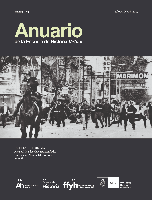
Advancing Interdisciplinary Approaches to HistoryAnuario de la Escuela de Historia Virtual is a distinguished academic journal published by the Universidad Nacional de Córdoba, Facultad de Filosofía y Humanidades. With its focus on the field of history, this peer-reviewed journal aims to foster scholarly discussion and disseminate innovative research that contributes to the understanding of historical contexts and narratives. Since transitioning to an Open Access model in 2010, it has greatly increased accessibility for researchers, professionals, and students, thereby promoting a greater exchange of knowledge across linguistic and geographical boundaries. Published under the ISSN 1853-7049, the journal provides invaluable insights into historical analysis, methodologies, and interdisciplinary approaches, ensuring its relevance in contemporary academic discourse. Its commitment to high-quality, impactful research positions it as a vital resource within the historical scholarship landscape.

Vestnik Tomskogo Gosudarstvennogo Universiteta Istoriya-Tomsk State University Journal of History
Unveiling the Narratives of the PastVestnik Tomskogo Gosudarstvennogo Universiteta Istoriya - Tomsk State University Journal of History is a prominent academic journal that focuses on advancing the field of historical studies with a particular emphasis on Russian and Siberian historiography. Published by TOMSK STATE UNIVERSITY, this journal aims to provide a platform for the dissemination of innovative research, critical analyses, and scholarly discussions among historians, researchers, and students. With its ISSN 1998-8613 and E-ISSN 2311-2387, the journal is committed to fostering an accessible scholarly community, although it currently does not operate under an Open Access model. By featuring works that engage with various narratives and methodologies, Vestnik Tomskogo Gosudarstvennogo Universiteta Istoriya plays a vital role in enriching academic dialogue and contributing to the ever-evolving understanding of historical contexts, particularly in relation to regional studies. This journal is an essential resource for anyone interested in delving into the complexities of history, culture, and society.

Taller de la Historia
Advancing Historical Scholarship for AllTaller de la Historia is a distinguished academic journal published by the Universidad Cartagena, particularly under the Faculty of Human Sciences. With its open access model in place since 2013, this journal provides a valuable platform for researchers, professionals, and students interested in the profound and evolving narratives of history. With an emphasis on interdisciplinary approaches, Taller de la Historia aims to foster scholarly dialogue and promote innovative research that intersects with cultural studies, social history, and critical theory. By making its content freely available, the journal not only enhances accessibility but also encourages the dissemination of knowledge across a global audience. Located in Cartagena, Colombia, this journal plays a pivotal role in elevating the academic discourse surrounding historical analysis and interpretation, making it an essential resource for anyone engaged in the study of history.