Revista Internacional de Contaminacion Ambiental
Scope & Guideline
Advancing Knowledge in Environmental Protection
Introduction
Aims and Scopes
- Environmental Contamination Assessment:
The journal emphasizes studies that assess various forms of environmental contamination, including soil, water, and air pollution, often utilizing advanced analytical techniques and bioindicators. - Ecotoxicology and Health Impacts:
Research addressing the ecotoxicological effects of pollutants on ecosystems and human health is a core focus, highlighting the interconnections between environmental quality and public health. - Bioremediation and Sustainable Practices:
The journal promotes research on bioremediation technologies and sustainable agricultural practices, including the use of biofertilizers and organic amendments to restore contaminated environments. - Policy and Regulatory Frameworks:
Investigations into environmental policies, regulations, and their enforcement are significant, aiming to inform better governance and compliance strategies for pollution control. - Climate Change and Environmental Interactions:
Research that explores the impacts of climate change on environmental contamination, including the influence of climate variations on pollution dynamics, is increasingly highlighted.
Trending and Emerging
- Microplastics and Emerging Contaminants:
There is a growing focus on the presence and impact of microplastics and other emerging contaminants in various ecosystems, highlighting the need for innovative detection and remediation techniques. - Climate Change Adaptation Strategies:
Research addressing the impacts of climate change on environmental contamination and exploring adaptation strategies is rising, reflecting increasing global awareness of climate-related challenges. - Health Risk Assessment and Public Health:
Studies linking environmental pollution to public health risks, particularly in vulnerable populations, are gaining traction, emphasizing the need for integrated environmental health assessments. - Innovative Waste Management Solutions:
The development of sustainable waste management practices and technologies, including recycling and waste-to-energy solutions, is becoming a prominent theme, reflecting global sustainability goals. - Use of Biotechnology in Pollution Mitigation:
There is an emerging trend towards utilizing biotechnological approaches, such as genetically modified organisms or engineered microbes, for pollution mitigation and bioremediation.
Declining or Waning
- Traditional Pollution Sources:
Research focusing solely on traditional pollution sources, such as industrial discharges, has seen reduced emphasis, possibly due to a shift towards more complex interrelationships involving emerging pollutants and their ecological impacts. - Static Environmental Monitoring:
Studies that primarily emphasize static monitoring of pollutants without integrating dynamic ecological assessments are becoming less frequent, indicating a move towards more comprehensive, systems-based approaches. - Agricultural Chemical Impact Studies:
While agricultural impacts on the environment remain important, the frequency of studies solely focused on chemical impacts without considering integrated pest management or organic alternatives appears to be declining.
Similar Journals

Environmental Chemistry and Ecotoxicology
Unveiling insights for a healthier planet.Environmental Chemistry and Ecotoxicology, published by KEAI PUBLISHING LTD, is a pioneering Open Access journal that has been at the forefront of research since its establishment in 2019. With an impressive trajectory that converges research excellence until 2024, the journal focuses on critical developments in the fields of environmental chemistry and ecotoxicology. It boasts a commendable market position, ranking in the top 3% among leading journals in Agricultural and Biological Sciences, Environmental Science, and related disciplines, as demonstrated by its high Scopus ranks. The journal is committed to disseminating groundbreaking research that addresses the pressing challenges of environmental sustainability and chemical safety, making it an essential resource for researchers, professionals, and students aiming to navigate the complexities of our ecological landscapes. By embracing an Open Access model, the journal ensures that valuable insights are accessible to a global audience, fostering collaboration and innovation in the field.
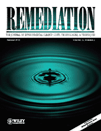
Remediation-The Journal of Environmental Cleanup Costs Technologies & Techniques
Transforming Pollution Management through Cutting-Edge ResearchRemediation: The Journal of Environmental Cleanup Costs Technologies & Techniques is a pivotal publication in the field of environmental engineering, pollution management, and waste disposal. Published by Wiley since 1990, this journal has established itself as a significant resource for researchers and practitioners dedicated to environmental remediation technologies and cost-effective cleanup techniques. With an impressive scope that spans over three decades and continues to evolve until 2024, the journal is recognized for its valuable contributions, reflected in its Q2 ranking in key categories such as Environmental Engineering, Pollution, and Waste Management and Disposal. Although not currently open access, it offers critical insights and scholarly articles that adhere to rigorous peer-review standards, making it a leading forum for sharing innovative research and practical applications aimed at addressing environmental cleanup challenges. Positioned within the competitive landscape of Scopus rankings, it attracts attention from a global audience, ensuring that its findings resonate within academic, governmental, and industrial domains. Researchers, professionals, and students alike will find Remediation an indispensable tool for advancing knowledge and fostering collaboration in environmental sustainability.
GLOBAL JOURNAL OF ENVIRONMENTAL SCIENCE AND MANAGEMENT-GJESM
Exploring the intersections of science, management, and sustainability.Global Journal of Environmental Science and Management (GJESM), published under the distinguished leadership of Professor J. Nouri, is an esteemed academic platform dedicated to advancing the interdisciplinary discourse surrounding environmental science and management. With an ISSN of 2383-3572 and an E-ISSN of 2383-3866, GJESM has established itself as a prominent Open Access journal since 2014, allowing for unrestricted sharing of knowledge and research findings. Based in Iran, this journal caters to a diverse global audience, featuring contributions that span various critical domains including agricultural and biological sciences, environmental engineering, pollution management, and social sciences, evidenced by its impressive 2023 Q1 and Q2 quartile rankings across multiple categories. The journal’s Scopus rankings demonstrate a robust standing in the academic landscape, with exciting placements that underscore its relevance in key fields. By bridging the gap between scientific inquiry and practical application, GJESM serves as a vital resource for researchers, practitioners, and students seeking to understand and address the pressing environmental challenges faced by our planet today.
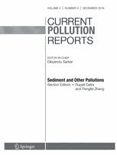
Current Pollution Reports
Connecting Scholars for a Greener TomorrowCurrent Pollution Reports, published by Springer Heidelberg, is an esteemed journal in the field of environmental science, focusing on the multifaceted aspects of pollution, waste management, and water science. With an impressive 2023 impact factor reflected in its status as a Q1 journal across multiple categories—including Management, Monitoring, Policy and Law, Pollution, Waste Management and Disposal, and Water Science and Technology—this journal stands at the forefront of environmental research and policy discourse. The journal, which has been in publication since 2015, aims to provide a platform for scholars and practitioners to share their findings, promoting the exchange of innovative ideas and effective solutions to pressing environmental challenges. With its rigorous peer-review process, Current Pollution Reports serves as an invaluable resource for researchers, professionals, and students committed to understanding and addressing pollution and its impacts on our planet.
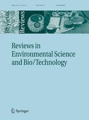
REVIEWS IN ENVIRONMENTAL SCIENCE AND BIO-TECHNOLOGY
Bridging Research and Application for Environmental ProgressREVIEWS IN ENVIRONMENTAL SCIENCE AND BIO-TECHNOLOGY is a leading academic journal published by Springer, focusing on the interdisciplinary study and advancement of environmental science and biotechnological applications. With an impressive impact factor that places it in the top quartile of its categories, this journal has consistently ranked highly (Q1) in vital fields such as Applied Microbiology and Biotechnology, Environmental Engineering, Pollution, and Waste Management and Disposal, reflecting its significant contribution to these domains. Established in 2002 and continuing to publish cutting-edge research, the journal primarily caters to researchers, professionals, and students who seek to stay abreast of the latest findings and methodologies in environmental sustainability and biotechnological innovations. While it does not currently offer open-access options, subscribers have access to a wealth of comprehensive reviews and original articles that explore the ever-evolving challenges and solutions in environmental science. Located in the Netherlands, REVIEWS IN ENVIRONMENTAL SCIENCE AND BIO-TECHNOLOGY is instrumental in bridging the gap between scientific research and practical application, promoting a collaborative approach to addressing global environmental issues.
Revista Eletronica em Gestao Educacao e Tecnologia Ambiental
Leading the way in educational strategies and environmental technology.Revista Eletronica em Gestao Educacao e Tecnologia Ambiental, published by the Universidade Federal de Santa Maria, serves as a pivotal platform in the interdisciplinary fields of education management and environmental technology. Dedicated to advancing knowledge and fostering best practices in these critical areas, the journal features peer-reviewed articles, case studies, and innovative research that reflect the latest trends and findings. With an open access model, it ensures that valuable information is readily available to researchers, professionals, and students alike, promoting knowledge sharing and collaboration across borders. Although specific metrics such as impact factor and H-index are currently unavailable, the journal’s commitment to quality and relevance resonates within the academic community, making it an essential resource for those looking to contribute to the discourse on effective educational strategies and sustainable technological applications in environmental contexts. Based in Santa Maria, Brazil, this journal is ideally positioned to highlight regional research while engaging a global audience interested in progressive approaches to education and technology.
Rocznik Ochrona Srodowiska
Exploring Innovative Solutions for Environmental ChallengesRocznik Ochrona Srodowiska, published by the Middle Pomeranian Scientific Society for Environmental Protection, is an esteemed journal dedicated to advancing the field of environmental science in Poland and beyond. With an ISSN of 1506-218X, this peer-reviewed journal has established itself as a vital resource since its inception in 2007, addressing various environmental issues and promoting sustainable practices. Currently holding a Q3 category ranking in the Environmental Science (miscellaneous) field for 2023, it places itself in the 23rd percentile of Scopus rankings, reflecting a growing influence in the broader environmental research community. While the journal is not open access, it serves as an important conduit for researchers, professionals, and students to disseminate their findings and contribute to the interdisciplinary dialogue aimed at tackling pressing environmental challenges. With a commitment to rigorous research and practical applications, Rocznik Ochrona Srodowiska remains an essential platform for fostering innovation and collaboration in environmental studies.
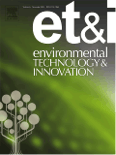
Environmental Technology & Innovation
Innovating Environmental Science for a Sustainable FutureEnvironmental Technology & Innovation is a leading academic journal published by Elsevier, focusing on groundbreaking research and advancements in the fields of Environmental Science, Plant Science, and Soil Science. Since its inception in 2014, this prestigious journal has established itself in the top Q1 quartiles of its categories, reflecting its commitment to publishing high-quality, impactful research. As evidenced by its impressive Scopus ranks, including a rank of #14/516 for Plant Science and #5/159 for Soil Science, it serves as a vital resource for scholars, researchers, and professionals aiming to advance their understanding and innovation in environmental technologies. Although it operates under a subscription model, the journal provides significant insights and access options, making it an essential addition to any researcher's library. With its emphasis on sustainability and technological advancements, Environmental Technology & Innovation remains at the forefront of addressing global environmental challenges and fostering innovative solutions.
WATER AIR AND SOIL POLLUTION
Advancing environmental knowledge for a sustainable future.Water Air and Soil Pollution is a leading peer-reviewed journal published by Springer International Publishing AG, focusing on the vital fields of environmental sciences, ecological modeling, and pollution management. Since its inception in 1971, the journal has contributed significantly to advancing knowledge in the interdisciplinary realms of Water Science and Technology, Environmental Chemistry, and Environmental Engineering. With an impressive history, the journal currently holds a Q2 quartile ranking in several categories, reflecting its high impact and relevance in these essential areas of research. Its rankings—such as #95 in Environmental Science: Water Science and Technology—illustrate its standing in the academic community. Researchers and practitioners alike can access a wealth of studies and reviews that aim to address pressing environmental concerns and foster sustainable practices, although the journal is not Open Access. Located in Switzerland, Water Air and Soil Pollution continues to be a critical resource for those dedicated to understanding and mitigating pollution, making it an indispensable tool for anyone engaged in ecological and environmental research.
Science of The Total Environment
Pioneering Insights in Environmental ScienceScience of The Total Environment, an esteemed journal published by Elsevier, holds a significant position in the field of environmental science, encompassing critical areas such as Environmental Chemistry, Environmental Engineering, Pollution, and Waste Management and Disposal. With an impressive impact factor and ranked in the Q1 quartile across its categories for 2023, the journal is recognized for its high-quality research output and contribution to environmental sustainability. Operating from its base in the Netherlands, the journal has been a valuable resource since its inception in 1972, welcoming innovative studies that address complex environmental challenges. Its notable rankings—such as Rank #9 in both Environmental Sciences and Pollution—underscore its relevance and influence in the academic community. Although the journal currently does not provide an open access option, the robust findings and discussions presented within its pages continue to foster a deeper understanding of environmental issues. Science of The Total Environment is an essential platform for researchers, professionals, and students dedicated to advancing knowledge and solutions in the rapidly evolving field of environmental science.