
Review of Middle East Studies
Scope & Guideline
Bridging Cultures through Interdisciplinary Research
Introduction
Aims and Scopes
- Historical Analysis:
The journal frequently publishes articles that delve into historical narratives, focusing on various periods, such as the Ottoman Empire and its legacy, offering critical insights into past events and their implications for contemporary society. - Cultural Studies:
There is a strong emphasis on cultural production, including literature, music, and visual arts. The journal explores how these forms reflect and shape societal values, identities, and political dynamics within the Middle East. - Political Economy:
Research articles often address the political economy of the Middle East, analyzing the intersections of state power, economic policies, and social movements, particularly in relation to historical and contemporary issues. - Ethnic and Gender Studies:
The journal includes a focus on ethnic minorities, gender roles, and feminist perspectives, highlighting the experiences and contributions of marginalized groups within the Middle Eastern context. - Interdisciplinary Approaches:
The journal encourages interdisciplinary research that integrates methodologies from history, sociology, anthropology, and literary studies, fostering a multifaceted understanding of Middle Eastern issues.
Trending and Emerging
- Intersections of Music and Politics:
Recent publications highlight the role of music as a form of resistance and cultural expression in the Middle East, showcasing how artists engage with political issues and social change. - Post-Genocide Studies:
There is a growing focus on the aftermath of genocides, particularly concerning the Yazidi community and Kurdish experiences. This theme emphasizes trauma, memory, and resilience in post-conflict societies. - Environmental and Economic Challenges:
Emerging research addresses the socio-economic impacts of environmental change and resource management in the region, reflecting global concerns about sustainability and climate change. - Digital Humanities and New Media:
The journal is increasingly publishing works that explore the impact of digital technologies on cultural expression and political engagement, particularly among youth in the Middle East. - Critical Examination of Nationalism:
There is an uptick in critical analyses of nationalism in the Middle East, particularly concerning its implications for identity, memory, and social cohesion in diverse societies.
Declining or Waning
- Traditional Political Narratives:
Articles focusing solely on traditional political narratives, such as state-centric analyses, seem to be decreasing. There is a noticeable shift towards more nuanced examinations of social movements and grassroots activism. - Solely Historical Biographies:
The focus on individual historical figures without contextual analysis appears to be less prevalent. Scholars are increasingly integrating broader social and political contexts into their biographical studies. - Eurocentric Perspectives:
Research that primarily adopts Eurocentric viewpoints or frameworks is declining, with a growing preference for indigenous perspectives and methodologies that prioritize local voices and experiences. - Static Cultural Representations:
The depiction of culture as static or monolithic is decreasing. Recent publications are moving towards dynamic interpretations that recognize the complexities and changes within Middle Eastern cultures.
Similar Journals
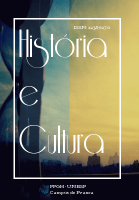
Historia e Cultura
Innovating Historical Discourse for a Global AudienceHistoria e Cultura is a distinguished open-access journal focusing on the dynamic and multifaceted exploration of history and culture within the context of the Humanities. Published by the UNIV ESTADUAL PAULISTA JULIO MESQUITA FILHO, FAC CIENCIAS HUMANAS & SOCIAIS, the journal serves as a vital resource for researchers, professionals, and students engaged in the fields of historical research and cultural studies. Since transitioning to open access in 2012, Historia e Cultura aims to democratize knowledge by providing free, unrestricted access to high-quality articles that foster scholarly exchange and innovation. Although the specific impact factor remains undisclosed, the journal is dedicated to contributing to the academic discourse through rigorous peer-reviewed research. Situated in Brazil, Historia e Cultura is well-positioned to address both local and global issues, encouraging critical engagement with cultural heritage and identity. Researchers and scholars are invited to submit their work, ensuring that diverse perspectives are represented in the study of our shared history.
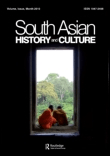
South Asian History and Culture
Unveiling the Cultural Depths of South AsiaSouth Asian History and Culture, published by Routledge Journals, Taylor & Francis Ltd, is an essential academic platform aimed at advancing the understanding of the historical and cultural dimensions of South Asia. With an ISSN of 1947-2498 and an E-ISSN of 1947-2501, this journal has established itself as a key resource for researchers and professionals in the fields of Arts and Humanities, Cultural Studies, Sociology, and Political Science. The journal occupies a significant standing in academia, reflected by its categorization in Q2 across multiple disciplines, highlighting its impact and relevance. Its Scopus rankings further emphasize its influence, ranking 31/173 in General Arts and Humanities and maintaining an 82nd percentile. Additionally, South Asian History and Culture provides a unique forum for scholarly discourse, ensuring the latest research is accessible to a global audience, thereby enriching the academic community's understanding of South Asian dynamics. By delving into themes ranging from social structures to cultural identities, the journal invites contributions that can drive forward innovative discussions and establish new paradigms in South Asian studies.
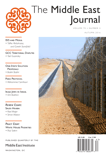
MIDDLE EAST JOURNAL
Fostering Academic Excellence in Middle Eastern DiscourseThe Middle East Journal, published by the esteemed Middle East Institute, serves as a vital platform for scholarly discourse on the complexities of the Middle East, encompassing rich analyses in the fields of Sociology, Political Science, and Geography. With a legacy dating back to 1976, this journal continues to shape contemporary dialogues, offering rigorous research and insights that influence policy-making and academic studies alike. Academic readers will note its Scopus rankings, positioning it within the lower quartiles of Geography, Planning and Development and Sociology and Political Science, reflecting an opportunity for growth and increased visibility within these fields. Although the journal is not open access, it remains an essential resource for those aiming to enhance their understanding of the historical and current dynamics of the Middle East. The Middle East Journal stands as a testament to the region's complex socio-political landscape and offers a comprehensive lens for both established scholars and aspiring researchers.
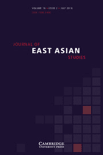
Journal of East Asian Studies
Connecting Scholars to East Asia's Rich TapestryThe Journal of East Asian Studies, published by Cambridge University Press, serves as a pivotal academic platform for scholars and practitioners who are dedicated to the multifaceted exploration of East Asian societies. With an ISSN of 1598-2408 and an E-ISSN of 2234-6643, this journal has been disseminating significant research since its inception in 2008 and continues to be a crucial resource for advancing scholarly dialogue up to 2024. Recognized for its contributions, it holds prestigious quartile rankings in various fields, including Q2 in Development, Political Science and International Relations, and Q3 in Economics and Econometrics, showcasing its broad impact within the social sciences. With Scopus rankings reflecting its robust presence in political science, sociology, and economics, this journal appeals to a wide audience of researchers, educators, and students. As it aims to foster a comprehensive understanding of East Asian political, economic, and social dynamics, the Journal of East Asian Studies remains an essential resource for those looking to engage deeply with the complexities of this vital region.
Sungkyun Journal of East Asian Studies
Connecting Disciplines, Cultures, and Ideas in East AsiaSungkyun Journal of East Asian Studies, published by the ACAD EAST ASIAN STUD, SUNGKYUNKWAN UNIVERSITY, is a premier open-access journal dedicated to the exploration and analysis of East Asian cultures, histories, and societies. Since its establishment in 2010, this journal has rapidly gained recognition, currently holding a notable impact across various disciplines, including Anthropology, Cultural Studies, Literature, Religious Studies, Sociology, and Political Science. As of 2023, it is classified in quartiles Q4 in Anthropology and Sociology, and Q3 in Cultural Studies and Religious Studies, highlighting its growing influence and relevance in contemporary research. Researchers and scholars can take full advantage of its open-access model introduced in 2021, ensuring broad dissemination of knowledge and fostering an inclusive academic discourse. The journal aims to facilitate interdisciplinary dialogue and critical insights into East Asian issues, making it an invaluable resource for students, professionals, and academics seeking to deepen their understanding of this dynamic region.

Belleten
Advancing Historical Insights and Cultural DiscussionsBeleten is a distinguished academic journal published by TURK TARIH KURUMU, focusing on cultural studies and history. With an ISSN of 0041-4255, this journal has made significant contributions to the understanding of Turkey's historical and cultural landscape since its inception in 1971. Recognized for its scholarly rigor, it holds a notable Q2 ranking in both the Cultural Studies and History categories as of 2023, reflecting its substantial impact within these fields. The journal is accessible to a diverse audience, including researchers, professionals, and students, who seek to explore comprehensive studies and discussions on Turkish history and culture. While it does not operate under an open-access model, its commitment to high-quality research continues to resonate within the academic community. Situated in Ankara, Turkey, Beleten aims to foster scholarly dialogue and provide a platform for innovative research that addresses contemporary and historical issues relevant to Turkish society and beyond.

Debats-Revista de Cultura Poder i Societat
Exploring the intersections of culture, power, and society.Debats-Revista de Cultura Poder i Societat, published by the Instituto Alfons el Magnànim in Valencia, Spain, is an esteemed open-access journal that has been contributing to the fields of Cultural Studies and Sociology since 2016. With an ISSN of 0212-0585 and an E-ISSN of 2530-3074, this journal encourages scholarly discourse and critical analysis of contemporary societal issues. Recognized in the 2023 Scopus rankings as a Q3 journal in Cultural Studies and Q4 in Sociology and Political Science, it ranks in the 50th percentile for Cultural Studies and the 23rd percentile for Sociology and Political Science. By bridging cultural discussions with political and societal analysis, Debats serves as a vital platform for researchers, professionals, and students alike, fostering interdisciplinary dialogue and enriching academic scholarship. The journal's focus on accessibility further empowers a diverse audience to engage with pressing cultural and societal debates, making it an invaluable resource in the academic landscape.
INTERNATIONAL JOURNAL OF MIDDLE EAST STUDIES
Bridging Past and Present in Middle Eastern ScholarshipInternational Journal of Middle East Studies, published by Cambridge University Press, is a leading scholarly platform dedicated to advancing the study of the Middle East within the realms of History, Sociology, and Political Science. Since its inception in 1970, the journal has consistently provided researchers and scholars with a critical forum for innovative research and significant discourse, boasting a 2023 Q1 ranking in History and impressive percentile rankings in related disciplines. Although it operates under a traditional publishing model, it reaches a global audience through its well-curated articles that bridge the gap between historical contexts and contemporary issues in the Middle East. Recognized for its scholarly rigor, the journal has a dedicated readership, making it an invaluable resource for anyone engaging deeply with the socio-political dynamics and historical narratives of this pivotal region.

INTERNATIONAL JOURNAL OF IBERIAN STUDIES
Exploring the Rich Tapestry of Iberian NarrativesINTERNATIONAL JOURNAL OF IBERIAN STUDIES (ISSN 1364-971X; E-ISSN 1758-9150), published by INTELLECT LTD, stands as a pivotal forum for interdisciplinary research on the Iberian Peninsula, engaging with complex cultural, historical, and political narratives. Established in 2012, this journal highlights diverse perspectives and fosters scholarly dialogue within its scope bridging Cultural Studies, History, and Political Science, reflected in its 2023 Scopus rankings which place it within the Q3 and Q4 quartiles across various categories. Although currently not an open-access journal, it provides critical insights and original research essential for students, researchers, and professionals alike. The journal's commitment to exploring the multifaceted dimensions of Iberian studies makes it a significant contributor to the field, encouraging submissions that deepen understanding and promote scholarly excellence.
MIDDLE EASTERN STUDIES
Connecting Research and Understanding in a Global ContextMIDDLE EASTERN STUDIES is a prestigious journal published by Routledge Journals, Taylor & Francis Ltd, focusing on the multidisciplinary examination of the Middle East from historical, cultural, geographical, sociopolitical, and developmental perspectives. With a convergence of research spanning over six decades (1964-2024), this journal seeks to present innovative scholarship that deepens the understanding of Middle Eastern dynamics, making it a vital resource for researchers, professionals, and students alike. It holds notable recognition in various academic fields, evidenced by its Q2 ranking in Cultural Studies and Q1 in History as of 2023, demonstrating its impact and relevance. Although it operates under a traditional subscription model, MIDDLE EASTERN STUDIES remains committed to enhancing academic discussions and fostering knowledge exchange within the international research community. As a trusted source for empirical studies and theoretical frameworks, this journal plays a crucial role in illuminating the complexities of the region and its global interactions.