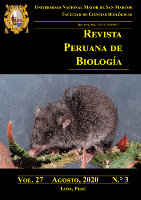
REVISTA PERUANA DE BIOLOGIA
metrics 2024
Empowering Minds with Cutting-Edge Biological Insights
Introduction
REVISTA PERUANA DE BIOLOGIA, an esteemed journal published by the Universidad Nacional Mayor de San Marcos, Faculty of Biological Sciences, has been a vital platform for disseminating significant biological research since its inception in 1974. With an Open Access model, this journal ensures that high-quality research is freely available to readers across the globe, fostering the advancement of knowledge within the field of agricultural and biological sciences. Despite proprietary challenges, the journal has secured a respectable Q3 category ranking in Agricultural and Biological Sciences and currently holds a 137th rank in Scopus among its peers. By embracing a comprehensive scope, REVISTA PERUANA DE BIOLOGIA encourages submissions that contribute to diverse biological topics, making it an essential resource for researchers, professionals, and students looking to enhance their understanding and expertise. With its ongoing commitment to excellence, this journal remains a cornerstone of biological research in Peru and beyond, reinforcing the importance of collaboration and knowledge sharing in the scientific community.
Metrics 2024
 0.230.50-26
Metrics History
Rank 2024
Scopus
IF (Web Of Science)
JCI (Web Of Science)
Quartile History
Similar Journals
JOURNAL OF PHYCOLOGY
Transforming Insights into Aquatic ScienceJOURNAL OF PHYCOLOGY, published by Wiley, is a premier academic journal dedicated to the realms of Aquatic Science and Plant Science. Established in 1965, it has continuously contributed to the advancement of phycology through rigorous research and scholarly discussions. The journal holds an impressive reputation, classified as Q1 in both aquatic and plant sciences for 2023, affirming its position among the top-tier journals in these fields. With a Scopus ranking of 31 out of 247 in Aquatic Science and 75 out of 516 in Plant Science, it stands in the 87th and 85th percentiles respectively, highlighting its influence and impact. While it is not an open access journal, it offers a wealth of valuable insights and original research articles that are essential for researchers, professionals, and students alike. The JOURNAL OF PHYCOLOGY is a critical platform for the dissemination of knowledge on both fundamental and applied aspects of algae, making it indispensable for those who seek to deepen their understanding of this crucial area of biological science.

Acta Brasiliensis
Cultivating Knowledge and Collaboration in Brazilian StudiesActa Brasiliensis is an esteemed academic journal published by the Federal University of Campina Grande. With an ISSN of 2526-432X and an E-ISSN of 2526-4338, this open access journal has been fostering scholarly communication in the field of Brazilian studies since its inception in 2017. Acta Brasiliensis aims to disseminate high-quality research by providing a platform for scholars, professionals, and students to share their work related to various aspects of Brazilian culture, society, and development. The journal's commitment to open access ensures that its content is freely available, promoting wider accessibility and engagement within the academic community. With a growing reputation in the landscape of scientific research, Acta Brasiliensis is poised to make significant contributions to the understanding of Brazilian studies, thereby advancing discourse and collaboration among researchers worldwide.
European Zoological Journal
Fostering Global Collaboration in Animal ResearchEuropean Zoological Journal, published by Taylor & Francis Ltd, is an esteemed open-access publication dedicated to advancing the exciting field of zoology. Since its inception in 2017, this journal has progressively established itself as a vital resource for researchers, professionals, and students alike. With its Q2 ranking in Animal Science and Zoology as of 2023, the journal ranks in the 69th percentile among its peers, showcasing its influence and contribution to the discipline. The journal’s broad scope covers a wide range of topics within zoology, aiming to foster an understanding of animal biology and conservation efforts. As an open-access journal, it not only enhances the dissemination of knowledge but also encourages collaborative research across global communities. Situated in the United Kingdom, the European Zoological Journal invites submissions that contribute to the evolving discourse in animal sciences, and endeavors to support the scientific community in addressing pressing ecological challenges.

Journal of Fish and Wildlife Management
Exploring the intersection of ecology and wildlife management.The Journal of Fish and Wildlife Management, published by the U.S. Fish & Wildlife Service, serves as a vital resource for scholars, researchers, and professionals in the fields of Animal Science, Ecology, and Conservation Biology. With its ISSN 1944-687X, this esteemed journal has been disseminating critical research findings since 2010, contributing significantly to the understanding of fish and wildlife conservation practices and their ecological impacts. Despite its Q3 category rankings in various disciplines as of 2023, it provides a platform for innovative research that influences policy and management strategies for biodiversity conservation. The journal, although not open access, remains committed to advancing the scientific discourse surrounding wildlife management with articles that emphasize practical conservation efforts and ecological sustainability. Readers can expect a diverse range of articles that promote best practices in the management and conservation of fish and wildlife resources, furthering our collective mission of preserving ecological health and biodiversity for future generations.
NEW ZEALAND JOURNAL OF ZOOLOGY
Exploring the Depths of Animal Science.NEW ZEALAND JOURNAL OF ZOOLOGY, published by Taylor & Francis Ltd, offers a crucial platform for the dissemination of high-quality research in the field of zoology and animal science. With an ISSN of 0301-4223 and an E-ISSN of 1175-8821, this journal has been a valuable resource since its inception in 1974 and continues to contribute significantly to the academic community, with a converged years span extending to 2024. The journal holds a commendable Q3 ranking in the 2023 category of Animal Science and Zoology, and ranks #175 out of 490 in Scopus, placing it in the 64th percentile of its category. While it is not an Open Access journal, researchers can still access a wide range of studies that delve into various aspects of zoology. With its robust editorial standards and commitment to advancing knowledge in animal science, the NEW ZEALAND JOURNAL OF ZOOLOGY serves as an essential resource for researchers, professionals, and students interested in the complexities of wildlife and ecological studies.

Diversity-Basel
Championing open dialogue in the pursuit of ecological understanding.Diversity-Basel is a premier open-access journal published by MDPI, specializing in the vital fields of agricultural, biological, and ecological sciences. Launched in 2009, this multidisciplinary journal, operating from Switzerland, aims to disseminate high-quality research that advances the understanding of biodiversity and ecosystem dynamics. With an impressive impact factor and notable rankings in Scopus, including Q1 classification in Agricultural and Biological Sciences and strong positions in Ecology and Ecological Modeling, Diversity-Basel stands as a valuable resource for global researchers, professionals, and students alike. Its commitment to accessibility enables researchers to reach a wider audience, fostering collaboration and innovation in addressing pressing environmental challenges. By providing an inclusive platform for diverse scientific inquiries and innovations, Diversity-Basel plays an essential role in shaping the discourse on biodiversity conservation and management, encouraging the pursuit of sustainable solutions in our rapidly changing world.
Neotropical Biology and Conservation
Exploring the Rich Tapestry of Neotropical LifeNeotropical Biology and Conservation, published by Pensoft Publishers, serves as a pivotal platform for researchers and professionals dedicated to the understanding and preservation of biodiversity in the Neotropical region. This Open Access journal, operational since 2006 and based in Brazil, invites contributions that delve into the complexities of ecology, evolution, and conservation strategies pertinent to the diverse ecosystems of South and Central America. With a commendable 2023 impact factor reflected in its Q3 rankings across multiple categories including Animal Science, Ecology, and Plant Science, it stands as a valuable resource for academics seeking to publish innovative findings and foster dialogue in these critical areas of study. The journal's commitment to open access ensures that knowledge is readily available to anyone interested in advancing the field of neotropical biology and conservation. Join the global conversation and contribute to the vital work of preserving our planet’s rich biological heritage through rigorous research published in this esteemed journal.
ZOOLOGY
Celebrating 30 years of excellence in zoological studies.ZOOLOGY, an esteemed journal published by Elsevier GmbH, stands at the forefront of research in the Animal Science and Zoology fields. With a notable impact factor and recognized as a Q1 category journal in its discipline, ZOOLOGY is highly regarded among researchers, ranking #98 out of 490 in Scopus rankings. Founded in 1994 and continuing through to 2024, the journal aims to publish cutting-edge, peer-reviewed articles that contribute significantly to the understanding of zoological sciences. Based in Munich, Germany, ZOOLOGY provides both subscription and open access options, ensuring that influential research reaches a wider audience. It serves as an essential platform for disseminating innovative findings, connecting scholars globally, and fostering interdisciplinary collaboration to advance zoological knowledge.

REVUE SUISSE DE ZOOLOGIE
Your Gateway to Cutting-Edge Zoological ResearchThe REVUE SUISSE DE ZOOLOGIE, published by the esteemed MUSEUM HISTOIRE NATURELLE, is a premier journal dedicated to advancing the field of zoology and its related disciplines. Established in 1964, this Swiss journal has consistently provided a platform for high-quality research in the areas of ecology, evolution, behavior, and systematics, currently holding a commendable Q3 ranking in these categories for 2023. With a rich publication history spanning from 1964 to 1979 and then from 1994 to the present, it serves not only as a significant repository of knowledge but also as a crucial resource for researchers, professionals, and students alike. While the journal is not open access, it remains a vital tool for those wishing to stay at the forefront of zoological research and innovation. Its commitment to disseminating groundbreaking studies makes it an indispensable asset for academic institutions and researchers globally, ensuring that pivotal findings in zoology continue to gain visibility and impact.
Biosystems Diversity
Advancing Knowledge in Biodiversity and BeyondBiosystems Diversity is an esteemed open access journal published by the Oles Honchar Dnipro National University since 2009, based in Ukraine. Focusing on a wide array of topics within the fields of Ecology, Evolution, Behavior, and Systematics, the journal aims to foster the dissemination of cutting-edge research and innovative methodologies in understanding biodiversity and ecological interactions. With its ISSN 2519-8513 and E-ISSN 2520-2529, Biosystems Diversity has seen a consistent growth trajectory, earning a Q3 category for Ecology and a Q4 classification for Ecology, Evolution, Behavior and Systematics as of 2023, reflecting its dedication to high standards of scholarly excellence. The journal's rankings in Scopus solidify its relevance in the academic community, providing researchers and practitioners with vital insights into contemporary environmental challenges. As it converges towards its 2024 target, Biosystems Diversity continues to empower scientists, students, and professionals alike to explore new dimensions in the study of biological systems, offering crucial open access options for broader reach and engagement.