RIBAGUA-Revista Iberoamericana del Agua
Scope & Guideline
Advancing knowledge in Ibero-American water sciences.
Introduction
Aims and Scopes
- Hydrological Modeling and Assessment:
The journal focuses on the development and application of hydrological models to assess water flow, quality, and management strategies in various contexts, particularly in Ibero-America. - Water Resource Management and Planning:
A core aim is to enhance the planning and sustainable management of water resources, addressing challenges such as climate variability and urbanization. - Innovative Engineering Solutions:
RIBAGUA publishes research that offers innovative engineering solutions to water-related problems, including infrastructure design and environmental monitoring. - Environmental Impact Studies:
The journal emphasizes research that evaluates the environmental impacts of water systems and proposes mitigation strategies, particularly in the context of aquatic ecosystems. - Interdisciplinary Approaches to Water Issues:
Encouraging interdisciplinary research, RIBAGUA seeks to integrate perspectives from hydrology, ecology, engineering, and social sciences to address complex water challenges.
Trending and Emerging
- Use of Remote Sensing and Satellite Data:
There is an increasing trend in the utilization of satellite monitoring for environmental factors, such as chlorophyll levels and rainfall patterns, showcasing the integration of technology in water resource management. - Application of Machine Learning in Hydrology:
Recent papers have begun to explore machine learning techniques, such as random forest modeling, to enhance predictions and analyses in hydrological studies, indicating a move towards data-driven methodologies. - Integration of Climate Change Impacts:
Research focusing on the impacts of climate change on water resources and management strategies is gaining prominence, reflecting the urgent need to address this global challenge. - Wastewater Management and Public Health:
Emerging themes include the detection of pathogens in wastewater, highlighting the intersection of water resource management with public health, particularly in urban areas. - Ecosystem Services and Water Resource Valuation:
There is an increasing focus on understanding the value of ecosystem services provided by water bodies, indicating a shift towards holistic and sustainable water management practices.
Declining or Waning
- Traditional Water Quality Assessments:
There has been a noticeable decrease in traditional studies focused solely on water quality measurements without integrating them into broader management or modeling frameworks. - Basic Hydrological Studies:
Research that presents basic hydrological data or observations without significant application or modeling context seems to be less frequent, indicating a shift towards more applied studies. - Standalone Environmental Monitoring Studies:
The journal has seen fewer standalone studies dedicated to environmental monitoring without the incorporation of predictive modeling or management recommendations.
Similar Journals

LHB-Hydroscience Journal
Bridging Research and Real-World Applications in Water ScienceLHB-Hydroscience Journal, published by Routledge Journals, Taylor & Francis Ltd in the United Kingdom, stands as a significant platform in the realm of Water Science and Technology. Since its inception in 2021, this open-access journal has been dedicated to disseminating high-quality research that addresses the critical challenges faced in hydroscience, aiming particularly at fostering innovative solutions for sustainable water management. With an impressive E-ISSN of 2767-8490, it offers researchers, professionals, and students the opportunity to access cutting-edge findings without any paywall, thereby promoting wider dissemination and engagement within the academic community. Although it currently holds a Q4 quartile ranking and ranks #208 out of 261 in the Environmental Science category, the journal aspires to elevate its scholarly impact through rigorous peer-reviewed articles that contribute to the field from 2021 to 2024. As recognition of its growing significance, LHB-Hydroscience Journal invites contributions that explore the multidimensional aspects of water science—from interdisciplinary methodologies to real-world applications—catering to an audience eager to push the boundaries of current knowledge.
Water Conservation Science and Engineering
Innovating Tomorrow's Water Conservation StrategiesWater Conservation Science and Engineering, published by SPRINGERNATURE, is a vital academic journal dedicated to advancing the fields of environmental engineering, ocean engineering, waste management, and water science and technology. Since its inception in 2016, the journal has quickly established itself within the academic community, achieving a commendable Q3 ranking across multiple categories in 2023. With an ISSN of 2366-3340 and an E-ISSN of 2364-5687, it is accessible to a global readership eager to explore the latest research and innovations in water conservation and sustainable practices. Although currently not open access, the journal is committed to publishing high-quality scholarly articles that provide insights into effective water management strategies, innovative engineering solutions, and the critical importance of preserving our water resources. Based in Singapore, Water Conservation Science and Engineering aims to foster interdisciplinary collaboration among researchers, professionals, and students, making it an essential resource for anyone passionate about environmental sustainability and preservation.
Hydrology
Leading the way in hydrological research and innovation.Hydrology, published by MDPI, is a prominent open-access journal dedicated to advancing the field of hydrological science. Since its establishment in 2014, the journal has garnered a reputation for excellence, reflected in its classification within the Q2 quartile for 2023 across multiple categories including Earth-Surface Processes, Oceanography, Water Science and Technology, and Waste Management and Disposal. Based in Switzerland, Hydrology provides a vital platform for scholars and practitioners to disseminate research findings, promote innovative methodologies, and foster discussions on current trends affecting water resources and management globally. The journal is easily accessible online and aims to significantly contribute to the understanding of hydrological processes, offering insights that are pivotal for addressing contemporary environmental challenges. With Scopus rankings showcasing its growing influence, Hydrology is a crucial resource for researchers, students, and professionals committed to water science and sustainable practices.
Journal of Hydrology
Exploring the Depths of Water KnowledgeThe Journal of Hydrology, published by ELSEVIER, stands as a premier outlet for scholarly research in the field of water science and technology. With an impactful history dating back to 1949 and a convergence period extending to 2024, this journal has consistently provided a platform for cutting-edge research that shapes our understanding of hydrological processes and their implications. Located in the Netherlands, its commitment to excellence is underscored by its impressive Scopus rank of 15 out of 261 in the Environmental Science category, placing it in the 94th percentile overall, and achieving a prestigious Q1 category allocation for 2023. While the journal does not currently offer open access options, it remains an invaluable resource for researchers, professionals, and students seeking to deepen their expertise in hydrology. The rigorous peer-review process ensures the publication of high-quality manuscripts that contribute significantly to the advancement of knowledge in this critical domain.
Water Science and Engineering
Transforming Water Challenges into Engineering TriumphsWater Science and Engineering, published by ELSEVIER, is a premier open access journal that has been disseminating vital research in the realms of civil and structural engineering as well as ocean engineering since 2008. With its ISSN 1674-2370 and E-ISSN 2405-8106, this journal plays a crucial role in advancing knowledge and innovation within the sector, evidenced by its impressive rankings in Scopus—holding the 15th position out of 105 in Ocean Engineering and 76th out of 379 in Civil and Structural Engineering, placing it in the 86th and 80th percentiles, respectively. Attaining a Q1 classification in both categories for 2023 highlights its importance and influence in the academic and professional communities. The journal addresses a broad spectrum of topics integral to water sciences, offering significant insights for researchers, professionals, and students alike. With a convergence period spanning from 2010 to 2024, it continues to explore contemporary issues and advancements, providing a pivotal platform for the dissemination of research. The journal is accessible to a global audience, reaffirming its commitment to fostering open access and enhancing accessibility to vital scientific literature.
Journal of Water Management Modeling
Bridging Research and Practice in Water Resource ManagementThe Journal of Water Management Modeling, published by COMPUTATIONAL HYDRAULICS INT, stands as a pivotal resource in the fields of Civil and Structural Engineering, Geography, Planning and Development, and Water Science and Technology. With an ISSN of 2292-6062, this Canadian-based journal has earned its reputation by exploring innovative modeling approaches to enhance water management, crucial in addressing today's environmental challenges. Despite its current Q3 status in Civil and Structural Engineering and Water Science categories, alongside a respectable Q2 rank in Geography, the journal is committed to advancing knowledge and fostering collaboration among researchers, practitioners, and students passionate about the sustainable management of water resources. The journal operates on an open-access model, ensuring research is readily available to a broad audience, and has converged its editorial focus from 2018 to 2024, continuously adapting to emerging trends and technologies within the discipline. As a part of the global conversation regarding effective water management, it plays a vital role in informing policies and practices that impact communities and ecosystems alike.
Meteorology Hydrology and Water Management-Research and Operational Applications
Innovating solutions for sustainable water management.Meteorology Hydrology and Water Management - Research and Operational Applications is a prominent academic journal published by the Institute of Meteorology and Water Management, based in Warsaw, Poland. With a focus on advancing the understanding and application of meteorology, hydrology, and water resource management, this journal plays a crucial role in disseminating high-quality research that contributes to both theoretical knowledge and practical applications in these pivotal fields. Although it operates under traditional access options, the journal is dedicated to providing valuable insights and solutions to challenges faced by researchers, practitioners, and policymakers in water management and environmental studies. Researchers keen on exploring innovative methodologies, operational tools, and empirical studies will find this journal an essential resource in enhancing their work and understanding of the dynamic interplay between meteorological phenomena and water resource management. The journal's commitment to maintaining rigorous scholarly standards ensures that every publication drives impactful dialogues within the community and beyond.
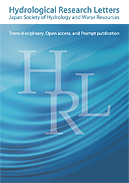
Hydrological Research Letters
Innovative Insights: Shaping the Future of Water ScienceHydrological Research Letters (ISSN: 1882-3416) is a distinguished peer-reviewed journal published by JSHWR, JAGH, JAHS, JSPH in Japan. Established with open access since 2007, this journal serves as a critical platform for the dissemination of innovative research in the field of hydrology, water science, and technology. With an increasing impact factor, currently positioned in the Q3 quartile for both Earth and Planetary Sciences and Water Science and Technology, it attracts a diverse readership keen to stay abreast of groundbreaking findings that shape water management and environmental policy. Researchers, professionals, and students alike will find this publication an invaluable resource for enhancing their understanding of hydrological processes and their implications. The journal is committed to fostering open academic dialogue and encouraging high-quality contributions during its converging years from 2015 to 2024. For more information, authors and readers can access the journal at its address, C/O INT ACAD PRINTING CO, LTD, Shinjuku-ku, Tokyo, Japan.
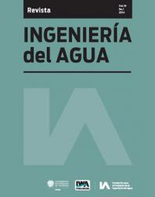
Ingenieria del Agua
Uniting Science and Practice in Water EngineeringIngenieria del Agua, published by Universitat Politècnica de València, Editorial UPV, is a prominent open-access journal dedicated to the field of water engineering and management. With its ISSN 1134-2196 and E-ISSN 1886-4996, this journal has been facilitating the dissemination of critical research and innovative practices in water resources since 1994. With a commitment to providing unrestricted access to high-quality research, Ingenieria del Agua aims to serve as a pivotal platform for researchers, professionals, and students alike. Focused on the intersection of hydrology, environmental engineering, and sustainability, the journal encourages submissions that address contemporary challenges in water resource management, promoting advancements that are vital for both ecological conservation and societal needs. By fostering a collaborative academic environment, it plays an essential role in shaping the future of water engineering.
Hydrological Sciences Journal
Advancing water science for a sustainable future.Hydrological Sciences Journal, published by Taylor & Francis Ltd, is a leading peer-reviewed publication dedicated to advancing the field of hydrology, spanning topics from water management to climate impacts on hydrological systems. With an impressive impact factor and a noted Q1 category ranking in Water Science and Technology, the journal occupies a pivotal role in the academic landscape, facilitating high-quality research dissemination since its inception in 1982. The journal is indexed in Scopus, holding a commendable rank of #48 out of 261 in the Environmental Science category, placing it in the 81st percentile among its peers. Although it does not offer Open Access options, the journal ensures extensive reach and readership through institutional subscriptions. As it converges toward its milestone of 2024, the Hydrological Sciences Journal remains an indispensable resource for researchers, professionals, and students eager to explore the latest advancements and methodologies in hydrological research.