
RIVISTA DEL NUOVO CIMENTO
metrics 2024
Connecting Scholars through High-Impact Scientific Discoveries.
Introduction
RIVISTA DEL NUOVO CIMENTO, published by SPRINGERNATURE, is a prestigious journal dedicated to advancing research in the field of physics and astronomy. Established in 1969, this journal has consistently delivered high-quality, peer-reviewed articles that explore emerging topics and significant developments in the broad scope of general physics. With an impressive Q1 ranking in the 2023 category for Physics and Astronomy and a remarkable Rank #23/243 in Scopus, it is recognized as a leading resource, standing in the 90th percentile of its field. Although not an open-access journal, RIVISTA DEL NUOVO CIMENTO ensures wide dissemination of its impactful content, making it essential reading for researchers, professionals, and students who are eager to stay ahead in their academic pursuits. Join a vibrant community dedicated to excellence and innovation in physics and astronomy by exploring the cutting-edge works published in this esteemed journal.
Metrics 2024
 1.345.904.3050
Metrics History
Rank 2024
Scopus
IF (Web Of Science)
JCI (Web Of Science)
Quartile History
Similar Journals
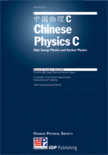
Chinese Physics C
Championing Open Access to Cutting-Edge Physics InsightsChinese Physics C is a premier, peer-reviewed journal published by IOP Publishing Ltd, dedicated to advancing knowledge in the fields of Astronomy and Astrophysics, Instrumentation, and Nuclear and High Energy Physics. With an impressive impact factor reflecting its standing in the Q1 quartile across multiple categories, this journal serves as a vital resource for researchers, professionals, and students seeking to engage with cutting-edge developments and experimental findings. Since its inception in 2008, Chinese Physics C has fostered significant collaborations and discussions within the global physics community, enabling easy access to high-quality research through its open access options. Operating from the United Kingdom with a commitment to excellence, this journal not only showcases high-impact papers but also encourages innovative methodologies and interdisciplinary approaches, solidifying its role as an essential platform for dissemination and dialogue in the rapidly evolving landscape of physics.
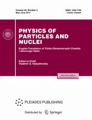
PHYSICS OF PARTICLES AND NUCLEI
Exploring the Frontiers of Nuclear PhysicsPhysics of Particles and Nuclei is an esteemed journal within the field of nuclear and high energy physics, published by Pleiades Publishing Inc. Based in the United States, this journal has been a vital platform for disseminating cutting-edge research since its inception in 1996, with coverage extending until 2024. Indexed under the ISSN 1063-7796 and the E-ISSN 1531-8559, it has established itself as a noteworthy publication, currently categorized in the Q3 quartile according to the 2023 standards for Nuclear and High Energy Physics. With its Scopus ranking placing it at #62 out of 87 in its category, Physics of Particles and Nuclei provides unique insights and discussions that resonate with academics, researchers, and students alike. Although it does not offer open access, the journal continues to serve as a crucial resource for those looking to engage deeply with the latest advancements and theoretical explorations in particle and nuclear physics.
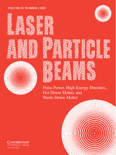
LASER AND PARTICLE BEAMS
Unveiling Breakthroughs in Optics and EngineeringLASER AND PARTICLE BEAMS is a distinguished peer-reviewed journal published by Hindawi Ltd, specifically focusing on the fields of atomic and molecular physics, optics, condensed matter physics, and electrical and electronic engineering. With its commitment to advancing knowledge in these areas, the journal has transitioned to an Open Access model since 2021, ensuring that research findings are readily accessible to the global scientific community. Covering an extensive publication history from 1983 to 2023, it serves as an important platform for researchers, professionals, and students interested in the latest developments and applications of laser technologies and particle beam methodologies. Although currently categorized in Q4 for two of its areas and Q3 for electrical engineering in the 2023 base metrics, LASER AND PARTICLE BEAMS is positioned to foster innovative research and discussions within the laboratory and applied settings, contributing significantly to advancements in its respective disciplines. The journal encourages contributions that push the boundaries of knowledge and seeks to attract a diverse array of submissions to enhance its impact in the scientific community.
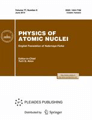
PHYSICS OF ATOMIC NUCLEI
Pioneering Research in Nuclear and Particle PhysicsPHYSICS OF ATOMIC NUCLEI is a distinguished journal dedicated to advancing the understanding of nuclear and particle physics, published by PLEIADES PUBLISHING INC. With its ISSN 1063-7788 and E-ISSN 1562-692X, this journal serves as a vital resource for researchers, professionals, and students in the fields of atomic and molecular physics, as well as high-energy physics. The journal has been actively contributing to the scientific community since its inception in 1996 and continues to publish valuable findings through 2024. Despite its current standing in the Q4 category for both Atomic and Molecular Physics, and Nuclear and High Energy Physics, there is an abundance of potential for growth and impact in these disciplines, as evidenced by its placement in the Scopus rankings. While the journal does not currently offer open access, it remains committed to disseminating quality research that informs and engages the scientific community. Explore PHYSICS OF ATOMIC NUCLEI to stay at the forefront of nuclear physics research and contribute to the dialogue in this critical area of study.
Moscow University Physics Bulletin
Advancing Knowledge Through Innovative ResearchMoscow University Physics Bulletin is a distinguished journal published by PLEIADES PUBLISHING INC, focusing on a broad spectrum of topics within the field of physics and astronomy. Since its inception, the journal has championed the dissemination of innovative research and advancements, making significant contributions to the academic community. Although currently categorized in the Q4 quartile and ranked #208/243 in the general physics and astronomy field by Scopus, it provides a valuable platform for emerging ideas and discussions in the sector. The journal's publication span, encompassing crucial years from 1975 to 1977, 1982 to 1989, and 2009 to 2024, showcases its resilience and commitment to advancing knowledge. While the journal follows a traditional access model, its content remains pivotal for researchers, professionals, and students aiming to stay abreast of the latest developments in physics. With contributions reflecting both theoretical advancements and practical applications, Moscow University Physics Bulletin is an essential resource for anyone looking to deepen their understanding of contemporary physics.
PROGRESS IN PARTICLE AND NUCLEAR PHYSICS
Shaping the Future of Particle Physics ResearchPROGRESS IN PARTICLE AND NUCLEAR PHYSICS is a prestigious academic journal published by Elsevier, focusing on the dynamic fields of particle and nuclear physics. Established in 1978 and continuing through 2024, this journal is recognized for its significant contributions to the scientific community, holding a Q1 ranking in Nuclear and High Energy Physics and topping the Scopus ranking in its category. With an impactful platform that encourages the dissemination of groundbreaking research, it attracts a diverse readership of researchers, professionals, and students eager to explore the latest advances in these fields. The journal is headquartered in Amsterdam, Netherlands, and provides an essential resource for those seeking to understand complex phenomena in particle and nuclear science. Although it does not offer Open Access options, it continues to uphold a reputation of excellence and rigor, making it a vital source of information in its domain.

Journal of Condensed Matter Nuclear Science
Fostering Collaboration in Condensed Matter Nuclear Research.The Journal of Condensed Matter Nuclear Science, published by the International Society for Condensed Matter Nuclear Science in the United Kingdom, serves as a pivotal platform for researchers exploring the intersections of condensed matter physics and nuclear science. With an ISSN of 2227-3123, this journal has been actively contributing to the academic discourse from its inception in 2016 through its latest volume in 2022. Although classified in Q4 quartiles across various categories, including Atomic and Molecular Physics, Condensed Matter Physics, and Nuclear Energy and Engineering, the journal provides a unique lens on innovative approaches and perspectives that could significantly impact future research directions. This open-access journal appeals to an audience keen on investigating the theoretical and experimental aspects of condensed matter nuclear science, fostering a collaborative environment for scientists, engineers, and students alike. By advancing discussions in this niche field, it aims to attract attention and inspire groundbreaking discoveries that underpin the evolving landscape of nuclear energy and applications.
NUCLEAR PHYSICS A
Driving Progress in High Energy Physics ResearchNUCLEAR PHYSICS A, published by Elsevier, is a leading international journal dedicated to the fields of Nuclear and High Energy Physics. With an ISSN of 0375-9474 and E-ISSN 1873-1554, the journal has been pivotal in advancing research since its inception in 1967 and is set to continue influencing the discipline through 2025. It holds a commendable Q2 classification in the 2023 category of Nuclear and High Energy Physics, ranking 32nd out of 87 journals in its field according to Scopus, placing it in the 63rd percentile. NUCLEAR PHYSICS A provides valuable insights and disseminates cutting-edge research, aiding researchers, professionals, and students in their academic and practical pursuits. Though it does not currently offer open access, the journal remains a vital resource for those engaged in the exploration of nuclear phenomena and theoretical advancements in high-energy physics.
NUCLEAR PHYSICS B
Pioneering Discoveries in Nuclear InteractionsNUCLEAR PHYSICS B, published by Elsevier, stands at the forefront of research in the dynamic field of Nuclear and High Energy Physics. Established in 1967, this prestigious journal has developed a reputation for excellence, now positioned in the Q1 category according to its 2023 quartile rankings. With an impressive Scopus rank of #21 out of 87 in its category and a commendable 76th percentile, it serves as a vital resource for scholars investigating the underlying principles of nuclear interactions and particle physics. The journal transitioned to an Open Access model in 2014, ensuring that groundbreaking research is accessible to a global audience. Its commitment to quality and innovation makes NUCLEAR PHYSICS B an essential platform for researchers, professionals, and students aiming to stay at the cutting edge of discoveries in this expansive field, contributing to the scientific discourse for nearly six decades.
EUROPEAN PHYSICAL JOURNAL C
Unlocking Innovative Discoveries in Particle PhysicsEUROPEAN PHYSICAL JOURNAL C (EPJ C), published by SPRINGER, stands as a premier platform for innovative research in the domains of Physics and Engineering. With its Open Access policy established in 2014, EPJ C ensures that groundbreaking findings are readily available to the global scientific community, enhancing accessibility and collaboration. The journal, indexed in prestigious databases, boasts an impressive impact factor and ranks within the Q1 category for both Engineering and Physics and Astronomy, placing it among the top-tier journals in these fields. Celebrated for its rigorous peer-review process, EPJ C offers a wide-ranging scope encompassing various topics in particle physics, quantum field theory, and related interdisciplinary studies. Its consistent publication since 1991 has fostered a vibrant community of researchers dedicated to advancing knowledge and innovation in physics and engineering. Join the scholarly discussion and contribute to the cutting-edge research made possible through EPJ C's esteemed platform.