
Russian Mathematics
metrics 2024
Bridging Theory and Application in Mathematics
Introduction
Russian Mathematics is an esteemed journal published by PLEIADES PUBLISHING INC, specializing in the field of mathematics. With its ISSN 1066-369X and E-ISSN 1934-810X, this journal serves as a vital platform for disseminating innovative research and advancements in various branches of mathematics. Established in 1992, it has earned its place in the Q2 category of the mathematics (miscellaneous) discipline, reflecting its growing influence and reputation within the academic community. Although it is not an open-access journal, its rigorous selection process ensures that only high-quality research is published, making it an invaluable resource for researchers, professionals, and students seeking in-depth insights into mathematical theories and applications. The journal has documented its evolution through a converged years format from 2010 to 2024, emphasizing its commitment to fostering scholarly discourse. With its address located at PLEIADES HOUSE, 7 W 54 ST, NEW YORK, NY 10019, UNITED STATES, Russian Mathematics is poised to contribute significantly to the global mathematical community.
Metrics 2024
 0.460.500.4018
Metrics History
Rank 2024
Scopus
IF (Web Of Science)
JCI (Web Of Science)
Quartile History
Similar Journals

Studia Universitatis Babes-Bolyai Mathematica
Exploring Diverse Mathematical HorizonsStudia Universitatis Babes-Bolyai Mathematica is a prestigious journal published by UNIV BABES-BOLYAI in Romania, dedicated to advancing the field of mathematics and its diverse applications. With an ISSN of 0252-1938 and E-ISSN 2065-961X, this journal has carved out its niche in the Q3 category of miscellaneous mathematics as of 2023, ranking 315 out of 399 in the Scopus Mathematics General category, reflecting its commitment to quality and relevance in mathematical research. Covering a wide range of mathematical topics, it seeks to foster scholarly dialogue and innovation among researchers, practitioners, and students. Although it operates under a traditional access model, the journal remains a vital resource for the mathematical community, inviting submissions that contribute to theoretical advancements and practical applications. Established in 2016, Studia Universitatis Babes-Bolyai Mathematica is poised to remain a central platform for groundbreaking research through 2024 and beyond, making it an essential addition to the libraries of those engaged in mathematical study and discourse.

Miskolc Mathematical Notes
Exploring the Depths of Algebra and BeyondMiskolc Mathematical Notes is a distinguished journal in the field of mathematics, published by the University of Miskolc Institute of Mathematics in Hungary. With a commitment to advancing research in areas such as Algebra and Number Theory, Analysis, Control and Optimization, Discrete Mathematics and Combinatorics, and Numerical Analysis, this journal provides a platform for both theoretical and applied contributions that enhance the understanding of complex mathematical concepts. Established in 2010, the journal has steadily gained a reputation, reflected in its 2023 categorization as a Q3 journal across several mathematical disciplines. While it operates under a traditional access model, researchers and mathematicians will find invaluable insights in its peer-reviewed articles. With Scopus rankings demonstrating respectable performance in various mathematical categories, Miskolc Mathematical Notes serves as an essential resource for scholars aiming to stay at the forefront of mathematical research and its applications.
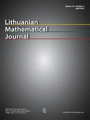
Lithuanian Mathematical Journal
Bridging Theory and Application in MathematicsLithuanian Mathematical Journal is a prominent academic publication that has been advancing the field of mathematics since its inception in 1973. Published by SPRINGER, this journal provides a platform for researchers, professionals, and students to disseminate their findings and engage with the latest developments in various branches of mathematics. With an ISSN of 0363-1672 and an E-ISSN of 1573-8825, it is accessible to a global audience, primarily serving as a hub for mathematical discourse and innovation. Despite its current categorization in Q4 within the miscellaneous mathematics category and holding a Scopus rank of #284 out of 399, the journal continuously aims to elevate its impact by contributing to significant mathematical research. The importance of this journal lies not only in its rigorous peer-review process but also in its commitment to fostering academic collaboration and knowledge exchange in a structured yet dynamic environment.

INDIANA UNIVERSITY MATHEMATICS JOURNAL
Advancing Mathematical FrontiersINDIANA UNIVERSITY MATHEMATICS JOURNAL is a prominent scholarly publication dedicated to the field of mathematics, characterized by its commitment to advancing academic discourse and research. Published by Indiana University, this journal provides a platform for the dissemination of original research, including innovative theories and methodologies in various areas of mathematics. With an esteemed impact factor placing it in the Q1 category for miscellaneous mathematics and a Scopus rank of #106 out of 399, this journal is recognized for its rigorous peer-review process and high-quality contributions, appealing exclusively to researchers, professionals, and students seeking to expand their knowledge. Although it currently does not offer open access, its extensive archive ranging from 1970 to the present allows for a rich exploration of past and current mathematical explorations. For those looking to stay at the forefront of mathematical research, INDIANA UNIVERSITY MATHEMATICS JOURNAL remains an essential resource in the academic landscape.

Advanced Studies-Euro-Tbilisi Mathematical Journal
Advancing Mathematical Knowledge GloballyAdvanced Studies-Euro-Tbilisi Mathematical Journal, published by the esteemed TBILISI CENTRE MATH SCI, is a vital resource for scholars and practitioners in the field of mathematics. Since its inception in 2021, this journal has committed to advancing knowledge across various mathematical disciplines, including Algebra and Number Theory, Analysis, Applied Mathematics, and Geometry and Topology, although it currently holds a category quartile ranking of Q4 in all these areas. With an open-access format, it provides unparalleled access to cutting-edge research to a global audience of researchers, professionals, and students, fostering collaboration and innovation within the mathematical community. Operating from TBILISI, Georgia, the journal acknowledges the growing importance of diverse geographical contributions to mathematics and aims to spotlight emerging research trends. As research continues to evolve, Advanced Studies-Euro-Tbilisi Mathematical Journal seeks to enrich the academic dialogue and support the dissemination of mathematical knowledge.

Azerbaijan Journal of Mathematics
Advancing Mathematical Frontiers for a Global CommunityWelcome to the Azerbaijan Journal of Mathematics, a premier academic platform dedicated to the advancement of mathematical research and education. Published by the esteemed Institute of Mathematics and Mechanics of Azerbaijan, this journal presents cutting-edge studies and innovative findings in the field of mathematics since its inception in 2011. With an ISSN of 2218-6816, it has established itself within the top-tier Q2 category of miscellaneous mathematics journals as of 2023, and is ranked #168 out of 399 in the General Mathematics category on Scopus, placing it in the 58th percentile. The journal's commitment to open access benefits a wide audience, making valuable research available to a global community. Covering a diverse range of mathematical disciplines, the Azerbaijan Journal of Mathematics serves as a vital resource for researchers, professionals, and students seeking to enhance their knowledge and contribute to the ongoing discourse in mathematics. Join us in exploring the depths of mathematical thought and application, and be part of our growing community of scholars.
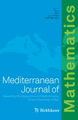
Mediterranean Journal of Mathematics
Exploring Innovative Solutions in MathematicsThe Mediterranean Journal of Mathematics, published by SPRINGER BASEL AG, is a prominent platform dedicated to the advancement of mathematical research and education. Since its inception in 2004, this journal has been pivotal in disseminating high-quality research across various fields of mathematics, currently holding a notable Q2 ranking in the miscellaneous mathematics category as of 2023. With its ISSN 1660-5446 and E-ISSN 1660-5454, the journal enjoys a respected position in the academic community, evident by its Scopus rank of 129 out of 399 in General Mathematics, placing it in the 67th percentile. While primarily a subscription-based journal, it remains committed to providing a comprehensive resource for researchers, professionals, and students, fostering dialogue and exploration within the mathematical sciences. The Mediterranean Journal of Mathematics, based in Basel, Switzerland, continues to contribute significantly to the evolution of mathematical theory and practice, marking its relevance as we approach its 20th anniversary in 2024.
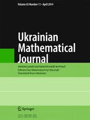
Ukrainian Mathematical Journal
Advancing Mathematical Frontiers Since 1957The Ukrainian Mathematical Journal is a prominent academic publication in the field of mathematics, focusing on a diverse range of topics that appeal to researchers, professionals, and students alike. Published by Springer, this journal has been an important platform for disseminating significant mathematical research since its inception in 1957. With the aim of fostering knowledge and collaboration within the mathematical community, the journal curates high-quality articles that meet rigorous scholarly standards, evidenced by its Q3 ranking in the miscellaneous mathematics category for 2023. Although it currently does not offer open access, the journal remains accessible through various institutional subscriptions. It serves as a vital resource for ongoing discourse in the field and invites contributions that further advance mathematical understanding.
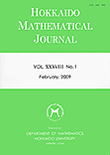
Hokkaido Mathematical Journal
Connecting theory and application in the realm of mathematics.Hokkaido Mathematical Journal, published by Hokkaido University, Department of Mathematics, stands as a pivotal platform for scholarly discourse in the field of mathematics. Established in 1972, this peer-reviewed journal has consistently contributed to the advancement of mathematical research, covering a wide spectrum of topics within the discipline. With its current ranking in the third quartile (Q3) among miscellaneous mathematics journals, it offers valuable insights and findings that cater to both established researchers and budding mathematicians alike. The journal is accessible through traditional subscription, fostering a community that values rigorous theoretical exploration and applied mathematical methods. As it approaches its convergence year in 2024, Hokkaido Mathematical Journal remains essential for those dedicated to pushing the boundaries of mathematical knowledge and innovation in Japan and beyond.
Quaestiones Mathematicae
Unveiling the Rich Tapestry of Mathematical KnowledgeQuaestiones Mathematicae is a distinguished academic journal dedicated to the field of mathematics, published by Taylor & Francis Ltd, a renowned name in scholarly publishing. Established in 1976, this journal has been a critical resource for researchers, professionals, and students alike, providing a platform for innovative and rigorous advancements in miscellaneous mathematics. The journal holds a 2023 Scopus rank of 35 out of 90 in its category, reflecting its significant contribution to the field with a 61st percentile standing, and whilst it is categorized in the Q3 quartile, it remains an essential avenue for sharing pivotal mathematical research. Although not open access, Quaestiones Mathematicae offers a rich archive of acclaimed papers, encouraging scholarly dialogue and fostering the growth of mathematical knowledge. With a converged span extending to 2024, it continues to evolve and adapt, ensuring its relevance and impact within the global academic community.