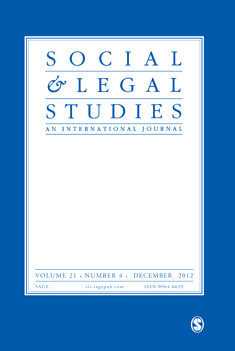
SOCIAL & LEGAL STUDIES
metrics 2024
Fostering Critical Conversations in Social and Legal Studies
Introduction
SOCIAL & LEGAL STUDIES, published by SAGE Publications Ltd, stands at the forefront of interdisciplinary research within the spheres of law, sociology, and political science. With an ISSN of 0964-6639 and an E-ISSN of 1461-7390, the journal has established a significant presence in academia since its inception in 1992. This esteemed journal, recognized as a Q1 publication in Law and holding Q2 status in both miscellaneous Social Sciences and Sociology & Political Science categories, garners attention from leading scholars and practitioners alike, evidenced by its impressive Scopus rankings, including a top 88th percentile in Law. Although it does not offer open access, researchers and students can rely on this journal for high-quality, peer-reviewed articles that synthesize theoretical and empirical insights, addressing contemporary legal and social issues. As it converges into 2024, SOCIAL & LEGAL STUDIES continues to be a vital platform for advancing discussions that shape the interplay between societal norms and legal frameworks.
Metrics 2024
 0.471.402.4050
Metrics History
Rank 2024
Scopus
IF (Web Of Science)
JCI (Web Of Science)
Quartile History
Similar Journals

Veredas do Direito
Exploring the pathways of law and policy.Veredas do Direito is a prominent academic journal dedicated to the dynamic field of law, published by the esteemed Escola Superior Dom Helder Camara in Brazil. With its ISSN 1806-3845 and E-ISSN 2179-8699, this journal has established itself as an open-access platform since 2004, fostering a culture of knowledge dissemination and accessibility. It occupies a significant niche within the legal discourse, as reflected in its 2023 Scopus rankings, placing it in the 3rd quartile for Law and the 4th quartile for Management, Monitoring, Policy, and Law. The journal's scope is comprehensive, covering a wide array of legal issues relevant in contemporary society, and it significantly contributes to academics and practitioners by offering insights into effective management and legal policy. Scholars are encouraged to engage with this publication not only for its rigorous research but also for its commitment to advancing legal scholarship in Brazil and beyond, making it an indispensable resource for those committed to excellence in legal studies.
Feminist Legal Studies
Bridging theory and practice in gender studies.Feminist Legal Studies is a prominent academic journal established in 1993, published by Springer in Switzerland, and has quickly become an essential resource for scholars and practitioners in the field of Gender Studies. With an ISSN of 0966-3622 and an E-ISSN of 1572-8455, this journal is known for its rigorous peer-reviewed articles that explore the intersection of gender and law, advocating for a critical examination of legal structures through a feminist lens. Ranked in the Q2 category of Gender Studies for 2023, and positioned at #53 out of 213 in Scopus rankings, it holds a significant place in the academic discourse, reflecting its commitment to advancing knowledge and fostering dialogue in an evolving field. The journal operates on a traditional subscription model but may also feature open-access options for select articles, broadening its reach to a diverse audience. With a focus from 1993 to 2002 and resuming from 2005 to 2024, Feminist Legal Studies continues to bridge theoretical insights with practical implications, making it a vital publication for researchers, legal professionals, and students alike who aspire to contribute to feminist theory and practice.

Revista Juridica Portucalense
Bridging Law, Politics, and Society through ResearchRevista Juridica Portucalense, published by the Universidade Portucalense Infante D Henrique Cooperativa de Ensino Superior in Portugal, stands as an influential peer-reviewed journal focusing on the fields of Law, Political Science, and Sociology. With an ISSN of 2183-5799 and an E-ISSN of 2183-5705, this Open Access journal has made significant strides in promoting scholarly research and academic discourse since its launch in 2014. The journal is categorized in the Q3 quartile for 2023 across its respective disciplines, highlighting its growing impact within the academic community, despite its current H-index rating still being unestablished. With a Scopus ranking pointing to its dedication to quality scholarship—ranked #724/1025 in Law and maintaining a presence in Political Science and Sociology—Revista Juridica Portucalense is an indispensable resource for researchers, practitioners, and students alike who are eager to engage with contemporary legal issues and the interplay of political and social dynamics.

Annual Review of Law and Social Science
Advancing Insights at the Intersection of Law and Social ScienceThe Annual Review of Law and Social Science, published by ANNUAL REVIEWS, is an essential interdisciplinary journal that bridges the domains of law, sociology, and political science. Established in 2006, this pivotal resource has consistently been recognized for its scholarly excellence, achieving a Q1 ranking in both the Law and Sociology and Political Science categories as of 2023. With a remarkable Scopus ranking that places it in the 93rd percentile among law journals, it serves as a vital platform for researchers and professionals seeking to engage with comprehensive reviews of contemporary issues at the intersection of these fields. Although not an open-access journal, its contributions are fundamental for advancing scholarship and fostering deeper insights into the relationship between social dynamics and legal frameworks. The journal's rigorous annual reviews provide valuable syntheses of the latest research, making it an indispensable resource for academics, policymakers, and students alike.
UNIVERSITY OF TORONTO LAW JOURNAL
Navigating the Intersection of Law and SocietyUNIVERSITY OF TORONTO LAW JOURNAL, published by University of Toronto Press Inc, stands as a distinguished platform in the realm of legal scholarship, having served the academic community since its inception. With an ISSN of 0042-0220 and an E-ISSN of 1710-1174, this quarterly journal is not only recognized for its rigorous peer-review process but also boasts an impressive Q2 rank in Law and a Q3 rank in Sociology and Political Science as per the 2023 category quartiles. The journal aims to foster advanced knowledge and discourse on various legal issues, thereby appealing to researchers, professionals, and students alike who are eager to engage with contemporary legal debates. It is noteworthy that the journal currently does not offer open access, ensuring the integrity and quality of its publications for a subscribed audience. Published in Canada and available for a wide readership, the UNIVERSITY OF TORONTO LAW JOURNAL continues to be a pivotal source for critical analyses and fresh insights in the fields of law and social sciences, contributing significantly to the understanding and evolution of legal frameworks.
Derecho PUCP
Empowering legal discourse through open access.Derecho PUCP is a distinguished open access journal published by the Pontificia Universidad Católica del Perú, specifically from the Faculty of Law. With a commitment to advancing legal scholarship, this journal has been an essential resource in the field of law since 2005, providing researchers, practitioners, and students with access to critical analyses and discussions on various legal topics. Based in Lima, Peru, Derecho PUCP holds a prestigious position with a Q2 ranking in the Law category, reflecting its impactful contributions to the social sciences, particularly in the legal domain. The journal publishes cutting-edge research and promotes innovative discourse, aiming to foster academic excellence and engage with contemporary legal challenges. As it continues to converge into its future issues from 2019 to 2024, Derecho PUCP exemplifies a vital platform for those committed to the pursuit of legal knowledge and research.

Alternative Law Journal
Fostering Critical Discourse for a Just Society.Alternative Law Journal, published by SAGE Publications Ltd, stands as a pivotal platform for critical discourse within the fields of law, sociology, and political science. Since its inception in 2008, the journal has fostered innovative scholarship aimed at exploring the intersections of legal practices and social justice, making it an essential resource for researchers, practitioners, and students alike. With its current ranking at Q3 in both the Law and Sociology categories according to the latest Scopus metrics, the Alternative Law Journal ensures a robust academic discourse, promoting diverse perspectives and challenging conventional norms. The journal's address reflects its international reach, further underscoring its commitment to fostering a global dialogue on pressing legal and societal issues. This journal is crucial for anyone seeking to stay updated with contemporary thoughts and research impacting law and society.
Canadian Journal of Law and Society
Bridging Legal Theory and Societal ImpactThe Canadian Journal of Law and Society, published by Cambridge University Press, is a distinguished academic journal dedicated to the multidisciplinary exploration of legal systems, social dynamics, and the intricate relationships that shape law and society. With an ISSN of 0829-3201 and an E-ISSN of 1911-0227, this journal has made significant contributions to the fields of Law, Sociology, and Political Science since its inception in 1986. Recognized in the 2023 category quartiles as Q3 in both Law and Sociology and Political Science, it stands as a credible platform for critical research, theoretical discussions, and empirical studies. Although not an open-access journal, it provides valuable insights that foster academic discourse and enhance understanding within the legal and social sciences domains. Addressed from the Edinburgh Building, Shaftesbury Road, Cambridge, England, the journal serves as an essential resource for researchers, practitioners, and students seeking to navigate the complexities of law and its societal impacts.

Ragion Pratica
Cultivating Intellectual Rigor in Social SciencesRagion Pratica is a distinguished academic journal that serves as a vital platform for scholarly discourse in the fields of Law, Philosophy, and Sociology and Political Science. Published by SOC ED IL MULINO in Italy, this journal aims to foster intellectual rigor and innovation by featuring research contributions that explore contemporary issues and theoretical advancements within these disciplines. With an emphasis on both empirical and theoretical research, Ragion Pratica is positioned as a Q3 journal in Law and Sociology, and Q2 in Philosophy for 2023, making it an essential resource for researchers, professionals, and students seeking to enhance their understanding of complex social dynamics. Although it operates under a traditional access model, the journal consistently attracts a diverse array of submissions that reflect the ongoing evolution of thought in these areas, ensuring its significance within the academic community. The journal's ISSN is 1720-2396, and it has been converging notable scholarship since its inception in 2016, contributing to the rich intellectual legacy of its home country.

Australian Feminist Law Journal
Fostering interdisciplinary dialogue through feminist perspectives.Australian Feminist Law Journal, published by Routledge Journals, Taylor & Francis Ltd, stands out as a pivotal platform in the exploration of feminist legal scholarship and its intersection with gender, literature, and social sciences. With its ISSN 1320-0968 and E-ISSN 2204-0064, this journal has been contributing to critical discourses in feminist jurisprudence since its converged years begin in 2018, with ongoing contributions informing debates up to 2024. The journal holds notable standings within its categories, achieving Q3 in both Gender Studies and Law, and impressive Q1 in Literature and Literary Theory, underscoring its diverse scholarly impact. Researchers and practitioners can engage with this essential resource, which underscores the importance of feminist perspectives across various disciplines, fostering interdisciplinary dialogue and inspiring new research trajectories within an Australian and global context. Though currently not an open-access journal, the Australian Feminist Law Journal remains an invaluable resource for those committed to advancing feminist legal principles and advocating for social justice.