Studia Quaternaria
metrics 2024
Illuminating the complexities of our planet's surface.
Introduction
Studia Quaternaria is a leading academic journal published by the Polish Academy of Sciences, Institute of Geological Sciences, specializing in the dynamic fields of Earth-Surface Processes and Geology. With an ISSN of 1641-5558 and an E-ISSN of 2300-0384, this journal has been a prominent platform for scholarly discourse since its inception in 2000. Operating under the open-access model, it aims to disseminate high-quality research that is accessible to a global audience. Studia Quaternaria holds a Q3 ranking in both relevant quartiles as of 2023, indicating its commitment to advancing knowledge in its disciplines despite centering in competitive academic environments. With its publications indexed in Scopus, the journal remains a valuable resource for researchers, professionals, and students looking to stay abreast of innovations and discoveries in Earth-Surface Processes and Geology. Encompassing a broad scope of studies, the journal represents an essential contribution to the geological sciences, fostering a deeper understanding of our planet's changes and processes.
Metrics 2024
 0.250.600.8016
Metrics History
Rank 2024
Scopus
IF (Web Of Science)
JCI (Web Of Science)
Quartile History
Similar Journals

Journal of Sedimentary Environments
Connecting Researchers to Shape the Future of Sedimentary Studies.Journal of Sedimentary Environments is a leading open-access publication dedicated to advancing the study of sedimentary processes and environments. Published by SPRINGER HEIDELBERG, this journal embraces a wide array of topics including sedimentology, paleoenvironments, and the interactions between sediments and ecosystems. Since its transition to open access in 2016, it has prioritized making high-quality research widely available, fostering collaboration and innovation among researchers, professionals, and students in the field. With a commitment to excellence, the journal aims to publish groundbreaking studies that enhance our understanding of sedimentary environments, making it an essential resource for anyone interested in the dynamics of Earth’s sedimentary systems. Located in Heidelberg, Germany, this journal is poised to play a vital role in shaping current and future research discussions worldwide.
Frontiers of Earth Science
Elevating Earth Science Research to New HeightsFrontiers of Earth Science is a prominent academic journal in the field of Earth and Planetary Sciences, published by Springer. With an ISSN of 2095-0195 and an E-ISSN of 2095-0209, this journal serves as a significant platform for researchers and professionals to disseminate their findings from 2007 to 2024. It is recognized for its impactful contributions within the category of Earth and Planetary Sciences, boasting a respected Q2 ranking in 2023. With a Scopus ranking of 64 out of 195, placing it in the 67th percentile, Frontiers of Earth Science continues to drive academic dialogue and innovation. The journal is dedicated to exploring a diverse range of topics, including geology, meteorology, and environmental science, and amplifying the understanding of Earth systems through rigorous research. Located in New York, USA, this journal embraces an Open Access model, ensuring that groundbreaking research is readily available to the global scientific community, thereby enhancing its accessibility and impact.
QUATERNARY INTERNATIONAL
Pioneering Insights into Earth’s Recent History.Quaternary International is a prestigious journal published by Pergamon-Elsevier Science Ltd, focusing on the interdisciplinary study of the Quaternary Period, which encompasses significant geological, hydrological, and climatic changes. With an ISSN of 1040-6182 and E-ISSN 1873-4553, it stands as a critical resource in the realm of Earth-Surface Processes, achieving a strong position within the academic community, evidenced by its 2023 Scopus rank of #32 out of 179 in this category, corresponding to an impressive 82nd percentile. Since its inception in 1989, this journal has provided valuable insights and contributed to the advancement of knowledge in the Earth and Planetary Sciences. Researchers, professionals, and students alike will find a wealth of original research articles, reviews, and case studies that inform and inspire further studies in the Quaternary sciences. Although the journal does not currently offer open access options, its reputation for rigorous peer review and impactful content underscores its significance in shaping scholarly discourse in the field.

Quaternary
Unveiling the Mysteries of Quaternary Earth ProcessesQuaternary is a dynamic academic journal that focuses on the intricate and evolving field of Earth and Planetary Sciences, with particular emphasis on Earth-Surface Processes. Published by MDPI, a globally recognized and reputable publisher based in Switzerland, Quaternary has established itself as a vital resource since its inception in 2018. The journal has successfully transitioned to an Open Access model since 2019, ensuring that groundbreaking research is readily accessible to a global audience. With a commendable impact factor reflected in its quartile ranks—Q2 in both Earth and Planetary Sciences (miscellaneous) and Earth-Surface Processes—it ranks comfortably within the top 40% of its field, making it an invaluable platform for sharing innovative research and insights. The journal promotes interdisciplinary collaboration and is committed to advancing our understanding of Quaternary science through high-quality publications that appeal to researchers, professionals, and students alike. Positioned as a significant player in its domain, Quaternary continues to foster discussions that shape the future of Earth sciences.
ACTA GEOLOGICA POLONICA
Connecting researchers to the forefront of geological research.ACTA GEOLOGICA POLONICA is a distinguished journal published by the Polska Akademia Nauk, in collaboration with the University of Warsaw's Geology Department. Since its inception, it has served as a vital platform for disseminating innovative research in the field of Geology, reflecting a commitment to advancing scientific knowledge in Earth and planetary sciences. With an ISSN of 0001-5709 and an E-ISSN of 2300-1887, this journal provides a rigorous review process and is classified in the Q3 quartile for Geology as of 2023, indicating its growing influence in the discipline. Despite not being open access, the journal facilitates meaningful contributions that span a range of geological topics from fundamental research to applied sciences, thereby enriching the academic landscape. Researchers, professionals, and students alike are encouraged to engage with the valuable findings and discussions contained within its pages, which continue to shape the future of geological inquiry.

Cuaternario y Geomorfologia
Connecting Past and Present Through GeomorphologyCuaternario y Geomorfologia is a distinguished journal published by the Spanish Quaternary Research Association, focusing on the interdisciplinary study of Quaternary research, geomorphology, and related fields. With its ISSN 0214-1744 and a publication history spanning from 2012 to 2024, the journal serves as a critical platform for researchers and practitioners in geography, geology, and paleontology. Although its current Scopus rankings place it in the lower quartiles across various categories, being Q4 in Earth-Surface Processes, Geography, Planning and Development, Geology, and Paleontology, Cuaternario y Geomorfologia continues to push boundaries within its sphere, aiming to foster a deeper understanding of Earth sciences. Situated in Madrid, Spain, the journal's commitment to sharing groundbreaking research without access barriers enhances its value for academics, offering insights that drive forward the fields of Quaternary studies and beyond. Researchers, professionals, and students alike will find a rich repository of knowledge within its pages, making it an essential resource for current and aspiring experts in the discipline.
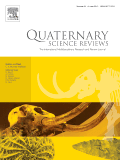
Quaternary Science Reviews
Unveiling Climate Secrets from the Quaternary PeriodQuaternary Science Reviews is a premier international journal published by PERGAMON-ELSEVIER SCIENCE LTD, dedicated to the multidisciplinary study of the Quaternary period and its implications across a variety of scientific fields, including archaeology, geology, ecology, and environmental science. With an impressive impact factor that places it in the Q1 quartile across multiple categories such as Archaeology, Ecology, and Geology, it stands as a beacon of scholarly excellence. The journal, which has been in circulation since 1982 and converges its knowledge through to 2024, is instrumental for researchers and professionals seeking to explore the complexities of climate change, biodiversity, and earth systems. Though it does not currently offer Open Access options, its well-curated content remains vital for academic advancement and is accessible to a broad audience through institutional subscriptions. Positioned at the forefront of modern scientific inquiry, the journal fosters an environment for sharing pivotal findings and fostering intellectual discussions, making it an indispensable resource for students, practitioners, and researchers alike.
JOURNAL OF PALEOLIMNOLOGY
Decoding Sediments: Insights into Our Planet's PastJOURNAL OF PALEOLIMNOLOGY, published by Springer, stands as a pivotal resource in the field of paleolimnology, bridging the disciplines of aquatic sciences and earth-surface processes. With an impact factor that showcases its scholarly influence and ranking it in the Q2 category for both Aquatic Science and Earth-Surface Processes, this journal has established a reputation for advancing our understanding of past aquatic environments through rigorous studies of sedimentary records. Since its inception in 1988, it has become a vital platform for researchers to disseminate their findings on climate change, biodiversity, and ecological shifts, revealing insights crucial for contemporary environmental science. Despite the lack of open-access options, the journal provides numerous subscription-based resources, ensuring that vital research is accessible to a wide audience. Located in the Netherlands, the journal continues to attract contributions from a global network of scholars aiming to explore the interplay between environmental change and aquatic systems.
MARINE GEOLOGY
Delving into the Dynamics of Marine Environments.MARINE GEOLOGY, published by Elsevier, is a premier journal dedicated to advancing the understanding of marine geological processes and their interactions with the Earth's systems. With an ISSN of 0025-3227 and an E-ISSN of 1872-6151, this esteemed journal has been a vital resource for researchers and professionals since its inception in 1964. The journal is recognized for its high impact, with commendable rankings, including Q1 in both Geology and Oceanography, and Q2 in Geochemistry and Petrology according to its 2023 category quartiles. With a Scopus rank within the top percentiles in various fields, MARINE GEOLOGY offers a platform for original research, critical reviews, and significant advancements in the field, covering topics ranging from sedimentology to geochemical processes in marine environments. Although it does not operate under an open-access model, its rigorous peer-review process ensures high-quality publications that contribute to our understanding of oceanic and geological sciences. Researchers, students, and professionals alike will find MARINE GEOLOGY to be an essential resource for collaboration and discovery within the vast field of marine science.
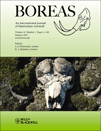
BOREAS
Fostering Groundbreaking Discoveries Since 1972BOREAS is a prestigious academic journal published by WILEY, dedicated to advancing knowledge across the fields of Archaeology, Ecology, Evolution, Behavior, Systematics, and Geology. With a commendable track record since its inception in 1972, BOREAS has consistently contributed to the scholarly landscape, currently holding a distinguished position in Q1 across multiple categories, including a ranking of #8 in Archaeology and a solid percentile rank in Ecology and Geology. This high-impact journal fosters the dissemination of groundbreaking research, further establishing itself as a vital resource for researchers, professionals, and students alike. While access options are limited to subscription-based, the quality and significance of research published in BOREAS make it an essential addition to any academic library, ensuring that studies conducted in these pivotal fields reach a global audience. With a commitment to excellence and innovation, BOREAS continues to drive forward the frontiers of knowledge and understanding in Earth and planetary sciences.