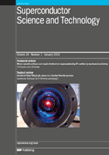
SUPERCONDUCTOR SCIENCE & TECHNOLOGY
metrics 2024
Catalyzing Breakthroughs in Electrical Engineering
Introduction
SUPERCONDUCTOR SCIENCE & TECHNOLOGY is a premier peer-reviewed journal published by IOP Publishing Ltd, based in the United Kingdom. Since its inception in 1988, the journal has consistently served as a vital resource for cutting-edge research in the fields of superconductivity, ceramics, and composites, amassing an impressive reputation with an impact factor that positions it within the Q1 quartile across multiple categories including Condensed Matter Physics, Electrical and Electronic Engineering, and Materials Chemistry. With its dedicated focus on the latest advancements and applications in superconductivity, this journal attracts contributions from leading researchers in the field, further solidifying its influence and relevance in materials science and engineering. While not an open-access journal, SUPERCONDUCTOR SCIENCE & TECHNOLOGY provides extensive insights and advancements that are critical for academics, professionals, and students alike, making it an essential addition to any academic library and a must-read for all with a vested interest in superconducting materials.
Metrics 2024
 1.063.703.50118
Metrics History
Rank 2024
Scopus
IF (Web Of Science)
JCI (Web Of Science)
Quartile History
Similar Journals

Extreme Mechanics Letters
Elevating Engineering Disciplines through Research ExcellenceExtreme Mechanics Letters is a distinguished scholarly journal published by Elsevier, focusing on advanced insights in the realms of bioengineering, mechanical engineering, chemical engineering, and mechanics of materials. With an impressive Q1 ranking in multiple categories and a strong representation in Scopus, this journal serves as a vital platform for researchers aiming to disseminate pioneering findings in extreme mechanics. Since its inception in 2014, the journal has rapidly established itself as a leading publication within its field, attracting high-quality manuscripts that push the boundaries of current understanding. As an important resource for professionals and scholars alike, Extreme Mechanics Letters provides valuable insights critical for driving innovation in engineering disciplines. While the journal currently operates on a subscription-based access model, it remains committed to fostering scholarly communication across the globe, ensuring that cutting-edge research reaches its intended audience.
Journal of Physics Communications
Bridging Theory and Application in PhysicsJournal of Physics Communications, published by IOP Publishing Ltd, serves as a significant platform for the dissemination of innovative research in the realm of physics and astronomy. Since its inception in 2017, this Open Access journal has fostered a collaborative environment, allowing researchers, professionals, and students to share their findings and ideas without barriers. With an ISSN of 2399-6528, the journal has established its credibility in the academic community, achieving a ranking of Q3 in the 2023 category of Physics and Astronomy (miscellaneous), as well as a respectable position in Scopus with a rank of #122 out of 243 in its field. The journal's focus is on bridging theoretical concepts and practical applications, making it an essential resource for those engaged in the evolving landscape of physics. The Journal of Physics Communications not only aims to advance knowledge but also to inspire interdisciplinary collaboration, inviting contributions from diverse areas within physics. Authors and readers alike will find this journal particularly beneficial to stay updated on emerging trends and innovative research.

LOW TEMPERATURE PHYSICS
Exploring the Depths of Thermal PhenomenaLOW TEMPERATURE PHYSICS, published by AIP Publishing, is a premier academic journal dedicated to the exploration and dissemination of research in the field of low-temperature physics. With an ISSN of 1063-777X and an E-ISSN of 1090-6517, this journal serves as a vital resource for researchers, professionals, and students eager to delve into the intricacies of thermal phenomena at reduced temperatures. Operating under a structured peer-review process, it presents high-quality, original research articles, reviews, and brief communications, all aimed at advancing our understanding of this specialized domain. Although it does not provide open access, the journal's presence in the Q3 category of Physics and Astronomy (miscellaneous) and its ranking within the 27th percentile reflect its commitment to impactful, cutting-edge research. With a publication timeline spanning from 1997 to 2024, LOW TEMPERATURE PHYSICS remains an essential platform for sharing innovative findings and fostering collaboration among physicists worldwide.
Advances in Physics-X
Catalyzing Collaboration for Groundbreaking DiscoveriesAdvances in Physics-X is a premier open-access journal published by Taylor & Francis Ltd, dedicated to advancing the frontiers of knowledge in the field of Physics and Astronomy. Since its inception in 2016, the journal has established itself as a vital platform for researchers and professionals, showcasing innovative research and cutting-edge theories that influence a broad array of sub-disciplines within physics. With an impressive impact factor and ranked in the 94th percentile among its peers, it resides in the Q1 category for Physics and Astronomy (miscellaneous), indicating its significant contributions to the academic community. Located in the United Kingdom, the journal encourages open access to foster wider dissemination and visibility of scholarly works, aligning with contemporary academic trends that prioritize global knowledge sharing. The ongoing commitment to publishing high-quality research ensures that Advances in Physics-X remains an essential resource for students, industry experts, and academics alike, helping to shape the future of physics research through collaboration and innovation.
JETP LETTERS
Illuminating the Frontiers of Physics and AstronomyJETP LETTERS, published by MAIK NAUKA/INTERPERIODICA/SPRINGER, is a prestigious journal in the field of physics and astronomy, which plays a pivotal role in disseminating groundbreaking research and innovative ideas since its inception in 1969. With an ISSN of 0021-3640 and an E-ISSN of 1090-6487, this journal aligns well with the interests of both seasoned researchers and emerging scholars, having achieved a 2023 category rank of Q3 for miscellaneous topics within physics and astronomy. Located in the United States at 233 SPRING ST, NEW YORK, NY 10013-1578, JETP LETTERS serves as a critical resource for its readership, offering exclusive insights and advancements across diverse areas of physics. While not open access, it hosts a collection of articles that refine theoretical approaches and experimental methods, providing both knowledge and inspiration to professionals and academics seeking to make impactful contributions to the scientific community. The journal’s quality is reflected in its Scopus ranking, where it stands at 39 out of 81 in the multidisciplinary category, placing it in the 52nd percentile, thus underscoring its significance and reliability as a scholarly outlet.

Annual Review of Condensed Matter Physics
Curating Excellence in Theoretical and Applied ResearchThe Annual Review of Condensed Matter Physics, published by Annual Reviews, is a leading journal dedicated to advancing understanding in the field of condensed matter physics and materials science. With an impact factor that reflects its esteemed position—ranking in the top quartile (Q1) across both condensed matter physics and miscellaneous materials science categories—this journal serves as a crucial resource for researchers and professionals seeking the latest insights and comprehensive reviews in these dynamic areas of study. The journal spans an impressive range of topics from theoretical developments to applied research, aiming to create a rich dialogue among academia and industry. With consistent publication from 2010 to 2024, it curates high-quality, peer-reviewed articles that set a benchmark for excellence in the scientific community. Engaging both established professionals and emerging scholars, the Annual Review of Condensed Matter Physics is pivotal in shaping the discourse and fostering innovation in condensed matter research.
CRYOGENICS
Leading the Charge in Materials Science and Physics.CRYOGENICS, published by Elsevier Science Ltd, is a highly regarded journal dedicated to the dynamic field of supercooling and cryogenic engineering. With its ISSN 0011-2275 and E-ISSN 1879-2235, the journal features a diverse array of topics encompassing both Materials Science and Physics and Astronomy, as evidenced by its 2023 Q2 ranking in both categories. With a history spanning over six decades, from 1960 to 2024, CRYOGENICS serves as a vital resource for researchers, professionals, and students interested in the latest advancements in cryogenic technologies. Although it operates under a subscription model, the journal is recognized for its scholarly contributions and rigorous peer-review process, effectively disseminating knowledge that informs industry practices and academic research alike. By navigating complex phenomena at low temperatures, CRYOGENICS plays a crucial role in propelling innovations across multiple disciplines, making it an essential publication for anyone engaged in this captivating field.
PHYSICAL REVIEW B
Unveiling Innovations in Materials SciencePHYSICAL REVIEW B, published by the American Physical Society, is a leading journal in the field of condensed matter physics and materials science, particularly focusing on electronic, optical, and magnetic materials. With an ISSN of 2469-9950 and an E-ISSN of 2469-9969, this periodical has garnered a prestigious reputation, achieving a Q1 ranking in both relevant categories as of 2023. The journal has recorded significant impact as reflected in its Scopus ranks, notably positioned at #95 out of 434 in Condensed Matter Physics and #75 out of 284 in the Materials Science sector, illustrating its importance in advancing research and discussions in these critical areas. Although it does not offer open access, PHYSICAL REVIEW B remains an invaluable resource for academics, researchers, and professionals seeking to increase their understanding of contemporary issues in condensed matter and material sciences. Established in 2005, this journal continues to foster innovation and dissemination of knowledge, making it a cornerstone publication for those engaged in cutting-edge research.

Progress in Superconductivity and Cryogenics
Shaping the Future of Electrical Engineering with SuperconductivityProgress in Superconductivity and Cryogenics is a distinguished academic journal published by the Korea Institute of Applied Superconductivity & Cryogenics, dedicated to advancing the field of superconductivity and cryogenic technologies. Since its inception in 2009, this journal has served as a pivotal platform for researchers and practitioners, promoting the dissemination of innovative findings and methodologies. Although currently positioned in Q4 quartiles in both Electrical and Electronic Engineering and Electronic, Optical and Magnetic Materials, the journal continually strives for excellence, offering insights that are essential for understanding the complexities of superconducting materials and their applications. While currently not an open-access journal, it provides invaluable research to the global scientific community. The journal's address is located in Changwon, South Korea, and aims to bridge the gap between theoretical research and practical implementation, making it a crucial resource for those engaged in the vibrant study of superconductivity.
JOURNAL OF EXPERIMENTAL AND THEORETICAL PHYSICS
Innovating Understanding in Physics and BeyondJournal of Experimental and Theoretical Physics is a distinguished publication in the field of physics, dedicated to disseminating pioneering research and fostering intellectual discourse in both experimental and theoretical domains. Published by Pleiades Publishing Inc, this journal has established itself as a crucial platform for physicists, with a commendable Q3 categorization in the 2023 rankings within Physics and Astronomy, illustrating its impactful contributions to the discipline. The journal features a wide array of articles that delve into the intricacies of physical theory, experimental techniques, and applications, making it an invaluable resource for researchers, professionals, and students alike. Although it operates under a traditional access model, its longstanding history, dating back to 1980 and converging years through to 2023, underscores its commitment to advancing the frontiers of physics knowledge. The journal is also notable for its engagement in the scientific community, aiming to bridge the gap between theoretical predictions and experimental validations. As a part of Pleiades Publishing, it continues to uphold rigorous standards of academic excellence, inviting contributions that push the boundaries of current understanding and stimulate further exploration in the fascinating world of physics.