
TAPPI JOURNAL
Scope & Guideline
Unveiling Cutting-edge Research in Materials Science
Introduction
Aims and Scopes
- Pulping Technologies:
Research on various pulping methods, including chemical, mechanical, and biotechnological approaches, aimed at optimizing yield, quality, and sustainability. - Paper Formation and Properties:
Studies focusing on the formation of paper sheets, the role of additives, and the impact of various parameters on paper properties such as strength, porosity, and barrier performance. - Process Optimization:
Analysis and development of methods to enhance the efficiency of manufacturing processes in pulp and paper production, including modeling and simulation of operations. - Sustainability and Recycling:
Investigations into sustainable practices, the use of recycled materials, and the environmental impact of pulp and paper processes. - Nanotechnology Applications:
Exploration of nanocellulose and other nanomaterials in paper production, focusing on their effects on performance and functionality. - Chemical Additives and Their Impact:
Research on the development and application of various chemical additives to improve the performance of paper products and enhance process efficiency.
Trending and Emerging
- Digital and AI Technologies:
The integration of digital tools and artificial intelligence in process monitoring and optimization is gaining traction, reflecting the industry's move towards smart manufacturing. - Sustainable Materials and Practices:
A significant increase in research focused on sustainable materials, including the use of non-wood fibers and biodegradable additives, highlights the industry's commitment to reducing its environmental footprint. - Advanced Characterization Techniques:
Emerging methods for characterizing paper and pulp properties, including digital microscopy and rheological analysis, are becoming more prevalent, enhancing the understanding of material behavior. - Life Cycle Analysis and Carbon Footprint Reduction:
There is a growing emphasis on life cycle assessments to evaluate the environmental impact of products, with a focus on reducing carbon emissions and improving sustainability. - Nanotechnology Innovations:
The application of nanotechnology in enhancing paper properties and creating new functional materials is on the rise, indicating a trend towards more advanced material science in the industry.
Declining or Waning
- Traditional Pulping Methods:
Research related to older, less sustainable pulping methods has decreased as the industry shifts towards more environmentally friendly and efficient alternatives. - Basic Mechanical Properties of Paper:
There has been a waning interest in fundamental mechanical testing of paper properties as more attention is directed towards innovative materials and advanced testing methods. - Conventional Coating Techniques:
Studies on traditional coating methods for paper products are becoming less frequent as new technologies and materials emerge, emphasizing multifunctional and sustainable coatings. - Non-Eco-Friendly Practices:
Research focusing on practices that do not align with sustainability goals is declining, as the industry increasingly prioritizes eco-friendly solutions. - Static Process Optimization Techniques:
Traditional static methods for process optimization are being overshadowed by dynamic and real-time monitoring and control methods.
Similar Journals
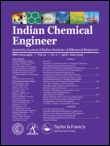
Indian Chemical Engineer
Exploring the Depths of Chemical Research.Indian Chemical Engineer, published by Taylor & Francis Ltd, stands as a reputable journal in the field of chemical engineering, encompassing a wide range of topics pertinent to both academia and industry. With an ISSN of 0019-4506 and an E-ISSN of 0975-007X, this journal has been a key resource for researchers and professionals since its inception in 1992, undergoing a significant evolution from 2009 to 2024. Currently ranked in the Q3 category of chemical engineering (miscellaneous) in 2023, it reflects a dedicated commitment to disseminating innovative research and insights within the discipline. The journal is indexed in Scopus, achieving a rank of 148 out of 273, which denotes its growing influence in the field with a 45th percentile placement. Although currently not an open-access publication, it offers valuable content that contributes extensively to the advancement of chemical engineering research and education. Researchers, professionals, and students alike are encouraged to engage with this publication to stay at the forefront of industry advancements and academic discussions.
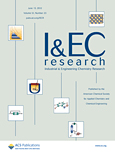
INDUSTRIAL & ENGINEERING CHEMISTRY RESEARCH
Transforming Ideas into Engineering ExcellenceINDUSTRIAL & ENGINEERING CHEMISTRY RESEARCH, published by the American Chemical Society, is a pivotal journal that disseminates high-quality research in the fields of Chemical Engineering, Chemistry, and Industrial and Manufacturing Engineering. With an impressive impact factor, this journal ranks in the top quartile (Q1) across multiple categories, reflecting its significance and influence within the scientific community. Since its inception in 1987, IECR has provided a platform for researchers, professionals, and students to publish innovative findings that advance the understanding and application of engineering chemistry. Though it operates under a subscription model, the journal continues to foster collaboration within the field, inviting contributions that span theoretical advancements, experimental studies, and practical applications. Whether you are engaged in academia or industry, IECR serves as a vital resource for staying abreast of the latest developments in chemical and engineering research.
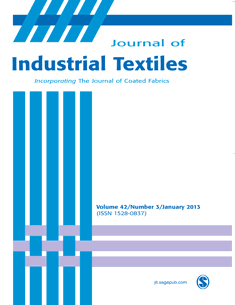
Journal of Industrial Textiles
Innovating the Fabric of IndustryJournal of Industrial Textiles, published by SAGE Publications Inc, is a leading academic journal that focuses on the intricate interplay between textile materials and industrial applications. With a significant impact factor and a strong reputation in the field, it caters to a diverse audience ranging from researchers and professionals to students interested in the advancement of textile engineering, chemical engineering, and materials science. The journal offers invaluable insights into innovative textile processes, sustainable practices, and the latest technological developments as it spans research contributions from 1971 to the present. Notably, it ranks in the second quartile across various categories, including Chemical Engineering and Industrial and Manufacturing Engineering, reflecting its influence and quality in the scientific community. Although it is not an open access journal, the Journal of Industrial Textiles remains a critical resource for advancing knowledge and fostering collaboration within the textile sector and related fields.

Journal of Advanced Joining Processes
Pioneering Research in Advanced Joining TechniquesJournal of Advanced Joining Processes, published by ELSEVIER, is a pioneering open-access journal dedicated to the dissemination of high-quality research in the field of joining processes, spanning across chemical, mechanical, and materials engineering. With its ISSN 2666-3309, this journal has rapidly established a significant presence in the academic community, achieving Q1 rankings in several categories, including Chemical Engineering, Mechanical Engineering, and Mechanics of Materials, as of 2023. Furthermore, it holds impressive Scopus rankings, with Engineering (miscellaneous) ranked #30 out of 204, indicating its influence and importance within the interdisciplinary landscape of engineering. As an open-access platform since 2020, the Journal of Advanced Joining Processes fosters the free exchange of ideas and research findings, thereby supporting professionals, researchers, and students in advancing their knowledge and practices in cutting-edge joining techniques. With converged years from 2020 to 2024, this journal is poised to remain at the forefront of the evolving field of joining technologies, appealing to a global readership eager to explore innovative solutions and methodologies.
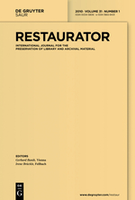
RESTAURATOR-INTERNATIONAL JOURNAL FOR THE PRESERVATION OF LIBRARY AND ARCHIVAL MATERIAL
Unraveling the Science of Preservation.RESTAURATOR-INTERNATIONAL JOURNAL FOR THE PRESERVATION OF LIBRARY AND ARCHIVAL MATERIAL, published by WALTER DE GRUYTER GMBH in Germany, is an esteemed scholarly journal dedicated to the conservation and preservation of library and archival materials. With a history spanning from its first publication in 1970, this journal has become a vital resource for professionals, researchers, and students in the fields of conservation, materials science, and media technology. The journal holds a Q2 classification in Conservation and positions itself within the top 30% of its peer category, reflecting its commitment to quality research and innovative practices. Although the journal is not open access, it offers invaluable insights into preservation methodologies, case studies, and advances in materials technology, supporting the ongoing dialogue within the conservation community. Its indexed presence in Scopus, especially notable in the Arts and Humanities and Engineering categories, further underscores its relevance and impact in shaping contemporary practices in conservation.
KOREAN JOURNAL OF CHEMICAL ENGINEERING
Exploring New Frontiers in Chemical Innovation.The Korean Journal of Chemical Engineering is a prestigious publication by the Korean Institute of Chemical Engineers, dedicated to advancing the field of chemical engineering and its associated sciences. Established in 1984, this journal has made significant contributions to the dissemination of innovative research, covering a broad spectrum of topics within chemical engineering and general chemistry. With a current impact factor placing it in the Q2 quartile within both the chemical engineering and chemistry categories, it is recognized for its rigorous peer-review process and high-quality articles. The journal provides a valuable platform for researchers, professionals, and students to share their findings and collaborate on emerging methodologies and technologies. Although it does not offer open access options, its broad international readership, bolstered by its Scopus rankings — including a commendable #108 in general chemical engineering — ensures widespread visibility and dissemination of published works. As it approaches its 40th anniversary in 2024, the Korean Journal of Chemical Engineering continues to be an essential resource for anyone engaged in the field, driving innovation and academic dialogue worldwide.
Journal of Alloys and Compounds
Unveiling the Science Behind Complex MaterialsJournal of Alloys and Compounds, published by Elsevier Science SA, stands at the forefront of materials research, focusing on the properties, applications, and innovations within alloys and compounds. With an impressive impact factor and prestigious rankings placing it in the Q1 quartile across multiple related categories—including Materials Chemistry, Mechanical Engineering, and Mechanics of Materials—this journal is recognized for its significant contributions to the field. Researchers and professionals engaged in metallurgy, materials science, and engineering will find it a critical resource that encompasses groundbreaking studies, insightful reviews, and essential findings. The journal has a strong influence, as evidenced by its Scopus rankings—ranking 14th in Metals and Alloys and 28th in Mechanics of Materials, indicating a robust global impact. As it continues to publish cutting-edge research from 1991 to 2024, the Journal of Alloys and Compounds serves as a vital platform for the exchange of knowledge, thereby advancing our understanding of complex materials and fostering innovation in diverse applications.

Engineering Review
Fostering innovation in engineering disciplines.Engineering Review is a prominent academic journal published by the University of Rijeka, Faculty of Engineering in Croatia. As an emerging outlet in the field of engineering, the journal has been providing a platform for interdisciplinary research since its inception in 2011, with a commitment to disseminating high-quality studies up to the horizon of 2024. Although currently categorized as Q4 in the Engineering (miscellaneous) section and ranking 242 out of 307 in General Engineering per Scopus metrics, the journal aims to bolster its impact and reach within the engineering community. With a focus on innovative approaches and practical applications in various engineering disciplines, Engineering Review invites contributions from researchers, professionals, and students alike, fostering a collaborative environment for the advancement of engineering research in a global context. While it is not an open-access journal at this time, it remains a vital resource for those engaged in cutting-edge engineering endeavors.

Journal of the Pakistan Institute of Chemical Engineers
Exploring New Frontiers in Chemical Engineering Practice.The Journal of the Pakistan Institute of Chemical Engineers serves as a pivotal platform for advancing the field of chemical engineering within Pakistan and beyond. Published by the Pakistan Institute of Chemical Engineers, this journal aims to disseminate high-quality research, reviews, and case studies that cover a wide scope of topics relevant to chemical engineering, including process design, environmental technology, and materials science. Although it operates under a non-open access model, the journal is committed to maintaining rigorous peer-review standards to ensure the publication of impactful articles that contribute to the advancement of knowledge and best practices in the discipline. As a hub for researchers, professionals, and students alike, this journal not only fosters academic collaboration but also plays an integral role in shaping the future of chemical engineering in the region. With an ISSN of 1813-4092, it is dedicated to enhancing the visibility and accessibility of chemical engineering research, promoting innovation and education within the field.
SURFACE ENGINEERING AND APPLIED ELECTROCHEMISTRY
Pioneering Research in Applied ElectrochemistrySURFACE ENGINEERING AND APPLIED ELECTROCHEMISTRY, published by PLEIADES PUBLISHING INC, stands as a pivotal resource in the realms of engineering and materials science. With an ISSN of 1068-3755 and an E-ISSN of 1934-8002, this journal encompasses an extensive scope that includes industrial applications, and innovative surface treatments, fostering advancements in the fields of Industrial and Manufacturing Engineering, Surfaces, Coatings and Films, and Surfaces and Interfaces. Recognized for its contributions, it currently holds a Q3 classification in both Industrial and Manufacturing Engineering and Surfaces, Coatings and Films, alongside a Q4 ranking in Surfaces and Interfaces for the year 2023. Despite its competitive standings, the journal encourages inclusive dialogue and dissemination of research from a global community—making it an essential platform for researchers and professionals dedicated to surface technologies and applied electrochemistry. Potential contributors and readers can expect a comprehensive exploration of techniques and innovations, reinforcing the journal's commitment to bridging theory and practical application in these dynamic fields.