
Teknik Dergi
Scope & Guideline
Connecting Ideas, Inspiring Progress in Engineering
Introduction
Aims and Scopes
- Civil and Structural Engineering:
Research in this area includes the design and analysis of infrastructure such as buildings, bridges, and dams, incorporating innovative materials and methods. - Environmental Engineering and Hydrology:
This scope addresses topics related to water resource management, flood control, and the impact of environmental factors on engineering practices. - Construction Management and Optimization:
The journal covers methodologies for improving efficiency and safety in construction processes, focusing on project management, scheduling, and performance evaluation. - Geotechnical Engineering:
Studies in this area analyze soil behavior, foundation design, and the impact of geological conditions on engineering structures. - Transportation Engineering:
Research includes traffic management, public transport optimization, and the design of roadways to enhance safety and efficiency. - Materials Engineering:
This scope encompasses the study of materials used in construction, including their properties, performance under various conditions, and innovative uses in engineering. - Seismic and Structural Performance:
Focus on evaluating the resilience of structures under seismic conditions and developing design methodologies to enhance safety.
Trending and Emerging
- Sustainable Engineering Practices:
Research focusing on sustainable materials, energy-efficient designs, and environmentally friendly construction methods is gaining traction, driven by global sustainability goals. - Data-Driven Decision Making:
The integration of machine learning, artificial intelligence, and data analytics in engineering processes is becoming increasingly prominent, showcasing the journal's commitment to modern methodologies. - Risk Assessment and Management:
Emerging studies on risk evaluation in construction and environmental contexts, including the use of advanced modeling techniques, are becoming more frequent, highlighting the importance of safety and resilience. - Smart Infrastructure and IoT:
The rise of smart technologies in infrastructure, including the Internet of Things (IoT) applications in monitoring and managing civil structures, is a growing area of interest. - Climate Change Impact Studies:
Research exploring the effects of climate change on engineering practices, particularly in hydrology and infrastructure resilience, is increasingly relevant in the face of global environmental challenges.
Declining or Waning
- Traditional Mechanical Engineering:
Research related to conventional mechanical systems and their applications has seen a decrease, possibly due to a shift toward more interdisciplinary and integrated engineering fields that emphasize automation and smart technologies. - Basic Theoretical Studies:
Papers focused solely on theoretical models without practical application or real-world validation are becoming less common as the journal's audience increasingly seeks applied research with tangible outcomes. - Non-Environmental Urban Planning:
There is a noticeable reduction in studies solely focused on urban planning aspects that do not incorporate environmental considerations, reflecting a broader trend towards sustainability in engineering.
Similar Journals

Civil Engineering Journal-Stavebni Obzor
Connecting Ideas, Building TomorrowWelcome to the Civil Engineering Journal-Stavebni Obzor, an esteemed academic publication dedicated to advancing the field of civil engineering. Published by the Czech Technical University in Prague, Faculty of Civil Engineering, this journal has provided a platform for innovative research and critical discourse since its inception. With an ISSN of 1210-4027 and an E-ISSN of 1805-2576, this Open Access journal has been facilitating wide dissemination of knowledge in civil engineering since 2014, ensuring that valuable research reaches a global audience without barriers. The journal is committed to fostering collaboration among researchers, professionals, and students, encouraging the exchange of ideas that drive the discipline forward. Its diverse scope encompasses various aspects of civil engineering, making it an essential resource for anyone looking to stay at the forefront of this dynamic field. Located in Prague, a hub of engineering excellence, this journal not only reflects the latest trends and innovations but also contributes to shaping the future of civil engineering.
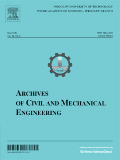
Archives of Civil and Mechanical Engineering
Elevating Civil and Mechanical InnovationsArchives of Civil and Mechanical Engineering is a distinguished peer-reviewed journal published by SpringerNature, focusing on advancing the fields of civil and mechanical engineering. With an impressive Q1 ranking in both categories in 2023, this journal caters to a global audience, addressing the evolving challenges and innovations within these vital engineering disciplines. The journal has been a pivotal platform since its inception in 2006, and it continues to be essential for researchers and practitioners seeking to publish and access high-quality research. The absence of an Open Access option ensures that published works maintain rigorous academic standards, thereby enhancing their value within institutional repositories. With a robust impact factor and high visibility on Scopus—ranking #122 out of 672 in Mechanical Engineering and #74 out of 379 in Civil and Structural Engineering—this journal is an ideal venue for professionals, researchers, and students dedicated to advancing their knowledge and contributing to cutting-edge engineering practices. Based in Germany and operating internationally, the Archives of Civil and Mechanical Engineering invites submissions that address critical issues and solutions in contemporary engineering.

Turkish Journal of Civil Engineering
Advancing the Future of Civil EngineeringWelcome to the Turkish Journal of Civil Engineering, a pioneering publication under the auspices of the TURKISH CHAMBER OF CIVIL ENGINEERS, dedicated to advancing the field of civil engineering and construction. With a focus on cutting-edge research and innovative practices, this journal seeks to provide a platform for scholars, professionals, and students to share their findings and insights within the sphere of civil and structural engineering. The journal is committed to open access, ensuring that research is readily available to a global audience. As it embarks on its journey from 2023 to 2024, it aims to enhance its reputation as a vital resource within the academic community, currently ranking in the 40th percentile for Building and Construction Engineering and 32nd for Civil and Structural Engineering in Scopus. We encourage contributions that push the boundaries of engineering knowledge, fostering collaboration and progress in this essential field.
JOURNAL OF EARTHQUAKE ENGINEERING
Advancing seismic safety through innovative engineering.JOURNAL OF EARTHQUAKE ENGINEERING, published by TAYLOR & FRANCIS LTD, stands as a pivotal resource in the fields of Building and Construction, Civil and Structural Engineering, and Geotechnical Engineering. With an impressive Q1 ranking in multiple categories for 2023, this journal is instrumental for researchers, professionals, and students committed to advancing knowledge in earthquake engineering and its practical applications. As a platform that spans the years from 1997 to 2024, it highlights significant contributions to safety, risk, reliability, and quality in engineering practices. While the journal operates on a subscription basis, its highly regarded articles, bolstered by robust Scopus rankings—such as rank #46 in Building and Construction—underscore its credibility and influence in shaping standards and methodologies within the discipline. Promoting innovative and evidence-based approaches, the JOURNAL OF EARTHQUAKE ENGINEERING is essential reading for anyone engaged in the science and technology of earthquake-resistant structures.

Journal of the South African Institution of Civil Engineering
Bridging knowledge gaps in civil engineering.Journal of the South African Institution of Civil Engineering (ISSN: 1021-2019) is a distinguished open-access publication dedicated to advancing the field of civil engineering in South Africa and beyond. Established by the South African Institution of Civil Engineering (SAICE) and South African Institute of Steel Construction (SAISI), it serves as a critical platform for sharing research, case studies, and industry developments. The journal has been openly accessible since 2015, ensuring broader dissemination of knowledge among researchers, professionals, and students alike. Although it currently holds a Q4 ranking in Civil and Structural Engineering and is positioned within the lower percentiles in Scopus rankings, its commitment to fostering growth in the engineering sector remains strong. Covering various topics from structural design to innovative construction methodologies, the journal invites contributions that push the boundaries of current practices and methodologies. This publication is essential for those invested in sustainable engineering solutions, aiming to collaborate and contribute towards the evolution of civil engineering standards in South Africa.
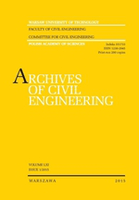
Archives of Civil Engineering
Championing Excellence in Structural InnovationArchives of Civil Engineering is a premier academic journal published by POLISH ACAD SCIENCES, dedicated to advancing the field of civil and structural engineering. Established in 1996, this open-access journal has been pivotal in disseminating high-quality research and innovation in engineering practices, particularly since adopting open access in 2010. With an ISSN of 1230-2945 and E-ISSN of 2300-3103, it enjoys a notable reputation, currently ranked in Q3 of the Civil and Structural Engineering category for 2023, reflecting its considerable contribution to scholarly content in the discipline. The journal caters to a diverse audience of researchers, professionals, and students, providing them with a platform to share and access essential findings. Its commitment to high academic standards is underscored by its ranking in Scopus, where it stands at Rank #265/379. Located in Warsaw, Poland, the journal aims to promote international collaboration and foster knowledge exchange in civil engineering, making it an indispensable resource for anyone involved in this dynamic field.
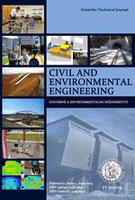
Civil and Environmental Engineering
Elevating research to shape the future of engineering.Civil and Environmental Engineering, published by SCIENDO, is a prominent open-access journal dedicated to advancing research and knowledge in the fields of civil and structural engineering, as well as environmental engineering. Since its inception in Germany, it has been committed to promoting cutting-edge studies and methodologies that address the pressing challenges in these domains. With an ISSN of 1336-5835 and E-ISSN of 2199-6512, the journal is accessible to a global audience, having adopted an open-access policy since 2014 to enhance the visibility and dissemination of scholarly work. The journal currently holds a Q3 ranking in both Civil and Structural Engineering and Environmental Engineering, as of 2023, reflecting its growing influence within the academic community. It operates within a framework of rigorous peer-review standards and encourages contributions that not only contribute to theoretical advancements but also have practical implications for real-world applications. Researchers, professionals, and students alike will find invaluable insights and innovative perspectives in the latest studies published from 2018 to 2024.

Advanced Steel Construction
Innovating Structural Solutions for TomorrowAdvanced Steel Construction is a prominent journal published by the Hong Kong Institute of Steel Construction, dedicated to the field of structural engineering and material sciences with a specific focus on steel construction techniques and advancements. Since its inception in 2005, the journal has established itself as a valuable resource for researchers, professionals, and students alike, offering insights into the latest developments and innovative practices within the realms of building construction, civil engineering, and materials mechanics. With its recognition as a Q2 journal across multiple engineering categories, including Building and Construction, Civil and Structural Engineering, Mechanical Engineering, and Mechanics of Materials, it ranks competitively in Scopus rankings, highlighting its significance in academic discourse. The journal is based in China, at the Hong Kong Polytechnic University, and provides an essential platform for sharing groundbreaking research and fostering collaboration within the engineering community.

Electronic Journal of Structural Engineering
Elevating Engineering Standards through Open Access ScholarshipThe Electronic Journal of Structural Engineering (ISSN: 1443-9255), published by EJSE INT LTD, serves as a vital platform for disseminating innovative research and developments in the field of structural engineering. Since its inception in 2001, the journal has evolved to embrace an Open Access model starting in 2022, ensuring that cutting-edge findings are freely accessible to researchers, professionals, and students worldwide. Housed within the reputable Department of Infrastructure Engineering at the University of Melbourne, Australia, the journal focuses on a wide range of topics related to civil and structural engineering, positioning itself within the Q4 category on the 2023 Scopus rankings. While its H-index and detailed scope data are currently unavailable, the journal's commitment to quality research is evident through its continuous publication and engagement with the global academic community. With significant implications for contemporary engineering practices, The Electronic Journal of Structural Engineering not only fosters scholarly discourse but also encourages practical applications of structural engineering advancements.
Advances in Civil Engineering
Bridging Knowledge and Practical ApplicationAdvances in Civil Engineering is a leading peer-reviewed journal published by HINDAWI LTD, dedicated to advancing knowledge and innovation in the field of civil and structural engineering. Holding an esteemed Q2 ranking in the 2023 category for Civil and Structural Engineering, this journal serves as a vital platform for disseminating cutting-edge research and practical applications that address contemporary challenges in infrastructure development, sustainable design, and material science. Launched in 2008 and operating as an Open Access journal since 2009, it promotes the free exchange of ideas by ensuring that all articles are accessible to researchers, professionals, and students globally. The journal is also indexed in Scopus, ranking at #142 out of 379 in its category, situating it within the 62nd percentile of its peers. With a focus on interdisciplinary collaboration and innovative solutions, Advances in Civil Engineering contributes significantly to the ongoing evolution of engineering practices and education, making it an essential resource for anyone involved in or studying the ever-evolving field of civil engineering.