
Tekst Kniga Knigoizdanie-Text Book Publishing
Scope & Guideline
Bridging Communication and Information Sciences.
Introduction
Aims and Scopes
- Literary Analysis and Critique:
The journal frequently publishes articles that analyze literary works, focusing on their thematic, stylistic, and ideological aspects. This includes examinations of classic and contemporary literature, exploring how these texts reflect and shape cultural narratives. - Publishing History and Practices:
A significant focus is placed on the history of publishing, including the evolution of publishing practices, the role of publishers in literary culture, and the impact of socio-political factors on the publishing industry. - Cultural Studies and Interdisciplinary Approaches:
The journal promotes interdisciplinary studies that connect literature with history, sociology, and cultural studies, examining how literary texts influence and are influenced by cultural contexts. - Textual Studies and Methodological Innovations:
There is a consistent emphasis on innovative methodologies for textual analysis, including the use of digital humanities approaches, comparative studies, and new theoretical frameworks in literary criticism. - Educational Practices in Literature:
The journal also addresses educational aspects of literature, including the teaching of literature in various contexts and the development of pedagogical materials related to literary studies.
Trending and Emerging
- Digital Humanities and New Media:
There is a growing emphasis on the intersection of literature and digital media, including the analysis of digital texts, e-publishing, and the impact of technology on reading habits and text production. - Interdisciplinary Studies of Literature and Society:
Recent publications increasingly highlight the connections between literature and social issues, such as identity, migration, and cultural memory, showcasing a trend towards more socially engaged literary criticism. - Visual and Graphic Texts:
Emerging interest in the study of visual and graphic texts, including illustrated books and comics, indicates a broader understanding of what constitutes literature and how visual elements interact with textual narratives. - Post-Soviet Literature and Cultural Memory:
An uptick in studies focusing on post-Soviet literature reflects a growing interest in exploring how contemporary Russian literature grapples with its historical and cultural legacy. - Reader Response and Cultural Codes:
The exploration of reader responses and the cultural codes embedded in texts is becoming more prominent, highlighting the role of the reader in the interpretation of literature.
Declining or Waning
- Traditional Literary Genres:
There seems to be a diminishing focus on traditional literary genres in favor of more experimental and contemporary forms of literature. This shift may reflect changing reader interests and the evolution of literary forms. - Historical Textual Analysis:
The analysis of historical texts, particularly those from earlier centuries, appears to be less frequent, as the journal increasingly prioritizes contemporary literary discourse and modern publishing practices. - Local Publishing Case Studies:
Case studies specific to local publishing practices have become less common, possibly overshadowed by broader discussions that encompass global trends in publishing and literature. - Focus on National Literary Traditions:
There is a noticeable reduction in articles centered on specific national literary traditions, suggesting a move towards more global and comparative literary studies that transcend national boundaries.
Similar Journals

REVISTA DE LITERATURA
Fostering dialogue through open access research.REVISTA DE LITERATURA, published by the Consejo Superior de Investigaciones Científicas (CSIC) in Spain, stands as a beacon of scholarly excellence in the field of Literature and Literary Theory. With an impressive Q1 ranking in its category for 2023, the journal has established a reputable position within the academic community, reflected in its Scopus rank of #427 out of 1106, placing it in the top 61st percentile. Operating under an Open Access model since 2001, it ensures that cutting-edge research on literary texts, theories, and critical practices is freely accessible to all, fostering scholarly dialogue and enhancing the global discourse on literature. The journal’s continuous commitment to advancing literary scholarship from 1996 to 2024 highlights its role in addressing contemporary literary challenges while celebrating diverse voices and ideas. Researchers, professionals, and students alike are encouraged to engage with this vital resource, which not only showcases innovative research but also contributes significantly to the richness of literary studies.

POETICA-ZEITSCHRIFT FUR SPRACH-UND LITERATURWISSENSCHAFT
Bridging Linguistics and Literary Theory with Innovative ResearchPOETICA-ZEITSCHRIFT FUR SPRACH-UND LITERATURWISSENSCHAFT is a pivotal journal published by Brill, focusing on the fields of linguistics and literary studies. Founded in Germany, this esteemed publication showcases rigorous scholarly research, fostering a deeper understanding of language and literature. Although the journal does not currently operate as an open-access platform, it remains an essential resource for academics in these areas, featuring innovative studies that span from 2002, through selected years, to 2024. With a Q4 category in Linguistics and Language and a Q3 in Literature and Literary Theory as of 2023, POETICA ranks among the significant contributors to the arts and humanities discourse. It provides a vital forum for researchers and students to engage with contemporary debates and methodologies, ensuring its relevance and importance in the academic community.
Literature Compass
Charting New Territories in Cultural CritiqueLiterature Compass, published by WILEY, is an esteemed journal in the field of Literature and Cultural Studies, reflecting a robust commitment to advancing scholarly discourse since its inception in 2004. With an impressive Q1 ranking in Literature and Literary Theory and a Q2 ranking in Cultural Studies as of 2023, the journal stands out as a critical resource for researchers, professionals, and students alike, offering insights into contemporary literary analysis and cultural critique. While not operating as an open access journal, it provides a wealth of peer-reviewed articles that delve into the complexities of literature and its societal implications. The journal’s unique aim is to bridge diverse literary topics, facilitating a holistic understanding of narrative forms and their cultural contexts. As part of a prestigious academic tradition, Literature Compass is published from the United Kingdom and serves as a vital platform for intellectual exchange in an increasingly interconnected world.

ROMANISTISCHE ZEITSCHRIFT FUR LITERATURGESCHICHTE-CAHIERS D HISTOIRE DES LITTERATURES ROMANES
Advancing Scholarship in the Realm of Romance LiteraturesROMANISTISCHE ZEITSCHRIFT FUR LITERATURGESCHICHTE-CAHIERS D HISTOIRE DES LITTERATURES ROMANES, published by Universitätsverlag C Winter Heidelberg GmbH, represents a significant contribution to the field of literary studies, focusing on the intricate histories of Romance literatures. With an ISSN of 0343-379X and an E-ISSN of 2509-7474, this journal strives to foster critical discourse among scholars, professionals, and students interested in literature and literary theory. Although its coverage in Scopus was discontinued in 2018, and it currently lacks open access options, the journal's past contributions have established it as a noteworthy resource, with a Scopus rank that reflects its engagement with the arts and humanities. The journal's unique scope, which spans various periods and styles, encourages interdisciplinary approaches and invites submissions that explore the evolution and impact of Romance literature across cultures. As a critical platform for emerging and established voices in the field, the ROMANISTISCHE ZEITSCHRIFT continues to be a valuable asset for those dedicated to the scholarship of literary history.

Criticon
Cultivating a community of innovative thinkers in History and Literature.Criticon is a distinguished open-access journal published by PRESSES UNIV MIDI-PUM in France, dedicated to advancing scholarship in the fields of History and Literature and Literary Theory. Since its transition to open access in 2014, Criticon has fostered a vibrant academic community, enabling the dissemination of high-quality research that contributes significantly to contemporary discourse. Positioned within the Q4 categories for both History and Literature, the journal boasts impressive rankings, including #152 out of 1106 in Literature and Literary Theory, reflecting its growing influence with a remarkable 86th percentile standing. With a dedication to interdisciplinary scholarship, Criticon invites researchers, practitioners, and students to submit original articles that explore the intersections of literary and historical narratives, thereby enriching the understanding of cultural and intellectual history. Located at 5 ALLEES ANTONIO MACHADO, F-31058 TOULOUSE, FRANCE, this journal not only serves as a platform for new voices but also as a beacon for established scholarship in the humanities.
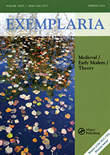
Exemplaria-Medieval Early Modern Theory
Engaging with the Rich Tapestry of Literary HeritageExemplaria: Medieval Early Modern Theory is a distinguished journal within the fields of Cultural Studies, Linguistics and Language, and Literature and Literary Theory, published by Routledge Journals, Taylor & Francis Ltd. With an impressive Q1 ranking in Literature and Literary Theory and notable placements in associated disciplines, this journal serves as an essential platform for scholars dedicated to exploring the complexities of medieval and early modern texts and contexts. Established with a vision to stimulate interdisciplinary dialogue, Exemplaria has evolved from its initial years (1989-1995) to a renewed focus (2002-2024), consistently fostering significant contributions that shape contemporary literary discourse. Although currently not open access, the journal ensures broad reach and engagement through its meticulously curated articles, reviews, and critical essays that challenge traditional narratives and advocate for innovative methodologies. With the journal's ISSN 1041-2573 and E-ISSN 1753-3074, researchers, professionals, and students interested in advancing their understanding of literary traditions are encouraged to explore its rich repository of knowledge, which reflects the dynamic interplay between historical texts and modern interpretations.

Anuario Lope de Vega-Texto Literatura Cultura
Exploring the Depths of Literature and CultureAnuario Lope de Vega-Texto Literatura Cultura, published by Universitat Autònoma de Barcelona, is a premier scholarly journal dedicated to the examination of literature, culture, and linguistic studies. With an impressive Open Access policy implemented since 2011, this journal facilitates the broad dissemination of cutting-edge research within the humanities. Renowned for its impactful contributions, it boasts a Q1 classification in both Linguistics and Language and Literature and Literary Theory categories, positioning it within the top echelons of its field. The journal ranks impressively among peers, placing 60th out of 1106 in Literature and Literary Theory and enjoys a healthy percentile showing in various linguistic categories, affirming its status as a critical resource for scholars, researchers, and students alike. Situated in Barcelona, Spain, it promotes a vibrant dialogue among researchers and cultural theorists, seeking to enrich the understanding of contemporary literary and linguistic issues.

Gripla
Illuminating the Rich Tapestry of Language and LiteratureGripla, published by the Arni Magnusson Institute for Icelandic Studies, stands as a significant academic journal in the fields of linguistics and literary studies. With an ISSN of 1018-5011, this esteemed journal has been releasing cutting-edge research since its inception in 2011. Although currently categorized as Q4 in Linguistics and Language and Q3 in Literature and Literary Theory for 2023, it has showcased robust scholarship with a Scopus rank of #327 in Literature and Literary Theory, placing it within the 70th percentile of its category. Gripla serves as a vital platform for the exploration of Icelandic studies, fostering a deeper understanding of language and literature in a rapidly evolving academic landscape. While it is not an open-access journal, its contributions are essential for researchers, professionals, and students eager to engage with new developments in the linguistics and literary discourse. Situated in the heart of Reykjavik, Gripla continues to enrich the scholarly community by providing insights that bridge traditional knowledge with contemporary relevance.

Alea-Estudos Neolatinos
Connecting Scholars Worldwide through Open Access ResearchAlea-Estudos Neolatinos is a prominent academic journal dedicated to the exploration and analysis of neolatino studies, published by the Universidade Federal do Rio de Janeiro, Faculdade de Letras. Since its establishment in 2003, this Open Access journal has provided a platform for scholars from around the globe to disseminate their research in both Linguistics and Literature and Literary Theory, recently earning a Q3 ranking in Linguistics and Language and a Q2 ranking in Literature and Literary Theory in 2023. With its broadening scope from 2008 to 2024, Alea plays a crucial role in advancing interdisciplinary dialogues across various dimensions of neolatino cultural studies, appealing to researchers, professionals, and students alike. Its commitment to accessibility and innovative scholarship underscores its significance in the academic community, particularly in the rich landscape of Brazilian and Latin American literature. With the world of linguistic and literary theory constantly evolving, Alea serves as a vital source for contemporary discourse and scholarly advancement.
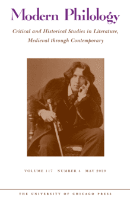
MODERN PHILOLOGY
Challenging Paradigms, Shaping PerspectivesMODERN PHILOLOGY is a distinguished academic journal published by the University of Chicago Press, dedicated to the exploration and advancement of knowledge in the fields of cultural studies, linguistics, and literary theory. Having commenced its publication in 1905, the journal continues to foster scholarly discourse and innovation through rigorous research and critical analysis, making it a vital resource for researchers, professionals, and students alike. With an ISSN of 0026-8232 and a commendable Scopus ranking, including a 69th percentile in Literature and Literary Theory, MODERN PHILOLOGY occupies a significant position within its respective quartiles (Q4) in the 2023 assessments. Although the journal does not currently offer open access, it remains a crucial platform for contributions that interrogate the complexities of language and literature. As a leading publication in its field, MODERN PHILOLOGY invites submissions that challenge conventional paradigms, encouraging a fresh examination of texts, contexts, and cultural phenomena from 1996 through 2024 and beyond.