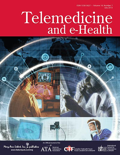
Telemedicine and e-Health
Scope & Guideline
Bridging gaps in healthcare with digital advancements.
Introduction
Aims and Scopes
- Telemedicine Applications:
The journal explores diverse applications of telemedicine, including remote consultations, telepsychiatry, teledermatology, and more, emphasizing their effectiveness in various healthcare settings. - Patient Engagement and Satisfaction:
Research published in the journal frequently addresses patient satisfaction and engagement with telehealth services, providing insights into user experiences and expectations. - Health Technology Integration:
The integration of health technologies into clinical practice is a core focus, examining how digital tools improve healthcare delivery, patient monitoring, and chronic disease management. - Health Equity:
The journal highlights the role of telehealth in addressing health disparities, focusing on underserved populations and the impact of socioeconomic factors on telehealth utilization. - Innovative Research and Methodologies:
It emphasizes rigorous research methodologies, including systematic reviews, randomized controlled trials, and qualitative studies that provide evidence-based insights into telehealth practices.
Trending and Emerging
- Remote Patient Monitoring:
There is an increasing focus on remote patient monitoring technologies and their effectiveness in managing chronic diseases, particularly in light of the COVID-19 pandemic. - Mental Health Services via Telehealth:
Telepsychology and telemental health services have gained prominence, reflecting a growing recognition of mental health needs and the effectiveness of virtual interventions. - Integration of Artificial Intelligence:
Research exploring the integration of AI and machine learning in telemedicine is on the rise, focusing on enhancing diagnostic accuracy and patient care efficiency. - Telehealth for Vulnerable Populations:
Emerging studies emphasize telehealth's role in improving access to care for vulnerable populations, addressing disparities in healthcare access and outcomes. - Hybrid Care Models:
There is a trend towards hybrid models that combine telehealth with in-person visits, optimizing patient care and improving system efficiencies.
Declining or Waning
- Traditional In-Person Consultations:
As telemedicine becomes more entrenched in healthcare, traditional in-person consultations appear to be discussed less frequently, reflecting a shift toward more remote care solutions. - Basic Telehealth Models:
Basic models of telehealth that do not incorporate advanced technologies or integrated systems are less frequently featured, as the focus shifts to more sophisticated, technology-driven approaches. - Non-Clinical Telehealth Applications:
Research on non-clinical applications of telehealth, such as administrative or operational aspects, seems to be waning, as the emphasis moves towards patient-centered, clinical outcomes.
Similar Journals

JOURNAL OF AMBULATORY CARE MANAGEMENT
Empowering professionals in ambulatory care management.JOURNAL OF AMBULATORY CARE MANAGEMENT, published by Lippincott Williams & Wilkins, is a leading peer-reviewed journal dedicated to advancing research and practice in the field of health policy, with a specific focus on ambulatory care management. Since its inception in 1978, this journal has served as a critical platform for disseminating innovative studies, insights, and methodologies that inform policy makers, healthcare professionals, and academic researchers alike. By maintaining an impressive ranking within the Q3 category in Health Policy and a Scopus rank of 148 out of 310, it underscores the journal's growing influence in shaping health policy discussions and decisions. The journal operates on a traditional subscription model, ensuring a high-quality review process while remaining accessible to those wishing to subscribe. With an ongoing commitment to excellence, the JOURNAL OF AMBULATORY CARE MANAGEMENT is essential for anyone involved in improving outcomes in ambulatory care settings and influencing health policy reforms, making it a must-read for researchers, practitioners, and students aiming to stay at the forefront of healthcare innovation.

Intelligent Medicine
Advancing medical practice with cutting-edge AI research.Intelligent Medicine, published by Elsevier, is a leading open-access journal dedicated to advancing the fields of Artificial Intelligence, Biomedical Engineering, Health Informatics, and related areas within Medicine. Since its inception in 2021, it has quickly established itself among the top tier of academic publications, holding a commendable Q2 ranking in several categories, including a rank of #51 in Health Informatics and #104 in Medicine (Miscellaneous) as of 2023. The journal aims to disseminate innovative research that harnesses AI technologies to improve healthcare outcomes, bridging the gap between cutting-edge technology and medical practice. With its open-access model, Intelligent Medicine ensures broad dissemination of research findings, facilitating collaboration and knowledge sharing among researchers, practitioners, and students globally. Located in Amsterdam, Netherlands, this journal plays a pivotal role in shaping the future of intelligent healthcare solutions, inviting submissions that push the boundaries of conventional medicine through creative and impactful research.

Contemporary Clinical Trials Communications
Connecting Researchers to Revolutionize Healthcare PracticesContemporary Clinical Trials Communications, published by ELSEVIER INC, serves as a pivotal resource in the evolving fields of medicine and pharmacology, especially with its commitment to open access since 2015. With the E-ISSN 2451-8654, this journal is dedicated to disseminating high-quality research that examines contemporary clinical trial methodologies and their applications in improving healthcare outcomes. Situated in the United States, its impressive ranking, with a Q2 status in both Medicine (miscellaneous) and Pharmacology for 2023, highlights its significance and impact within the scientific community. Ranking #199 out of 636 in General Medicine and #217 out of 313 in Pharmacology on the Scopus scale, the journal aims to foster innovative discussions and developments among researchers, professionals, and students, making it an essential tool for those seeking to stay at the forefront of clinical research and trials.
JOURNAL OF MEDICAL INTERNET RESEARCH
Elevating Knowledge in Mobile Health InnovationsJOURNAL OF MEDICAL INTERNET RESEARCH, published by JMIR PUBLICATIONS, INC, stands as a pivotal resource in the field of Health Informatics, with an esteemed ranking of #7 out of 138 in the Scopus database, placing it in the top 95th percentile. Since its inception in 1999, this Open Access journal has been committed to disseminating high-quality, peer-reviewed research that explores the intersection of healthcare and internet technologies. With its headquarters in Toronto, Canada, the journal encompasses a broad range of topics, including eHealth, telemedicine, and mobile health innovations. The impact factor and its Q1 quartile ranking highlight the journal's significant influence and prevalence in advancing the understanding of digital health landscapes. Researchers, professionals, and students alike benefit from its valuable insights, making the JOURNAL OF MEDICAL INTERNET RESEARCH an essential tool for fostering informed practices and policy-making in the rapidly evolving domain of health informatics.
Healthcare Technology Letters
Advancing healthcare through innovative technology insights.Healthcare Technology Letters is a leading open-access journal published by WILEY that has been at the forefront of disseminating cutting-edge research in the field of health informatics and health information management since its inception in 2014. With an E-ISSN of 2053-3713, this esteemed journal is recognized for its commitment to advancing knowledge and practice in healthcare technology, making it a vital resource for researchers, professionals, and students alike. The journal's scope encompasses a wide range of topics, including digital health solutions, data management, and innovative technologies that enhance patient care. It holds a respectable position in the academic community, featuring a Q3 ranking in both health informatics and health information management as of 2023, and consistently contributing to high-impact research evidenced by its Scopus rankings. By providing open access to its content since 2017, Healthcare Technology Letters ensures that valuable insights and breakthroughs can reach a broader audience, furthering the impact of its published work on the global health landscape.
Telemedicine Reports
Exploring the future of health informatics and remote healthcare.Telemedicine Reports is a pioneering open access journal dedicated to disseminating cutting-edge research and advancements in the rapidly evolving fields of telemedicine and health informatics. Published by MARY ANN LIEBERT, INC, this journal has established itself as a valuable resource for researchers, healthcare professionals, and students, providing insights into the integration of technology in healthcare. Since its inception in 2020, Telemedicine Reports has contributed to the discourse around remote healthcare delivery, accessibility, and patient outcomes, aligning with its rankings in the Q3 quartile across Computer Science Applications, Health Informatics, and diverse areas of Medicine as of 2023. With an emphasis on empirical studies and innovative methodologies, the journal aims to advance the understanding and application of telemedicine practices in both clinical and research settings. With an impact factor reflective of its importance, Telemedicine Reports facilitates an open access model, encouraging widespread dissemination and accessibility to research findings that are crucial in reshaping patient care in a digital age.
Asia Pacific Journal of Health Management
Connecting Ideas for a Healthier Asia-PacificAsia Pacific Journal of Health Management is a distinguished open-access journal published by the Australian College of Health Service Management. Since its inception in 2006, this journal has become an essential resource for researchers, practitioners, and students in the fields of health policy, public health, and health information management. With a commitment to disseminating high-quality research, it operates from Australia, serving as a platform for innovative studies and discussions that address contemporary issues in health management across the Asia-Pacific region. The journal is indexed in Scopus, holding a rank of #228 in Health Policy and #499 in Public Health, indicative of its growing impact, although classified in the Q4 quartile for several categories in 2023. This positions the journal as a valuable resource for understanding health challenges and management practices, promoting a comprehensive understanding of health systems within diverse contexts. Whether you are a seasoned researcher or an emerging scholar, the Asia Pacific Journal of Health Management offers a vital outlet for sharing insights that advance the discipline and improve health outcomes.

SAGE Open Medicine
Fostering Rigorous Research for a Healthier Tomorrow.SAGE Open Medicine, published by SAGE Publications Inc, stands as an influential open-access journal in the realm of medicine since its inception in 2013. With an ISSN of 2050-3121, this journal facilitates a dynamic platform for the dissemination of rigorous research across a variety of medical disciplines, encompassing extensive topics that range from clinical practice to healthcare policy. Based in the United Kingdom, SAGE Open Medicine has quickly ascended in prominence, achieving a Q2 ranking in the Medicine (miscellaneous) category and securing an impressive placement as #149 out of 636 in the Scopus rankings for general medicine, which places it in the 76th percentile. The journal's commitment to accessibility ensures that researchers, practitioners, and students alike can readily engage with cutting-edge health research that shapes contemporary medical practice. By offering a rigorous peer-review process alongside expedited publication timelines, SAGE Open Medicine remains dedicated to fostering scholarly dialogue and advancing the field of medicine.
Danish Medical Journal
Exploring the Frontiers of Medical Science Together.Danish Medical Journal, published by the esteemed Danish Medical Association, is a vital platform in the field of medicine, providing open access research that reflects the current advances and innovations within the medical community. With an E-ISSN of 2245-1919, this journal has established itself as a significant contributor to the discourse in general medicine, holding a commendable Q3 rank in Scopus for 2023 and placed in the 65th percentile among its peers. The journal aims to disseminate high-quality research from Denmark and beyond, fostering collaboration and dialogue across disciplines. Researchers, healthcare professionals, and students alike will find invaluable insights into contemporary medical issues and evidence-based practices within its pages. The journal, which has successfully converged its focus from 2012 to 2024, is committed to continuing its legacy of excellence and innovation in medical literature, ensuring that readers remain at the forefront of medical science.
Healthcare Informatics Research
Advancing healthcare through innovative informatics solutions.Healthcare Informatics Research, published by the Korean Society of Medical Informatics, is a leading open access journal that has been advancing the field of healthcare informatics since its inception in 2010. With an ISSN of 2093-3681 and E-ISSN of 2093-369X, the journal provides a vital platform for disseminating high-quality research aimed at improving healthcare systems through innovative informatics solutions. Recognized for its contributions, it holds a Q2 rank in Biomedical Engineering and Q3 rankings in both Health Informatics and Health Information Management for 2023, reflecting its stature within the academic community. The journal is committed to open access, ensuring that research is freely accessible to researchers, professionals, and students worldwide, thus promoting knowledge sharing and collaboration. Located in the dynamic city of Seoul, South Korea, the journal serves as a hub for groundbreaking studies that impact health systems globally, making it an essential resource for those at the forefront of healthcare technology and management.