
Toxicology Research
metrics 2024
Unveiling the complexities of toxic substances.
Introduction
Toxicology Research is a distinguished journal dedicated to advancing the field of toxicology through the dissemination of high-quality research. Published by Oxford University Press, this UK-based journal focuses on critical aspects of toxicology and mutagenesis, highlighting both environmental and pharmacological implications. With an ISSN of 2045-452X and an E-ISSN of 2045-4538, it serves as a valuable resource for researchers, professionals, and students alike. Currently categorized in the Q3 quartile for Health, Toxicology and Mutagenesis, as well as Toxicology in 2023, Toxicology Research maintains a visible presence in Scopus rankings, positioning itself within the targeted professional community. Although the journal operates without open access options, its importance in contributing to scientific discussions and policy formation is undeniable. Covering content from 2012 to 2024, it continues to provide insights into contemporary toxicological challenges, thereby fostering interdisciplinary collaborations and informing best practices in health and safety.
Metrics 2024
 0.512.202.6047
Metrics History
Rank 2024
Scopus
IF (Web Of Science)
JCI (Web Of Science)
Quartile History
Similar Journals

TOXICOLOGY AND APPLIED PHARMACOLOGY
Illuminating the Pathways of Drug and Toxic Substance InteractionsTOXICOLOGY AND APPLIED PHARMACOLOGY, published by Academic Press, Inc. Elsevier Science, stands as a leading journal in the domains of toxicology and pharmacology, with its establishment dating back to 1959. With an impact factor reflecting its academic rigor and relevance, this journal is classified in the Q2 quartile for both pharmacology and toxicology categories, underscoring its significance in the scientific community. It ranks #34 out of 133 in Toxicology and #95 out of 313 in Pharmacology according to Scopus, placing it within the 74th and 69th percentiles, respectively. The journal aims to disseminate quality research that drives advancements in understanding the interactions of drugs and toxic substances within biological systems. Researchers and professionals are invited to contribute and engage with a broad spectrum of articles that cover mechanistic studies, risk assessment, and innovative therapeutic strategies. Although the journal does not offer open access, it continues to be a crucial resource for those who seek to navigate the complex interface of drugs and their toxicological implications.
DRUG AND CHEMICAL TOXICOLOGY
Bridging disciplines for safer environments.Drug and Chemical Toxicology is a well-respected journal in the fields of toxicology, pharmacology, and public health, published by Taylor & Francis Ltd. Since its inception in 1978, this journal has diligently explored the effects and mechanisms of chemical exposures on health and the environment, fulfilling a crucial role in advancing scientific understanding and safeguarding public health. The journal is indexed across prestigious databases and features an impressive array of articles categorized within the Q2 and Q3 quartiles across various categories in 2023, reflecting its significance in Chemical Health and Safety as well as Environmental and Occupational Health disciplines. With an extensive reach and a focus on interdisciplinary research, Drug and Chemical Toxicology offers a rich repository of original research, reviews, and methodological advancements, catering to a diverse audience of researchers, professionals, and students dedicated to the betterment of safety and health standards. Although not an open-access publication, its articles are widely accessible to the academic community, ensuring that critical innovations and insights are shared for the greater good.
TOXICOLOGY MECHANISMS AND METHODS
Pioneering the future of toxicological science.TOXICOLOGY MECHANISMS AND METHODS is a distinguished peer-reviewed journal dedicated to the advancement of toxicological research, published by Taylor & Francis Ltd. With its ISSN 1537-6516 and E-ISSN 1537-6524, this esteemed journal features critical studies and innovative methodologies in the field of toxicology, aligning with its mission to enhance understanding of biological mechanisms and risk assessment. The journal holds a commendable Q2 ranking in both the Health, Toxicology and Mutagenesis, and Toxicology categories, as well as strong positions in Scopus rankings, reflecting its influence with a 71st percentile rank in Toxicology and a 69th percentile rank in Environmental Health. Researchers, professionals, and students in the toxicology domain will find this journal to be an invaluable resource, offering open access options that foster widespread dissemination of its findings. Since its inception, encompassing converged years from 1991 to 1995 and from 2002 to 2024, the journal remains at the forefront of critical discourse and innovative research methods, making it a vital platform for advancing toxicological science globally.
CELL BIOLOGY AND TOXICOLOGY
Exploring the Intersections of Life and ToxicityCELL BIOLOGY AND TOXICOLOGY, published by SPRINGER, stands as a vital journal within the realms of cell biology and toxicology, boasting an impressive 2023 Q1 ranking in its fields, alongside robust Scopus rankings placing it in the top 11th percentile for Toxicology and the 22nd for Health, Toxicology and Mutagenesis. With an ISSN of 0742-2091 and an E-ISSN of 1573-6822, the journal has been a cornerstone of scientific discourse since its inception in 1984, and will continue to converge innovative research until 2024. The journal focuses on the interplay between cellular mechanisms and toxicological implications, making it an essential resource for researchers, healthcare professionals, and students keen on advancing their understanding of these critical areas. Although it does not offer open access, its high impact and prestigious standing ensure that its publications reach a wide audience dedicated to significant advancements in the life sciences.

Current Research in Toxicology
Advancing Knowledge for a Safer FutureCurrent Research in Toxicology is a pioneering journal published by ELSEVIER that serves as a vital platform for disseminating cutting-edge research in the field of toxicology, spanning from biological impacts to pharmacological applications. With an ISSN of 2666-027X and an impressive Q2 ranking in key categories such as Applied Microbiology and Biotechnology, Health, Toxicology and Mutagenesis, and Toxicology, this journal underscores its commitment to high-quality research and significant contributions to the scientific community. Based in the Netherlands, Current Research in Toxicology aims to bridge the gap between academia and industry by providing rigorously peer-reviewed articles that cover a wide array of topics including novel methodologies, regulatory challenges, and emerging trends within the domain. The journal is accessible through various platforms, making it essential for researchers, professionals, and students eager to stay updated on the latest findings and advancements in toxicology. With a comprehensive focus on integrating theory with practical application, this journal is poised to influence future studies and policies in health and environmental science.
Particle and Fibre Toxicology
Fostering collaboration for a healthier future.Particle and Fibre Toxicology is a leading open-access journal dedicated to advancing the field of toxicology, specifically focusing on the health impacts of particulate matter and fibers. Published by BMC since 2004, this journal operates from its offices in the United Kingdom and has gained significant recognition in the scientific community, achieving an impressive impact factor that highlights its relevance and influence. As indicated by its Q1 ranking in various categories including Health, Toxicology and Mutagenesis and Medicine (miscellaneous), it occupies a prestigious position in the academic landscape, appealing to researchers, professionals, and students alike. With a Scopus ranking of #4 in Toxicology and #7 in Environmental Science, the journal ensures high visibility and accessibility, providing a platform for the dissemination of key research findings and innovative methodologies in the interdisciplinary domains of toxicology. Through its commitment to open access, Particle and Fibre Toxicology fosters knowledge-sharing and collaboration, facilitating significant advancements in our understanding of the toxicological effects of environmental agents.
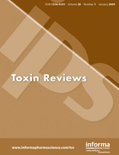
Toxin Reviews
Transforming Toxicological Research into ActionToxin Reviews is a premier academic journal focused on the critical field of Toxicology, published by Taylor & Francis Inc. Established with an aim to foster research and disseminate knowledge, this journal has been pivotal since its inception in 1982 and continues to be a leading platform for both emerging and established researchers. With an impressive impact factor and ranked in the 75th percentile among its peers in the Scopus categories, it serves as an essential resource for scientists, practitioners, and students interested in understanding the complexities of toxins and their effects on health. The journal provides an Open Access platform, enhancing visibility and accessibility of research findings to a broader audience. Covering a wide scope, Toxin Reviews plays a vital role in bridging gaps between toxicological research and practical applications, ensuring that rigorous scientific inquiry translates into real-world solutions.
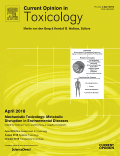
Current Opinion in Toxicology
Shaping Future Directions in Toxicological StudiesCurrent Opinion in Toxicology is a premier academic journal published by Elsevier, focusing on the latest advancements and perspectives in the field of toxicology. With an impressive impact factor reflecting its high citation and influence within the research community, this journal ranks in the Q1 category for Toxicology, positioned at #8 out of 133 in the Scopus Toxicology domain, placing it in the 94th percentile. The journal aims to provide concise and insightful reviews of contemporary research, fostering an understanding of critical issues related to toxic effects of chemicals and environmental agents. Although not an open access journal, it attracts a worldwide readership, making it an essential resource for researchers, professionals, and students committed to understanding toxicological science. Based in the Netherlands, Current Opinion in Toxicology serves as a platform for stimulating scholarly dialogue and guiding future research directions in this vital area of study.
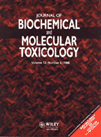
JOURNAL OF BIOCHEMICAL AND MOLECULAR TOXICOLOGY
Illuminating the Pathways of Biochemical and Molecular ScienceJournal of Biochemical and Molecular Toxicology, published by Wiley, plays a pivotal role in the advancement of knowledge within the fields of biochemistry, toxicology, and molecular biology. Established in 1998, this esteemed journal has garnered a significant reputation, evidenced by its current placement in the Q2 quartile across several categories, including Biochemistry, Health, Toxicology and Mutagenesis, and Medicine. With an ISSN of 1095-6670 and an E-ISSN of 1099-0461, it serves an international audience, offering critical insights and innovative research that shape our understanding of biochemical interactions and toxicological assessments. While it does not operate on an open-access model, the journal ensures rigorous peer review and high-quality publication standards, making it a valuable resource for researchers, professionals, and students dedicated to the exploration of molecular toxicology. The journal's recognized impact within the scientific community is reflected in its competitive rankings among specialized journals, fostering significant contributions to both academic and applied contexts.
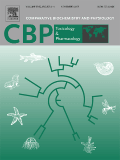
COMPARATIVE BIOCHEMISTRY AND PHYSIOLOGY C-TOXICOLOGY & PHARMACOLOGY
Unlocking the Secrets of Biochemical Processes Across SpeciesComparative Biochemistry and Physiology C-Toxicology & Pharmacology, published by Elsevier Science Inc, stands as a prominent resource in the fields of pharmacology, toxicology, and biochemical research. With its ISSN 1532-0456 and E-ISSN 1878-1659, this journal has carved out a significant niche, focusing on the comparative aspects of biochemical and physiological data across various species. Recognized for its impact in diverse fields, it boasts a Q1 ranking in Animal Science and Zoology, Aquatic Science, Health, Toxicology and Mutagenesis, alongside respectable standings in other related disciplines. Researchers and professionals can leverage this publication to access high-quality, peer-reviewed studies that advance the understanding of biochemical processes and their toxicological implications. The journal aims to bridge the gap between laboratory findings and real-world applications, fostering an environment for interdisciplinary collaboration. For academics seeking to enhance their knowledge or contribute to this impactful field, Comparative Biochemistry and Physiology C-Toxicology & Pharmacology serves as an invaluable platform.