Tradition & Discovery
Scope & Guideline
Exploring Knowledge Through Time.
Introduction
Aims and Scopes
- Interdisciplinary Exploration of Knowledge:
The journal emphasizes the importance of tacit knowledge and personal judgment, often referencing Polanyi’s work. It explores how knowledge is not only a collection of facts but also involves intuitive and personal dimensions. - Philosophical Inquiry into Social Structures:
A core focus is on social theory, particularly through the lens of Polanyi’s critiques of positivism and liberalism. The journal examines the interplay between individual agency and social systems. - Cultural and Political Analysis:
Tradition & Discovery frequently engages with cultural studies and political philosophy, analyzing how cultural narratives shape and are shaped by political ideologies and practices. - Historical Contextualization of Ideas:
The journal often revisits historical figures and movements, assessing their relevance to contemporary debates. This includes revisiting the thoughts of philosophers like William James and Karl Polanyi. - Phenomenological Approaches to Experience:
With papers addressing perception and human experience, there is a consistent interest in phenomenology, particularly as it relates to understanding the ‘Other’ and our embodied experiences.
Trending and Emerging
- Integration of Aesthetics and Ethics:
The exploration of aesthetics, particularly American aesthetics, is gaining traction, suggesting a growing interest in how aesthetic experiences relate to ethical considerations in society. - Re-evaluation of Political Authority and Nihilism:
There is an emerging focus on the relationship between political authority and nihilism, reflecting contemporary societal anxieties and the search for meaning in modern governance. - Interviews and Conversations with Thinkers:
The format of interviews and personal reflections with contemporary thinkers is on the rise, indicating a trend towards valuing personal narratives and insights in academic discourse. - Phenomenological Approaches in Understanding Others:
The journal is increasingly publishing works that employ phenomenological methods to explore interpersonal relationships and the nature of being, emphasizing the importance of subjective experience. - Cultural Critique and Global Perspectives:
There is a growing interest in cultural critique, particularly in the context of global political and economic dynamics, suggesting an expanding scope that considers transnational influences on local cultures.
Declining or Waning
- Strict Empirical Analysis:
There has been a noticeable decline in papers that prioritize strict empirical methodologies. This shift suggests a move away from quantitative analyses towards more qualitative, philosophical inquiries. - Postmodern Critiques of Knowledge:
Themes centered around postmodernism and its critiques of objective knowledge appear to be waning. The journal seems to be focusing less on deconstructive approaches and more on constructive dialogues about knowledge. - Traditional Economic Theories:
Discussions around traditional economic theories, particularly those not linked to Polanyi's thought, have decreased. The journal has shifted towards more integrated approaches that consider cultural and social dimensions. - Narrowly Defined Philosophical Schools:
There is a reduction in papers strictly adhering to isolated philosophical schools. Instead, the journal is favoring interdisciplinary approaches that blend multiple perspectives. - Focus on Historical Figures Outside Polanyi's Sphere:
While historical analysis is still present, there are fewer papers focusing on figures outside of Polanyi's influence. This indicates a narrowing of historical discourse to more closely align with Polanyian thought.
Similar Journals
Journal of Social Philosophy
Connecting Thought Leaders in PhilosophyJournal of Social Philosophy, published by Wiley, is a premier academic resource in the field of philosophy, specifically focused on social theory and ethics. With an esteemed impact factor indicative of its scholarly influence, this journal consistently ranks in the Q1 category of philosophy journals, placing it among the top 12% of publications in its field according to Scopus. Spanning a convergence of intellectual inquiry since its establishment in 1970, the journal serves as a vital platform for researchers, professionals, and students to engage with groundbreaking discussions and contemporary debates relevant to social philosophy. Although it does not offer an open-access model, the journal is accessible through various academic institutions globally, ensuring that its rich content reaches an informed audience eager for rigorous philosophical exploration. With headquarters located in the United Kingdom, the Journal of Social Philosophy continues to shape the discourse on social practices, ethics, and political theory well into 2024 and beyond.

Lebenswelt-Aesthetics and Philosophy of Experience
Connecting Interdisciplinary Ideas to Enrich Philosophical DiscourseLebenswelt-Aesthetics and Philosophy of Experience is a distinguished academic journal published by Milano University Press, located in the heart of Italy. With a commitment to fostering open access dissemination of knowledge since 2011, this journal serves as a vital platform for scholars and students in the fields of aesthetics and philosophy, facilitating innovative discussions and research pertaining to human experience. The journal aims to explore the intricate relationships between lived experience and aesthetic theory, making significant contributions to contemporary philosophical discourse. Although it currently holds a Q4 ranking within the philosophy category of Scopus, its open access format and focus on interdisciplinary connections are invaluable for researchers seeking to engage with cutting-edge ideas. As it converges on themes of practical relevance and philosophical inquiry, Lebenswelt-Aesthetics and Philosophy of Experience invites contributions that enrich our understanding of the complexities of human perception and aesthetic appreciation.
PACIFIC PHILOSOPHICAL QUARTERLY
Advancing Philosophical Discourse for TomorrowWelcome to the PACIFIC PHILOSOPHICAL QUARTERLY, a leading journal in the field of philosophy, published by Wiley. With an impressive impact factor and ranked in the top 15% of its category (Q1 in Philosophy), this esteemed journal has become a vital source for scholars and practitioners alike. Established in 1996, the journal presents groundbreaking articles that explore contemporary philosophical issues, ensuring its relevance through converged contributions up to 2024. With robust Scopus rankings, including a position of #122 out of 806 in the Arts and Humanities category, the quarterly serves as a platform for innovative ideas and rigorous debates in the philosophical community. Though it does not offer open access, its insights are invaluable for researchers, professionals, and students eager to deepen their understanding of philosophical discourse.
Revue de Synthese
Cultivating a Legacy of Intellectual InquiryRevue de Synthèse, published by BRILL, is a distinguished journal in the field of Philosophy, recognized for its rich academic tradition since its inception in 1950. With an impressive history of converged years and a steady commitment to philosophical discourse, the journal offers a platform for scholars to present innovative ideas and critical analyses. Although currently listed in Q4 of the 2023 category quartiles, it serves as an essential resource for those pursuing interdisciplinary studies, enriching the philosophical landscape amidst global intellectual challenges. The journal is not currently available as Open Access, making its curated content accessible through institutional subscriptions. With an ISSN of 0035-1776 and E-ISSN of 1955-2343, Revue de Synthèse aims to empower researchers, professionals, and students alike with transformative insights that advance the understanding of contemporary philosophical issues.
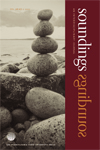
SOUNDINGS
Illuminating the Intersection of Arts and SocietySOUNDINGS, published by Penn State University Press, stands as a notable journal within the realms of the arts and humanities, cultural studies, and sociology and political science. With its ISSN 0038-1861 and E-ISSN 2161-6302, this academic periodical has been a platform for critical discourse and innovative research since its inception in the mid-1970s, although it has experienced several convergence periods. Though currently categorized in Q4 within its respective fields, including rankings that reflect its growing influence, SOUNDINGS continues to provide a rigorous space for interdisciplinary dialogue and scholarly reflection. Despite the absence of open access, the journal’s comprehensive articles are vital for researchers, professionals, and students seeking to deepen their understanding of complex cultural and societal dynamics. With its headquarters located at 820 North Univ Drive, U S B 1, Ste C, University Park, PA 16802, SOUNDINGS invites its readership to engage with contemporary issues through a rich lens of academic inquiry.
Philosophical Perspectives
Elevating scholarly communication in philosophy.Philosophical Perspectives is a premier academic journal published by WILEY, dedicated to advancing the field of philosophy through innovative and rigorous research. Established more than two decades ago, this esteemed UK-based journal carries the ISSN 1520-8583 and E-ISSN 1758-2245, and it has earned a reputation for quality, as reflected in its ranking in the top quartile (Q1) for philosophy. With an impressive Scopus rank of #152 out of 806 and a respectable 81st percentile standing, it is a significant platform for scholars seeking to disseminate their findings and contribute to philosophical discourse. The journal's objectives include fostering critical thought and interdisciplinary dialogue, making it an essential resource for researchers, professionals, and students alike. Although it does not currently offer open access options, its content is meticulously curated to ensure relevance and depth, covering a wide array of philosophical topics from ethics to metaphysics. As a vital part of the philosophical community, Philosophical Perspectives continues to shape the future of philosophical inquiry and practice.

Nuevo Pensamiento-Revista de Filosofia
Cultivating Innovative Perspectives in Philosophical ThoughtNuevo Pensamiento-Revista de Filosofia is an esteemed academic journal dedicated to the exploration and dissemination of philosophical thoughts and advancements. Published by UNIV SALVADOR, FAC FILOSOFIA & LETRAS in Buenos Aires, Argentina, it has been an open-access resource since 2011, ensuring that its scholarly articles are readily accessible to researchers, professionals, and students worldwide. With the ISSN 1853-7596, this journal welcomes contributions that span various philosophical disciplines, encouraging discourse that bridges theoretical frameworks with contemporary issues. By fostering an inclusive scholarly community, Nuevo Pensamiento stands as a pivotal platform for those engaged in the rich traditions of philosophy, making significant contributions to both regional and global philosophical debates.

Sguardo-Rivista di Filosofia
Shaping Contemporary Thought Through Rigorous DiscourseSguardo-Rivista di Filosofia, published by EDIZIONI STORIA & LETTERATURA, serves as a significant forum for interdisciplinary discourse in the realms of philosophy, political science, and history. With the ISSN 2036-6558 and open access since 2010, this esteemed Italian journal fosters an inclusive academic environment, making its rich content widely accessible to researchers, professionals, and students alike. Although currently positioned in the Q4 quartile across various scholarly fields, including Philosophy and Political Science, it offers critical insights that encourage discourse and spark scholarly engagement. The journal's commitment to promoting innovative philosophical dialogue plays an essential role in shaping contemporary thought, making it a valuable resource for those pursuing advanced studies or conducting research in these domains. Join the growing community that values rigorous academic discussion through Sguardo-Rivista di Filosofia, where every article contributes to the evolution of contemporary philosophical and social inquiry.
Critical Horizons
Stimulating Scholarly Impact Through Critical InquiryCritical Horizons is a distinguished academic journal published by Routledge Journals, Taylor & Francis Ltd, focusing on the interdisciplinary spheres of Philosophy and Sociology and Political Science. Founded in 2003, this journal caters to a global audience of researchers, professionals, and students by facilitating critical dialogues on pressing philosophical inquiries and sociopolitical issues. With an HIndex that reflects its scholarly impact, it has earned a reputable standing in its category, achieving a Q2 ranking in both Philosophy and Sociology and Political Science as of 2023. The journal's comprehensive scope encourages contributions that challenge conventional wisdom and stimulate innovative thinking within these disciplines. Although not open access, Critical Horizons remains a valuable resource for contemporary scholarship, evidenced by its substantial presence in Scopus rankings—boasting a 70th percentile in Arts and Humanities for Philosophy. Researchers and practitioners alike will find this journal an essential platform for exploring the critical intersections of knowledge and society as we approach its convergence year of 2024.
European Legacy-Toward New Paradigms
Navigating the Complexities of Cultural HeritageEuropean Legacy-Toward New Paradigms is a distinguished academic journal published by Routledge Journals, Taylor & Francis Ltd, focusing on interdisciplinary approaches to cultural studies, history, and philosophy. With an ISSN of 1084-8770 and an E-ISSN of 1470-1316, this journal has made significant contributions to the understanding of European heritage and its impact on contemporary thought and society since its inception in 2001. It currently holds a Q3 ranking in Cultural Studies, History, and Philosophy, reflecting its relevance and scholarly impact within the academic community. Although not an Open Access journal, European Legacy provides valuable insights and research findings through its carefully curated articles, making it an essential resource for researchers, professionals, and students alike. The journal's commitment to exploring new paradigms fosters critical dialogue and encourages innovative perspectives on Europe’s complex legacies, thereby positioning itself as a vital platform for ongoing academic discourse.