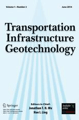
Transportation Infrastructure Geotechnology
metrics 2024
Advancing the Future of Transportation Infrastructure.
Introduction
Transportation Infrastructure Geotechnology, an esteemed journal published by SpringerNature, serves as a vital platform in the fields of Civil and Structural Engineering, Environmental Engineering, Geotechnical Engineering, and Transportation. Established in 2014 and spanning a decade of significant scientific discourse, this journal has gained recognition for its robust contribution to the understanding of the interplay between geotechnical processes and transportation infrastructure. With an impactful Q2 ranking in multiple categories—including Civil and Structural Engineering and Environmental Engineering—it emphasizes innovative research and practical applications globally. Researchers and professionals can explore critical topics that influence infrastructure sustainability, safety, and efficiency. Although it operates under a subscription model, its affiliation with SpringerNature ensures rigorous peer-review and high-quality publications, making it an indispensable resource for academics and industry experts alike.
Metrics 2024
 0.542.60-18
Metrics History
Rank 2024
Scopus
IF (Web Of Science)
JCI (Web Of Science)
Quartile History
Similar Journals
Geomechanics and Geoengineering-An International Journal
Connecting Academia and Industry in Geotechnical ExcellenceGeomechanics and Geoengineering-An International Journal, published by Taylor & Francis Ltd, serves as a prominent platform for the dissemination of innovative research and advancements in the fields of Geotechnical Engineering and Engineering Geology. With an ISSN of 1748-6025 and E-ISSN of 1748-6033, this journal has established itself as a critical resource within its category, ranking in the Q2 quartile according to the 2023 metrics and positioning itself in the top 38% of the Scopus rankings for Earth and Planetary Sciences. Geomechanics and Geoengineering encompasses a diverse range of topics, including but not limited to soil mechanics, foundation engineering, rock mechanics, and environmental geotechnics, ultimately aiming to advance both theoretical and practical knowledge in these vital areas. This journal not only highlights pioneering research but also facilitates a platform for academia and industry practitioners to collaborate and exchange ideas. While it does not offer open access, it remains a valuable resource for institutions and individuals committed to enhancing their expertise in the geotechnical domain. With convergence years spanning from 2006 to 2024, this journal is equipped to significantly contribute to the evolving landscape of geomechanical research.

Geotechnical Engineering
Connecting Researchers and Practitioners in Geotechnical EngineeringGeotechnical Engineering, published by the Southeast Asian Geotechnical Society, is a prominent journal dedicated to the field of geotechnical and civil engineering. With its ISSN of 0046-5828, this journal serves as a vital platform for researchers and practitioners to disseminate innovative findings and explore new methodologies within the discipline. Although currently listed in the Q4 quartile across both Civil and Structural Engineering and Geotechnical Engineering categories, Geotechnical Engineering is committed to fostering rigorous scholarship and community engagement in the dynamic field of geotechnical sciences. The journal covers a wide range of topics, providing an important resource for the engineering community. While it does not offer open access, it facilitates significant contributions that enhance the understanding and practice of geotechnical engineering in Southeast Asia and beyond, underscoring its vital role as a knowledge hub for researchers, professionals, and students alike.
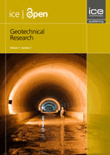
Geotechnical Research
Driving forward the frontiers of geotechnical research.Geotechnical Research is an esteemed scholarly journal published by EMERALD GROUP PUBLISHING LTD, dedicated to advancing the field of geotechnical engineering and earth sciences. With an impact factor reflective of its robust contributions, this open access journal has been providing unrestricted access to high-quality research since 2014, making it indispensable for researchers, professionals, and students alike. The journal, indexed under the ISSN 2052-6156, features rigorous peer-reviewed articles that encompass a wide range of topics within geotechnical engineering and engineering geology, achieving a notable placement in the Q2 category in both Earth and Planetary Sciences and Geotechnical Engineering as of 2023. With its Scopus ranks further affirming its significance—ranked #44 out of 159 in Earth and Planetary Sciences and #78 out of 229 in Geotechnical Engineering—Geotechnical Research stands as a vital resource for innovative solutions and advancements in this critical field, ensuring researchers access to essential insights that drive the discipline forward.

JOURNAL OF COLD REGIONS ENGINEERING
Bridging Knowledge and Practice in Harsh EnvironmentsJOURNAL OF COLD REGIONS ENGINEERING, published by the ASCE-American Society of Civil Engineers, is a premier platform for disseminating innovative research in the field of cold regions engineering. Since its inception in 1987, the journal has been at the forefront of advancing the understanding of engineering challenges and solutions in cold climate contexts, which are critical for civil and environmental engineering practices. With its presence in both Geotechnical Engineering and Industrial and Manufacturing Engineering categories, the journal has achieved a commendable Q2 ranking in various Scopus classifications, signifying its robust contribution to academia and the industry. Researchers and professionals benefit from the journal's rigorously peer-reviewed articles that explore cutting-edge methodologies and technologies, making it an essential resource for anyone engaged in the dynamic intersections of engineering within cold environments. As an indispensable reference, JOURNAL OF COLD REGIONS ENGINEERING continues to foster knowledge exchange and innovation crucial for addressing contemporary engineering challenges.
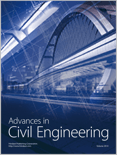
Advances in Civil Engineering
Shaping Tomorrow's Civil Engineering TodayAdvances in Civil Engineering is a leading peer-reviewed journal published by HINDAWI LTD, dedicated to advancing knowledge and innovation in the field of civil and structural engineering. Holding an esteemed Q2 ranking in the 2023 category for Civil and Structural Engineering, this journal serves as a vital platform for disseminating cutting-edge research and practical applications that address contemporary challenges in infrastructure development, sustainable design, and material science. Launched in 2008 and operating as an Open Access journal since 2009, it promotes the free exchange of ideas by ensuring that all articles are accessible to researchers, professionals, and students globally. The journal is also indexed in Scopus, ranking at #142 out of 379 in its category, situating it within the 62nd percentile of its peers. With a focus on interdisciplinary collaboration and innovative solutions, Advances in Civil Engineering contributes significantly to the ongoing evolution of engineering practices and education, making it an essential resource for anyone involved in or studying the ever-evolving field of civil engineering.

Italian Geotechnical Journal-Rivista Italiana di Geotecnica
Empowering Professionals with Cutting-Edge Geotechnical Research.Italian Geotechnical Journal-Rivista Italiana di Geotecnica, published by PATRON EDITORE S R L, is a rigorously peer-reviewed journal dedicated to advancing the field of geotechnical engineering and engineering geology. With a history dating back to 1976 and an active publication span from 2011 to 2024, the journal provides a vital platform for researchers and practitioners to disseminate innovative findings and methodologies in the field. Although it currently holds a Q4 category ranking in Geotechnical Engineering and Engineering Geology, the journal is committed to maintaining high academic standards and quality of publication. Its Scopus ranking places it within the 29th percentile of Earth and Planetary Sciences, indicating its significance among scholarly publications. The Italian Geotechnical Journal serves not only as a resource for academic inquiry but also as an essential tool for professionals seeking to stay abreast of the latest developments and applications in geotechnical research. This journal is essential for students and researchers aiming to deepen their knowledge and contribute to ongoing discourse in geotechnics.

Jordan Journal of Civil Engineering
Building Knowledge, Shaping FuturesThe Jordan Journal of Civil Engineering, ISSN 1993-0461 and E-ISSN 2225-157X, serves as a pivotal platform for research dissemination in the field of civil engineering. Published by Jordan University of Science & Technology, this journal has established itself as a vital resource since its inception in 2007 and continues to impact the academic community with its wide-ranging scope covering innovative practices and cutting-edge research in civil and structural engineering. Holding a respectable Q3 ranking in the 2023 category, with Scopus positioning it at rank #235 out of 379, the journal reflects growing recognition within its discipline. Although currently not an open-access publication, it provides essential insights that can benefit researchers, industry professionals, and students seeking to contribute to advancements in civil engineering through rigorous scholarly articles and studies up to 2024. Its commitment to high academic standards enhances the relevance and importance of its contributions to both local and global engineering practices.

Periodica Polytechnica-Civil Engineering
Elevating Engineering Standards with Rigorous ResearchPeriodica Polytechnica-Civil Engineering is a prestigious journal published by the Budapest University of Technology and Economics, dedicated to advancing the field of civil engineering through high-quality research and innovative practices. Established in 1972, the journal has transitioned through various phases of publication and now spans an expansive range of topics within civil and structural engineering, geotechnical engineering, and engineering geology. With an impact factor indicating its growing influence and a commendable placement in the Q3 quartile according to the latest 2023 metrics, it recognizes contributions that bridge theoretical advancements with practical applications. While currently not open access, the journal remains a vital resource for researchers, professionals, and students seeking to stay abreast of the latest developments in engineering design, construction techniques, and geotechnical innovations. The continuous publication of significant research after almost five decades underscores its commitment to disseminating knowledge crucial for the world’s infrastructure challenges, making it an essential reference point within the engineering community.
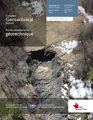
CANADIAN GEOTECHNICAL JOURNAL
Connecting Researchers and Practitioners in Geotechnical ScienceCanadian Geotechnical Journal, published by Canadian Science Publishing, stands as a premier resource in the field of geotechnical engineering, focusing on the science and practice of soil mechanics, engineering geology, and related disciplines. Established in 1968, this esteemed journal has earned a distinguished reputation, holding a Q1 ranking in both Civil and Structural Engineering as well as Geotechnical Engineering and Engineering Geology as of 2023. It features a rigorous peer-review process that ensures the publication of high-quality research, making it essential reading for researchers, professionals, and students alike. With an impressive Scopus rank of #63 out of 379 in Civil and Structural Engineering and #41 out of 229 in Geotechnical Engineering, the journal continues to contribute significantly to the advancement of knowledge in geotechnics. While the journal does not currently provide open access options, it remains a vital platform for disseminating innovative findings and fostering academic collaboration in the geotechnical community.
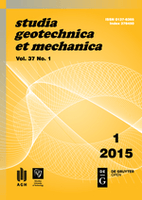
Studia Geotechnica et Mechanica
Bridging Theory and Practice in Geotechnical and Civil EngineeringStudia Geotechnica et Mechanica is a distinguished academic journal dedicated to the vital fields of geotechnics, civil engineering, and materials science. Published by SCIENDO, this Open Access journal has been facilitating unrestricted access to research since 2012, allowing for wide dissemination of innovative findings and methodologies. Based in Poland, it contributes significantly to the scholarly community by providing a platform for the exchange of ideas, techniques, and advancements relevant to Civil and Structural Engineering, Geotechnical Engineering, and related disciplines. With an increasing emphasis on applied research, Studia Geotechnica et Mechanica is classified in various quartiles, demonstrating its emerging influence in fields such as Computers in Earth Sciences and Mechanics of Materials. The journal is indexed in Scopus, showcasing its commitment to maintaining high academic standards. By publishing peer-reviewed research articles, this journal is essential for researchers, professionals, and students looking to stay at the forefront of developments in these critical areas of engineering and science.