TRANSPLANT INTERNATIONAL
Scope & Guideline
Fostering Collaboration for Safer Organ Transplants
Introduction
Aims and Scopes
- Transplantation Techniques and Innovations:
The journal publishes studies on various transplantation techniques, including surgical methods, machine perfusion, and organ preservation strategies, showcasing innovations that improve patient outcomes. - Immunological Responses and Rejection Mechanisms:
A significant portion of the research addresses the immunological aspects of transplantation, including antibody-mediated rejection, T cell responses, and the role of biomarkers in predicting graft success. - Patient Outcomes and Quality of Life:
Research articles often focus on the long-term outcomes of transplant recipients, including survival rates, quality of life assessments, and management of post-transplant complications. - Ethical and Sociopolitical Aspects of Transplantation:
The journal explores ethical considerations in organ donation and transplantation, including access to care, disparities in transplant outcomes, and the impact of sociocultural factors. - Emerging Infectious Diseases in Transplant Recipients:
Given the recent global health challenges, studies on infectious disease management, particularly related to COVID-19 and its impact on transplant patients, have become increasingly important.
Trending and Emerging
- Machine Perfusion and Organ Preservation:
Research on machine perfusion techniques, particularly normothermic perfusion, is gaining traction as a method to enhance organ viability and improve transplantation outcomes. - Biomarkers and Genomic Insights:
There is a rising interest in the use of biomarkers, including donor-derived cell-free DNA, to monitor transplant health and predict outcomes, allowing for more personalized management of transplant patients. - Psychosocial Aspects of Transplantation:
Increasingly, studies are addressing the psychological and social dimensions of transplantation, focusing on patient experiences, mental health, and the support systems needed for successful outcomes. - Infectious Disease Management in Transplant Patients:
Given the impact of the COVID-19 pandemic, research on managing infectious diseases in transplant recipients is a burgeoning area, highlighting the need for effective protocols and surveillance. - Ethics and Equity in Transplantation:
Emerging discussions on ethical considerations, including equity in access to transplantation and the impact of social determinants of health, are becoming more prominent in the literature.
Declining or Waning
- Traditional Immunosuppressive Regimens:
Research on conventional immunosuppressive therapies is decreasing as newer, more targeted therapies are developed and studied, reflecting a shift towards personalized medicine approaches. - Basic Science Studies:
There is a noticeable reduction in purely basic science research related to transplantation, as the field moves towards more translational studies that emphasize clinical applications. - Historical Analyses of Transplant Practices:
Articles focusing on historical practices and outcomes are becoming less frequent as the journal prioritizes contemporary studies with direct implications for current clinical practice.
Similar Journals
BONE MARROW TRANSPLANTATION
Elevating Standards in Hematology and Transplantation.BONE MARROW TRANSPLANTATION, published by SpringerNature, stands as a leading journal in the fields of Hematology and Transplantation, as evidenced by its recognition in the Q1 category for both disciplines according to 2023 rankings. With an impressive impact factor and notable Scopus rankings—7th out of 54 in Medicine Transplantation and 25th out of 137 in Medicine Hematology—this journal is instrumental for researchers and professionals dedicated to advancements in bone marrow transplantation practices and research. Established in 1986, the journal publishes original research, clinical studies, and reviews that push the boundaries of current knowledge, making it essential reading for those looking to stay abreast of the latest developments in the field. Although offering limited Open Access options, BONE MARROW TRANSPLANTATION reaches a broad audience and furthers a global dialogue on best practices and innovative approaches in transplantation medicine. Its address in London, UK positions it at the heart of international research collaboration, fostering connections among scientists, clinicians, and students alike.
TRANSPLANTATION PROCEEDINGS
Fostering Knowledge in the Art of Transplantation.TRANSPLANTATION PROCEEDINGS is a distinguished journal published by Elsevier Science Inc, focused on the field of transplantation and surgery. With a publication history spanning over five decades, from 1969 to 2024, this journal has consistently provided a platform for researchers and practitioners to share significant findings and advancements in organ transplantation and related surgical techniques. The journal is renowned for its rigorous peer-review process and has achieved a respectable impact factor within its categories, ranking in the Q3 quartile for both Surgery and Transplantation as of 2023. With Scopus rankings placing it in the 47th percentile in Medicine (Surgery) and the 43rd percentile in Medicine (Transplantation), TRANSPLANTATION PROCEEDINGS serves as a vital resource for academics and medical professionals seeking to stay updated on the latest empirical research, clinical practices, and innovative methodologies in the field. While it does not operate under an open-access model, the journal ensures that critical insights and data are accessible to its audience, enhancing the global discourse in transplantation science. For those dedicated to advancing transplant medicine, this journal represents an invaluable collection of knowledge and a forum for fostering innovative approaches to improve patient outcomes.
TRANSPLANTATION
Leading the Way in Transplantation Knowledge and Practice.TRANSPLANTATION is a premier journal in the field of organ transplantation, published by Lippincott Williams & Wilkins, that has been a cornerstone of transplantation research since its inception in 1963. With an impressive impact factor cementing its status, this journal is categorized in the top quartile (Q1) of its field, currently ranking 6th out of 54 in the Scopus Medicine Transplantation category, placing it in the 89th percentile. The journal publishes original research, clinical studies, and reviews that significantly advance our understanding of transplantation science, ensuring that professionals, researchers, and students remain informed of the latest developments. Although it is not an open-access journal, it offers valuable insights that contribute to enhancing practice and improving outcomes in transplantation medicine, making it an essential resource for anyone involved in this dynamic and impactful discipline.
Indian Journal of Transplantation
Fostering Collaboration in Transplant ResearchIndian Journal of Transplantation (ISSN: 2212-0017, E-ISSN: 2212-0025), published by Wolters Kluwer Medknow Publications, serves as a pivotal resource in the expanding field of transplantation medicine. As an Open Access journal since 2011, it provides unrestricted access to cutting-edge research, facilitating the dissemination of knowledge among practitioners, researchers, and students globally. With a growing focus on transplant-related advancements from 2020 to 2024, the journal has positioned itself within the Q4 category in Transplantation, underscoring its commitment to publishing valuable contributions that aim to enhance clinical practices and improve patient outcomes. Situated in the Netherlands, the journal upholds high-quality standards, inviting submissions that contribute to the understanding of various transplant procedures and practices, ultimately fostering innovation in the field. Researchers and professionals are encouraged to explore the vast array of articles, enhancing both their expertise and the community's collective knowledge in transplantation.
HUMAN IMMUNOLOGY
Navigating the Landscape of Immunological ScienceHUMAN IMMUNOLOGY, published by Elsevier Science Inc, serves as a critical platform for disseminating research in the fields of immunology and allergy, as well as various aspects of miscellaneous medicine since its inception in 1980. With an ISSN of 0198-8859 and E-ISSN 1879-1166, this journal is pivotal for researchers and practitioners looking to advance their understanding of human immune responses and related conditions. The journal currently holds a respectable position within its field, as highlighted by its 2023 Scopus ranks—#114/233 in Immunology and Allergy and #132/236 in Immunology and Microbiology. Moreover, it maintains a Q2 quartile ranking in both Immunology and Allergy and miscellaneous Medicine, underscoring its influence and reach within the scientific community. Although it does not currently offer Open Access options, HUMAN IMMUNOLOGY remains dedicated to providing valuable insights and fostering academic discourse within its discipline, characterized by a rigorous peer-review process and a focus on innovative research trajectories.

International Journal of Organ Transplantation Medicine
Pioneering Discoveries in Organ TransplantationThe International Journal of Organ Transplantation Medicine, published by the Avicenna Organ Transplant Center, stands as a vital resource for the field of transplantation medicine. Established to advance scientific knowledge and clinical practices, this open access journal has been supporting the global research community since 2010, ensuring that groundbreaking findings are easily accessible to researchers, professionals, and students alike. With its ISSN of 2008-6490 and E-ISSN 2008-6482, the journal consistently showcases high-quality, peer-reviewed articles, addressing critical advancements in transplantation techniques, patient care, and immunology. Renowned for its commitment to excellence, it holds a Q3 ranking in transplantation for 2023 and ranks #32 out of 54 in the Scopus medicine transplantation category, placing it in the 41st percentile. Researchers are encouraged to submit their work, contributing to the journal's goal of improving outcomes in organ transplantation and fostering collaboration across disciplines.
Transplant Infectious Disease
Bridging the gap between transplantation and infectious disease understanding.Transplant Infectious Disease is a premier journal dedicated to advancing the understanding of infectious complications in transplant recipients, contributing significantly to the fields of Infectious Diseases and Transplantation. Published by Wiley in the United Kingdom, this journal boasts an impressive reputation within the academic community, holding a 2023 Q2 quartile ranking in both Infectious Diseases and Transplantation, as well as notable Scopus rankings that position it among the top tiers of its categories. With a convergence of scholarly articles and research findings from 1999 through 2024, Transplant Infectious Disease serves as a critical resource for researchers, professionals, and students seeking to explore the intersection of transplantation and infectious diseases. The journal encourages open dialogue and knowledge dissemination through rigorous peer-reviewed content, making it an essential platform for those aiming to address the challenges and innovations in transplant medicine.
Current Opinion in Organ Transplantation
Elevating Knowledge in Organ TransplantationCurrent Opinion in Organ Transplantation, published by Lippincott Williams & Wilkins, serves as a leading journal in the fields of immunology and transplantation, providing insightful reviews and expert opinions that shape the discourse in these vital areas of medical research. With an impact factor showcasing its significance and influence in the academic community, this journal is ranked in the Q2 category for both Immunology and Transplantation according to the 2023 metrics, affirming its essential role in advancing knowledge and understanding. Spanning from its inception in 2001 through to 2024, Current Opinion in Organ Transplantation offers a platform for researchers, professionals, and students to engage with the latest advancements and trends, contributing to the ongoing dialogue that drives innovation in organ transplantation and immunological therapies. Although the journal does not currently offer open access options, its rigorous peer-review process and reputable publisher ensure the highest quality of research dissemination, making it an invaluable resource for those invested in the future of organ transplantation.
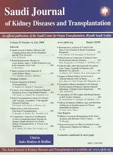
Saudi Journal of Kidney Diseases and Transplantation
Connecting scholars to revolutionize kidney care.Saudi Journal of Kidney Diseases and Transplantation, published by Wolters Kluwer Medknow Publications, serves as a vital resource in the fields of nephrology and transplantation, dedicated to advancing the understanding and treatment of kidney diseases. With an ISSN of 1319-2442 and E-ISSN 2320-3838, this esteemed peer-reviewed journal aims to facilitate scholarly exchange and promote innovative research since its inception in 2006. Recognized for its Open Access model since 2007, it enables widespread dissemination of critical findings, thereby enhancing the global impact of kidney-related research. With a solid reputation reflected in its current Q3 categorization in both Nephrology and Transplantation for 2023, the journal continues to contribute meaningfully to these essential medical fields. Researchers, clinical professionals, and students can access its wealth of information to further their knowledge and practice in kidney health and organ transplantation, vital components in the landscape of modern medicine.
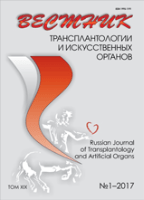
Vestnik Transplantologii i Iskusstvennyh Organov
Bridging knowledge and innovation in organ transplantation.Vestnik Transplantologii i Iskusstvennyh Organov, published by the Federal Research Center Transplantology & Artificial Organs V I Shumakov, is an esteemed open access journal that has been disseminating critical research in the fields of transplantation and immunology since 2009. With an ISSN of 1995-1191 and E-ISSN 2412-6160, this journal serves as a vital resource for academics and practitioners alike, offering insights into current trends, innovations, and methodologies in organ transplantation. The journal is indexed in prominent databases, holding a Q4 category in Immunology and Allergy and a Q3 in Transplantation as of 2023, ranking 42nd out of 54 in the field of Medicine - Transplantation, and 208th out of 233 in Medicine - Immunology and Allergy. Through its commitment to open access publishing and its strategic focus on advancing the science of transplantology, Vestnik Transplantologii i Iskusstvennyh Organov contributes significantly to the global body of knowledge, promoting collaboration and engagement among researchers, healthcare professionals, and students from around the world.