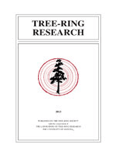
Tree-Ring Research
metrics 2024
Innovating Dendrochronology for a Sustainable Tomorrow
Introduction
Tree-Ring Research is a prestigious journal dedicated to advancing the interdisciplinary study of tree-ring science, encompassing atmospheric science, geology, paleontology, and forestry. Published by the TREE-RING SOC in the United States, this journal serves as a vital platform for researchers and professionals seeking to share innovative findings and develop collaborative methodologies in dendrochronology and its applications. With a commendable standing across multiple categories, including Q2 in Forestry and Q3 rankings in Atmospheric Science, Geology, and Paleontology for 2023, Tree-Ring Research holds an important position within the academic community. Researchers are encouraged to access recent studies and contribute their findings, fostering a rich dialogue that illuminates the complexities of environmental change and forest ecosystems. The journal's comprehensive scope and commitment to quality make it an essential resource for those engaged in understanding the critical role trees play in our planet’s ecological health and history.
Metrics 2024
 0.351.101.3028
Metrics History
Rank 2024
Scopus
IF (Web Of Science)
JCI (Web Of Science)
Quartile History
Similar Journals
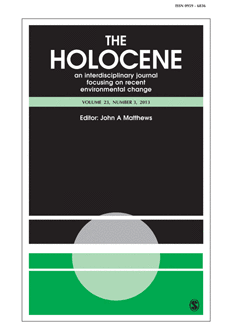
HOLOCENE
Exploring the Interactions of Humanity and Nature.HOLOCENE is a leading academic journal published by SAGE Publications Ltd that serves as an essential platform for researchers and scholars in the fields of archaeology, earth-surface processes, ecology, and paleontology. With an impressive Q1 ranking in prominent categories like Archaeology, Earth-Surface Processes, and Paleontology, this journal is dedicated to disseminating high-quality research that examines the dynamic interactions between humans and their environment throughout the Holocene epoch. Released biannually, it covers innovative studies and comprehensive review articles that contribute to our understanding of environmental changes and their implications across various disciplines. Although it does not offer open access, HOLOCENE maintains a robust reputation with an influential impact on the academic community, making it a vital resource for professionals, researchers, and students who aim to expand their knowledge and explore current developments in Earth and environmental sciences. With a commitment to excellence, HOLOCENE continues to shape the discourse in its field from its headquarters in the United Kingdom.

RECORDS OF THE AUSTRALIAN MUSEUM
Connecting History with Modern MuseologyRecords of the Australian Museum is a leading journal in the fields of Animal Science, Ecology, History, and Museology, published by the renowned Australian Museum in Sydney, Australia. With a commitment to advancing knowledge and understanding of natural history and cultural heritage, this journal provides an essential platform for original research, reviews, and significant findings relevant to its diverse academic audience. The journal encompasses a broad scope, including studies in ecology, evolution, behavior, systematics, and the history of science, attracting contributions from leading scholars and professionals. Notably, it ranks highly in various categories, achieving a Q1 ranking in History and Museology, reflecting its impact and prestige within the academic community. Although it operates under a traditional access model, the journal ensures that its robust compilation of cutting-edge research remains vital to researchers, professionals, and students aiming to stay informed of the latest developments in their fields. With converging years of publication since 1983, Records of the Australian Museum continues to play a pivotal role in disseminating critical insights and fostering discussions that shape our understanding of both the natural world and our cultural heritage.

FOREST SCIENCE
Connecting scholars and practitioners in forest science.FOREST SCIENCE, published by Oxford University Press Inc, is a pivotal journal in the field of forestry and ecological modeling, boasting an impressive track record since its inception in 1970. With an ISSN of 0015-749X and E-ISSN 1938-3738, the journal provides a valuable platform for the dissemination of high-quality research and studies that address contemporary challenges in forestry and ecology. It ranks in the Q2 category for both ecology and forestry and holds a Q3 ranking in ecological modeling according to the latest evaluations, illustrating its significant contribution to these fields. The journal is accessible through various options, facilitating broad readership and engagement within the academic community. As part of its commitment to advancing knowledge and practices in forest management and conservation, FOREST SCIENCE seeks to bridge theoretical research with practical applications, making it an indispensable resource for researchers, professionals, and students alike.
FOREST PATHOLOGY
Enhancing Ecological Resilience Through Pathology InsightsFOREST PATHOLOGY is a premier journal published by Wiley that focuses on the intricate relationships between trees, pathogens, and forest health. With an ISSN of 1437-4781 and an E-ISSN of 1439-0329, this British journal has garnered an impressive reputation in the fields of Ecology and Forestry, achieving a Q2 Quartile ranking in both categories as of 2023. The journal invites researchers and professionals to explore cutting-edge studies and case reports that delve into forest pathology, contributing to the understanding of disease dynamics and management in forest ecosystems. Currently indexed in Scopus, it ranks 61st out of 174 in the Forestry category and 214th out of 461 in Ecology, reflecting its impact and relevance in advancing the field. Access options are available to cater to a wide audience, emphasizing the journal's commitment to disseminating vital knowledge that enhances forest management practices and ecological resilience. FOREST PATHOLOGY stands as an essential resource for those dedicated to the health and sustainability of forest ecosystems.

Arctic Science
Fostering Global Dialogue on Arctic Science and SustainabilityArctic Science is a premier journal published by Canadian Science Publishing, dedicated to advancing our understanding of the Arctic region through interdisciplinary research. With a strong emphasis on topics within Agricultural and Biological Sciences, Earth and Planetary Sciences, and Environmental Science, the journal has established itself as a leading publication, reflected by its impressive Q1 category quartiles and significant SCOPUS rankings. The journal's scope encompasses vital issues related to Arctic ecosystems, climate change, and sustainable resource management, making it an essential resource for researchers, professionals, and students committed to addressing the challenges facing this unique environment. Published from 2019 to 2024, Arctic Science aims to foster globally relevant discussions and disseminate high-quality research that is critical for the scientific community and policymakers alike.
NEW FORESTS
Unlocking Insights in Forest Ecosystems.NEW FORESTS, published by SPRINGER, stands at the forefront of forestry research, delivering cutting-edge insights into forest science, management, and conservation. With an ISSN of 0169-4286 and an E-ISSN of 1573-5095, this esteemed journal has earned a distinguished reputation as it continues to contribute significantly to the field since its inception in 1986. As evidenced by its impressive ranking in the Q1 category for Forestry and being positioned at #32/174 in the Scopus Ranks for Agricultural and Biological Sciences, NEW FORESTS maintains an 81st percentile standing, emphasizing its influential role in advancing scientific discourse. The journal focuses on a diverse array of topics within the realm of forestry, making it an essential resource for researchers, professionals, and students eager to engage with contemporary developments and challenges in forest ecosystems. Although it is not an open-access journal, access to its articles can be facilitated through various academic institutions and libraries, ensuring that vital research is available to a broad audience. As we look toward the future, NEW FORESTS continues to strive for excellence, fostering dialogue and collaboration among scholars committed to sustainable forest management and restoration until at least 2024.

Journal of Geography-Chigaku Zasshi
Innovating Research to Illuminate Global ChallengesJournal of Geography - Chigaku Zasshi is a distinguished publication that serves as a crucial platform for the dissemination of research in the realm of geography and earth sciences. Published by the TOKYO GEOGRAPHICAL SOC in Japan, this journal is indexed with an ISSN of 0022-135X and an E-ISSN of 1884-0884. With a scope that includes Earth-Surface Processes, Geography, Planning and Development, Geology, Geophysics, and Global and Planetary Change, it provides comprehensive coverage of pressing geographical issues. Although it holds a Q4 ranking in multiple categories as of 2023, the journal presents an opportunity for researchers, professionals, and students to contribute meaningful findings in a diverse and competitive landscape. The Journal of Geography actively promotes scholarly dialogue by embracing the complexities of our planet and encouraging innovative approaches to geographical inquiries. This open-access journal aspires to bridge gaps and foster collaboration among scholars worldwide, underscoring its importance in understanding and addressing contemporary geographic challenges.
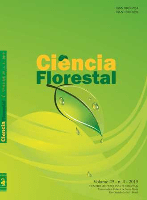
CIENCIA FLORESTAL
Nurturing the Future of Forest StudiesCIENCIA FLORESTAL is a premier open-access journal published by the Universidade Federal de Santa Maria, dedicated to advancing knowledge in the field of Forestry. Established in 1991, it provides a vital platform for researchers, professionals, and students to disseminate innovative research findings and methodologies. With an ISSN of 0103-9954 and an E-ISSN of 1980-5098, this journal offers extensive access options for a global audience, ensuring that key scientific discoveries in forest science are available to all. The journal is recognized for its contribution to the scholarly community, currently ranked in the Q3 category within the Forestry discipline, reflecting its commitment to quality and relevance in research. CIENCIA FLORESTAL covers a wide array of topics related to forestry practices, environmental sustainability, and biological sciences, making it an essential resource for those seeking to deepen their understanding of forest ecosystems and their management. Whether you’re a seasoned researcher or a student embarking on your academic journey, CIENCIA FLORESTAL stands as an invaluable asset in the exploration and development of forestry sciences in Brazil and beyond.
TREES-STRUCTURE AND FUNCTION
Illuminating the vital role of trees in our ecosystem.TREES - STRUCTURE AND FUNCTION, published by Springer Heidelberg, is a leading journal dedicated to advancing the scientific understanding of tree biology through rigorous research and interdisciplinary approaches. With an impressive impact factor reflecting its high visibility in the scholarly community, this journal specializes in various aspects of tree ecology, physiology, and structure, making it a vital resource for researchers, professionals, and students engaged in forestry and environmental sciences. The journal holds notable rankings, placing it in the top quartiles of several categories, including Q1 in Forestry and Q2 in Ecology as of 2023, underscoring its relevance and influence in the field. Although it is not an open-access journal, TREES strives to disseminate critically important findings that contribute to our understanding of global forest ecosystems and their role in climate change mitigation. With a publication history spanning from 1986 to 2024, this journal continues to shape the future of tree research, providing a platform for innovative studies that inform policy, conservation, and sustainable practices.
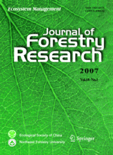
JOURNAL OF FORESTRY RESEARCH
Elevating forestry studies to new heights of excellence.JOURNAL OF FORESTRY RESEARCH, published by Northeast Forestry University in China, stands as a pivotal platform for advancing the field of forestry science. With an ISSN of 1007-662X and an E-ISSN of 1993-0607, this esteemed journal has maintained its commitment to disseminating high-quality research since its inception in 1997, converging into a recognized authority through the years. Currently boasting a Q1 ranking in the Forestry category for 2023, it ranks 18th out of 174 journals in its field on Scopus, highlighting its vital role in shaping contemporary forestry studies. The journal focuses on a broad spectrum of topics pertinent to forestry, including sustainable forest management, ecology, and conservation efforts, making it an indispensable resource for researchers, professionals, and students alike. Although it is not an open-access publication, the insights shared within its pages promise to contribute significantly to the advancement of knowledge and practices in forestry. The journal's significant impact and relevance are underscored by its operations from Harbin, People's Republic of China, where it continues to foster scholarly communication in the world of forestry research.