
ULTRASTRUCTURAL PATHOLOGY
metrics 2024
Unveiling the Complexities of Pathology and Forensic Medicine
Introduction
ULTRASTRUCTURAL PATHOLOGY is a prestigious academic journal published by Taylor & Francis Inc, focusing on the intricate and detailed aspects of pathology as well as forensic medicine since its inception in 1980. With an ISSN of 0191-3123 and an E-ISSN of 1521-0758, this journal provides a vital platform for researchers and professionals to disseminate innovative findings pertinent to both clinical and experimental pathology. Despite not being an open-access journal, its contributions are critical within its categories, positioned at the Q3 quartile in Pathology and Forensic Medicine and Q4 in Structural Biology as of 2023. The journal's reputation is further underscored by its Scopus rankings, placing it in the 41st percentile for Pathology and 15th percentile for Structural Biology, indicating a competitive standing in these fields. ULTRASTRUCTURAL PATHOLOGY aims to foster rigorous scholarly discourse and advance knowledge through the publication of original research articles, reviews, and case studies, making it an essential resource for academics, practitioners, and students engaged in the evolving domains of pathology and structural biology.
Metrics 2024
 0.281.101.2046
Metrics History
Rank 2024
Scopus
IF (Web Of Science)
JCI (Web Of Science)
Quartile History
Similar Journals

PATHOLOGY RESEARCH AND PRACTICE
Empowering Researchers with Cutting-Edge FindingsPATHOLOGY RESEARCH AND PRACTICE is a premier journal in the field of pathology and forensic medicine, published by Elsevier GmbH in Germany. With a rich publication history since 1978 and an impressive convergence period extending to 2024, this journal serves as a vital resource for researchers and professionals dedicated to advancing the understanding of pathological processes. It holds notable rankings, including Q3 in Cell Biology and Q2 in Pathology and Forensic Medicine for 2023, reflecting its significance in the academic community. The journal aims to publish innovative research findings, reviews, and case studies, facilitating a deeper understanding of disease mechanisms and improving diagnostic practices. Authors and readers alike benefit from its reputable platform, noted for its challenging and rigorous peer-review process. By fostering a collaborative environment and providing open access options, PATHOLOGY RESEARCH AND PRACTICE continues to contribute meaningfully to the discourse within its respective fields, thereby appealing to a diverse audience of researchers, professionals, and students.

MODERN PATHOLOGY
Shaping the Landscape of Diagnostic InnovationMODERN PATHOLOGY is a premier journal in the field of pathology and forensic medicine, published by Elsevier Science Inc. With an impressive impact factor that places it in the top 1st quartile (Q1) for 2023, and a remarkable rank of 5 out of 208 in its category according to Scopus, it serves as a vital resource for researchers, professionals, and students alike. Established in 1988, the journal focuses on the latest advancements in diagnostic pathology, molecular pathology, and related fields, providing a platform for innovative research that drives the discipline forward. Although it does not operate under an open access model, readers can expect rigorously peer-reviewed publications that contribute to the growing body of knowledge in pathology. With a continuous commitment to excellence and relevance, MODERN PATHOLOGY remains a fundamental avenue for disseminating high-quality scientific research globally, facilitating the growth and development of its field.

Pathologie
Pioneering Discoveries in Forensic MethodologiesPathologie is a distinguished academic journal published by Springer Heidelberg, dedicated to advancing the field of pathology and forensic medicine. With an ISSN of 2731-7188 and an E-ISSN of 2731-7196, this journal serves as a vital platform for researchers, professionals, and students to disseminate innovative findings and insights. Currently ranked in the Q3 category of pathology and forensic medicine according to the 2023 metrics, Pathologie reflects a commitment to quality and relevance in a dynamic research landscape. Despite its relatively recent establishment from 2022, the journal is gaining traction with a Scopus rank of 139 out of 208 in its category, positioning itself as an emerging resource within the academic community. While it operates under a subscription model, the importance of the journal lies in its objective to facilitate the exploration of diverse pathological processes and enhance forensic methodologies, ultimately improving clinical outcomes and investigative practices. As it continues to grow, Pathologie stands poised to impact the pathology domain significantly.

ENDOCRINE PATHOLOGY
Transforming Knowledge into Clinical PracticeENDOCRINE PATHOLOGY is a premier journal published by HUMANA PRESS INC, dedicated to advancing the understanding of endocrine disorders through innovative research and clinical practices. With an impressive impact factor and consistently ranked in the Q1 quartile across multiple categories such as Endocrinology, Diabetes and Metabolism, as well as Pathology and Forensic Medicine, this journal serves as a pivotal resource for researchers and professionals in the field. The journal covers a broad spectrum of topics related to endocrine pathology, providing insights into mechanisms, diagnostics, and therapeutics that inform both clinical and laboratory practices. Although it does not offer open access, its rigorous peer-review process ensures the dissemination of high-quality, impactful research that shapes clinical strategies and enhances patient care. With distribution spanning from its inception in 1990 to 2024, ENDOCRINE PATHOLOGY stands at the forefront of endocrine research, making it an essential read for anyone involved in the study and treatment of endocrine disorders.
Annual Review of Pathology-Mechanisms of Disease
Transforming Knowledge into Pathological SolutionsAnnual Review of Pathology: Mechanisms of Disease is a premier scholarly journal published by ANNUAL REVIEWS that systematically reviews significant advancements in the field of pathology and the mechanisms underpinning various diseases. With an ISSN of 1553-4006 and an E-ISSN of 1553-4014, the journal has established its importance within the academic community, evidenced by its prestigious Q1 rankings in several categories including medicine, pathology, forensic medicine, and plant science for 2023. Notably, it ranks #1 out of 208 in the pathology and forensic medicine category, placing it in the 99th percentile according to Scopus metrics. Although not an open-access journal, it offers crucial insights to researchers, professionals, and students alike by providing a comprehensive understanding of pathophysiological concepts and emerging trends. The journal continues to be an essential resource for those dedicated to advancing research and practical applications in disease mechanisms.

Indian Journal of Pathology and Microbiology
Advancing Knowledge in Pathology and MicrobiologyIndian Journal of Pathology and Microbiology, published by Wolters Kluwer Medknow Publications, is a distinguished open-access journal that has been fostering knowledge dissemination in the fields of pathology and microbiology since 2008. With an ISSN of 0377-4929 and E-ISSN 0974-5130, this journal serves as a critical resource for researchers and practitioners committed to advancing their understanding of medical sciences in India and beyond. Spanning decades of valuable research contributions since its establishment in 1972, it provides a platform for peer-reviewed articles that explore current trends and innovations in medicinal pathology and microbiological studies. Although it holds a Q4 ranking in categories such as medicine and microbiology, it maintains a notable Q3 classification in pathology and forensic medicine, highlighting its relevance to contemporary scientific discussions. Accessible freely to a global audience, the journal plays a pivotal role in enhancing scholarly communication and collaboration, making it an indispensable tool for students, professionals, and researchers alike aiming to contribute to this evolving discipline.

Turkish Journal of Pathology
Pioneering Knowledge in Pathology Since 2013Turkish Journal of Pathology, published by the Federation Turkish Pathology Society, stands as a vital platform for disseminating high-quality research in the field of pathology and forensic medicine. With an ISSN of 1018-5615 and an E-ISSN of 1309-5730, this journal has been an open-access publication since 2013, ensuring that cutting-edge findings are readily available to the global community. Based in Turkey, it aims to contribute significantly to the advancement of pathology as it converges from 2010 to 2024, currently holding a Q3 quartile ranking in its category according to 2023 metrics. As it ranks #129 out of 208 in the Scopus database for Medicine, Pathology, and Forensic Medicine, it offers researchers, professionals, and students invaluable insights and innovative studies that address critical developments in the field. The Turkish Journal of Pathology fosters collaboration and knowledge-sharing, making it an essential resource for anyone involved in pathology research and practice.

EUROPEAN JOURNAL OF HISTOCHEMISTRY
Advancing the frontiers of histochemical research.European Journal of Histochemistry (ISSN: 1121-760X; E-ISSN: 2038-8306) is a distinguished peer-reviewed scholarly journal published by PAGEPRESS PUBL based in Italy. Since its inception in 1992 and with a commitment to Open Access since 2010, the journal has played a pivotal role in disseminating high-quality research in the fields of Histology, Biophysics, and Cell Biology. As of 2023, the journal holds a commendable position within the academic community, achieving Q2 rankings in Biophysics, Histology, and Medicine (miscellaneous), further highlighting its relevance and impact in these critical areas of research. Despite its HIndex not being specified, its Scopus rankings demonstrate the journal's competitive edge, particularly in Histology (Rank #33/62) and Biophysics (Rank #84/152). The journal aims to provide a platform for researchers to share innovative findings and contribute to the enrichment of knowledge in histochemical methodologies and their application to biomedical sciences. Its Open Access model ensures the broadest possible dissemination of research, making it an essential resource for researchers, professionals, and students alike who are engaged in the life sciences. For more information, visit the journal's webpage hosted by PAGEPRESS PUBL.

International Journal of Clinical and Experimental Pathology
Unlocking the Secrets of Pathology for AllInternational Journal of Clinical and Experimental Pathology, published by E-CENTURY PUBLISHING CORP, serves as a vital resource for professionals in the field of pathology. With its ISSN 1936-2625, the journal has positioned itself within the competitive landscape of medical journals, achieving commendable rankings in Scopus, particularly in the categories of Pathology and Forensic Medicine (Rank #98/185) and Histology (Rank #38/58). Although its coverage in Scopus has been discontinued, the journal’s past contributions from 2009 to 2017 continue to be a touchstone for researchers interested in advancing their understanding of clinical and experimental pathology. The open-access format ensures accessibility to a wide audience, fostering collaboration and education in this essential medical discipline. By bridging clinical research and experimental findings, this journal plays a crucial role in disseminating knowledge and enhancing practices within pathology, making it an indispensable tool for researchers, professionals, and students alike.
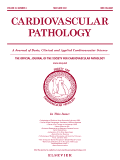
CARDIOVASCULAR PATHOLOGY
Elevating the discourse in cardiovascular medicine.CARDIOVASCULAR PATHOLOGY, published by Elsevier Science Inc, is a distinguished journal dedicated to the dissemination of high-quality research in the fields of cardiology, pathology, and cardiovascular medicine. With an ISSN of 1054-8807 and an E-ISSN of 1879-1336, this journal has established itself as a vital resource for researchers, clinicians, and students alike. It is positioned in the Q2 quartile for both cardiology and pathology, indicating its significant impact and relevance in these disciplines. The journal offers a platform for innovative studies, reviews, and clinical insights, aiming to enhance our understanding of cardiovascular conditions and their pathological underpinnings. With an H-index that showcases its scholarly influence, CARDIOVASCULAR PATHOLOGY is committed to advancing the field through rigorous peer review and open dialogue among professionals. The journal is accessible through institutional subscriptions, making it an essential reference point for ongoing research through its convergence of knowledge from 1992 through 2024.