
Vestnik of Saint Petersburg University-Law-Vestnik Sankt-Peterburgskogo Universiteta-Pravo
Scope & Guideline
Fostering Scholarly Discourse for Legal Evolution
Introduction
Aims and Scopes
- International and Comparative Law:
The journal frequently publishes articles examining the implications of international legal frameworks and comparative legal studies, highlighting differences and similarities across jurisdictions. - Regulatory and Legislative Developments:
A significant focus is placed on recent changes in legislation and regulatory practices, particularly in the context of digitalization, economic reforms, and human rights. - Criminal Law and Procedure:
The journal explores various aspects of criminal law, including the evolution of criminal liability, procedural norms, and the intersection of criminal law with technological advancements. - Legal Theory and Philosophy:
There is a strong emphasis on theoretical discussions, including the philosophy of law, ethical implications of legal practices, and the role of law in society. - Human Rights and Social Justice:
The journal addresses issues related to human rights, social justice, and the legal protection of vulnerable populations, reflecting a commitment to advancing legal frameworks that support equity. - Digital Transformation and Law:
The impact of digital technologies on legal practices and frameworks is a recurring theme, with a focus on how legal systems adapt to challenges posed by innovations such as artificial intelligence and blockchain.
Trending and Emerging
- Artificial Intelligence and Law:
There is a growing body of work focused on the implications of artificial intelligence for law-making, enforcement, and legal ethics, highlighting the transformative potential of technology in legal practice. - Environmental Law and Sustainability:
The journal has increasingly addressed topics related to environmental protection, sustainability, and the legal frameworks necessary to manage ecological challenges, reflecting a global priority. - Digital Rights and Data Protection:
Emerging discussions on digital rights, personal data protection, and privacy laws have gained traction, as legal scholars respond to the challenges posed by the digital age. - Transnational Legal Issues:
The exploration of transnational legal issues, including cross-border legal cooperation and international treaties, is on the rise, reflecting the complex nature of contemporary legal problems. - Social Justice and Human Rights:
An increasing number of papers focus on social justice issues, advocating for legal reforms that address inequalities and promote the protection of human rights in various contexts.
Declining or Waning
- Traditional Legal Education:
Discussions surrounding the traditional methodologies of legal education have decreased, as the focus shifts towards more practical and technology-oriented approaches to legal training. - Rigid Legal Doctrines:
Legal theories that emphasize strict adherence to historical doctrines are less frequently addressed, indicating a move towards more dynamic and adaptable frameworks that consider contemporary challenges. - Local and National Law without International Context:
There is a noticeable decline in articles that exclusively focus on local or national legal issues without considering their international implications, reflecting a growing recognition of the interconnectedness of legal systems. - Static Legal Frameworks:
The examination of static legal frameworks, which do not account for the rapid changes in society and technology, has waned, as scholars increasingly advocate for responsive and flexible legal solutions. - Historical Legal Analysis:
Interest in historical legal analysis appears to be declining, potentially due to a greater emphasis on current and future legal challenges rather than retrospective studies.
Similar Journals

Revista Juridica Portucalense
Exploring Contemporary Legal Challenges and InsightsRevista Juridica Portucalense, published by the Universidade Portucalense Infante D Henrique Cooperativa de Ensino Superior in Portugal, stands as an influential peer-reviewed journal focusing on the fields of Law, Political Science, and Sociology. With an ISSN of 2183-5799 and an E-ISSN of 2183-5705, this Open Access journal has made significant strides in promoting scholarly research and academic discourse since its launch in 2014. The journal is categorized in the Q3 quartile for 2023 across its respective disciplines, highlighting its growing impact within the academic community, despite its current H-index rating still being unestablished. With a Scopus ranking pointing to its dedication to quality scholarship—ranked #724/1025 in Law and maintaining a presence in Political Science and Sociology—Revista Juridica Portucalense is an indispensable resource for researchers, practitioners, and students alike who are eager to engage with contemporary legal issues and the interplay of political and social dynamics.

UNIVERSITY OF NEW SOUTH WALES LAW JOURNAL
Advancing Legal Scholarship Through Interdisciplinary InsightsUniversity of New South Wales Law Journal, published by the University of New South Wales, Faculty of Law, is a leading academic journal that serves as an essential platform for discourse in the field of legal studies. With an ISSN of 0313-0096 and an E-ISSN of 1839-2881, the journal has been a beacon of legal scholarship since its inception in 1983. Operating from Kensington, New South Wales, Australia, it provides profound insights into various legal issues, emphasizing interdisciplinary perspectives by also being recognized in the fields of philosophy, sociology, and political science. While it maintains a Q3 ranking in Law and has shown increased visibility in Philosophy at Q2 according to the 2023 category quartiles, the journal assures a diverse range of critical analyses from scholars, professionals, and students alike. It is particularly valuable for researchers seeking to engage with contemporary legal debates, ensuring they remain at the forefront of academic and practical discussions in law and related disciplines.

Revista General de Derecho Penal
Navigating the complexities of penal legislation.Revista General de Derecho Penal, published by IUSTEL, is a premier academic journal dedicated to the dynamic field of criminal law. With an ISSN of 1698-1189, this journal serves as a crucial platform for researchers, legal professionals, and students to share their insights and findings related to penal law and its evolving applications in contemporary society. Although it is not an open access journal, it maintains high scholarly standards, helping to advance discourse in legal studies. The journal's address is C PRINCESA NO 29, 2A DCHA, MADRID 28008, SPAIN, positioning it within a vibrant academic community. With a focus on current legal challenges and theoretical advancements, Revista General de Derecho Penal plays an essential role in fostering understanding and developing effective legal frameworks in criminal justice, making it an invaluable resource for those engaged in the study and practice of law.

ZBORNIK PRAVNOG FAKULTETA SVEUCILISTA U RIJECI
Exploring Innovative Legal Research and DialogueZBORNIK PRAVNOG FAKULTETA SVEUCILISTA U RIJECI, with ISSN 1330-349X and E-ISSN 1846-8314, is a distinguished academic journal published by the University of Rijeka, Faculty of Law, Croatia. Since its inception, the journal has steadfastly committed to promoting legal scholarship and fostering academic dialogue within the field of law. With an Open Access model adopted since 2006, ZBORNIK allows researchers, practitioners, and students universal access to its invaluable content, enhancing the dissemination of knowledge across borders. This journal serves as a pivotal platform for innovative legal research, covering a diverse range of topics pertinent to both national and international legal frameworks. The journal’s importance in the legal community is further underscored by its efforts to bridge theory and practice, making it an essential resource for anyone engaged in legal studies. For scholars looking to contribute to an inclusive discourse in legal academia, ZBORNIK PRAVNOG FAKULTETA is an ideal venue.

Revista de Derecho Civil
Advancing Civil Law Discourse GloballyRevista de Derecho Civil is a distinguished academic journal dedicated to the field of civil law, published by NOTYREG HISPANIA in Spain. With an ISSN of 2341-2216 and E-ISSN of 2341-2216, it has established itself as an essential platform for scholarly discourse since gaining Open Access status in 2014, thereby ensuring a wider dissemination of knowledge and increased accessibility for researchers and practitioners alike. The journal has been recognized in the Q2 category in the field of Law for 2023, reflecting its contribution to the academic community and competitive standing within the discipline, evidenced by its Scopus rank of 683 out of 1025 in the Social Sciences and Law category. Covering a wide range of topics and converging from 2018 to 2024, Revista de Derecho Civil invites contributions from legal scholars globally, fostering an environment that promotes in-depth analysis, critical thought, and innovative research in civil law. As such, it holds an important place for students, researchers, and professionals aiming to engage with contemporary legal issues and doctrines.

Tsinghua China Law Review
Navigating the complexities of law in China and beyond.Tsinghua China Law Review is an esteemed academic journal published by the Tsinghua University School of Law in China, dedicated to advancing the field of law through rigorous scholarly analysis and critical discourse. Established in 2019, this journal has carved a niche for itself within the legal community, striving to cover pertinent issues in Chinese law and its intersections with global legal trends. Although it retains an H-index disclaim and has discontinued its coverage in Scopus after 2024, it continues to provide a platform for innovative research and thought-provoking essays. Recognized for its contributions, it is categorized as Q4 in Law based on the latest ranking, positioning it at a pivotal juncture for emerging scholars aiming to make their mark within the legal scholarship landscape. With open access options limited, Tsinghua China Law Review remains a valuable resource for researchers, professionals, and students eager to engage with contemporary legal issues that shape society in an increasingly interconnected world.

MINNESOTA LAW REVIEW
Navigating the Evolving Landscape of Legal PrinciplesMINNESOTA LAW REVIEW is a prestigious academic journal dedicated to advancing legal scholarship and discourse, published by the MINN LAW REVIEW FOUND in the United States. Established in 1976, this journal has become a cornerstone in the field of law, achieving an impressive Q1 ranking in the Law category for 2023, underscoring its significance and influence in legal studies, with a Scopus rank placing it in the 65th percentile among social sciences law journals. The ISSN number for both print and electronic editions is 0026-5535, ensuring broad accessibility to its scholarly contributions. With a commitment to publishing innovative and analytical articles that address contemporary legal issues, the MINNESOTA LAW REVIEW serves as an essential resource for researchers, students, and legal professionals seeking to deepen their understanding and engage with critical legal concepts. While it does not currently provide open access, its wide array of topics spans various disciplines within law, fostering a vibrant academic community dedicated to the exploration of legal principles and their applications. The journal’s editorial office can be found at 229 19TH AVE SOUTH, UNIVERSITY OF MINNESOTA, MINNEAPOLIS, MN 55455, where a team of experts curates content that reflects the evolving landscape of legal thought.

Novum Jus
Connecting ideas that influence contemporary legal discourse.Novum Jus is a prominent academic journal dedicated to advancing knowledge in the fields of Law, Sociology, and Political Science. Published by UNIV CATOLICA COLOMBIA, FAC DERECHO, this open-access journal has been providing a platform for scholarly communication since 2008, making valuable research freely accessible to readers around the globe. With an impressive impact reflected in its 2023 category quartiles—Q1 in Law and Q2 in Sociology and Political Science—Novum Jus is ranked favorably within Scopus, standing at #479 out of 1025 for Law and #823 out of 1466 for Sociology and Political Science, indicating its significant contribution to the academic community. The journal aims to foster interdisciplinary dialogue and disseminate innovative ideas that shape contemporary legal and social landscapes, catering to researchers, professionals, and students alike. With its commitment to quality and rigorous peer review, Novum Jus remains an essential resource for those engaged in the evolving dynamics of law and society.
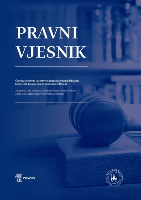
Pravni Vjesnik
Championing Accessible Legal Knowledge.Pravni Vjesnik is a peer-reviewed academic journal published by the Pravni Fakultet Sveučilišta Josipa Jurja Strossmayera & Osijek, primarily focusing on the field of law within the social sciences. Since transitioning to an Open Access model in 2016, the journal has broadened its accessibility, allowing researchers, professionals, and students to engage with diverse legal scholarship without subscription barriers. With an ISSN of 0352-5317 and an E-ISSN of 1849-0840, Pravni Vjesnik plays a crucial role in disseminating knowledge and fostering discourse in the legal community, particularly within the context of the Croatian legal system and broader European legal frameworks. Although it holds a rank of #760 out of 1025 in the Scopus database, placing it in the 25th percentile of law journals, its commitment to quality and relevance ensures its importance as a resource for rigorous academic inquiry. The journal's scope is anticipated to expand from 2019 to 2024, promoting ongoing research in contemporary legal issues. This dedication to publishing comprehensive and impactful studies makes Pravni Vjesnik an essential platform for those involved in the legal field.

QUEENS LAW JOURNAL
Advancing Legal Scholarship with IntegrityQUEENS LAW JOURNAL is a prestigious legal journal published by Queen's University, Faculty of Law, located in Kingston, Ontario, Canada. With its ISSN 0316-778X, the journal serves as a key platform for academic discourse and research in the field of law, encompassing various disciplines such as criminal law, constitutional law, and international law. Although currently not available as Open Access, the QUEENS LAW JOURNAL maintains a strong reputation for publishing impactful research, making it a vital resource for legal scholars, practitioners, and students alike. By fostering an environment for innovative legal theories and critical analyses, the journal plays an essential role in advancing legal scholarship and promoting informed discussions on pertinent legal issues. Emphasizing quality and rigor, the QUEENS LAW JOURNAL is a valuable addition to any academic library and serves as a trusted reference for those engaged in the legal profession.