Waste Management
metrics 2024
Exploring cutting-edge methodologies in waste management.
Introduction
Waste Management, published by Pergamon-Elsevier Science Ltd, stands as a premier journal in the field of waste management and disposal, reflecting its esteemed position with an impressive 2023 impact factor and ranking in the Q1 category. This journal is pivotal for researchers, professionals, and students, offering a rich repository of innovative studies and methodologies aimed at addressing the increasingly critical challenges in waste management. With a dedicated focus on advancing knowledge and practice in environmental science, it encompasses a wide array of topics from waste reduction techniques to sustainable disposal strategies. Founded in 1983, Waste Management continues to be at the forefront of academic discourse, providing invaluable insights into both theoretical frameworks and practical applications, thus playing a vital role in shaping the future of waste disposal practices worldwide.
Metrics 2024
 1.737.107.90220
Metrics History
Rank 2024
Scopus
IF (Web Of Science)
JCI (Web Of Science)
Quartile History
Similar Journals
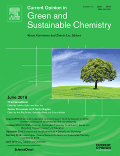
Current Opinion in Green and Sustainable Chemistry
Leading the Charge in Green Chemistry InnovationCurrent Opinion in Green and Sustainable Chemistry, published by Elsevier, is a premier journal dedicated to exploring the rapidly evolving field of green and sustainable practices in chemistry. With an impressive Q1 ranking in multiple categories, including Catalysis, Process Chemistry and Technology, and Waste Management, this journal plays a pivotal role in disseminating innovative research by providing critical insights into sustainable methodologies and their implementation across various industries. The journal aims to gather leading perspectives from experts to facilitate knowledge exchange that drives the global transition towards more sustainable chemical practices. Based in the Netherlands, Current Opinion in Green and Sustainable Chemistry emphasizes high impact, evidenced by its Scopus ranks, notably achieving the 10th percentile in Environmental Science Management, making it indispensable for researchers and professionals keen on advancing sustainable chemistry solutions. This journal offers a blend of open access articles and subscription-based content, ensuring a wide reach and engagement with its audience.
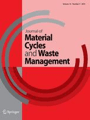
Journal of Material Cycles and Waste Management
Shaping the Future of Material SustainabilityThe Journal of Material Cycles and Waste Management, published by Springer, stands as a pivotal resource in the fields of material cycles and waste management, addressing critical challenges related to the sustainability of materials and the efficient disposal of waste. With an impact factor reflective of its significant contribution to the scientific community, this journal publishes innovative research that spans a diverse range of topics, from recycling technologies to lifecycle assessment. The journal ranks in the Q2 category for both Mechanics of Materials and Waste Management and Disposal, highlighting its respected position in academia. Operating without open access, the journal seeks to engage researchers, professionals, and students alike, providing a platform to advance knowledge and foster collaboration in the pursuit of sustainable material management solutions. Located in Japan and adhering to a high standard of editorial excellence, the journal is a must-read for those invested in optimizing resource use and minimizing environmental impacts.
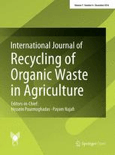
International Journal Of Recycling of Organic Waste in Agriculture
Transforming Waste into Agricultural GoldInternational Journal of Recycling of Organic Waste in Agriculture is a pioneering open-access journal, established in 2012 and published by the Islamic Azad University, Isfahan-Khorasgan Branch, Iran. With ISSN 2195-3228 and E-ISSN 2251-7715, this journal focuses on innovative research and development in the field of organic waste recycling within agricultural contexts. As indicated by its latest metrics, it holds a respectable ranking in the Q2 quartile in Agricultural and Biological Sciences and Q3 in Waste Management and Disposal for 2023. This positions the journal as a valuable resource for professionals, researchers, and students invested in sustainable agricultural practices and waste management strategies. With its commitment to advancing knowledge and fostering interdisciplinary dialogue, the journal serves as an essential platform for disseminating significant findings that can positively impact environmental sustainability and agricultural productivity worldwide.
JOURNAL OF THE AIR & WASTE MANAGEMENT ASSOCIATION
Empowering Researchers to Tackle Global Environmental ChallengesJOURNAL OF THE AIR & WASTE MANAGEMENT ASSOCIATION is a leading publication in the fields of environmental science, pollution control, and waste management, published by Taylor & Francis Inc in the United Kingdom. With an impressive history of publication dating back to 1989 and a commitment to advancing knowledge and practice in these critical areas, this journal serves as a valuable resource for researchers, professionals, and students alike. It holds a 2023 impact factor reflected through its competitive rankings in four distinct categories: Q3 in Atmospheric Science and Q2 in Management, Monitoring, Policy and Law, Pollution, and Waste Management and Disposal. The journal's dedication to disseminating innovative research and best practices plays a vital role in enhancing environmental policies and strategies globally. Although not currently Open Access, the journal is accessible through its ISSN 1096-2247 and E-ISSN 2162-2906, providing opportunities for rich academic discussion and collaboration in addressing pressing environmental challenges.
Resources Conservation & Recycling Advances
Leading the way in sustainable practices and waste management.Welcome to Resources Conservation & Recycling Advances, an influential open-access journal published by Elsevier since its inception in 2021. With an ISSN of 2667-3789, this journal serves as a vital platform for disseminating cutting-edge research in the fields of economics, waste management, and environmental science. Recognized for its high impact, it proudly holds a Q1 ranking in both Economics and Econometrics as well as Waste Management and Disposal, highlighting its significance within these critical categories. The journal aims to advance understanding and innovation in resource conservation and recycling practices, making it an essential resource for researchers, professionals, and students dedicated to sustainability. With its current Scopus rankings placing it in the top percentiles—34th out of 716 in Economics and Econometrics and 21st out of 134 in Waste Management—Resources Conservation & Recycling Advances continues to contribute to meaningful discussions and developments in the pursuit of a more sustainable future.
Journal of Hazardous Materials Advances
Leading the charge in hazardous materials research.The Journal of Hazardous Materials Advances, published by ELSEVIER, is a premier open-access journal dedicated to advancing the understanding and management of hazardous materials. Established in 2021, this journal has quickly gained recognition, securing a place in the prestigious Q1 quartile across multiple categories, including Environmental Chemistry, Environmental Engineering, Health, Toxicology and Mutagenesis, Pollution, and Waste Management and Disposal. With its impactful research indexed under ISSN 2772-4166, the journal not only prioritizes quality but also promotes accessibility to its scholarly outputs, ensuring that vital findings are readily available to the global research community. As part of Scopus, the Journal ranks competitively in various subfields of Environmental Science, reflecting its vital role in addressing contemporary environmental challenges. Researchers, professionals, and students can rely on this journal to provide innovative insights and solutions in the ever-evolving landscape of hazardous material management and its implications for public health and environmental sustainability.
International Journal of Environment and Waste Management
Advancing Practices for a Cleaner PlanetThe International Journal of Environment and Waste Management, published by InderScience Enterprises Ltd, serves as a vital platform for researchers and professionals in the fields of Environmental Engineering and Waste Management. With an ISSN of 1478-9876 and an E-ISSN of 1478-9868, this journal encompasses a wide range of topics from innovative technologies in waste processing to sustainable environmental practices. Ranked in the Q3 category for Environmental Engineering and Q4 for Waste Management and Disposal in 2023, it holds significance in advancing knowledge and impacting practices in these essential domains. The journal accepts articles that contribute to the understanding and development of effective waste management strategies, ensuring alignment with contemporary environmental challenges. As it converges years from 2006 to 2024, it continues to attract contributions that reflect the latest research and methodologies. For scholars, students, and practitioners alike, this journal is an invaluable resource, enriching the dialogue around environmental sustainability and waste minimization.
REVIEWS IN ENVIRONMENTAL SCIENCE AND BIO-TECHNOLOGY
Empowering Researchers with Cutting-Edge Environmental KnowledgeREVIEWS IN ENVIRONMENTAL SCIENCE AND BIO-TECHNOLOGY is a leading academic journal published by Springer, focusing on the interdisciplinary study and advancement of environmental science and biotechnological applications. With an impressive impact factor that places it in the top quartile of its categories, this journal has consistently ranked highly (Q1) in vital fields such as Applied Microbiology and Biotechnology, Environmental Engineering, Pollution, and Waste Management and Disposal, reflecting its significant contribution to these domains. Established in 2002 and continuing to publish cutting-edge research, the journal primarily caters to researchers, professionals, and students who seek to stay abreast of the latest findings and methodologies in environmental sustainability and biotechnological innovations. While it does not currently offer open-access options, subscribers have access to a wealth of comprehensive reviews and original articles that explore the ever-evolving challenges and solutions in environmental science. Located in the Netherlands, REVIEWS IN ENVIRONMENTAL SCIENCE AND BIO-TECHNOLOGY is instrumental in bridging the gap between scientific research and practical application, promoting a collaborative approach to addressing global environmental issues.
RESOURCES CONSERVATION AND RECYCLING
Exploring the intersection of economics and environmental stewardship.RESOURCES CONSERVATION AND RECYCLING, published by Elsevier, is an esteemed journal that has been at the forefront of academic discourse since its inception in 1988. Focusing on the critical fields of resource management, recycling, and sustainability, this journal has established itself as a leading platform for innovative research, holding a prestigious position in the Q1 quartile for both Economics and Econometrics, and Waste Management and Disposal. With a remarkable Scopus ranking of #4 in its respective categories, it represents the pinnacle of scholarly contributions, aimed at fostering knowledge that drives efficient resource utilization and effective waste management practices. The journal's commitment to advancing the understanding of economic implications and environmental impacts of resource conservation is reflected in its diverse array of articles, case studies, and reviews. Although it is not an open-access journal, the valuable insights it offers are essential for researchers, professionals, and students who are dedicated to addressing pressing environmental challenges and enhancing sustainable practices on a global scale.
Environment Protection Engineering
Transforming Waste Challenges into Sustainable OpportunitiesEnvironment Protection Engineering is a peer-reviewed academic journal published by Technical University of Wroclaw, dedicated to advancing knowledge and research in the fields of environmental engineering and waste management. With a rich publishing history dating back to 1980, the journal encompasses a wide spectrum of topics, from innovative engineering solutions to the effective management of waste, promoting sustainable practices and environmental protection methodologies. Despite its recent classification in the Q4 quartile of both Environmental Engineering and Waste Management and Disposal, the journal serves as a critical platform for researchers, professionals, and students seeking to disseminate their findings and engage with current challenges faced in environmental science. Located in Poland, the journal supports the scholarly community by providing insightful articles that contribute to the discourse surrounding environmental sustainability. Though currently not available as an open-access publication, it remains an essential resource for those aspiring to deepen their understanding of pressing ecological issues and solutions.