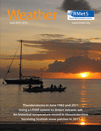
Weather
metrics 2024
Charting New Paths in Climate Research
Introduction
Weather is a prestigious academic journal published by WILEY, specializing in the field of Atmospheric Science. Since its inception in 1946, the journal has emerged as a key resource for researchers, professionals, and students seeking to deepen their understanding of meteorological phenomena and climate dynamics. Weather is recognized for its robust impact within the scientific community, boasting a 2023 Scopus ranking of 96 out of 148 in the Earth and Planetary Sciences category, placing it comfortably within the Q2 category. Although it does not offer open access options, the journal is committed to publishing high-quality, peer-reviewed articles that advance the knowledge base of atmospheric sciences up to 2024. Through its diverse range of research, reviews, and case studies, Weather continues to play a vital role in facilitating discussions and discoveries in this essential field of study.
Metrics 2024
 0.652.301.9046
Metrics History
Rank 2024
Scopus
IF (Web Of Science)
JCI (Web Of Science)
Quartile History
Similar Journals
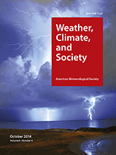
Weather Climate and Society
Connecting Climate Change with Human BehaviorWeather Climate and Society, published by the American Meteorological Society, serves as a leading journal in the interdisciplinary intersection of atmospheric sciences and social sciences. With an ISSN of 1948-8327 and an E-ISSN of 1948-8335, this journal emphasizes the impacts of weather and climate on societal dynamics. Since its inception in 2009, it has gained recognition for its scholarly contributions, achieving a respectable Q3 ranking in Atmospheric Science and Global and Planetary Change, and a notable Q2 ranking in Social Sciences (miscellaneous) as of 2023. Located in the heart of Boston, Massachusetts, the journal is committed to fostering a comprehensive understanding of how climatic factors influence human behavior and decision-making. With access options available for researchers and institutions, Weather Climate and Society is an essential resource for academics and professionals dedicated to exploring the critical interplay between weather, climate, and societal frameworks.

Weather and Climate Dynamics
Decoding Climate Patterns for a Sustainable FutureWeather and Climate Dynamics, an esteemed journal published by COPERNICUS GESELLSCHAFT MBH, focuses on the intricate relationships and processes governing climate and weather patterns, advancing our understanding of atmospheric sciences. Since its launch in 2020, this Open Access journal has rapidly gained recognition, achieving a commendable Q1 status in Atmospheric Science and ranking 39th out of 148 journals in the Earth and Planetary Sciences category, placing it in the 73rd percentile. Based in Germany, the journal aims to provide a platform for innovative research, sharing crucial findings that contribute to tackling global climate challenges. Researchers, professionals, and students alike are encouraged to explore the wealth of knowledge contained within its pages, as it continues to shape the discourse on weather and climate dynamics through rigorous and impactful scholarship.

Atmospheric Science Letters
Unlocking the secrets of the Earth's atmosphere.Atmospheric Science Letters, published by WILEY, is a leading open-access journal in the field of Atmospheric Science. Since its establishment in 2000, it has significantly contributed to advancing knowledge related to the Earth's atmosphere, focusing on both theoretical and practical aspects. With an impressive Q2 ranking in the Atmosphere Science category as of 2023 and a Scopus rank of 62 out of 148, this journal provides a platform for researchers and professionals to share their findings and insights. The journal’s commitment to open access since 2016 ensures that cutting-edge research is accessible to a global audience, fostering collaboration and innovation in the atmospheric sciences. Addressed from its headquarters at 111 River St, Hoboken, NJ, USA, Atmospheric Science Letters is pivotal for students, researchers, and professionals seeking to stay abreast of the latest developments in this dynamic field.
MONTHLY WEATHER REVIEW
Illuminating the Science of Weather and ClimateMONTHLY WEATHER REVIEW, published by the American Meteorological Society, is a leading journal in the field of atmospheric science, recognized for its rigorous peer-reviewed articles that contribute significantly to the understanding of weather patterns and climate systems. With an impressive Q1 ranking in the 2023 category quartiles and a strong standing (#41 out of 148) in the Earth and Planetary Sciences Scopus rankings, the journal serves as an essential resource for researchers, professionals, and students alike. Although it does not currently offer open access, its comprehensive coverage of meteorological research spanning from 1960 to 2024 makes it invaluable for those seeking to stay at the forefront of developments in weather analysis and prediction. Situated in Boston, Massachusetts, this journal not only showcases pioneering research but also emphasizes the importance of collaborative efforts in the meteorological community, ultimately contributing to advancements in our understanding of atmospheric phenomena.
SOLAR PHYSICS
Exploring the Sun: A Beacon of Knowledge in AstronomySOLAR PHYSICS, published by SPRINGER, serves as a pivotal platform for the dissemination of groundbreaking research in the fields of Astronomy and Astrophysics, as well as Space and Planetary Science. With an impressive impact factor and ranked Q2 in both categories as of 2023, this esteemed journal has become integral for scholars seeking to advance their knowledge in solar phenomena and related disciplines. Originating from the Netherlands and converging from 1967 to 2024, SOLAR PHYSICS features a diverse array of articles, from observational studies to theoretical analyses, contributing significantly to our understanding of solar activity and its influence on the heliosphere and beyond. Researchers, professionals, and students alike will find this journal an indispensable resource for current trends and comprehensive insights in solar research.

Atmosphere-Korea
Unveiling the Secrets of Climate and WeatherAtmosphere-Korea is a prestigious journal published by the Korean Meteorological Society, dedicated to advancing the field of atmospheric sciences. With a focus on both theoretical and applied research, this journal encompasses a wide range of topics including meteorology, climatology, and environmental science, providing a platform for researchers to disseminate their findings and enhance scientific dialogue. Although currently not categorized under an open access model, the journal ensures that all articles meet rigorous scientific standards, thereby maintaining its credibility and academic integrity. The ISSN 1598-3560 and E-ISSN 2288-3266 identify its unique contributions to global knowledge in meteorology. Researchers, professionals, and students alike benefit from the invaluable insights offered through its publications, making Atmosphere-Korea an essential resource in understanding climatic phenomena and their implications for society.
WEATHER AND FORECASTING
Innovating Forecasting Techniques for TomorrowWeather and Forecasting is a premier journal published by the American Meteorological Society, focusing on cutting-edge research in the field of atmospheric science. With its ISSN 0882-8156 and E-ISSN 1520-0434, the journal has distinguished itself within the scientific community, holding a Q1 ranking in Atmospheric Science for 2023 and ranking #56 out of 148 in the Scopus Earth and Planetary Sciences category, demonstrating its influence and high-quality content. Since its inception in 1992, Weather and Forecasting has been dedicated to advancing knowledge in meteorology through rigorous peer-reviewed articles that span a wide range of topics—from numerical weather prediction to climate impacts and atmospheric dynamics. While the journal is not open access, it remains accessible to a broad audience through institutional subscriptions, reinforcing its role as a vital resource for researchers, practitioners, and students alike. With a commitment to excellence in scholarship and a vision towards the future, this journal plays a significant role in shaping the understanding of weather phenomena and forecasting methodologies.
METEOROLOGY AND ATMOSPHERIC PHYSICS
Innovating Insights into Weather PhenomenaMETEOROLOGY AND ATMOSPHERIC PHYSICS is a premier journal published by SPRINGER WIEN, dedicated to advancing the study of atmospheric phenomena and weather-related sciences. With an ISSN of 0177-7971 and an E-ISSN of 1436-5065, the journal has established itself as an important contributor in the field, particularly noted for its contributions in atmospheric science, holding a Q3 ranking in the 2023 category quartiles. Covering a wide array of topics from meteorological modeling to the physics of the atmosphere, it serves researchers, professionals, and students alike, facilitating the dissemination of significant findings and innovative research. The journal’s acceptance of articles until 2024 encourages a continuous influx of knowledge, and despite its lack of Open Access, it plays a crucial role in enriching the academic landscape for those engaged in Earth and planetary sciences, holding a commendable rank of 78 out of 148 in Scopus. Located in the scenic city of Vienna, Austria, the journal is positioned to harness the vibrancy of the academic community, providing a platform for valuable insights that can drive forward the field of meteorology and atmospheric physics.
JOURNAL OF GEOPHYSICAL RESEARCH-SPACE PHYSICS
Illuminating the Dynamics of Our Planetary EnvironmentJOURNAL OF GEOPHYSICAL RESEARCH-SPACE PHYSICS, published by the American Geophysical Union, stands as a pivotal academic platform dedicated to the dissemination of cutting-edge research in the fields of geophysics and space physics. With an impressive impact factor and recognition as a Q1 journal in Geophysics and Q2 in Space and Planetary Science as of 2023, this journal offers an esteemed venue for researchers seeking to publish high-quality studies that advance our understanding of the interactions between the Earth and space environment. The journal features comprehensive coverage of topics spanning from the ionosphere to magnetosphere, facilitating insights critical for both academic and applied sciences. Researchers, professionals, and students will find that this journal not only presents rigorous peer-reviewed articles but also encourages the accessibility of scientific knowledge, enhancing collaboration across disciplines. With its dedicated readership and influence in the scientific community, JOURNAL OF GEOPHYSICAL RESEARCH-SPACE PHYSICS plays an essential role in fostering innovations within these dynamic fields.
TELLUS SERIES A-DYNAMIC METEOROLOGY AND OCEANOGRAPHY
Connecting Oceans and Atmospheres: Where Science Meets InsightTELLUS SERIES A-DYNAMIC METEOROLOGY AND OCEANOGRAPHY, published by Stockholm University Press, is a prestigious open-access journal that has been at the forefront of research in the fields of atmospheric science and oceanography since its inception in 1983. With an enduring commitment to disseminating high-quality, peer-reviewed research, the journal has achieved a commendable impact factor, securing its position in the Q2 category for both Atmospheric Science and Oceanography as of 2023. The journal's significant reach is reflected in its Scopus rankings, being positioned at Rank #51 in Oceanography and Rank #77 in Atmospheric Science. With open access established since 2012, TELLUS SERIES A serves not only as a vital resource for researchers and professionals in these dynamic fields but also as an inclusive platform for budding scholars and students. Engaging with this journal allows readers to stay updated on the latest developments and groundbreaking discoveries that advance our understanding of climate systems and marine environments. Its editorial ethos emphasizes the cross-disciplinary integration of atmospheric and oceanographic studies, making it an essential publication for anyone invested in environmental research and policy.