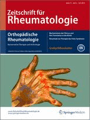
ZEITSCHRIFT FUR RHEUMATOLOGIE
Scope & Guideline
Empowering research and practice in rheumatic disease management.
Introduction
Aims and Scopes
- Clinical Research in Rheumatology:
The journal publishes original research on various rheumatic conditions, emphasizing clinical trials, treatment efficacy, and patient outcomes. - Interdisciplinary Approaches:
There is a strong focus on collaborative research involving rheumatologists, physiotherapists, and other healthcare professionals to enhance patient care and treatment strategies. - Innovative Treatment Modalities:
Papers often explore new therapeutic options, including biologics, JAK inhibitors, and multimodal treatment approaches, reflecting the evolving landscape of rheumatology. - Patient-Centered Research:
Research emphasizing patient-reported outcomes, quality of life assessments, and shared decision-making in treatment plans is a key area of focus. - Epidemiology and Public Health:
The journal includes studies on the prevalence, incidence, and healthcare utilization related to rheumatic diseases, contributing to better healthcare policy and resource allocation. - Education and Guidelines:
The dissemination of clinical guidelines and educational resources for rheumatologists is crucial, aiming to standardize practices and improve care across settings.
Trending and Emerging
- Digital Health and Telemedicine:
There is a significant increase in research focusing on digital health applications, telemedicine, and the use of technology in patient care, reflecting the impact of recent global health challenges. - Multimodal Treatment Approaches:
Papers exploring comprehensive treatment strategies that combine pharmacological, physical, and psychological therapies are on the rise, highlighting a holistic view of patient care. - Autoimmune and Autoinflammatory Diseases:
Research into autoimmune conditions, particularly the intersection of these diseases with other health issues like infections and cancer, is gaining prominence. - Personalized Medicine:
The trend towards personalized treatment strategies based on genetic, environmental, and lifestyle factors is emerging, indicating a shift towards more tailored therapeutic interventions. - Mental Health in Rheumatology:
Increased attention is being paid to the psychological aspects of chronic rheumatic diseases, with studies focusing on the interplay between mental health and physical symptoms. - Health Inequities and Social Determinants:
Emerging research is addressing the impact of social determinants of health on rheumatic disease outcomes, emphasizing the need for equitable healthcare access.
Declining or Waning
- Complementary and Alternative Medicine:
Interest in complementary therapies and alternative medicine approaches in rheumatology has decreased, with fewer papers exploring these topics compared to previous years. - Historical Perspectives on Rheumatic Diseases:
There is a waning focus on historical analyses or retrospective studies that document the evolution of rheumatologic care, indicating a shift toward contemporary issues and future directions. - Case Reports and Rare Conditions:
The publication of isolated case reports, particularly for rare rheumatic diseases, appears to be less frequent, possibly due to a preference for larger cohort studies and systematic reviews. - Traditional Imaging Techniques:
The emphasis on conventional imaging methods, such as X-rays and standard MRI techniques, is declining as advanced imaging modalities gain traction. - Surgical Interventions:
Discussion surrounding surgical treatments for rheumatic conditions is less prevalent, suggesting a move towards non-invasive management strategies.
Similar Journals
RMD Open
Unlocking insights for a healthier tomorrow.RMD Open, published by the BMJ Publishing Group, is a leading open-access journal that has made significant contributions to the fields of Immunology, Immunology and Allergy, and Rheumatology since its inception in 2015. With an impressive Q1 ranking in these categories for 2023, the journal has established itself as an essential platform for the dissemination of high-quality research, case studies, and reviews that advance understanding and treatment strategies in these critical areas of health. As an open-access publication, RMD Open ensures that its content is freely accessible to a global audience, promoting collaboration and knowledge sharing among researchers, clinicians, and students. Based in the United Kingdom at the British Medical Association House, RMD Open is not only dedicated to improving patient care but also to fostering innovative research and discussions in the rapidly evolving landscape of rheumatic diseases.
RHEUMATOLOGY INTERNATIONAL
Exploring the forefront of rheumatology research.Rheumatology International, published by Springer Heidelberg, is a prestigious journal that focuses on innovative research in the field of rheumatology and immunology. Established in 1981, this peer-reviewed journal has contributed significantly to advancing our understanding of autoimmune disorders, clinical approaches, and therapeutic interventions. It holds a commendable Q2 ranking in the categories of Immunology, Immunology and Allergy, and Rheumatology as of 2023, showcasing its influence and importance within these disciplines. With a robust Scopus ranking—positioned 14 out of 73 in Medicine Rheumatology—it caters to a diverse audience of researchers, clinicians, and students committed to improving patient care and treatment modalities. Although it does not currently offer open access options, the journal remains a vital resource for insights on contemporary challenges and breakthroughs in rheumatological research, published from its base in Heidelberg, Germany.
Reumatologia
Fostering collaboration in the fields of Immunology and Rheumatology.Reumatologia is a dedicated open-access journal published by TERMEDIA PUBLISHING HOUSE LTD that has been serving the global scientific community since 2005. The journal focuses on the fields of Rheumatology, Immunology, and Allergy, providing a rich platform for researchers and practitioners to share innovative findings, clinical insights, and methodologies. With its roots tracing back to the early 1960s and a steady convergence of quality content through 2024, Reumatologia has secured a place in the academic landscape, currently holding a Q4 rating in Immunology and a Q3 rating in both Immunology and Allergy and Rheumatology categories for 2023. While the journal ranks #42 out of 73 in the Medicine - Rheumatology category, its open-access model ensures that research is widely disseminated, enhancing visibility and accessibility to vital knowledge that shapes therapeutic practices. Located in Poznan, Poland, Reumatologia remains a pivotal source of credible research, fostering collaboration among academics, healthcare professionals, and students internationally.
Advances in Rheumatology
To innovate, educate, and transform rheumatology.Advances in Rheumatology is a premier open-access journal published by BMC, dedicated to advancing the field of rheumatology through high-quality, peer-reviewed research. Launched in 2018, the journal has quickly established itself within the academic community, achieving a commendable Q2 ranking in the category of Rheumatology as of 2023 and ranking #34 out of 73 in the Scopus Medicine Rheumatology listings, placing it in the 54th percentile. With a focus on innovative treatments, patient care, and the latest in rheumatological research, the journal provides a platform for researchers and clinicians to disseminate their findings and foster collaborative advancements in this critical area of medicine. Recognized for its accessibility, the journal follows an open-access model, ensuring that research is freely available to a global audience. With a commitment to high standards of academic rigor, Advances in Rheumatology plays a vital role in enhancing the understanding and treatment of rheumatic diseases, making it an invaluable resource for researchers, professionals, and students alike.
SCANDINAVIAN JOURNAL OF RHEUMATOLOGY
Exploring New Horizons in Rheumatology ScienceThe Scandinavian Journal of Rheumatology, published by Taylor & Francis Ltd, is a prestigious peer-reviewed journal dedicated to advancing research in the fields of rheumatology, immunology, and related disciplines. With an ISSN of 0300-9742 and an E-ISSN of 1502-7732, this journal has established itself as a vital platform for disseminating significant findings and innovative approaches in the management of rheumatic diseases since its inception in 1959. As a recognized scholarly outlet, it currently resides within the Q2 category for Medicine (miscellaneous) and ranks #39 out of 73 in Rheumatology according to the 2023 Scopus assessments. This reflects the journal's commitment to high-quality research and its relevance in the scientific community. Although it does not provide Open Access options, the journal's rigorous selection process ensures that only the most impactful research reaches its audience, making it a crucial resource for researchers, clinicians, and students engaged in the exploration of rheumatological and immunological challenges. The journal's broad scope encompasses ongoing studies, clinical trials, and reviews that aim to enhance understanding and treatment of rheumatic conditions, promoting collaboration and knowledge-sharing among professionals in the field.
International Journal of Rheumatic Diseases
Illuminating the complexities of rheumatic diseases.The International Journal of Rheumatic Diseases, published by WILEY, serves as a crucial platform for disseminating high-quality research and advancements in the field of rheumatology. With an ISSN of 1756-1841 and an E-ISSN of 1756-185X, this journal has established itself within the academic community since its inception in 2008, and it is set to continue until at least 2024. Positioned in the Q3 category of rheumatology, the journal holds a significant rank of #38 out of 73 in its field according to Scopus, showcasing its growing influence despite the competitive environment. The absence of Open Access reflects a traditional scholarly publishing model, allowing for meticulous peer-review processes to ensure the rigor and reliability of published studies. This journal aims to foster innovative research, critical reviews, and clinical studies, thereby contributing to a deeper understanding of rheumatic diseases and enhancing patient care. The dedicated readership, including researchers, healthcare professionals, and students, will find valuable insights into the latest findings and methodologies relevant to rheumatology in the journal's comprehensive articles.

Journal of Rheumatic Diseases
Innovating research and practice in rheumatic diseases.Journal of Rheumatic Diseases, published by the Korean College of Rheumatology, stands as a pivotal platform in the field of rheumatology, contributing significantly to the advancement of knowledge and clinical practice since its inception. With an impact factor reflecting its esteemed position in the academic community, this open-access journal promotes accessibility to high-quality research, ensuring that groundbreaking discoveries are reachable to all stakeholders in the realm of rheumatic diseases. The journal has maintained its commitment to quality, evidenced by its ranking in the Q3 category for Rheumatology in 2023, and its presence among the top quartiles of medical research. Focusing on innovative therapeutic approaches, emerging diagnostic techniques, and comprehensive reviews, the Journal of Rheumatic Diseases seeks to foster collaboration and dialogue among researchers, clinicians, and students alike. For accessibility, the journal offers numerous articles since its transition to open access in 2017, thereby facilitating research dissemination across the globe. As it converges over the years from 2019 to 2024, the journal promises to be instrumental in shaping the future of rheumatic disease research, inviting contributions that inspire new frontiers in this essential field.

Rheumatology Advances in Practice
Bridging research and practice for better patient outcomes.Rheumatology Advances in Practice, published by Oxford University Press, is a vital open-access journal dedicated to advancing research and education in the field of rheumatology. With an E-ISSN of 2514-1775 and an impressive open access model established since 2017, this journal facilitates the dissemination of cutting-edge knowledge and innovative practices to a global audience. It has garnered recognition within the academic community, holding a Q3 classification in Rheumatology for 2023, which reflects its contribution to the evolving landscape of rheumatological research. The journal aims to present high-quality, peer-reviewed articles that explore the latest findings, advancements, and clinical applications in rheumatology, making it an essential resource for researchers, healthcare professionals, and students alike. By bridging the gap between research and practice, Rheumatology Advances in Practice plays a significant role in improving the care of patients with rheumatological conditions, promoting evidence-based approaches to clinical challenges.
ANNALS OF THE RHEUMATIC DISEASES
Pioneering Insights in Immunology and GeneticsANNALS OF THE RHEUMATIC DISEASES, published by BMJ Publishing Group, stands as a leading academic journal in the realm of rheumatology and related fields, including biochemistry, immunology, and genetics. With an esteemed impact factor and a consistent ranking in the upper echelons of its category (Q1) as per the latest evaluations, this journal represents the forefront of research and innovation, fostering scientific advancement from 1945 to the present. As the top journal in the Medicine - Rheumatology category and achieving remarkable percentiles in various interdisciplinary categories, it serves as a critical platform for researchers, clinicians, and students dedicated to understanding and addressing rheumatic diseases. Although it does not currently offer open access, its rigorous peer-review process ensures the dissemination of high-quality research findings that are paramount in enhancing clinical practices and advancing scientific discourse. Readers can expect to be challenged and inspired by the breadth of studies and reviews that address the complexities of rheumatology and its intersecting scientific domains.
ACR Open Rheumatology
Unleashing the potential of open research in rheumatology.ACR Open Rheumatology, published by WILEY, is a premier open-access journal dedicated to advancing the field of rheumatology. Since its inception in 2019, this journal has rapidly gained recognition, achieving a Q1 category ranking in the 2023 Scopus Quartiles, positioning it among the top 30% within its discipline. With a current Scopus rank of 22 out of 73 in Medicine - Rheumatology and an impressive 70th percentile, ACR Open Rheumatology serves as a vital platform for researchers and clinicians to disseminate knowledge on the latest developments in rheumatic diseases and treatments. The journal promotes unrestricted access to cutting-edge research, thus fostering collaboration and innovation in the rheumatological community. Situated in the United States, it caters to a global audience, encouraging submissions from researchers worldwide and addressing critical health issues that affect millions. We invite professionals, students, and researchers alike to engage with the transformative findings published in our journal.