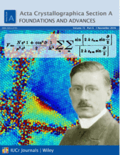
Acta Crystallographica A-Foundation and Advances
metrics 2024
Catalyzing interdisciplinary dialogue in the realm of crystal sciences.
Introduction
Acta Crystallographica A-Foundation and Advances is a leading journal in the field of crystallography, published by the International Union of Crystallography. This esteemed journal, with an ISSN of 2053-2733, offers a platform for the dissemination of high-quality research, featuring advances in the study of crystallographic methodologies and their applications across various disciplines. Although it does not provide open access, its rigorous peer-review process ensures that only the most impactful and innovative research reaches its audience. With a notable presence in the academic realm, the journal is categorized as Q3 in Biochemistry and Q2 in numerous physical sciences categories, including Condensed Matter Physics, Inorganic Chemistry, and Materials Science. This diversity underscores its importance in facilitating interdisciplinary communication and cooperation among researchers. In 2023, the journal demonstrated its commitment to excellence through fluctuations in its Scopus rankings, reflecting the evolving landscape of scientific research. Researchers, professionals, and students alike are encouraged to engage with this invaluable resource, as it plays a crucial role in advancing both theoretical and practical knowledge within the crystal sciences.
Metrics 2024
 0.541.902.1090
Metrics History
Rank 2024
Scopus
IF (Web Of Science)
JCI (Web Of Science)
Quartile History
Similar Journals
CRYSTAL RESEARCH AND TECHNOLOGY
Exploring Innovations in Crystal ScienceCRYSTAL RESEARCH AND TECHNOLOGY, published by WILEY-V C H VERLAG GMBH, is a distinguished journal in the fields of Chemistry, Condensed Matter Physics, and Materials Science, with over five decades of continuous publication from 1966 to 2024. With its ISSN 0232-1300 and E-ISSN 1521-4079, the journal serves as a crucial platform for disseminating significant research findings, theoretical advances, and technological innovations related to crystal growth, structure, and properties. Holding a Category Quartile ranking of Q3 in the 2023 assessments across its disciplines, CRYSTAL RESEARCH AND TECHNOLOGY is recognized for its contribution to the scientific community, making it an essential resource for researchers, professionals, and students alike. While this journal is not open access, its robust publishing framework ensures that high-quality peer-reviewed articles remain accessible to a global audience. The importance of this journal lies in its commitment to advancing knowledge and fostering collaborations in crystallography and related fields.
TRANSITION METAL CHEMISTRY
Navigating the Evolving Landscape of Transition MetalsTransition Metal Chemistry is a distinguished journal published by Springer, focusing on the latest advancements in the field of inorganic chemistry, materials science, and metals and alloys. With an impressive publication history dating back to 1975, this journal serves as an essential platform for researchers and professionals seeking to explore the complexities and innovations in transition metal chemistry. Transition Metal Chemistry holds a Q4 ranking in Inorganic Chemistry and positions itself in Q3 within both Materials Chemistry and Metals and Alloys categories, highlighting its evolving influence in these domains. With a Scopus ranking of #41 in Inorganic Chemistry and #56 in Materials Science, it provides readers with valuable insights into research trends and discoveries. Although it does not offer open access, its rigorous peer-review process ensures that only the most impactful and validated studies are published. By bridging theoretical concepts and practical applications, Transition Metal Chemistry plays a pivotal role in advancing scientific knowledge, attracting a diverse audience of researchers, students, and industry professionals committed to unraveling the complexities of transition metals.

Crystals
Bridging Theory and Application in Materials ScienceCrystals is a premier open-access journal, published by MDPI since 2011, that focuses on the multidisciplinary fields of chemical engineering, condensed matter physics, inorganic chemistry, and materials science. With its E-ISSN 2073-4352, the journal is headquartered in Switzerland, and actively contributes to the global scientific community by facilitating the dissemination of high-quality research. Ranking in the Q2 quartile across multiple categories, including Chemical Engineering (miscellaneous) and Materials Science (miscellaneous) for 2023, Crystals provides a platform for innovative studies that span from fundamental research to practical applications. The journal's commitment to open access ensures that groundbreaking findings are readily available to researchers, professionals, and students alike, fostering an environment of collaboration and knowledge sharing that is essential in advancing the scientific understanding of crystalline materials.
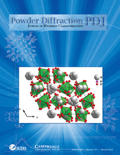
POWDER DIFFRACTION
Transforming Material Science with Cutting-Edge Diffraction InsightsPOWDER DIFFRACTION, published by Cambridge University Press, is a pivotal journal focused on the evolving field of powder diffraction, which is crucial for researchers in condensed matter physics, materials science, and radiation studies. Established in 1986, this journal emphasizes the latest methodological advancements and applications in powder diffraction techniques, making it a comprehensive resource for professionals and students alike. With an ISSN of 0885-7156 and an E-ISSN of 1945-7413, it offers valuable insights into the characterizations of crystalline materials. Although currently not open access, the journal is highly regarded for maintaining rigorous peer review standards, reflecting in its rankings within the lower quartiles of relevant fields according to Scopus. Positioned within the United States and with distribution through Cambridge University Press, POWDER DIFFRACTION aims to foster innovation and knowledge exchange among the global scientific community, thereby solidifying its role as an essential platform for disseminating research findings from 1986 through to 2024 and beyond.
Acta Crystallographica Section F-Structural Biology Communications
Elevating Knowledge in Structural Biology and BeyondActa Crystallographica Section F-Structural Biology Communications, published by the International Union of Crystallography, serves as a crucial platform for researchers in the field of structural biology. Established in 2014, this journal focuses on the dissemination of high-quality research regarding the crystallographic methods and structural analyses of biological macromolecules. Although currently positioned in various category quartiles including Q3 in Biochemistry, Biophysics, and Genetics, and even achieving Q2 in Condensed Matter Physics, the journal continually aims to enhance its influence and reach within the scientific community. The journal is an essential resource for professionals and students alike, providing insights into cutting-edge research and methodologies that can advance our understanding of complex biological systems. Accessibility is facilitated through robust online publishing platforms, although it remains beyond the open access model. Located in the United Kingdom, Acta Crystallographica Section F is dedicated to promoting the integrity of structural biology research and fostering a collaborative scholarly environment.
JOURNAL OF STRUCTURAL BIOLOGY
Exploring the Complexities of Life at the Molecular LevelJOURNAL OF STRUCTURAL BIOLOGY, published by Academic Press Inc. Elsevier Science, is a prestigious peer-reviewed journal dedicated to advancing the field of structural biology. With an impressive Impact Factor and recognized as a Q1 journal in its category for 2023, it holds a significant position in the academic community, ranked 20th out of 49 in the Scopus Biochemistry, Genetics and Molecular Biology - Structural Biology category. The journal publishes groundbreaking research that contributes to our understanding of biological macromolecules and their complexes, span from 1990 and continuing through 2024. Researchers and professionals alike rely on this journal for high-quality articles that cover a wide array of techniques including X-ray crystallography, NMR spectroscopy, and cryo-electron microscopy. Although it does not operate under an Open Access model, the journal remains a vital resource for those in academia and industry searching for the latest findings and methodologies in structural biology.
CRYSTALLOGRAPHY REPORTS
Unveiling Innovations in Materials ScienceCRYSTALLOGRAPHY REPORTS (ISSN: 1063-7745, E-ISSN: 1562-689X), published by PLEIADES PUBLISHING INC, is a pivotal journal in the fields of chemistry, condensed matter physics, and materials science. Established in 1996 and continuing through to 2024, it serves as a vital resource for researchers and professionals seeking to disseminate and engage with contemporary advancements in crystallography. While currently not classified as open access, the journal's rigorous peer-review process ensures the publication of high-quality research, making it a respected entity within the academic community. With a categorization in the Q4 quartile for its respective fields and notable Scopus rankings, CRYSTALLOGRAPHY REPORTS is committed to fostering an understanding of crystallographic techniques and their application across scientific disciplines. This journal is essential for those looking to stay abreast of the latest findings and methodologies in crystallography, providing a platform for impactful discussions and collaborations.

PROTEINS-STRUCTURE FUNCTION AND BIOINFORMATICS
Illuminating the Pathways of Protein SciencePROTEINS - STRUCTURE FUNCTION AND BIOINFORMATICS, published by WILEY, is a leading journal in the fields of biochemistry, molecular biology, and structural biology, recognized for its significant contribution to protein research since its inception in 1986. With its impressive rankings in the Q1 category for Biochemistry and Q2 for both Molecular Biology and Structural Biology in 2023, the journal serves as an essential resource for researchers and professionals seeking to explore the intricate relationships between protein structures and their functions. The journal, based in the United States, operates without an Open Access model, ensuring a curated selection of high-quality peer-reviewed articles that drive innovation and collaboration in the scientific community. Engaging with the robust content of PROTEINS not only bolsters academic scholarship but also opens avenues for groundbreaking discoveries that are pivotal in the advancing field of bioinformatics.
STRUCTURAL CHEMISTRY
Bridging Disciplines in Condensed Matter and ChemistrySTRUCTURAL CHEMISTRY is a premier journal published by SPRINGER/PLENUM PUBLISHERS, dedicated to advancing the study and understanding of the structural aspects of chemistry. With an ISSN of 1040-0400 and an E-ISSN of 1572-9001, this journal serves as a critical resource for researchers and professionals engaged in the fields of Condensed Matter Physics and Physical and Theoretical Chemistry. Since its inception in 1990, it has become an essential platform for disseminating high-quality research, featuring articles that explore innovative methodologies, experimental techniques, and theoretical frameworks. As evidenced by its Scopus rankings, including #192 in Condensed Matter Physics and #101 in Physical and Theoretical Chemistry, the journal occupies a respected position within the academic community, promoting interdisciplinary collaboration and insight. While it operates on a traditional subscription model, the journal continues to broaden its reach to foster knowledge exchange among scholars worldwide. With a commitment to excellence and relevance, STRUCTURAL CHEMISTRY remains a vital contributor to the scientific dialogue surrounding chemical structure and its myriad implications across various scientific disciplines.
ZEITSCHRIFT FUR ANORGANISCHE UND ALLGEMEINE CHEMIE
Bridging Historical Knowledge with Modern DiscoveriesZEITSCHRIFT FUR ANORGANISCHE UND ALLGEMEINE CHEMIE, published by WILEY-V C H VERLAG GMBH, is a pivotal journal in the field of inorganic chemistry, catering to the needs of researchers, professionals, and students seeking to advance their understanding of this dynamic discipline. With its historical roots dating back to 1892 and a commitment to high-quality research, this journal provides a platform for the dissemination of significant findings related to inorganic substances and their general chemistry. Although currently not an open-access journal, it holds a competitive position with an impact factor placing it in the Q3 quartile of the Inorganic Chemistry category, ranking #57 out of 79 in Scopus. Situated in Germany, this journal not only connects past and present research endeavors but also aims to foster innovation and collaboration within the inorganic chemistry community. Whether you are exploring fundamental concepts or groundbreaking applications, ZEITSCHRIFT FUR ANORGANISCHE UND ALLGEMEINE CHEMIE remains an invaluable resource for advancing chemical sciences.