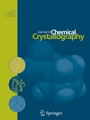
JOURNAL OF CHEMICAL CRYSTALLOGRAPHY
metrics 2024
Advancing the frontiers of crystallographic research.
Introduction
Welcome to the Journal of Chemical Crystallography, a prominent publication dedicated to the advancement of knowledge in the fields of chemical crystallography, general chemistry, and condensed matter physics. Published by Springer/Plenum Publishers, this journal provides a critical platform for researchers, professionals, and students to disseminate and access innovative research findings and methodologies from 1994 to 2024. With an ISSN of 1074-1542 and E-ISSN 1572-8854, the journal currently holds a Q4 quartile ranking in both Chemistry and Condensed Matter Physics, reflecting its broadening scope and niche significance within the scientific community. While it operates under a traditional access model, it endeavors to promote high-quality research that advances theoretical and practical aspects of crystallography, making it an essential resource for those involved in these dynamic disciplines. Join us as we explore the intricate world of chemical structures and their properties, bridging gaps between chemistry and physics.
Metrics 2024
 0.180.400.7036
Metrics History
Rank 2024
Scopus
IF (Web Of Science)
JCI (Web Of Science)
Quartile History
Similar Journals
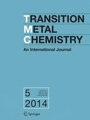
TRANSITION METAL CHEMISTRY
Exploring the Frontiers of Inorganic InnovationTransition Metal Chemistry is a distinguished journal published by Springer, focusing on the latest advancements in the field of inorganic chemistry, materials science, and metals and alloys. With an impressive publication history dating back to 1975, this journal serves as an essential platform for researchers and professionals seeking to explore the complexities and innovations in transition metal chemistry. Transition Metal Chemistry holds a Q4 ranking in Inorganic Chemistry and positions itself in Q3 within both Materials Chemistry and Metals and Alloys categories, highlighting its evolving influence in these domains. With a Scopus ranking of #41 in Inorganic Chemistry and #56 in Materials Science, it provides readers with valuable insights into research trends and discoveries. Although it does not offer open access, its rigorous peer-review process ensures that only the most impactful and validated studies are published. By bridging theoretical concepts and practical applications, Transition Metal Chemistry plays a pivotal role in advancing scientific knowledge, attracting a diverse audience of researchers, students, and industry professionals committed to unraveling the complexities of transition metals.

JOURNAL OF HETEROCYCLIC CHEMISTRY
Charting the Future of Organic ChemistryJournal of Heterocyclic Chemistry, published by Wiley, stands as a key resource in the field of organic chemistry, offering in-depth research articles and insights spanning from 1966 to 2024. With its strong Scopus ranking of #83 out of 211 in the Organic Chemistry category, placing it in the 60th percentile, the journal maintains its significance and relevance within the academic community. Although it does not currently offer open access options, it provides extensive coverage of heterocyclic compounds, which are vital to various applications in pharmaceuticals and material sciences. The journal's commitment to high-quality research is further reflected in its classification as Q3 in the 2023 quartiles for Organic Chemistry. Researchers, professionals, and students alike will find valuable contributions to the intricate studies of heterocycles, enhancing their understanding and exploration of this fascinating area of chemistry.
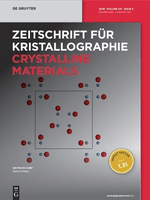
Zeitschrift fur Kristallographie-Crystalline Materials
Pioneering Research in the World of CrystallographyZeitschrift für Kristallographie-Crystalline Materials is a prestigious academic journal published by Walter de Gruyter GmbH, focusing on the intricate field of crystallography and its applications within condensed matter physics, inorganic chemistry, and materials science. Established in Germany, this journal spans a rich history from its inception in 1930 to its convergence years from 2012 to 2024, presenting cutting-edge research and developments in crystalline materials. With an impact factor reflective of its critical role within its field—ranking Q3 in the prestigious quartiles for 2023 across multiple categories—this journal serves as an essential platform for researchers, professionals, and students seeking to expand their knowledge and contribute to the advancement of crystalline materials. While currently not offering open access, the journal remains committed to disseminating high-quality, peer-reviewed articles that inspire innovation and collaboration within the scientific community.

Molbank
Exploring the Frontiers of Biochemistry and BeyondMolbank is an open-access journal published by MDPI, dedicated to the fields of Biochemistry, Organic Chemistry, and Physical and Theoretical Chemistry. Established in 2002, this journal has served as a vital platform for the dissemination of research findings, where researchers and professionals share original articles focusing on molecular chemistry, synthesis, and related studies. With a commitment to open access, Molbank enables global access to scientific knowledge, fostering collaboration and innovation among scientists. While currently categorized in the fourth quartile for its field rankings, it provides a unique opportunity for emerging scholars to contribute to and engage with the scientific community. The journal is based in Switzerland, operating from its office at ST ALBAN-ANLAGE 66, CH-4052 BASEL, SWITZERLAND, and continues to attract submissions until 2024. Researchers, students, and professionals looking to expand their knowledge and participate in the dialogue of current molecular chemistry can benefit significantly from engaging with the content published in Molbank.
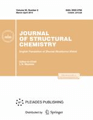
JOURNAL OF STRUCTURAL CHEMISTRY
Pioneering Research in Theoretical and Physical ChemistryThe JOURNAL OF STRUCTURAL CHEMISTRY, published by PLEIADES PUBLISHING INC, is a premier resource in the fields of Inorganic Chemistry, Materials Chemistry, and Physical and Theoretical Chemistry. Established in 1960, this journal has been providing a platform for groundbreaking research, facilitating the advancement of knowledge and innovation up to the year 2024. With an ISSN of 0022-4766 and an E-ISSN of 1573-8779, this journal strives to maintain high academic standards, as evidenced by its quartile rankings in 2023, where it ranks Q4 across various chemistry categories. While it currently does not offer open access, the journal's insightful articles are crucial for professionals and students seeking to enhance their understanding and expertise in structural chemistry. Subscribers can expect a comprehensive collection of peer-reviewed research, empirical findings, and theoretical discussions that contribute significantly to the scientific community. With its strong historical foundation and ongoing commitment to quality, the JOURNAL OF STRUCTURAL CHEMISTRY continues to be an essential resource for those passionate about the complexities of structural chemistry.
JOURNAL OF PHYSICAL ORGANIC CHEMISTRY
Advancing the frontiers of organic reactions.JOURNAL OF PHYSICAL ORGANIC CHEMISTRY, published by Wiley, serves as a vital platform for researchers and professionals in the fields of organic and physical theoretical chemistry. With a rich history of publication dating back to 1988 and continuing through 2024, this esteemed journal aims to advance the understanding of the physical principles underlying organic reactions and processes. Although it operates without an open access model, the journal maintains a respectable impact factor and has achieved Q3 rankings in both Organic Chemistry and Physical and Theoretical Chemistry as of 2023, affirming its relevance within the scientific community. Researchers looking to publish innovative studies will find a competitive space given its Scopus rankings—placed at #105 in Physical and Theoretical Chemistry and #123 in Organic Chemistry. The journal not only curates high-quality research but also encourages collaboration and the exchange of ideas, making it a cornerstone for anyone dedicated to exploring the complexities of organic materials and their physical interactions.
CRYSTENGCOMM
Advancing crystallization knowledge for a brighter scientific future.CRYSTENGCOMM is a distinguished journal published by the Royal Society of Chemistry, dedicated to advancing the field of crystallization and crystal engineering. With its impact factor consistently among the top tier in its category, CRYSTENGCOMM serves as an essential platform for researchers, professionals, and students in Chemistry, Condensed Matter Physics, and Materials Science. The journal has successfully maintained its relevance and influence since its inception, showcasing pioneering research from 1999 to 2024, with a commendable Q2 ranking in the latest evaluations. This accessibility to crucial developments in crystallization facilitates knowledge transfer across disciplines and enhances collaboration within the scientific community. Although it operates under a subscription model, the journal remains committed to disseminating cutting-edge research and fostering innovation in the field. For more information or to submit your research, please visit the Royal Society of Chemistry's website.
STRUCTURAL CHEMISTRY
Fostering Excellence in Chemical Structure ResearchSTRUCTURAL CHEMISTRY is a premier journal published by SPRINGER/PLENUM PUBLISHERS, dedicated to advancing the study and understanding of the structural aspects of chemistry. With an ISSN of 1040-0400 and an E-ISSN of 1572-9001, this journal serves as a critical resource for researchers and professionals engaged in the fields of Condensed Matter Physics and Physical and Theoretical Chemistry. Since its inception in 1990, it has become an essential platform for disseminating high-quality research, featuring articles that explore innovative methodologies, experimental techniques, and theoretical frameworks. As evidenced by its Scopus rankings, including #192 in Condensed Matter Physics and #101 in Physical and Theoretical Chemistry, the journal occupies a respected position within the academic community, promoting interdisciplinary collaboration and insight. While it operates on a traditional subscription model, the journal continues to broaden its reach to foster knowledge exchange among scholars worldwide. With a commitment to excellence and relevance, STRUCTURAL CHEMISTRY remains a vital contributor to the scientific dialogue surrounding chemical structure and its myriad implications across various scientific disciplines.
ZEITSCHRIFT FUR ANORGANISCHE UND ALLGEMEINE CHEMIE
Unveiling the Secrets of Inorganic SubstancesZEITSCHRIFT FUR ANORGANISCHE UND ALLGEMEINE CHEMIE, published by WILEY-V C H VERLAG GMBH, is a pivotal journal in the field of inorganic chemistry, catering to the needs of researchers, professionals, and students seeking to advance their understanding of this dynamic discipline. With its historical roots dating back to 1892 and a commitment to high-quality research, this journal provides a platform for the dissemination of significant findings related to inorganic substances and their general chemistry. Although currently not an open-access journal, it holds a competitive position with an impact factor placing it in the Q3 quartile of the Inorganic Chemistry category, ranking #57 out of 79 in Scopus. Situated in Germany, this journal not only connects past and present research endeavors but also aims to foster innovation and collaboration within the inorganic chemistry community. Whether you are exploring fundamental concepts or groundbreaking applications, ZEITSCHRIFT FUR ANORGANISCHE UND ALLGEMEINE CHEMIE remains an invaluable resource for advancing chemical sciences.

REVUE ROUMAINE DE CHIMIE
Illuminating the Path of Chemistry Research and DiscoveryREVUE ROUMAINE DE CHIMIE is a distinguished academic journal in the field of chemistry, published by EDITURA ACAD ROMANE in Romania. With an ISSN of 0035-3930, this journal has been a valuable platform for disseminating original research and insights in the diverse realm of chemistry since its inception. The journal currently operates under a competitive tier, categorized in Q4 for miscellaneous chemistry fields, as reflected in its Scopus ranking of #348 out of 408, placing it within the 14th percentile. Aiming to foster scientific discourse and innovation, the REVUE ROUMAINE DE CHIMIE provides a repository of knowledge that is crucial for researchers, professionals, and students eager to advance their understanding and contribute to the global chemistry community. By bridging local and international research initiatives, this journal plays an essential role in enhancing the visibility of Romanian scientific contributions on the world stage.