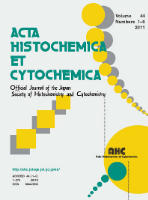
ACTA HISTOCHEMICA ET CYTOCHEMICA
metrics 2024
Transforming Discoveries into Scientific Dialogue
Introduction
ACTA HISTOCHEMICA ET CYTOCHEMICA, published by the Japan Society of Histochemistry & Cytochemistry, is a reputable journal specializing in the fields of histochemistry, cytochemistry, and related disciplines. With an ISSN of 0044-5991 and an E-ISSN of 1347-5800, this journal provides a crucial platform for researchers to disseminate their findings and advances in the study of cellular and tissue structures at a biochemical level. The journal, which has been in publication since 1968, holds a commendable position within several academic categories, achieving a Q3 ranking in Biochemistry and Cell Biology and a Q2 ranking in both Histology and Pathology and Forensic Medicine as of 2023. Its Scopus rankings further affirm its impact, particularly within the fields of Histology and Pathology. Although it does not offer open access, ACTA HISTOCHEMICA ET CYTOCHEMICA remains an essential resource for academicians, professionals, and students seeking to stay informed on the latest trends and research developments in histochemical and cytochemical processes. The journal is located at C/O Nakanishi Printing Co Ltd, Shimodachiuri-Ogawa, Kamigyo-ku, Kyoto 602-8048, Japan, making it a significant outlet for scientific communication within and beyond the Japanese research community.
Metrics 2024
 0.601.601.8031
Metrics History
Rank 2024
Scopus
IF (Web Of Science)
JCI (Web Of Science)
Quartile History
Similar Journals
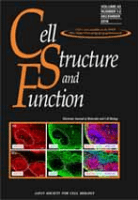
CELL STRUCTURE AND FUNCTION
Exploring the Intricacies of Cellular LifeCELL STRUCTURE AND FUNCTION is a distinguished open-access journal published by the Japan Society for Cell Biology, dedicated to advancing the field of cell biology and related disciplines. Since its inception in 1975, and now with open access available since 2017, the journal seeks to disseminate cutting-edge research and reviews that delve into the complexities of cellular structures and their functions. With a notable presence in various categories—ranked Q3 in Cell Biology and Molecular Biology and Q2 in Medicine (Miscellaneous) and Physiology as of 2023—this journal caters to a global audience of researchers, professionals, and students who are keen to explore the latest findings in cellular research. The efforts to foster accessibility and promote scholarly exchange in the field make CELL STRUCTURE AND FUNCTION an essential resource for those looking to stay at the forefront of biological sciences. The journal is indexed in Scopus, marking its relevance and reliability in the academic community. Explore the vast potential of cell biology through this comprehensive platform.
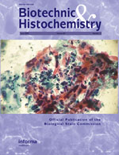
BIOTECHNIC & HISTOCHEMISTRY
Advancing Histochemistry for Tomorrow's HealthcareBIOTECHNIC & HISTOCHEMISTRY is a distinguished journal published by Taylor & Francis Ltd, dedicated to advancing the fields of histochemistry and medical laboratory technology. With a history of publication dating back to 1926 and a commitment to excellence, this journal serves as a vital resource for researchers, professionals, and students seeking to explore cutting-edge techniques and emerging trends within the biomedical sciences. As evidenced by its 2023 categorizations, including Q3 in Histology and Q2 in Medical Laboratory Technology, BIOTECHNIC & HISTOCHEMISTRY maintains a strong academic presence, with Scopus rankings reflecting its relevance and impact within the scientific community. Although it is not an open-access journal, it offers multiple access options for readers and contributors. The journal emphasizes rigorous peer review and encourages submissions that contribute to the understanding and application of histochemical techniques in diagnostics and research. By fostering scholarly communication, it aims to enhance the integration of biotechnology into clinical practice, thereby supporting the health profession’s evolving landscape.

INTERNATIONAL JOURNAL OF EXPERIMENTAL PATHOLOGY
Innovating Insights in Cell and Molecular BiologyINTERNATIONAL JOURNAL OF EXPERIMENTAL PATHOLOGY, published by Wiley, is a leading peer-reviewed journal dedicated to the field of experimental pathology. With an ISSN of 0959-9673 and E-ISSN 1365-2613, the journal has been a vital resource for researchers and professionals since its inception in 1990, covering a broad spectrum of topics within pathology, cell biology, and molecular biology. The journal's relevancy is underscored by its Q2 ranking in Pathology and Forensic Medicine and Q3 rankings in both Cell Biology and Molecular Biology, as of 2023, reflecting its significant contribution to the scientific community. Although it does not currently offer open access options, readers can benefit from its insightful research articles and reviews that guide advancements in diagnostic pathology and therapeutic strategies. As the journal continues to evolve, it remains committed to facilitating the exchange of innovative ideas and findings that drive progress in experimental pathology and related fields, making it an indispensable platform for scientists, clinicians, and students alike.

EUROPEAN JOURNAL OF HISTOCHEMISTRY
Fostering collaboration in the realm of histochemical science.European Journal of Histochemistry (ISSN: 1121-760X; E-ISSN: 2038-8306) is a distinguished peer-reviewed scholarly journal published by PAGEPRESS PUBL based in Italy. Since its inception in 1992 and with a commitment to Open Access since 2010, the journal has played a pivotal role in disseminating high-quality research in the fields of Histology, Biophysics, and Cell Biology. As of 2023, the journal holds a commendable position within the academic community, achieving Q2 rankings in Biophysics, Histology, and Medicine (miscellaneous), further highlighting its relevance and impact in these critical areas of research. Despite its HIndex not being specified, its Scopus rankings demonstrate the journal's competitive edge, particularly in Histology (Rank #33/62) and Biophysics (Rank #84/152). The journal aims to provide a platform for researchers to share innovative findings and contribute to the enrichment of knowledge in histochemical methodologies and their application to biomedical sciences. Its Open Access model ensures the broadest possible dissemination of research, making it an essential resource for researchers, professionals, and students alike who are engaged in the life sciences. For more information, visit the journal's webpage hosted by PAGEPRESS PUBL.
FREE RADICAL RESEARCH
Exploring Breakthroughs in Biochemistry and MedicineFREE RADICAL RESEARCH, published by TAYLOR & FRANCIS LTD, stands at the forefront of studies in biochemistry and medicine, with a distinguished trajectory since its inception in 1985. This esteemed journal, which boasts an ISSN of 1071-5762 and an E-ISSN of 1029-2470, is recognized for its impactful contributions within the scientific community, as evidenced by its Q2 ranking in the 2023 category quartiles for both Biochemistry and miscellaneous Medicine. Utilizing rigorous peer-review standards, FREE RADICAL RESEARCH disseminates critical findings on the role of free radicals in biological systems, facilitating knowledge exchange among researchers, healthcare professionals, and students. Although it is not an open-access journal, its reach through academic databases ensures visibility and accessibility of groundbreaking research, making it an indispensable resource for those engaged in the dynamic fields of biochemistry and molecular biology. As the journal continues to evolve until 2024, it remains committed to advancing our understanding of oxidative stress and its implications for health and disease.
Doklady Biochemistry and Biophysics
Illuminating the Science Behind Biochemical Processes and Physical PrinciplesDoklady Biochemistry and Biophysics is a vital resource for the advancement of knowledge in the fields of biochemistry and biophysics, published by MAIK NAUKA/INTERPERIODICA/SPRINGER. Featuring an ISSN of 1607-6729 and an E-ISSN of 1608-3091, this journal plays a critical role in disseminating research findings and fostering scholarly discourse. Despite its recent ranking in the Q4 quartile for biochemistry and biophysics in 2023, it serves as an essential platform for researchers exploring these intertwined disciplines. The journal’s scope encompasses a wide variety of topics, enhancing the understanding of biochemical processes and physical principles in biological systems. With converged years of publication from 2001 to 2024, it stands as a continual source of knowledge for its readers, who include researchers, professionals, and students alike. While the journal currently does not offer open access options, its contributions remain significant within the scholarly community, illustrated by its competitive Scopus rankings across related fields.
Medical Molecular Morphology
Transforming Research into Therapeutic Advances.Medical Molecular Morphology, published by SPRINGER JAPAN KK, stands as a significant resource in the fields of medicine and molecular biology, bridging critical insights between histological studies and modern therapeutic approaches. With an ISSN of 1860-1480 and E-ISSN of 1860-1499, this journal has evolved since its inception in 1996 and has continued to provide a platform for innovative research through 2024, establishing its relevance particularly in the realms of medical pathology and molecular morphology. Although categorized as Q3 in Medicine (miscellaneous) and Q4 in Molecular Biology per the 2023 quartiles, the journal's unique contributions cannot be understated, as evidenced by its Scopus rankings, which place it in the 52nd percentile for Pathology and 19th percentile for Molecular Biology. The journal’s mission focuses on disseminating valuable findings that enhance the understanding of cellular and molecular structures and their implications in health and disease. As access options are not currently open access, it remains essential for professionals and researchers to consider the journal's contributions as they pursue academic growth and impactful research in these dynamic fields.
Organogenesis
Advancing the Frontiers of Developmental Biology.Organogenesis is a leading journal published by Taylor & Francis Inc, dedicated to advancing the field of developmental biology and regenerative medicine. With an ISSN of 1547-6278 and E-ISSN 1555-8592, this journal spans an extensive research scope that includes embryology, transplantation, and biomedical engineering, distinguishing itself as a crucial platform for researchers and practitioners alike. Its impact is reflected in its performance across various categories in 2023, earning Q3 rankings in Biomedical Engineering and Embryology, Q4 in Developmental Biology, and Q2 in Transplantation, showcasing its reputable standing among peer journals. Moreover, with Scopus rankings indicating strong positioning in the fields of medicine and biochemistry, Organogenesis is essential for those looking to publish or stay updated on pioneering research. The journal facilitates rigorous peer-review and offers a forum for disseminating innovative findings, making it an invaluable resource for academics, professionals, and students committed to understanding the complexities of organism development.
JOURNAL OF CELLULAR BIOCHEMISTRY
Elevating Biochemical Insights for Tomorrow's ScienceJournal of Cellular Biochemistry is a premier academic journal dedicated to advancing the field of biochemistry and cellular biology. Published by Wiley, this influential journal has a significant impact factor that underscores its relevance and authority within the scientific community. With its ISSN 0730-2312 and E-ISSN 1097-4644, the journal has been on the frontier of research since its inception in 1982, and is expected to continue publishing cutting-edge studies through 2024. As evidenced by its ranking in the 2023 Scopus Quartiles, it holds a rank of Q2 in Biochemistry and Q3 in both Cell and Molecular Biology, placing it among the top tiers of scientific journals in these disciplines. The Journal of Cellular Biochemistry serves as a vital resource for researchers, professionals, and students alike, providing a platform for the dissemination of innovative ideas and findings that shape our understanding of cellular processes and biochemical pathways. Though it does not currently offer Open Access options, its robust peer-review process ensures that each publication meets the highest academic standards, thus solidifying its esteemed position in the landscape of biochemical research.
JOURNAL OF MOLECULAR AND CELLULAR CARDIOLOGY
Unraveling the complexities of heart health through science.JOURNAL OF MOLECULAR AND CELLULAR CARDIOLOGY, published by Elsevier Science Ltd, is a premier scholarly journal dedicated to advancing the field of cardiology and cardiovascular medicine as well as molecular biology. With an impressive Q1 ranking in both categories as of 2023, the journal boasts a significant influence in the scientific community, evidenced by its Scopus rankings—33rd out of 387 in Cardiology and 65th out of 410 in Molecular Biology. Established in 1970 and continuing to publish groundbreaking research through 2024, the journal’s mission is to disseminate innovative findings that enhance our understanding of cardiovascular health at the molecular and cellular levels. Although it is not an open-access publication, it attracts top-tier research contributions, making it essential reading for researchers, healthcare professionals, and students aiming to stay ahead in the dynamic domains of cardiovascular and molecular biology research.